A refrigerator can be running normally and still waste energy every hour because of a worn door gasket. If you are asking when should fridge seal be replaced, look for more than a small crack or a loose corner. The real concern is whether the seal is letting warm, humid air into the refrigerator, forcing the appliance to work harder and putting your food at risk.
Prefer a pro to handle it? Book refrigerator repair in Massachusetts — same-day service across 90+ MA cities.
A fridge seal, also called a door gasket, is the flexible magnetic strip around the edge of the door. It creates an airtight closure when the door shuts. A damaged gasket is often a manageable repair, but ignoring it can lead to high utility bills, excess frost, uneven temperatures, and premature strain on the compressor.
At Fasteny Appliance Repair, serving Reading, Waltham, and homes across Massachusetts, we help homeowners decide when a refrigerator door seal replacement is worth it. A worn gasket quietly wastes energy and lets temperatures drift, so here are the signs it’s time and what to check first.
When Should a Fridge Seal Be Replaced?
Replace a refrigerator seal when it no longer makes consistent contact with the cabinet, remains warped after cleaning and reshaping, is torn or brittle, or fails a simple closure test. A little surface dirt does not automatically mean replacement is necessary. Grease, crumbs, and sticky residue can prevent a good seal, and a thorough cleaning may solve the problem.
The difference comes down to condition and performance. If the gasket is clean but the door still does not close tightly, replacement is usually the right next step. If the refrigerator door itself is sagging or the appliance is not level, the gasket may not be the root cause. Replacing it without correcting the alignment issue can leave you with the same problem.
1. The gasket is cracked, torn, or permanently flattened
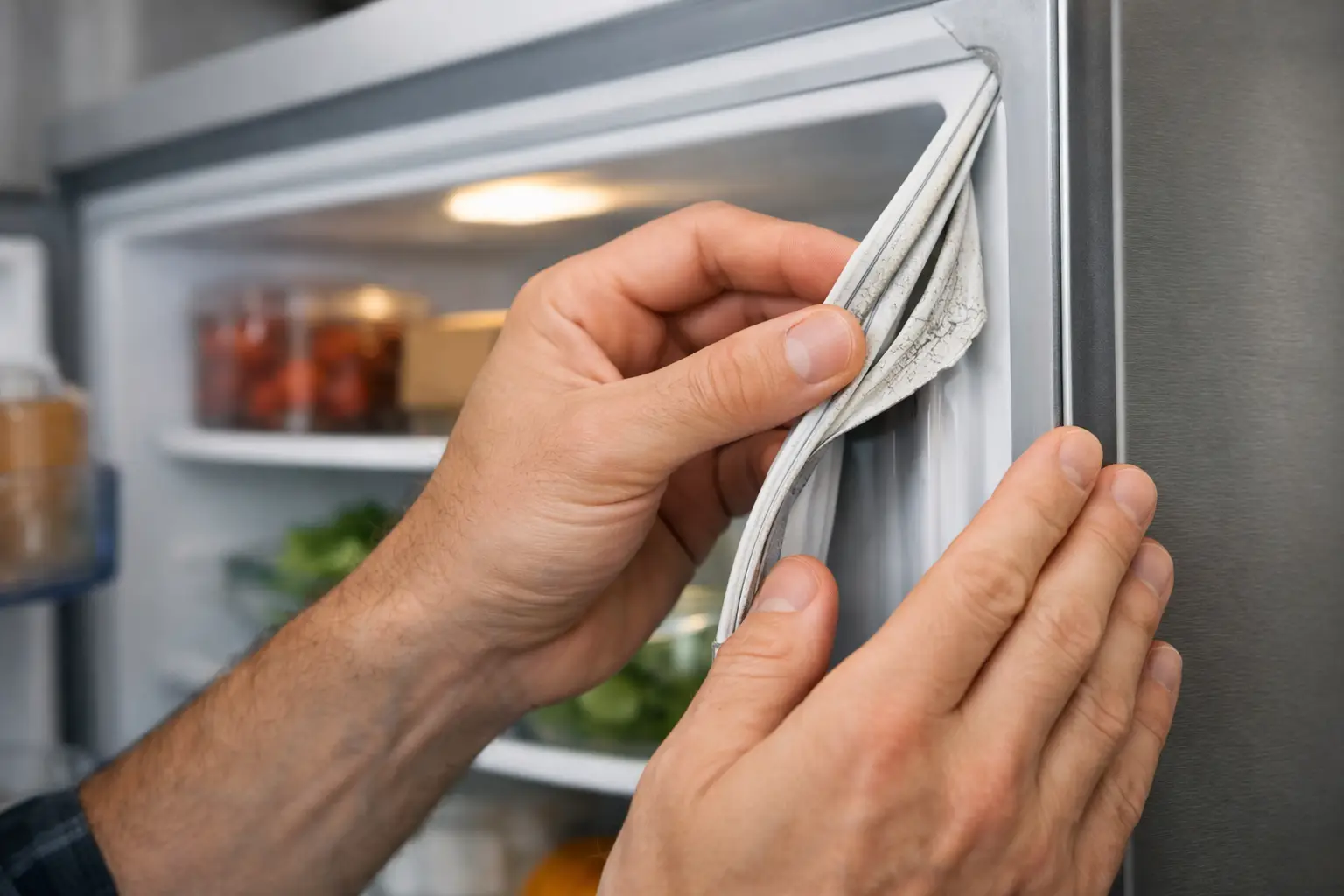
Inspect the full length of the gasket, including the corners and the fold that touches the refrigerator frame. Small tears, missing sections, hardened rubber, and deep cracks allow air to leak through. A seal that looks compressed flat instead of rounded and flexible may no longer reach the cabinet surface.
Age, frequent use, harsh cleaners, and heat from a nearby oven or direct sunlight can all shorten gasket life. Once the material becomes brittle, cleaning will not restore its flexibility. Replacement is the dependable fix.
2. You feel cool air leaking around the closed door
Run your hand slowly around the outside edge of the closed refrigerator and freezer doors. You may feel a draft, especially near a warped corner or split section of gasket. Condensation on the exterior of the cabinet near the door can also point to warm air reaching cold surfaces where it should not.
Air leaks are not always easy to feel, particularly in a warm kitchen. Pair this check with a paper test rather than relying on touch alone.
3. The paper test shows weak spots
Close the refrigerator door on a piece of paper or a dollar bill, leaving enough outside to pull it. It should resist firmly when you pull. Test several spots around each side of the door, including the top and bottom corners.
If the paper slides out with almost no resistance in one area, the seal may be leaking there. A single weak spot could be caused by debris or a gasket that has pulled out of its channel. Weak resistance around most of the door usually means the gasket is worn, the door is misaligned, or both.
4. Frost or moisture keeps returning
Excess frost inside the freezer is a common sign of a poor door seal. Every time humid room air enters, the moisture freezes on interior surfaces. A frost-free refrigerator can handle a normal amount of moisture, but a constant air leak can overwhelm the defrost system over time.
In the fresh-food section, you may see water droplets, damp packaging, or condensation around the door frame. These symptoms can also result from frequent door openings or placing hot food inside, so check the gasket before assuming the refrigerator has a major cooling problem.
5. Food temperatures are inconsistent
A bad seal may contribute to milk that spoils too quickly, produce that freezes near the back wall, or food that feels warmer than expected near the door. Warm air entering through the gasket makes the refrigerator cycle more often and can create uneven temperatures.
That said, a gasket is only one possible cause. Dirty condenser coils, a failing fan, a defective thermostat, blocked vents, or a compressor issue can produce similar symptoms. If cleaning or replacing the gasket does not restore normal temperatures, the refrigerator needs a proper diagnosis.
6. The refrigerator runs more often than usual
Most refrigerators cycle on and off throughout the day. But if yours seems to run nearly nonstop, feels unusually warm around the cabinet, or has a noticeable increase in operating noise, a leaking gasket may be making the compressor work overtime.
This is one reason a small seal problem deserves attention. The gasket itself is relatively simple, but the ongoing strain can become expensive if the refrigerator must constantly compensate for lost cold air.
7. The door pops open or will not stay closed
A refrigerator door that opens slightly after you close it may have a damaged gasket, but it could also be overloaded with heavy items in the door bins. First, remove excess weight and make sure shelves or drawers are not preventing the door from closing.
If the problem continues, inspect the hinges and check whether the refrigerator is tilted slightly backward. Most units need a small backward tilt so the doors close on their own. A sagging door or loose hinge can create a gap that looks like a bad gasket.
Try These Steps Before Replacing the Seal
Start by cleaning the gasket and the cabinet surface it contacts. Use warm water with mild dish soap and a soft cloth, paying close attention to folds and corners. Avoid bleach, abrasive scrubbers, and strong solvents that can dry out or damage the rubber.
After cleaning, dry the gasket completely and check whether it has come loose from its mounting track. On many refrigerators, a portion of the gasket can be pressed carefully back into place. If a corner is slightly misshapen, gentle warmth from a hair dryer on a low setting can sometimes help it regain its form. Keep the dryer moving and do not overheat the rubber or plastic liner.
Then repeat the paper test. If the seal grips evenly and the door closes properly, replacement may not be necessary. If the gasket remains warped, torn, stiff, or loose, order the exact replacement specified for your refrigerator model.
Is Replacing a Fridge Seal a DIY Job?
For many refrigerator models, gasket replacement is a reasonable DIY task. The job typically involves loosening screws under the gasket edge or pulling the old seal from a retaining channel, then installing the new one evenly. The work requires patience more than specialized tools.
The trade-off is that an incorrectly installed gasket can wrinkle, leave gaps, or prevent the door from closing. A replacement gasket may also arrive folded and need time to relax into shape. If you are not sure of the model number, see damage to the door liner, or suspect hinge or alignment trouble, professional service can prevent buying the wrong part or making repeated adjustments.
For homeowners and businesses in Greater Massachusetts, Fasteny Appliance Repair can diagnose whether the gasket is truly at fault or whether a cooling, hinge, or door-alignment issue needs attention. A clear diagnosis helps avoid paying for a part that will not solve the underlying problem.
How Long Does a Refrigerator Door Seal Last?
There is no fixed replacement schedule. Many refrigerator seals last 10 years or longer, while others wear earlier because of heavy family use, commercial traffic, poor cleaning habits, or repeated exposure to grease and heat. Replace the seal based on visible damage and failed performance tests, not age alone.
Freezer gaskets often show problems sooner because frost and frequent openings can affect their flexibility. Check both doors if your refrigerator has a top freezer, bottom freezer, French doors, or a side-by-side design. On French-door models, inspect the center flap and its seals as well, since even a small gap there can create temperature and frost issues.
A refrigerator gasket is easy to overlook because it is not a moving mechanical part. Yet it protects the cold air your appliance works hard to produce. If cleaning and a careful door check do not restore a tight seal, addressing the gasket promptly can help protect your food, reduce wasted energy, and keep a small repair from turning into a larger refrigerator problem.
Frequently Asked Questions
How do I know if my refrigerator door seal needs replacing?
Watch for a cracked, torn, or permanently flattened gasket, cool air leaking around the closed door, a dollar-bill paper test that slides out easily, returning frost or moisture, or the fridge running more than usual. Any of these points to a seal that no longer holds.
Can I replace a refrigerator door seal myself?
Often yes. Many gaskets are held by a retainer or screws and can be swapped with the correct part for your model. If the door is misaligned or the new seal won’t sit flat, a technician can correct it so the door seals evenly.
How long does a refrigerator door seal last?
Most gaskets last several years, but heat, cleaning products, and daily use wear them down over time. Cleaning the seal a few times a year and checking it with the paper test helps you catch failure before it costs you in energy.
What happens if I ignore a failing refrigerator door seal?
A worn seal forces the compressor to run longer, which raises energy bills and lets temperatures drift over time. If you are not sure yours is failing, GE Appliances’ guide on how to tell if a refrigerator door seal is bad lists the signs to check.
Is it cheaper to replace the seal or the whole refrigerator?
Replacing a door seal is almost always far cheaper than replacing the appliance, and it can restore efficiency and stable temperatures. A technician can confirm whether the seal alone is the issue or if the door or hinges also need attention.
Conclusion
A refrigerator door seal replacement is one of the cheapest fixes that can restore efficiency, hold steady temperatures, and stop frost and moisture problems before they grow. If your gasket is failing the paper test or the door won’t stay shut, it’s worth acting on. Fasteny Appliance Repair serves Billerica, Peabody, and communities across Massachusetts with clear pricing and dependable work. Request a repair, explore our appliance repair services, or call +1 (617) 618-3311. For upkeep tips, see our guide to refrigerator maintenance habits.