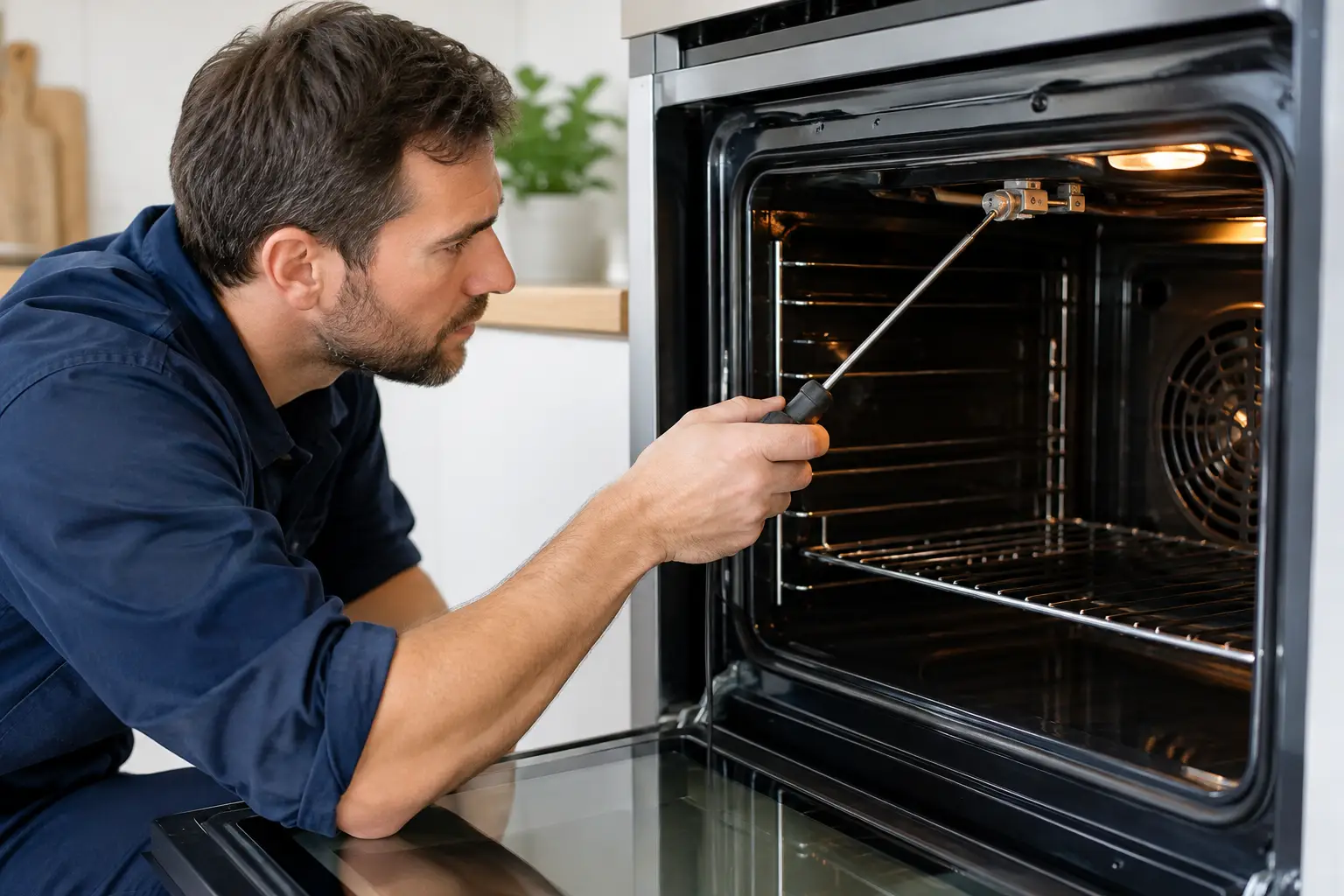
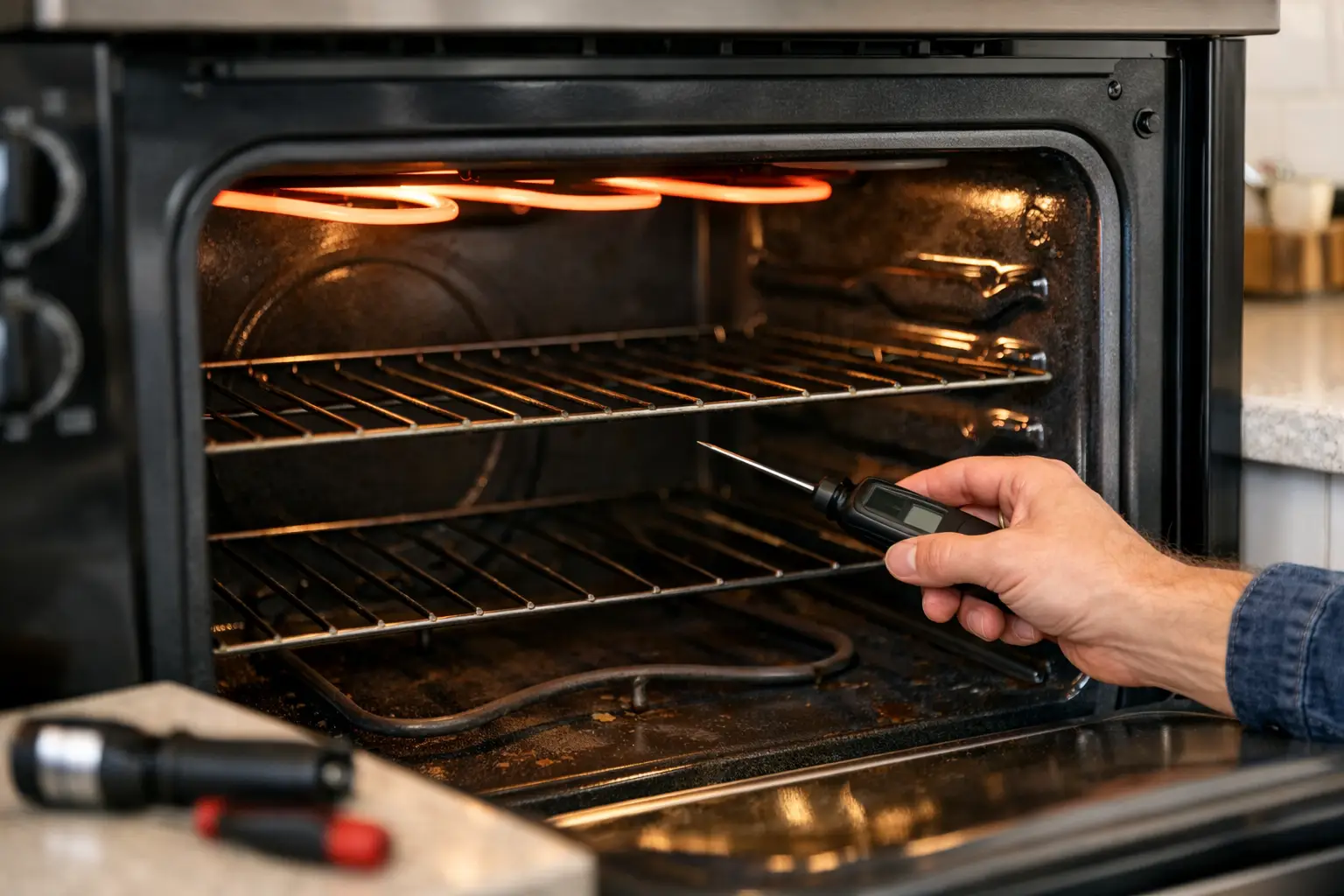
Dinner takes twice as long, the roast comes out pale, and the preheat beep never seems to arrive. An oven not heating up — or heating unevenly and running cold — is one of the most common kitchen breakdowns, and the cause is often a single failed part. At Fasteny Appliance Repair, we diagnose and repair electric and gas ovens for homeowners in Reading, Waltham, and towns across Massachusetts, frequently the same day.
This guide explains why an oven stops heating, how gas and electric faults differ, brand-specific quirks, and the checks you can safely make before booking a technician.
At Fasteny Appliance Repair, we get an oven not heating back up to temperature for homeowners across Reading, Peabody, and Waltham — often the same day.
Why Is My Oven Not Heating Up?
When people ask why is my oven not heating up, the answer depends on how it is powered. An electric oven makes heat through a bake element at the bottom and a broil element at the top; if one fails, the oven runs cold or cooks unevenly. A gas oven relies on an igniter that must glow hot enough to open the safety valve and light the burner — a weak igniter is the single most common reason a gas oven will not heat. A failing temperature sensor or control board can leave either type stuck cold or wildly off temperature.
Start With the Simplest Checks First
Before assuming the worst, rule out the easy causes. Confirm the oven is set to Bake and not stuck in a timed-bake, delay-start, or Sabbath mode. Make sure the clock is set, since many ovens will not heat if the time was never entered. For an electric oven, check the breaker: these run on a 240-volt double breaker, and half of it can trip while the display still lights up. For a gas oven, confirm the gas supply is on and other gas appliances work. Finally, make sure the door closes fully, because a worn door or hinge lets heat escape.
Electric Oven Not Heating Up
Bake or broil element
A working element glows bright orange along its whole length. If it stays dark, shows a break or blister, or only partly glows, it needs replacing. This is the most common electric-oven heating failure and a straightforward repair.
Temperature sensor
The sensor, a thin probe inside the oven, tells the control board the current temperature. When it drifts, the oven can underheat, overheat, or never reach the set point. A technician can test and replace it quickly.
Control board or thermostat
If the elements and sensor test fine, the control board relays that switch power to the elements may be failing. This one calls for a professional diagnosis.
Gas Oven Not Heating Up
Weak or failed igniter
The igniter is behind most gas-oven heating problems. Over time it weakens, so it still glows but no longer gets hot enough to open the safety valve, and you may hear gas trying to light with little or no flame. A glowing-but-not-lighting igniter almost always needs replacing.
Safety valve and gas supply
If the igniter is strong but no gas flows, the safety valve may be faulty or the supply partially shut. Because these involve the gas line, they are best left to a technician.
One important safety note: a gas oven that will not ignite can release unburned gas, and running a faulty gas appliance is a carbon monoxide risk. Never use your oven to heat the room, keep a working CO alarm nearby, and learn the warning signs of carbon monoxide from the CDC. If you smell gas, leave and call your gas utility.
Brand-Specific Oven Heating Problems
Samsung
A Samsung oven not heating often traces to the bake element or the temperature sensor, and many models show an error code that points straight to the fault.
Whirlpool and Maytag
On a Whirlpool oven not heating, the bake element or the oven igniter on gas models is the usual culprit, and Maytag units share the same parts.
Frigidaire
A Frigidaire oven not heating is commonly a failed bake element or a weak gas igniter, both inexpensive and common repairs.
GE and Kenmore
These brands most often come back to the element, igniter, or temperature sensor — the same core parts in a different package.
Signs the Problem Is Getting Worse
A few symptoms mean it is time to act rather than wait: preheating that takes far longer than it used to, food that cooks unevenly or needs extra time, a burning or electrical smell, visible breaks or blistering on an element, or a gas oven that clicks and smells of gas before lighting. If your cooktop burners have also stopped working, our guide on a cooktop not working covers those separately.
What You Can Safely Do Yourself
Stick to no-risk checks: reset the breaker, re-enter the clock, confirm the mode and temperature, inspect the bake element for obvious breaks, and watch whether a gas igniter glows and lights within about 90 seconds. Avoid opening the gas line, removing panels, or testing electrical components unless you are trained, since oven elements and gas valves carry real shock and gas hazards. Anything beyond the basic checks is a job for a professional.
When to Call for Professional Oven Repair
If the simple checks do not restore heat, if an element is broken, or if a gas oven will not ignite, bring in a technician. We repair oven elements, igniters, sensors, safety valves, and control boards across Massachusetts. See our oven repair service for coverage and same-day availability, or read our overview of common oven problems for related issues.
Preventing Future Heating Problems
Keep the oven clean so spills do not coat the elements or block the gas ports, avoid lining the bottom with foil since it traps heat and stresses parts, use an oven thermometer to catch calibration drift early, and do not slam the door, which can crack the glass or knock the hinges out of true. Simple upkeep keeps heating parts working longer.
Frequently Asked Questions
Why is my oven not heating up?
The most common causes are a burned-out bake element on an electric oven, a weak gas igniter that no longer opens the safety valve on a gas oven, or a faulty temperature sensor. Simple issues like a tripped 240-volt breaker or the oven being set to a timed or delayed mode can also leave it cold.
Why is my gas oven not heating but the burners work?
The cooktop burners and the oven use separate ignition. If the stovetop lights but the oven stays cold, the oven’s igniter is usually weak or failed, or the oven safety valve is not opening. The cooktop working does not rule out an oven problem.
How do I know if it is the bake element or the igniter?
On an electric oven, a healthy bake element glows bright orange along its full length; if it stays dark or shows a break, it is the element. On a gas oven, if the igniter glows but the burner never lights or barely lights, the igniter is weak and needs replacing.
Is a gas oven that will not ignite dangerous?
It can be. An oven that clicks and releases gas without lighting can let unburned gas escape, and running a faulty gas appliance is a carbon monoxide risk. Keep a working CO alarm nearby, never use the oven to heat your home, and if you smell gas, leave and call your gas utility.
Should I repair or replace an oven that will not heat?
If the oven is under about 10 to 15 years old and the fix is an element, igniter, or sensor, repair is usually the better value. Replacement makes more sense when several parts are failing at once or the unit is well past its expected life.
Conclusion
An oven not heating up usually comes down to one part — a burned-out element, a tired gas igniter, or a drifting temperature sensor — and most are affordable to fix. Handle the safe checks yourself, and leave elements, gas valves, and wiring to a professional. If your oven is not heating in Peabody, Brookline, or anywhere across Massachusetts, Fasteny Appliance Repair can help. Book online through our request form, visit our homepage, or call +1 (617) 618-3311 to schedule same-day service.