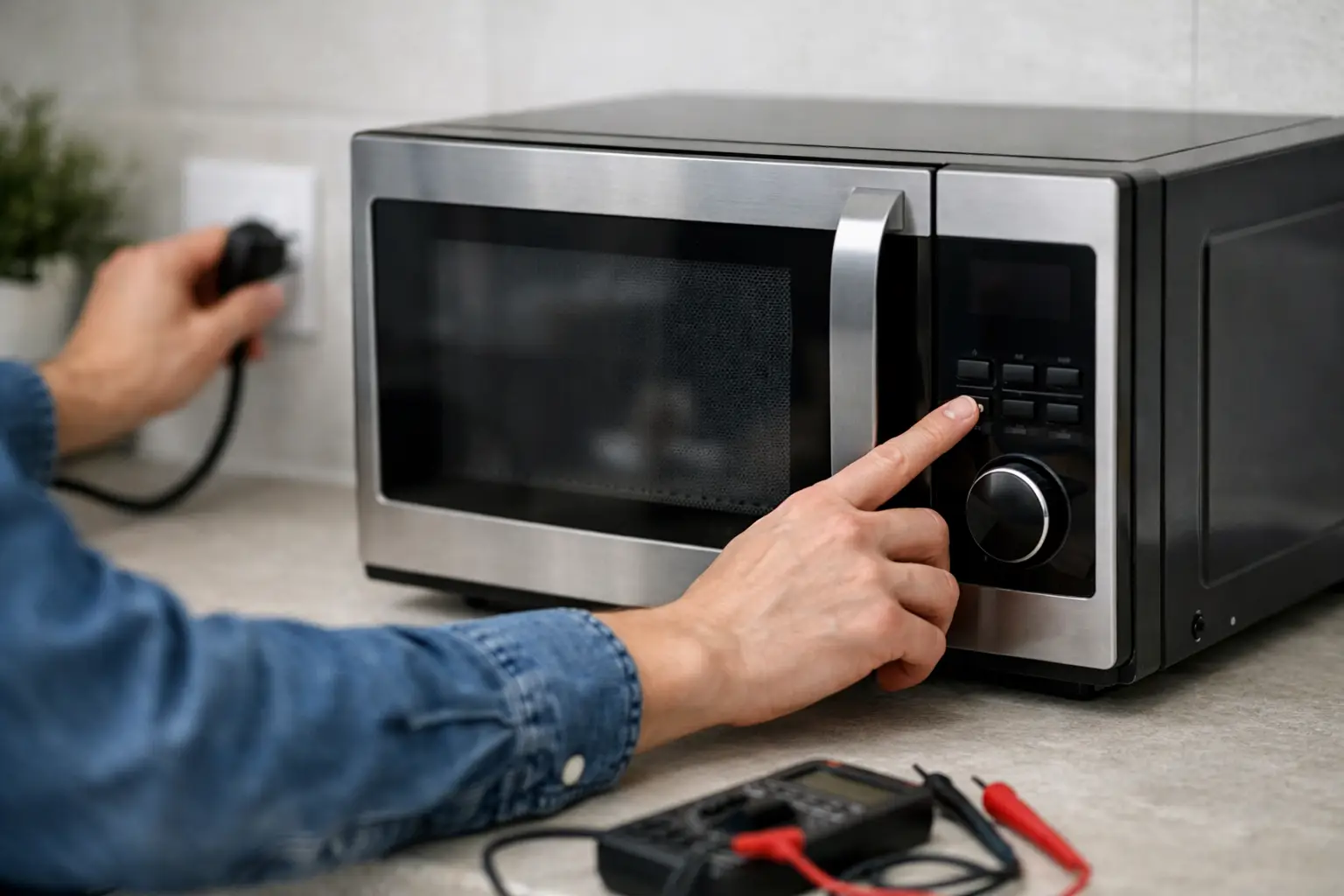
You press Start, nothing happens, and dinner suddenly gets more complicated than it should be. If your microwave not turning on has gone from a one-time annoyance to a dead appliance on the counter, the good news is that the cause is often identifiable. The real question is whether it is something simple you can safely rule out yourself or a repair that needs a trained technician.
A microwave can fail for a few very different reasons. Sometimes the issue is outside the appliance, like a tripped breaker or a dead outlet. Other times it is inside the unit: a blown fuse, a failed door switch, a bad control board, or a thermal cutout. Because microwaves store high-voltage electricity even after they are unplugged, the line between basic troubleshooting and unsafe DIY repair matters more here than with most kitchen appliances. At Fasteny Appliance Repair, we help homeowners from Reading to communities across Massachusetts tell the quick fixes apart from the repairs that need a pro.
Why a Microwave Not Turning On Can Mean Different Things
Not every won’t-turn-on problem looks the same. Some microwaves are completely dead, with no display, light, or fan. Others show a lit display but will not start a cycle, or they start and then quit. The pattern points toward the cause. A totally dead unit usually means a power or fuse problem, while a lit-but-unresponsive microwave more often points to the door switches, keypad, or control board. Noticing exactly how yours is behaving is the fastest way to narrow things down.
Common Reasons a Microwave Won’t Turn On
Most no-power microwaves trace back to one of a handful of causes. Work through them from the outside in.
Start With the Power Source
Begin with the obvious: is the outlet live? Test it with another small appliance, and check the panel for a tripped breaker. Many kitchens put outlets on GFCI protection, so reset any tripped GFCI outlet nearby. A surprising number of dead microwaves are simply a tripped breaker or GFCI, not a broken appliance.
A Loose Plug or Damaged Cord
Make sure the plug is fully seated and the cord is undamaged. A partially pulled plug, a scorched outlet, or a frayed cord can cut power entirely. If you see burn marks, melted plastic, or smell anything hot, stop using the outlet and have it checked. That is an electrical hazard, not just a microwave problem.
Try a Power Reset
Electronics can lock up. Unplug the microwave for a full minute, then plug it back in. This clears many temporary control glitches and is completely safe to do. If the display returns and the microwave works, a momentary fault was the culprit.
The Door Switch May Be the Real Problem
Microwaves use several interlock switches that must confirm the door is closed before the unit will run. If one of those switches fails, the microwave often goes dead or refuses to start even though it has power. A door that feels loose, sits unevenly, or no longer clicks shut firmly is a common reason a microwave will not turn on.
A Blown Internal Fuse
Microwaves contain a line fuse that blows to protect the unit during a power surge or internal fault. When it blows, the microwave usually goes completely dead. Replacing it is not a simple DIY job, because reaching the fuse means opening the cabinet and getting near the high-voltage capacitor. This is one of the most common repairs a technician makes on a no-power microwave.
Thermal Cutouts and Overheating
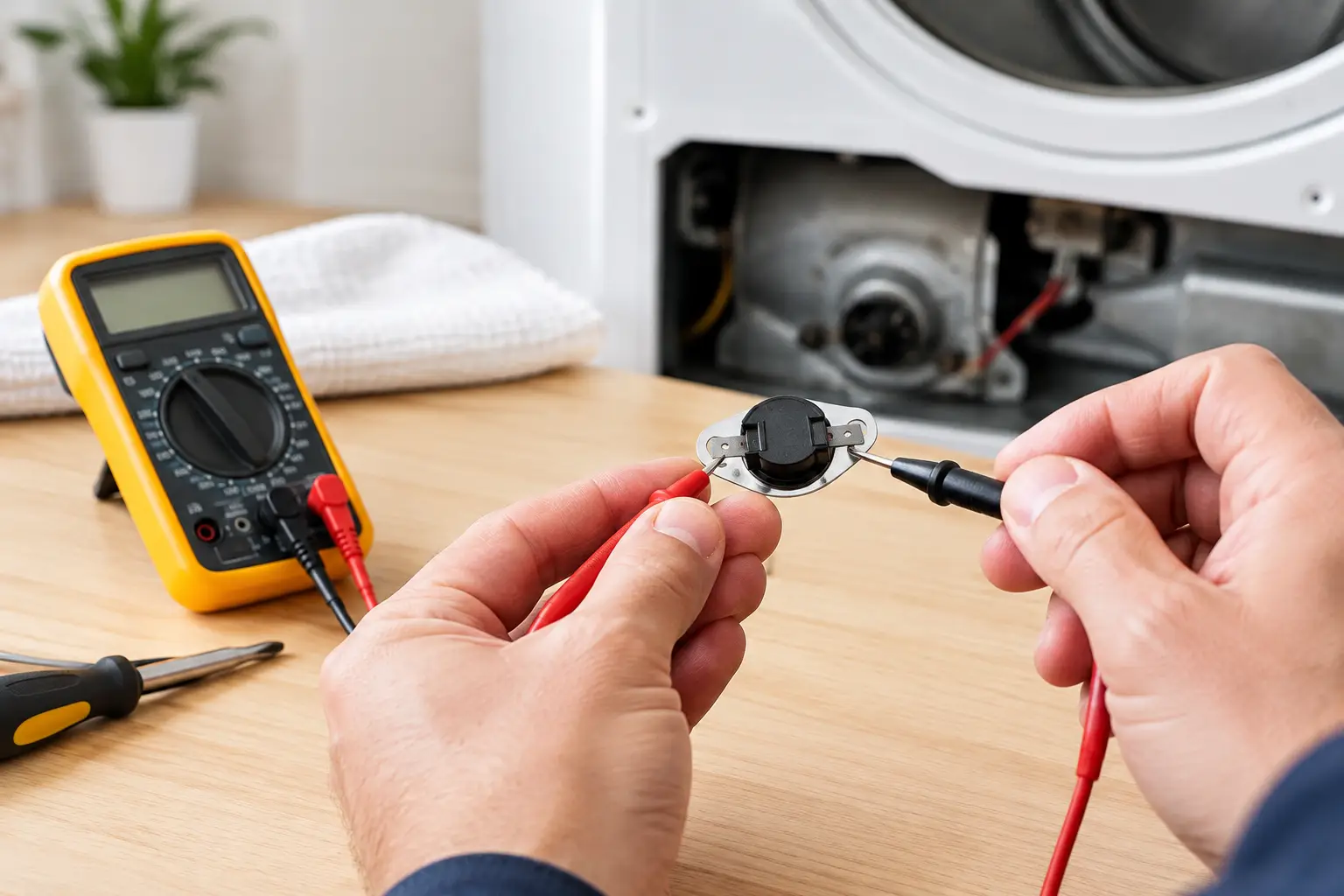
Thermal protectors shut the microwave down if it runs too hot, often due to blocked vents or a failing cooling fan. Sometimes the unit will not restart until it cools, and sometimes the cutout has failed and needs replacement. Repeated overheating shutdowns are worth a professional look.
Control Board and Keypad Failures
If the display is dead or the buttons do not respond, the control board or membrane keypad may have failed. These parts interpret your input and drive the microwave, so a fault there can leave a powered unit unresponsive. Board-level diagnosis is best left to a technician who can confirm the fault before you pay for a part.
Brand-Specific Notes: GE, Whirlpool, Samsung, and LG
The basics are the same across brands, but a few patterns come up often. GE microwaves, including GE Profile and Advantium models, are known for tripping an internal fuse or GFCI after a power surge, which leaves them completely dead until the fuse is replaced. Whirlpool and Samsung units frequently trace no-power complaints to door-switch or control-board faults. LG, Kenmore, and Panasonic microwaves follow the same logic: check power first, then look at the door switches, fuse, and board. Whatever the badge on the front, an accurate diagnosis beats swapping parts by guesswork.
What You Can Safely Do Before Calling for Service
Safe troubleshooting should stay limited to what you can check from the outside. Test the outlet, reset the breaker or GFCI, inspect the plug and cord, and try a power reset by unplugging the microwave briefly.
Pay attention to symptoms, too. Was there a burning smell? Did it die mid-cycle? Does the display work but the unit not start? Does the door feel different than usual? Those details speed up diagnosis and help a technician arrive prepared.
What you should not do is remove the outer cover or test internal parts. Microwaves store a dangerous high-voltage charge in the capacitor even after being unplugged, which is why the U.S. Food and Drug Administration advises having microwave ovens serviced by qualified technicians. Unlike many appliances, unplugged does not always mean safe.
When to Call a Microwave Repair Technician
If the outlet has power and the microwave is still unresponsive, it is time to move past basic checks. The same is true if the breaker trips repeatedly, the microwave dies during use, the door latch feels faulty, or the unit shows signs of burning, arcing, or overheating.
Over-the-range microwaves deserve special mention, because diagnosis and removal can be awkward and risky without the right setup. A professional can determine whether the issue is a fuse, door switch, thermal protector, board failure, or wiring problem without turning a small kitchen issue into a bigger safety concern. You can review our transparent pricing and recent customer reviews, then book microwave repair in Massachusetts when you are ready.
For homeowners and small businesses across Massachusetts, speed matters when a primary kitchen appliance goes down. Fasteny Appliance Repair handles microwave problems with the same focus we bring to every service call: clear diagnosis, fair pricing, and repairs done right the first time.
Repair or Replace a Microwave?
That depends on the age of the unit, the type of microwave, and the failed part. A countertop microwave with a major control-board failure may not be worth a large repair bill. An over-the-range model with a failed door switch or fuse often is worth fixing, especially if the appliance is otherwise in good shape.
Installation costs matter too. Replacing a built-in or over-the-range microwave is usually more involved than swapping out a basic countertop unit, which can make a professional repair the better value even when the part itself is inexpensive. If you are weighing the decision, our guide on whether to repair or replace an appliance walks through the numbers. The smartest next step is not guessing. It is getting a clear diagnosis so you can compare real repair and replacement costs.
Frequently Asked Questions
Why is my microwave not turning on at all?
Start with power: a dead outlet, a tripped breaker, or a tripped GFCI is a common cause. If the outlet is live, the problem is usually inside the unit, such as a blown line fuse, a failed door switch, or a control-board fault. Because those repairs mean opening the cabinet near a high-voltage capacitor, they are best handled by a technician.
My microwave turns on but does not heat. What is wrong?
That is a different problem from a no-power microwave. When a microwave runs but food stays cold, the usual causes are the magnetron, high-voltage diode, or capacitor. These are high-voltage parts that should only be tested and replaced by a trained technician, not diagnosed by trial and error.
Why did my GE microwave stop working after a power surge?
Power surges commonly blow the microwave’s internal line fuse or trip a GFCI outlet, and GE Profile and Advantium models are especially known for it. The unit usually goes completely dead. A technician can replace the fuse and confirm the surge did not damage the board or other components.
Can I fix a microwave that will not turn on myself?
Safe do-it-yourself steps are limited to outside checks: test the outlet, reset the breaker or GFCI, inspect the plug and cord, and try unplugging the unit for a minute. Never remove the cover or test internal parts, because a microwave stores a dangerous charge even when unplugged.
Is it worth repairing a microwave that will not turn on?
It depends on the type, age, and failed part. Over-the-range and built-in microwaves are often worth repairing because replacement involves installation cost. A countertop unit with a major board failure may be cheaper to replace. A quick diagnosis gives you real numbers to compare.
How long should a microwave last?
Most microwaves last about nine to ten years. If a unit near or past that age needs an expensive part, replacement may make more sense, while a newer microwave with a simple fault is usually worth repairing.
Conclusion
When your microwave stops responding, the goal is not just to get power back. It is to make sure the appliance is safe, dependable, and ready for daily use again without surprises.
If the simple checks did not bring your microwave back, request a visit or reach Fasteny Appliance Repair at (617) 618-3311. We help homeowners in Waltham, Peabody, and across Massachusetts get a clear diagnosis and a safe, lasting fix.