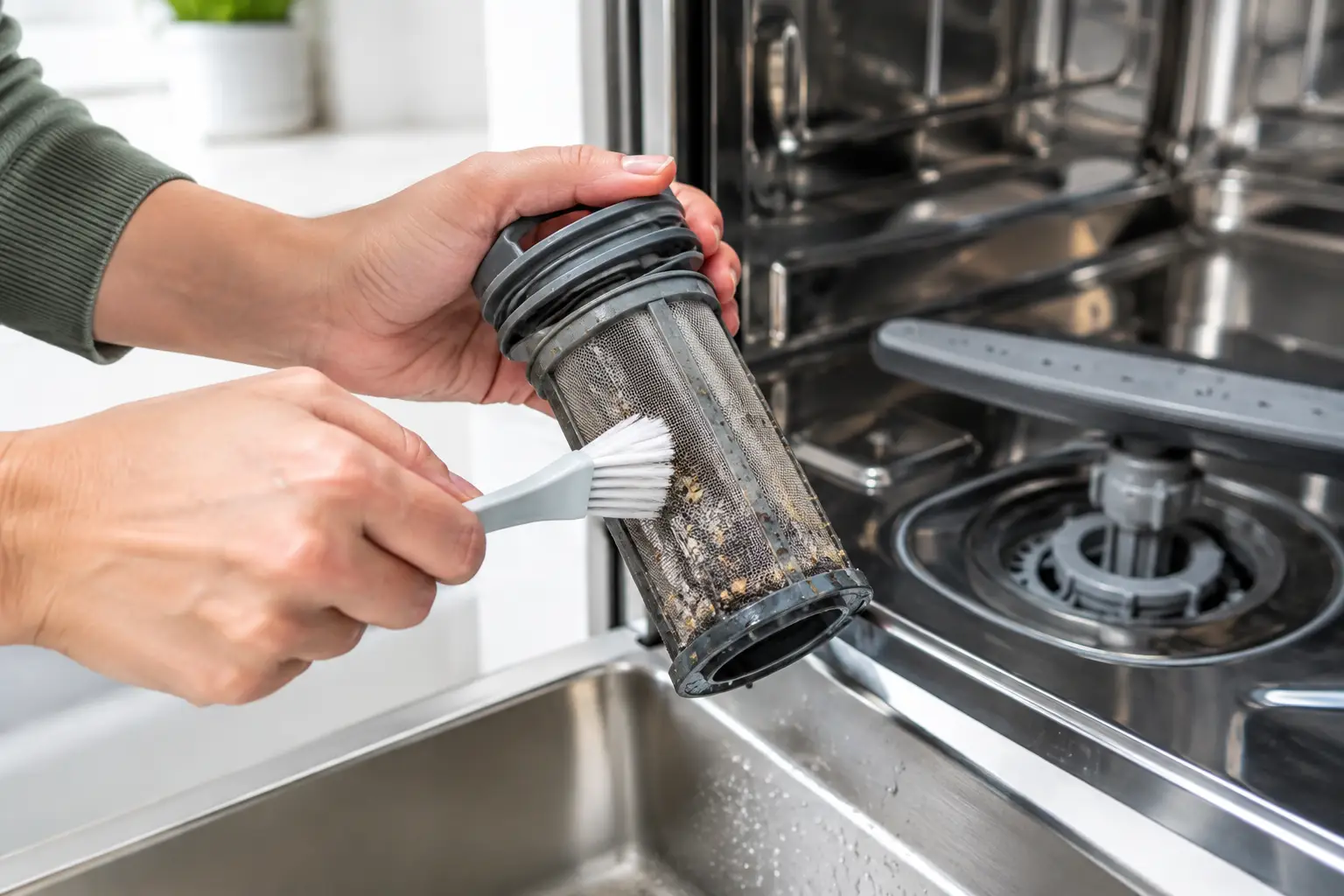
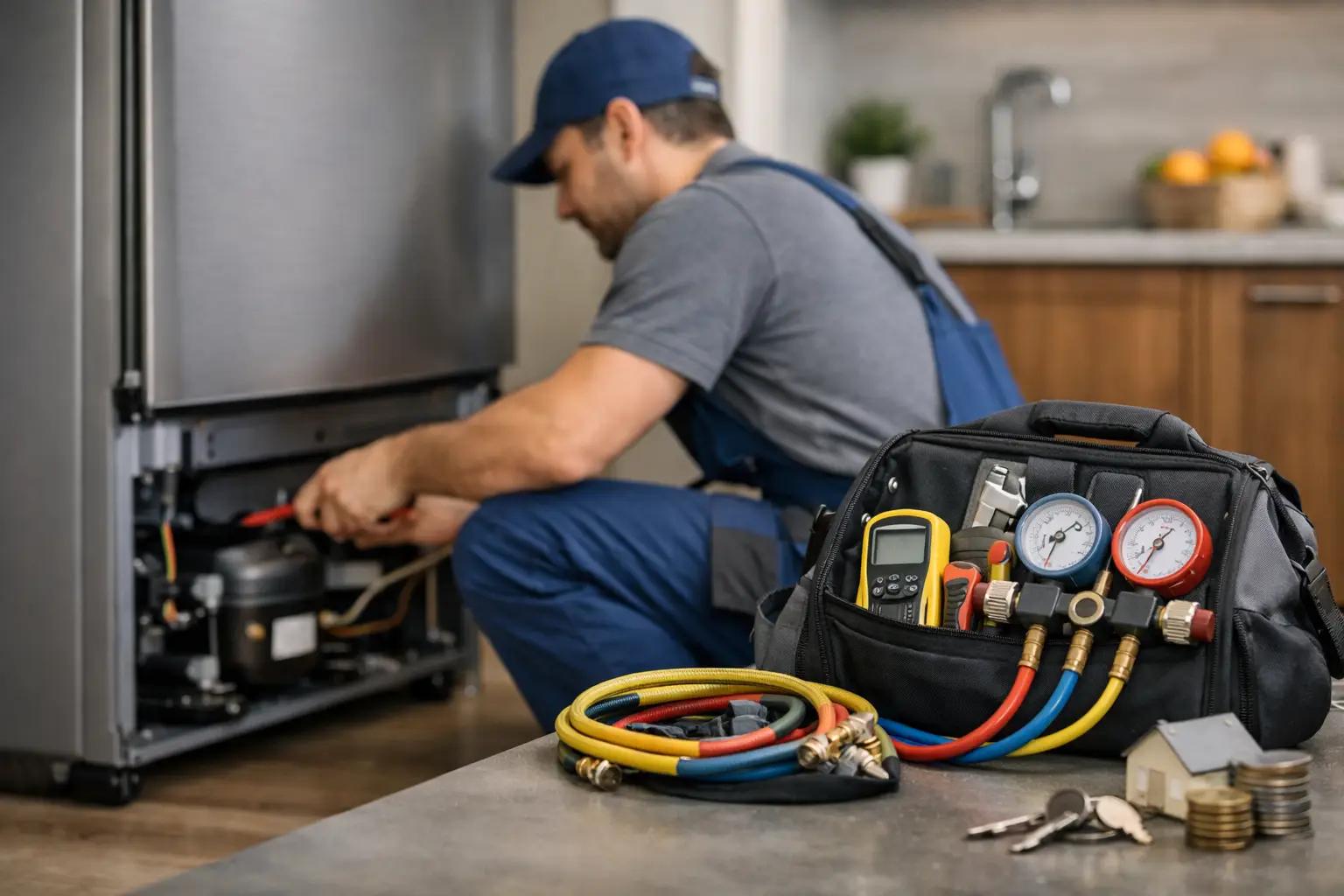
A refrigerator failure usually starts small — the milk is not staying cold, the back panel is frosting over, or there is a puddle under the crisper drawers. Then comes the question every homeowner asks right away: what is this going to cost? Understanding refrigerator repair cost up front helps you decide quickly and avoid both spoiled food and an inflated bill. At Fasteny Appliance Repair, we give homeowners across Massachusetts — from Billerica and Reading to Peabody and Waltham — clear pricing before any work begins. This guide breaks down what you are really paying for, typical costs by problem and fridge type, and when repair still makes sense.
Need it fixed instead of replaced? Book refrigerator repair in Massachusetts — same-day service across 90+ MA cities.
Refrigerator Repair Cost: What You Are Really Paying For
Every quote combines the same core elements: a diagnostic or service-call fee, the replacement part, and the labor to install it. A fair company discloses each of these up front. Because a failing fridge risks hundreds of dollars in spoiled food — the USDA and FoodSafety.gov note food is only safe for about four hours once cooling stops, as covered in their guidance on food safety when a fridge stops cooling — fast, accurate diagnosis is part of the value you are paying for.
Common Refrigerator Repair Costs by Problem
Lower-cost repairs
Door gaskets, thermostats, defrost heaters, and evaporator fans typically fall in the $150 to $250 range. These are common, fast fixes that restore cooling without major disassembly.
Mid-range repairs
Water inlet valves, defrost control boards, and ice-maker assemblies usually run $250 to $400, depending on the part and the model’s complexity.
Higher-cost repairs
Sealed-system work and compressor replacement are the priciest, often $350 to $650 or more, because they combine an expensive part with skilled labor. This is where the repair-or-replace question matters most.
What Affects Refrigerator Repair Cost the Most
Several factors move the final number: the specific part that failed, labor time and difficulty, the age and brand of the fridge, and how urgently you need the fix. Premium and built-in brands — such as Samsung, LG, Bosch, and Sub-Zero — often use proprietary parts that raise the overall refrigerator repair cost even for a similar fault. A clear diagnosis is what tells you which of these you are dealing with.
Refrigerator Repair Cost by Fridge Type
The design of your refrigerator affects both the parts and the labor involved:
- Top-freezer: The simplest layout and usually the cheapest to repair.
- Side-by-side: More components, including ice and water systems, so costs run a bit higher.
- French-door: Feature-rich and popular, with pricier electronic and dispenser parts.
- Built-in and counter-depth: The most expensive, due to proprietary parts and precise installation.
When Repair Makes Sense — and When It Does Not
If the repair costs less than half the price of a comparable new unit and your fridge is under roughly eight years old, repair is almost always the better value. When an older refrigerator faces a major sealed-system or compressor failure, replacement may win. Our guide on whether to repair or replace an appliance walks through the math, and you can compare against broader figures in our appliance repair cost guide.
How to Keep Costs from Climbing
The best protection is early action and a clear quote. Catching a cooling problem quickly prevents a small fix from becoming a spoiled-food emergency, and a company that explains its transparent pricing up front keeps surprises off your bill. For urgent failures, same-day refrigerator repair can save the contents of your fridge. You can also review the most common refrigerator problems to describe your symptom accurately.
What to Ask Before Approving a Repair
- Is the service-call fee credited toward the repair if I approve it?
- What is the full price — parts and labor — before you start?
- Is the repair backed by a warranty?
- Given my fridge’s age, is repair or replacement the better value?
Frequently Asked Questions
How much does refrigerator repair cost on average?
Most refrigerator repairs run between about $150 and $450 all-in, including the service call, parts, and labor. Minor fixes like a thermostat, fan, or door gasket sit at the low end, while sealed-system and compressor work reaches the high end. Your exact refrigerator repair cost depends on the failed part, the fridge type, and the brand.
Why is compressor repair so expensive?
The compressor is the heart of the cooling system, and replacing it involves both a costly part and skilled sealed-system labor — often $300 to $650 or more. Because of that price, compressor failure on an older fridge is one of the clearest cases where replacement may make more sense than repair.
Is it worth repairing a refrigerator or should I replace it?
A common guideline is the 50% rule: if the repair costs more than half the price of a comparable new unit and the fridge is more than about eight years old, replacement is often smarter. For newer refrigerators or minor faults, repair is almost always the better value.
Does the fridge type affect refrigerator repair cost?
Yes. Basic top-freezer models are usually cheapest to fix, while side-by-side, French-door, and built-in units have more components and proprietary parts, which raises the cost. Brand also matters — premium and built-in brands often use pricier parts.
Do you offer upfront refrigerator repair pricing across Massachusetts?
Yes. Fasteny Appliance Repair provides clear, upfront quotes for homes and businesses across Massachusetts, including Billerica, Reading, Peabody, Waltham, and Brookline. You approve the price before any work begins.
Conclusion
Knowing what refrigerator repair costs — and what drives that price — puts you in control the moment your fridge starts acting up. If your refrigerator needs attention in Billerica, Reading, Peabody, Waltham, Brookline, or anywhere across Massachusetts, request a transparent quote or visit our homepage to get started. You can also call us directly at +1 (617) 618-3311 — fast diagnosis, honest pricing, and cooling restored before your groceries pay the price.