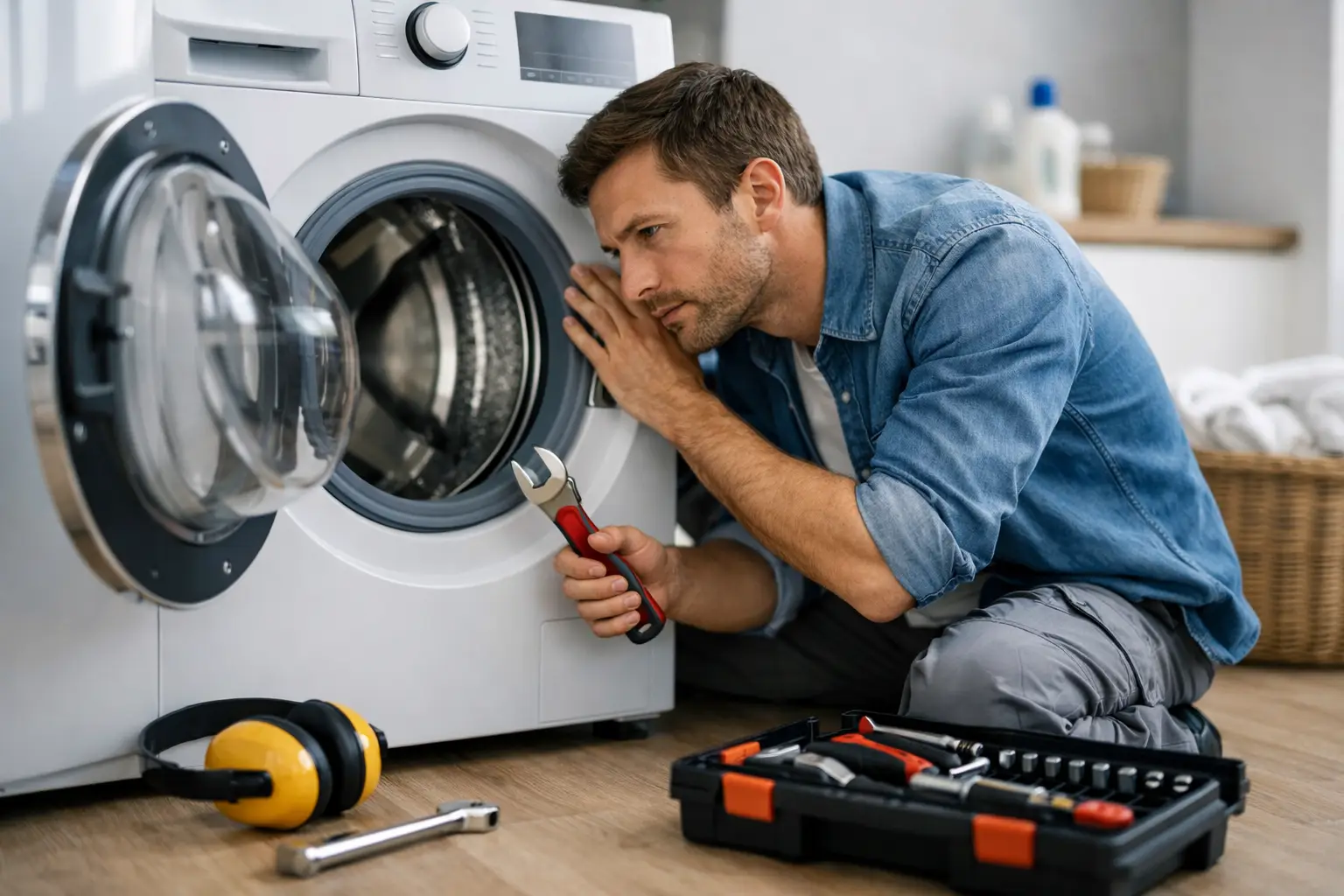
A reach-in refrigerator that will not hold temperature can put an entire prep list at risk before the lunch rush starts. This commercial kitchen equipment repair guide helps restaurant owners, café managers, and other local operators recognize what needs immediate professional service, what staff can safely check first, and how to reduce repeat breakdowns.
Commercial appliances work harder than residential units. They run longer hours, face heavier loads, and are often exposed to grease, heat, moisture, and frequent door openings. A small issue that might be inconvenient at home can become a food-safety concern, lost inventory, or a closed service line in a business kitchen.
Start With Safety and Food Protection
Before troubleshooting any commercial appliance, protect people and product. If you smell gas, see smoke, notice sparking, or find standing water near electrical equipment, stop using the unit immediately. Shut off the appropriate power or gas supply only if it is safe to do so, keep employees clear of the area, and arrange professional service.
For refrigeration problems, move temperature-sensitive food to another approved cold-storage unit as quickly as possible. Do not rely on a unit that feels cool to the touch. Use a calibrated thermometer and follow your food-safety procedures for evaluating products that may have been held outside a safe temperature range.
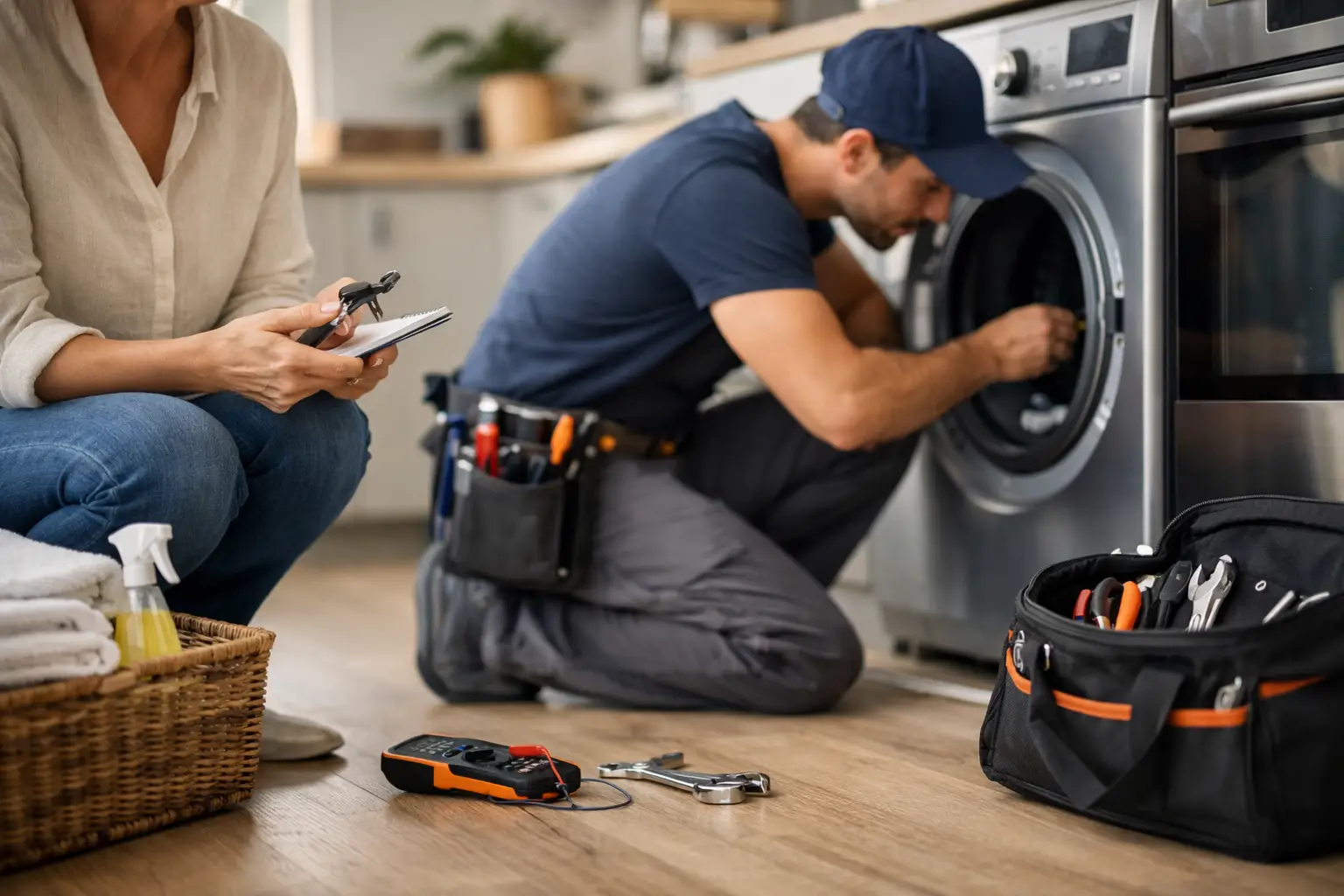
It is also wise to document the symptoms before a technician arrives. Note when the problem began, whether it is constant or intermittent, any error codes, unusual sounds, and recent changes in performance. This gives the technician a clearer starting point and can shorten the diagnostic visit.
What Your Staff Can Check Before Calling
A quick check can sometimes reveal an operational issue rather than a failed component. These checks should be limited to accessible, low-risk items. Staff should not remove electrical panels, bypass safety switches, disconnect gas lines, or attempt repairs on sealed refrigeration systems.
Confirm that the appliance has power and that the breaker has not tripped. Check that plugs are secure where applicable, but do not repeatedly reset a breaker that keeps tripping. A recurring electrical fault needs diagnosis, not another reset.
For refrigerated equipment, make sure doors close fully, gaskets are not torn or caked with debris, and boxes are not blocking interior air vents. Overloading shelves or holding doors open during a busy shift can strain cooling performance, but it should not cause a healthy unit to stop cooling entirely.
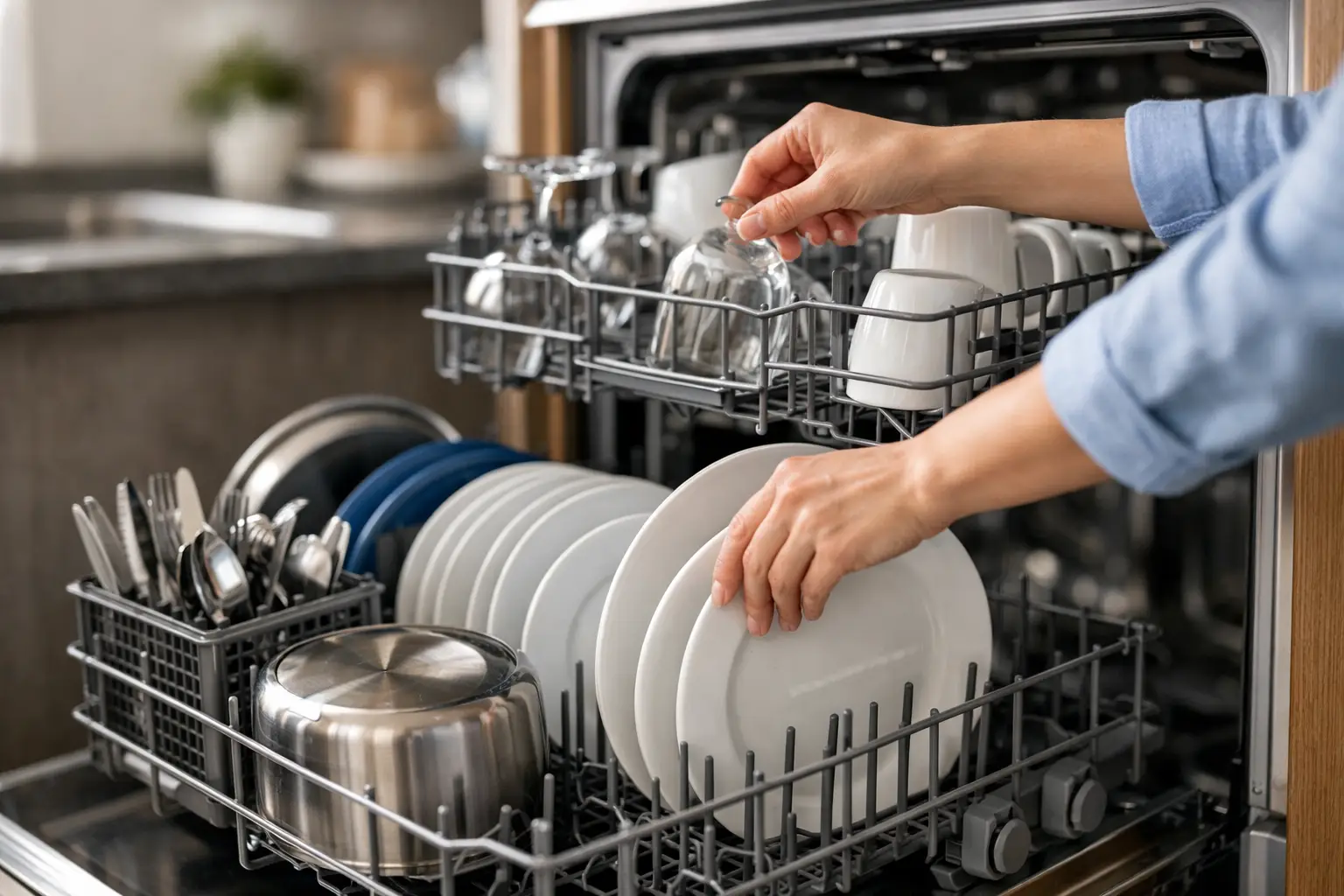
For dishwashers, inspect the accessible drain area for food scraps, labels, or other debris. Verify that the water supply valve has not been turned off and that spray arms are not visibly blocked. For ovens and cooktops, check that controls are set correctly and that no obvious spillover is interfering with burners or igniters. If a gas burner will not ignite, do not use an open flame to light it.
These checks are useful because they prevent avoidable service calls. They are not a substitute for a proper diagnosis when the unit continues to malfunction.
Refrigeration Failures Need Fast Attention
Walk-in coolers, reach-in refrigerators, freezers, prep tables, and ice machines are among the most urgent commercial repairs because they affect inventory and food safety. Warning signs include temperatures that drift upward, excessive frost, water leaking onto the floor, constant cycling, loud buzzing, or a compressor that is unusually hot.
Dirty condenser coils are a common contributor to poor performance. In a commercial kitchen, airborne grease and dust can collect quickly and restrict airflow. Regular cleaning is valuable, but it must be done according to the manufacturer’s instructions and only when the equipment is powered down. Bent coil fins, damaged wiring, refrigerant concerns, and compressor problems require a trained technician.
A unit that cycles constantly may have several possible causes: a worn door gasket, restricted airflow, a failing fan motor, a control issue, or a refrigeration-system fault. Replacing parts based on guesswork can waste time and money. Accurate temperature readings and professional testing matter more than a quick assumption.
Cooking Equipment Problems Can Disrupt the Entire Line
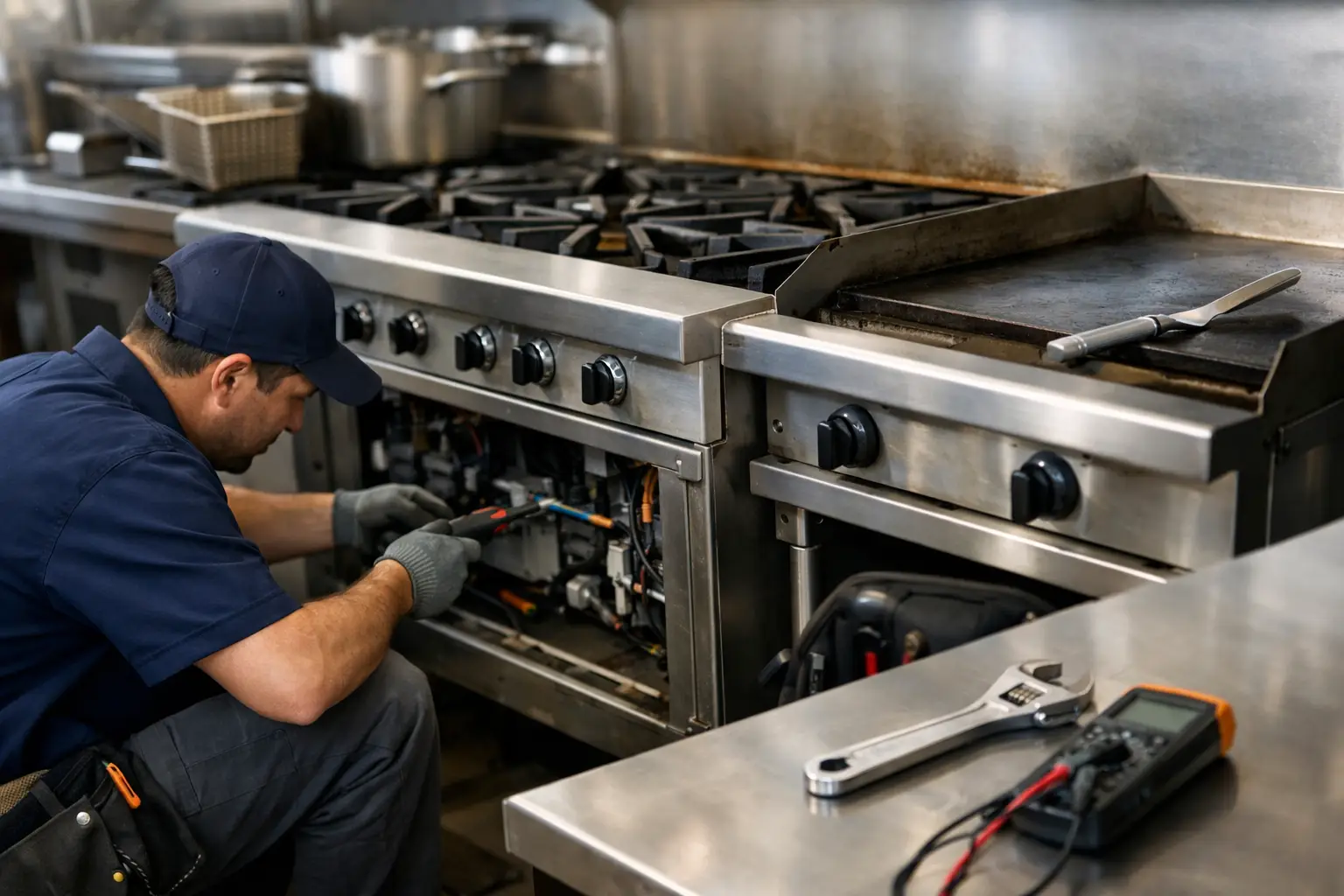
Commercial ovens, ranges, cooktops, fryers, griddles, and microwaves often show trouble through inconsistent heat. Food taking longer to cook, hot and cold zones, burners that click without lighting, an oven that overshoots its setting, or a fryer that cannot recover temperature all deserve attention.
Some causes are simple, such as a dirty burner opening or an improperly seated oven rack interfering with a door. Others involve ignition systems, thermostats, heating elements, relays, gas valves, sensors, or control boards. Those repairs should be handled by qualified professionals because gas and high-voltage electrical components create real safety risks.
Do not keep operating equipment that produces a gas odor, flames that burn yellow or unevenly, repeated ignition failures, or scorched electrical smells. Turning up the heat or restarting the appliance over and over can make the problem worse. Taking the equipment out of service early is usually less costly than waiting for a complete failure during peak hours.
Dishwasher and Water Problems Require a Different Approach
A commercial dishwasher that leaves residue, does not drain, leaks, or fails to reach the right wash or rinse temperature can create sanitation and workflow problems quickly. Start by confirming that filters and accessible strainers are clean, the drain is not visibly obstructed, and the water supply is available.
Persistent draining issues may involve a drain pump, hose restriction, float switch, or control problem. Poor wash results can come from spray-arm blockage, low water pressure, chemical dispensing problems, or insufficient water temperature. A leak may be as minor as a worn gasket or as serious as a cracked hose or failed pump seal.
Because dishwashing equipment combines water, heat, chemicals, and electrical components, avoid taking apart panels or attempting internal repairs during service. Shut the unit down if water is reaching the floor or electrical connections, then schedule service promptly.
When Repair Makes More Sense Than Replacement
The right decision depends on the appliance’s age, condition, repair history, and role in your operation. A relatively new unit with a failed fan motor, heating element, gasket, or sensor is often a strong repair candidate. These are common wear items, and a targeted repair can restore dependable performance.
Replacement may be worth considering when a unit has recurring compressor failures, major corrosion, obsolete controls, unavailable parts, or repair costs that approach the value of a comparable replacement. Energy use also matters. An older refrigerator that runs constantly can cost more over time than its repair estimate suggests.
Ask for a clear explanation of the diagnosis, the recommended repair, parts availability, and the expected cost before work begins. Honest pricing is especially valuable for small businesses that need to control downtime without paying for work they do not need.
Preventive Maintenance Is the Best Repair Strategy
The most effective commercial kitchen equipment repair guide is one that helps prevent emergency calls. Build basic equipment checks into your opening or closing routine, and assign responsibility so maintenance is not left to chance.
Keep this schedule simple and consistent:
- Check refrigerator and freezer temperatures daily and record the results.
- Clean spills, food debris, filters, and accessible drain areas as part of normal closing work.
- Inspect door gaskets, hinges, cords, and hoses weekly for visible wear.
- Keep ventilation paths clear and schedule professional cleaning and maintenance for equipment that collects grease or dust.
Train staff to report changes early. A new rattle, longer recovery time, small puddle, or temperature fluctuation is easier to address before it turns into equipment failure. Avoid using extension cords, forcing doors closed, or continuing to run an appliance that is clearly malfunctioning.
For businesses across Greater Massachusetts, Fasteny Appliance Repair can help diagnose many commercial appliance issues with the same direct approach customers expect: prompt scheduling, clear quotes, and repairs focused on getting essential equipment back in service.
The goal is not to turn your kitchen team into repair technicians. It is to give them enough awareness to protect food, avoid unsafe shortcuts, and call for help before a manageable problem becomes a costly interruption.