
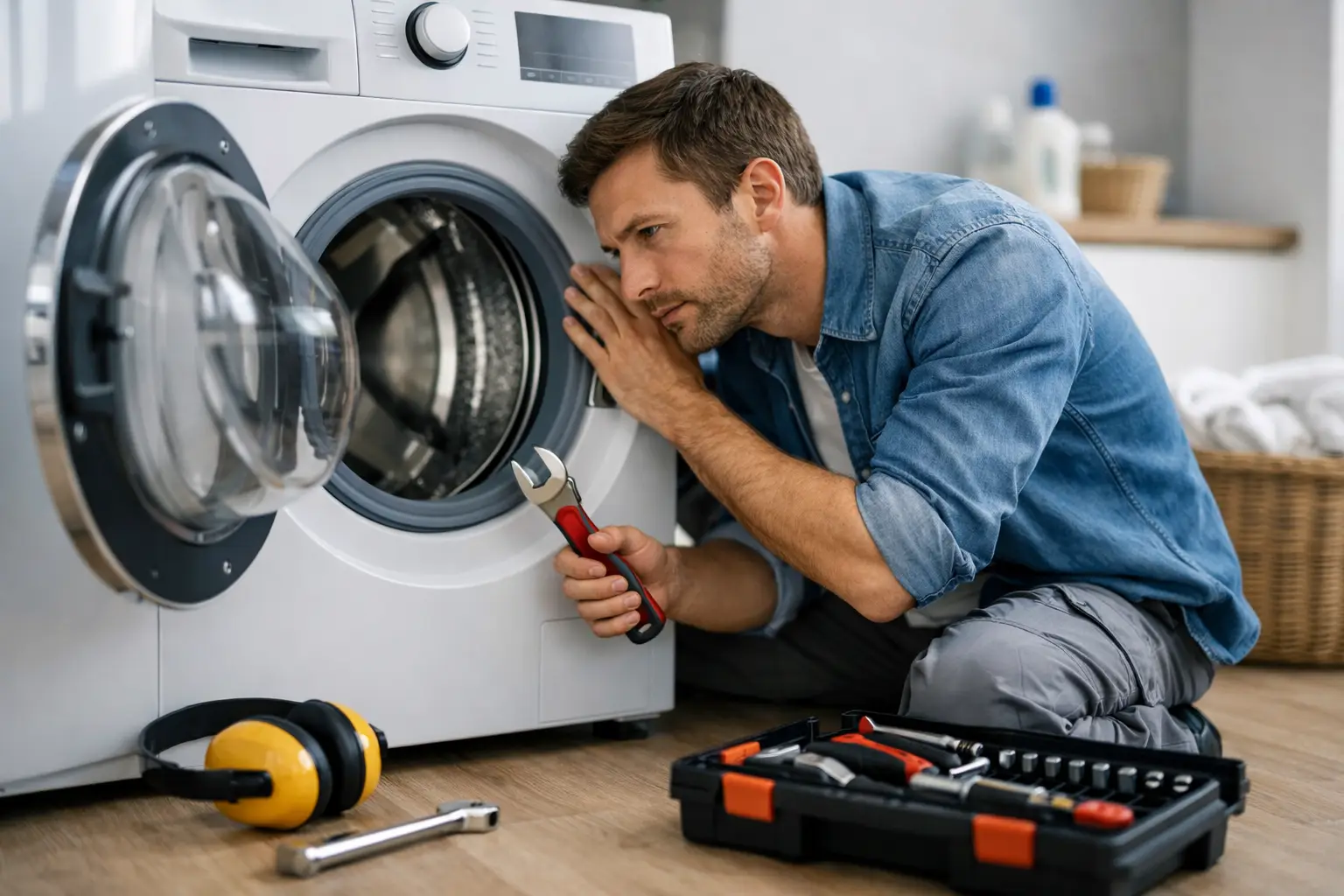
A washer that suddenly bangs through the spin cycle can make the whole house stop. A light rattle may be a quick adjustment, but grinding, screeching, or repeated thumping can point to a part that needs attention before it damages the machine or your laundry room. Knowing how to fix noisy washing machine problems starts with identifying when the sound occurs and what it sounds like.
Before inspecting anything, stop the cycle and unplug the washer. Never reach into a moving drum or attempt electrical repairs with power connected. A few safe checks can solve common noise issues, but persistent or severe sounds deserve a professional diagnosis.
At Fasteny Appliance Repair, serving Reading, Waltham, and homes across Massachusetts, we diagnose noisy washers all the time. A washing machine making noise is often telling you exactly what’s wrong, so start by matching the sound and its timing to the likely cause below.
Start With the Noise and Its Timing
Washing machines make different sounds during filling, washing, draining, and spinning. The timing helps narrow down the cause. If the noise occurs only during a high-speed spin, an unbalanced load, uneven floor, worn suspension, or a failing bearing is more likely. If it happens while water drains, look toward the drain pump or a small object caught in it.
A clicking or scraping sound during the wash portion of the cycle can come from coins, bra wires, buttons, or other items moving between the inner basket and outer tub. A loud hum with no movement may be a motor, belt, or control issue. Do not keep running cycles just to confirm the sound. Continued use can turn a manageable repair into a more expensive one.
Check the Simple Causes First
Redistribute the Load
An overloaded washer or a single bulky item can throw the drum off balance. Comforters, bath mats, sneakers, and heavy towels are common culprits, especially in a top-load washer. Pause the machine, spread items evenly around the basket, and remove a few pieces if the load is packed tightly.
If you are washing one large item, add two or three similar lightweight items to help balance it. Avoid adding heavy objects just to stop the banging. The goal is an even load, not a fuller drum.
A balanced load should reduce normal vibration. It will not correct a washer that shakes violently with ordinary laundry, which usually means there is another issue to address.
Make Sure the Washer Is Level
A washer can become unlevel after being moved, installed on an uneven surface, or gradually shifted by repeated spin cycles. Even a small tilt allows the cabinet to rock, creating loud knocking and vibration.
Press down on opposite corners of the machine. If it rocks, adjust the leveling feet according to the owner’s manual until all four feet sit firmly on the floor. A bubble level placed across the top of the washer can help confirm the adjustment. Tighten the locking nuts on adjustable feet once the machine is stable.
Do not use cardboard, towels, or loose shims under a washer. They compress, slip, and make the problem worse. If the floor itself is weak or noticeably uneven, a technician can help determine whether the installation needs a more permanent solution.
Look for Loose Items and External Contact
Check the pockets of the laundry already in the machine and inspect the space around the washer. A hose striking the wall, a detergent bottle rattling against the cabinet, or a washer pushed tightly against a dryer can create surprising noise.
For front-load washers, inspect the rubber door gasket for small items that may have fallen from a pocket. For top-load models, look beneath the agitator area only if the manufacturer’s instructions explain how to do so safely. A coin or hairpin caught in the wrong place can create a repeating metallic scrape.
What Specific Washing Machine Sounds Usually Mean
The character of the sound matters. Some noises have a relatively simple cause, while others point to parts that should be inspected by a trained appliance technician.
Loud Banging or Thumping During Spin
Banging is often caused by an unbalanced load or an unlevel machine. If those checks do not help, the washer’s suspension system may be worn. Top-load machines use suspension rods, springs, or dampening components to keep the tub steady. Front-load machines typically use shock absorbers and springs.
When these parts weaken, the tub can strike the cabinet during spin. Continuing to use the washer can loosen hoses, damage the tub, or stress the motor. This is a repair where the correct diagnosis matters because the symptoms can resemble a bearing or counterweight problem.
Grinding, Rumbling, or Roaring
A deep rumble that grows louder during spin may indicate worn tub bearings. On some washers, you may also notice side-to-side play when you gently lift the inner basket with the machine off and empty. Bearings support the spinning tub, and a damaged bearing can allow water intrusion and further internal damage.
Bearing repairs can be labor-intensive, and whether repair makes financial sense depends on the washer’s age, condition, and model. A qualified technician can identify the failed component and provide a clear quote before work begins.
Squealing or High-Pitched Screeching
A squeal may come from a worn drive belt on belt-driven models, a failing pulley, or a motor-related component. Belts can stretch, crack, or slip over time. Although replacing a belt sounds straightforward, access varies widely by model, and the underlying issue may be a worn pulley or bearing rather than the belt alone.
If the washer also smells hot or the drum struggles to spin, stop using it. Friction and an overworked motor should be addressed promptly.
Rattling or Metallic Scraping
Rattling often means a foreign object is loose inside the washer. Small metal items can lodge near the tub, pump, or filter area. On many front-load washers, the drain pump filter is accessible behind a lower panel. Check your owner’s manual before opening it, place towels nearby, and expect some water to drain out.
If the object is between the inner and outer tubs, do not force tools into the drum holes. That can damage the tub or seal. A technician can remove trapped items without creating a leak.
Humming While the Washer Will Not Drain or Spin
A low hum can mean the drain pump is blocked or failing. A washer may refuse to spin if it cannot drain water first. Check for a kinked drain hose and, if your model permits, inspect the pump filter. Do not continue restarting a washer that is full of water and humming without draining.
The cause could also be a failed pump, motor issue, lid switch, door lock, or control problem. These repairs require testing rather than guesswork.
When a DIY Fix Is Not the Right Move
Homeowners can safely correct load balance, leveling, loose hoses, and accessible debris. Beyond that, washing machines involve water lines, electrical connections, heavy components, and sharp cabinet edges. Attempting to replace bearings, shocks, belts, motors, or pumps without the proper tools can cause leaks, injury, or additional damage.
Call for professional service if the washer walks across the floor, leaks while making noise, produces a burning smell, trips a breaker, will not spin, or makes grinding sounds even when empty. These are signs that the issue is more than routine vibration.
For Greater Massachusetts homeowners and local businesses, Fasteny Appliance Repair can diagnose noisy washer problems with clear communication and fair quotes. A certified technician can identify the source of the noise, explain the repair options, and help you decide whether repair is the practical choice for your machine.
Prevent the Noise From Returning
A few habits can reduce future washer noise. Check pockets before every load, avoid cramming the drum, and wash bulky items according to the machine’s capacity guidance. Keep the washer level, leave enough clearance for hoses behind it, and clean the pump filter when your manufacturer recommends it.
Most importantly, treat a new sound as useful information. Addressing a washer when it first starts rattling, thumping, or roaring is often the simplest way to protect the appliance, your floor, and your peace of mind.
Frequently Asked Questions
Why is my washing machine making noise?
The sound points to the cause. Banging or thumping usually means an unbalanced load or an unlevel machine, grinding or rumbling often signals worn drum bearings, squealing can be a belt or pump, and rattling is frequently a loose object or coin trapped in the drum.
Is it safe to keep using a noisy washing machine?
A brief clunk between cycles is normal, but loud grinding, banging, or metal-on-metal noise means you should stop and check. Running a washer with a failing bearing or trapped object can turn a small fix into major drum or motor damage.
Why does my washer make noise during the spin cycle?
Spin-cycle noise is commonly a worn drum bearing, an unbalanced load, or an object caught between the drum and tub. Because spin runs at high speed, wear shows up loudest here; if balancing the load doesn’t help, have the bearing checked.
What does a grinding noise from my washing machine mean?
Grinding usually points to worn bearings or overloading. Maytag’s guide on a washing machine making loud noises explains the common culprits; if reducing the load doesn’t quiet it, it’s time for a technician.
How do I stop my washing machine from being so loud?
Level the machine, balance and avoid overloading, and check the drum for loose objects. If a heavy, violent shake is the main issue, our guide on a washer shaking violently covers that specific problem.
Conclusion
A washing machine making noise is usually fixable once you match the sound to its cause: balance and level the machine for thumps, and call a pro for grinding or squealing that signals worn parts. Catching it early keeps a simple bearing or belt job from becoming a drum or motor replacement. Fasteny Appliance Repair serves Billerica, Peabody, and communities across Massachusetts. Request a repair, see our washer repair services, or call +1 (617) 618-3311 to get your washer running quietly again.