A casserole that takes an extra 25 minutes, cookies that brown on one side, or a roast that never reaches a safe temperature can all point to oven temperature sensor failure. The oven may appear to be heating normally, yet the temperature inside can be far from the number shown on the display. That makes this a frustrating problem for busy households and a serious concern for anyone preparing food for customers.
The good news is that an inaccurate oven is often repairable. The key is determining whether the sensor is at fault or whether another component, such as the heating element, wiring, control board, or door seal, is producing similar symptoms.
What an Oven Temperature Sensor Does
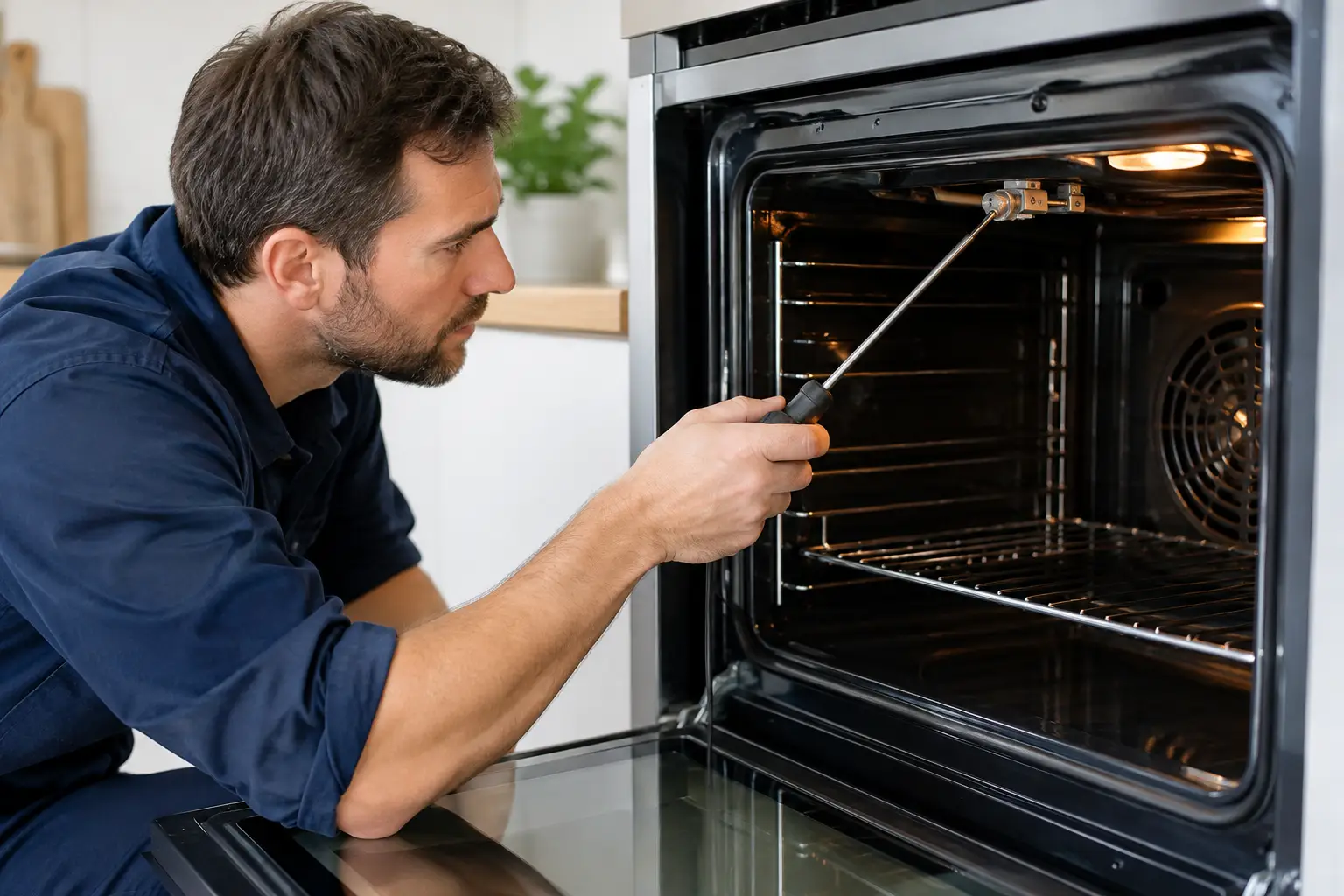
Most modern electric ovens use a small metal probe inside the oven cavity to monitor heat. It is usually mounted to the rear wall, often near an upper corner. As the oven warms up, the sensor changes its electrical resistance. The electronic control board reads that change and cycles the bake or broil element on and off to hold the selected temperature.
When the sensor sends inaccurate information, the control board makes decisions based on the wrong reading. The result can be an oven that runs too hot, too cool, or swings widely above and below the set temperature. A temperature sensor does not create heat itself. It tells the oven when to keep heating and when to stop.
Gas ovens can use a similar sensor system, though a failing igniter, gas valve, or burner assembly may also cause poor heating. That is why the symptom alone does not confirm the failed part.
Signs of Oven Temperature Sensor Failure
A failed sensor is not always a complete no-heat situation. More often, the oven heats, but it cannot maintain predictable temperatures. Watch for a pattern rather than judging the appliance by one undercooked dinner.
Food Is Consistently Overcooked or Undercooked
If trusted recipes suddenly produce different results, verify the oven temperature. Cakes that fall, bread that remains pale, or frozen foods that need far longer than the package directions can indicate that the oven is running cool. Burned edges, overly dark tops, and food that cooks much faster than expected may mean it is running hot.
One poor result can come from a changed recipe, pan material, rack position, or an overloaded oven. Repeated problems across several meals are more meaningful.
The Oven Takes Too Long to Preheat
A slow preheat can be related to a temperature sensor, especially if the oven claims it has reached the selected temperature before it actually has. However, weak bake or broil elements are also common causes in electric ovens. In many models, both elements participate in preheating, even when the oven is set to bake.
Temperature Readings Do Not Match the Setting
An oven thermometer can help reveal a major discrepancy. Place it in the center of the middle rack, allow the oven to cycle for at least 20 to 30 minutes after preheat, and observe the range rather than a single momentary reading. Normal ovens cycle above and below the set temperature. A brief rise or drop is expected; a consistent difference of 25 to 50 degrees is not.
Keep in mind that inexpensive dial thermometers can be inaccurate themselves. A technician can test the oven with calibrated equipment and determine whether the issue is truly temperature control.
Error Codes or Unusual Temperature Behavior
Some electronic ranges display an error code when the control detects an open, shorted, or out-of-range sensor circuit. The exact code varies by brand. Other ovens may keep heating after reaching the set temperature, shut off unexpectedly, or display a temperature that changes erratically.
If the oven is overheating, smoking, tripping the breaker, or showing signs of damaged wiring, stop using it. Turn the appliance off and arrange service rather than trying to force another cooking cycle.
Why an Oven Sensor Fails
Heat is hard on every part inside an oven. Over time, repeated heating and cooling can weaken the sensor, its wire connections, or the harness leading to the control board. Grease buildup, heavy impacts during cleaning, and a sensor probe that has been bent or pushed against the oven wall can also contribute to failure.
Sometimes the sensor is perfectly functional, but the connector behind the oven has corrosion or a loose terminal. A damaged wire may work intermittently as the appliance heats and expands. That can create temperature problems that seem to come and go.
The control board is another possibility. If it misreads a good sensor or fails to regulate the heating elements correctly, replacing the sensor alone will not solve the problem. This is why a professional diagnosis matters. Installing parts based only on symptoms can turn a straightforward repair into an unnecessary expense.
How a Technician Diagnoses the Problem
A proper diagnosis starts with the oven’s heating pattern. The technician checks whether the bake and broil elements are operating as expected, verifies temperature performance, and looks for visible damage to the sensor and wiring.
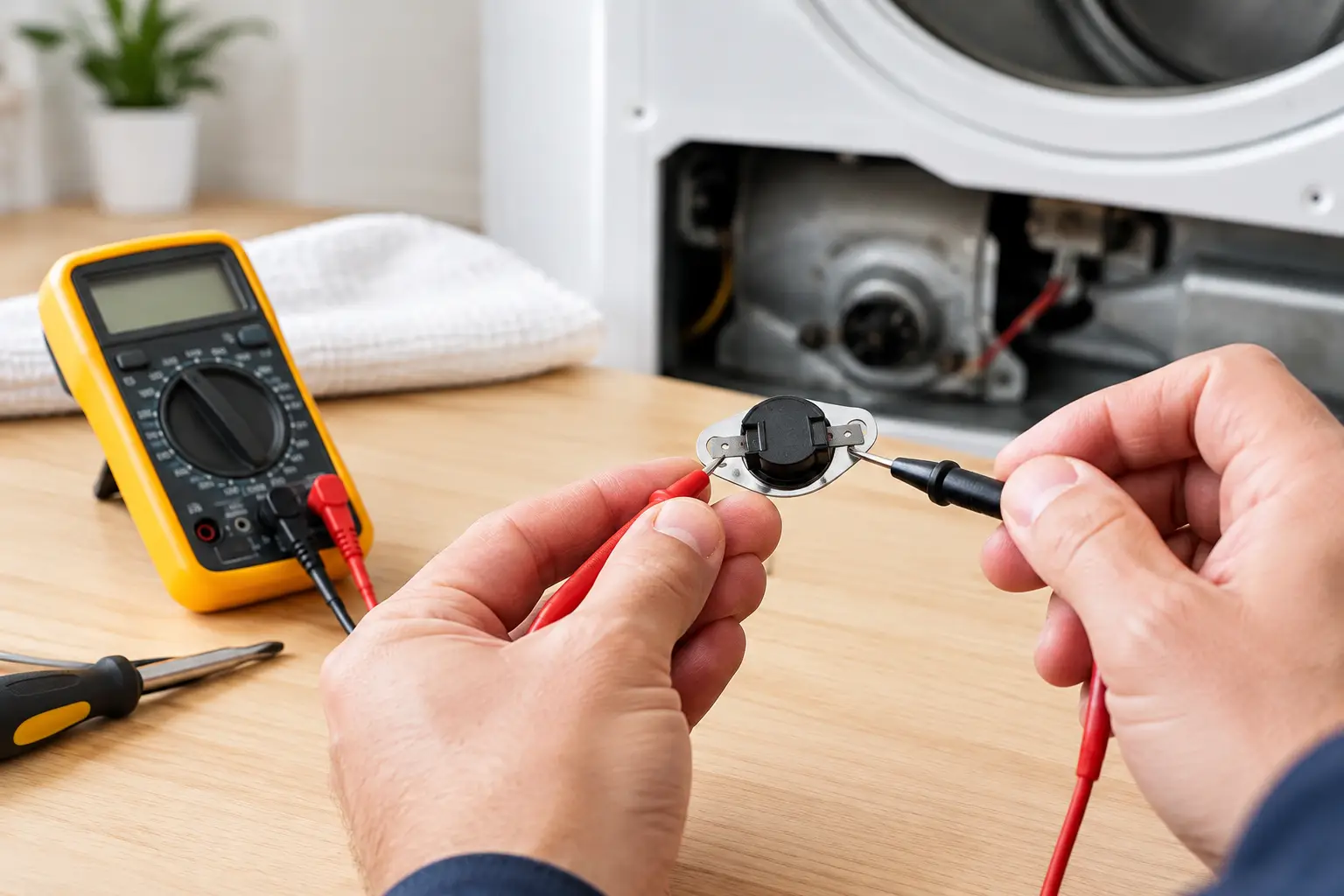
With power safely disconnected, the sensor circuit can be tested for resistance. Many oven sensors read roughly 1,080 ohms at room temperature, but acceptable values depend on the manufacturer and the temperature at the time of testing. The technician may test at the sensor itself and again from the control-board connection. Different readings can expose a wiring or connector issue.
The repair plan should follow the actual cause. A faulty sensor may need replacement. Damaged wiring may need to be repaired, and a failed control board may require replacement or, on certain models, professional board repair. For gas ovens, the technician also checks components related to ignition and burner operation before assigning blame to the sensor.
Can You Keep Using an Oven With a Bad Sensor?
It depends on the failure and how far off the temperature is. An oven that runs a little cool may seem manageable with extra cook time, but that approach is unreliable for baking and risky for foods that must reach safe internal temperatures. Poultry, casseroles, egg dishes, and reheated leftovers should not be judged by oven time alone.
An oven that overheats deserves more urgency. Excessive heat can burn food, damage cookware, stress nearby components, and create smoke. If temperatures are unpredictable, skip the temporary workarounds and have the appliance inspected.
Avoid attempting live electrical tests or removing panels while the range is connected to power. Ovens operate on high voltage, and the sensor wiring leads back to electronic controls that can be damaged by an incorrect test or installation.
Preventing Repeat Temperature Problems
No maintenance step can prevent every sensor failure, but careful use helps. Avoid spraying cleaner directly onto the sensor or soaking the rear oven wall. Do not use the sensor as a handhold when moving oven racks or cleaning the cavity. If a spill reaches the rear wall, clean it after the oven has cooled.
Use the self-clean cycle only as recommended by the manufacturer. That cycle exposes internal components to extreme heat and can reveal weaknesses in older parts. It does not automatically cause a failure, but if your oven already has erratic heating, postpone self-cleaning until the issue is resolved.
For homes and small businesses across Greater Massachusetts, Fasteny Appliance Repair can diagnose oven temperature issues with clear findings and a fair quote before repair work begins. A certified technician can identify whether the sensor is the real problem and help get your oven back to dependable cooking temperatures.
If your oven has stopped producing reliable results, do not keep guessing at rack positions and cooking times. A timely diagnosis can protect your meals, your schedule, and your confidence that the temperature on the display is the temperature your food is actually getting.