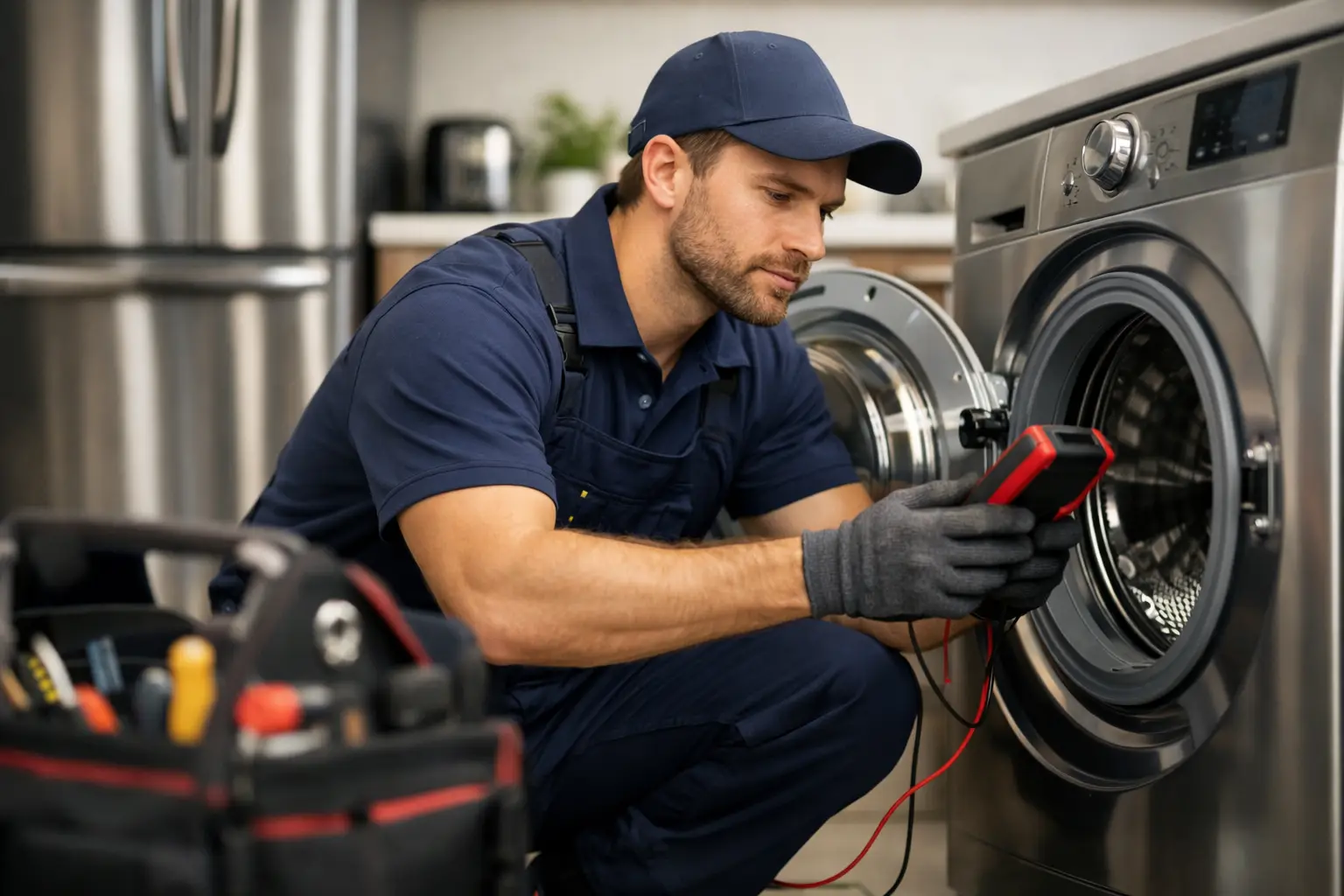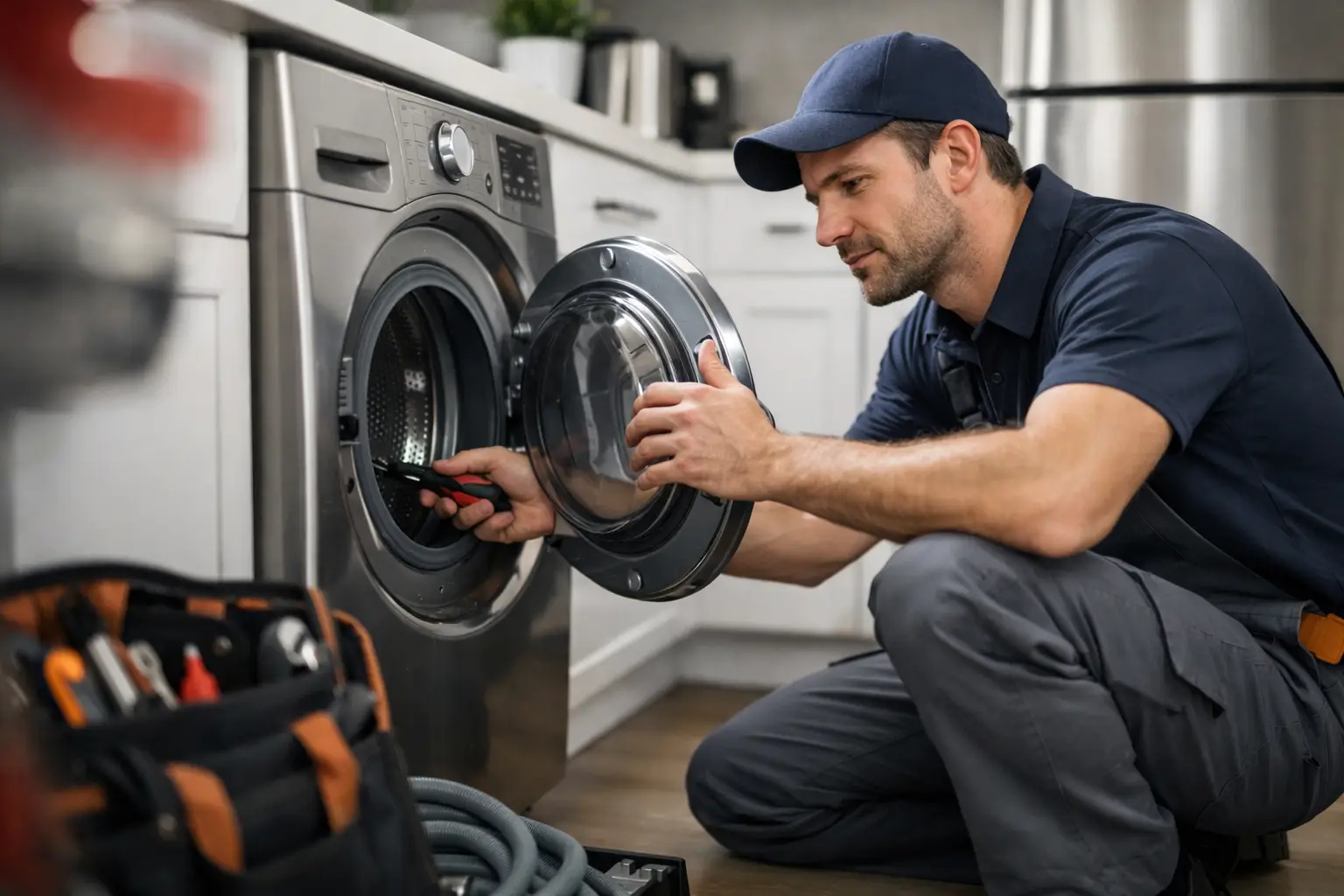
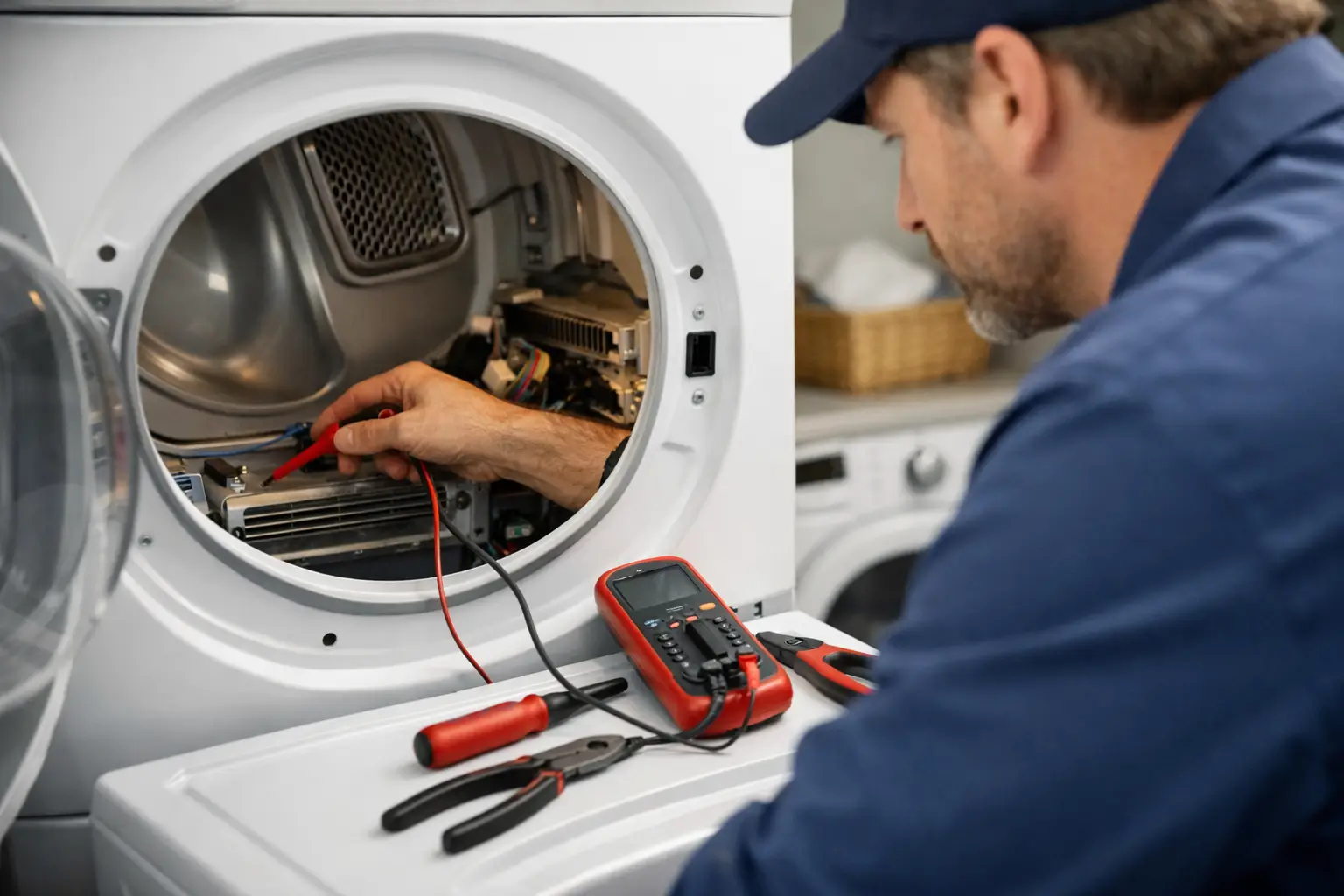
A dryer that runs but leaves clothes cold and damp usually means one thing – your routine just got harder. If you are searching for dryer not heating repair, the goal is not just finding the failed part. It is getting the appliance working again quickly, safely, and without paying for guesswork.
For homeowners and small business operators, a no-heat dryer can disrupt a full day of laundry, delay tenant turnover, or create backups in a busy property. The challenge is that several different problems can cause the same symptom. The drum may spin normally, the timer may advance, and the controls may appear fine, yet the dryer still produces little or no heat.
Dryer not heating repair starts with the right diagnosis
A dryer needs the right combination of power, airflow, and functioning heat components to dry properly. When any one of those fails, heat can drop off completely or become too weak to finish a cycle. That is why proper diagnosis matters.
In electric dryers, a heating problem may come from a failed heating element, a blown thermal fuse, a bad thermostat, or a power issue. In gas dryers, the issue may involve the igniter, gas valve coils, flame sensor, or thermal protection components. In both types, restricted venting can cause overheating, poor drying, and repeated part failures.
This is where many repairs go wrong. Replacing a visible part without confirming the full cause can lead to another breakdown soon after. A dryer that overheated because of blocked airflow may burn through a new component if the vent problem is left in place.
Common reasons a dryer runs but does not heat
The most common cause depends on the dryer type, age, and how it has been used. In homes across Massachusetts, we often see no-heat complaints tied to a small group of recurring issues.
Power supply problems
An electric dryer can sometimes run on partial power. That means the motor turns, but the heating circuit does not receive the full voltage it needs. To the homeowner, it looks like the dryer is working, just without heat. A tripped breaker, loose connection, or damaged cord can all create this situation.
This is one of the easiest issues to overlook because the machine does not appear completely dead. If the drum spins but there is no warmth at all, power should be ruled out early.
Failed heating element
In electric dryers, the heating element is a frequent failure point. Over time, the coil can break or short out. When that happens, the dryer may stop heating altogether or heat inconsistently. Some elements fail from age alone, while others fail because the dryer has been running too hot due to poor venting.
Blown thermal fuse or high-limit thermostat
These safety parts are designed to shut down heating when temperatures become unsafe. They are often the result of an underlying airflow problem rather than the root cause by themselves. If a thermal fuse blows, the dryer may stop heating or stop running entirely, depending on the model.
A professional diagnosis matters here because simply replacing the fuse is not enough if lint buildup or a crushed vent hose caused the overheating.
Gas ignition problems
On gas dryers, the machine may tumble normally but fail to ignite the burner. A weak igniter, faulty gas valve coils, or a failed flame sensor can interrupt the heating cycle. Some gas dryers heat briefly, then stop heating mid-cycle. That pattern often points to gas valve coil problems.
Blocked dryer vent
A restricted vent is one of the most common and most preventable dryer issues. When hot air cannot escape, the dryer struggles to dry clothes and may overheat internally. That can trigger safety components to shut off heat, and over time it can damage other parts.
If clothes take multiple cycles to dry, the outside of the dryer feels unusually hot, or the laundry room gets humid during use, airflow should be checked right away.
What you can safely check before scheduling dryer not heating repair
There are a few practical checks that can help you identify whether the problem is simple or needs service. Start by confirming the dryer settings. It sounds basic, but air fluff or no-heat settings can be selected by mistake, especially on newer control panels.
Next, check the lint filter and the vent path. Clean the lint screen fully, inspect the flexible vent behind the dryer for kinks, and make sure the outside vent hood opens properly when the machine runs. If airflow seems weak at the exterior vent, there may be a blockage that needs attention.
For electric dryers, look at the breaker panel. Some dryer circuits use a double breaker, and one side can trip while the other stays on. Resetting the breaker once may solve the issue if the trip was minor, but if it happens again, the electrical supply should be evaluated.
You can also pay attention to the symptoms. A dryer with no heat at all points to a different problem than a dryer that starts warm and then cools off. Those details help a technician narrow down the cause faster and reduce unnecessary part replacement.
When not to troubleshoot it yourself
Dryers involve high voltage, gas components, heating systems, and moving parts. Opening the cabinet without the right tools or experience can turn a manageable repair into a safety problem.
If you smell gas, notice scorching, hear unusual buzzing near the burner area, or see signs of melted wiring, stop using the dryer immediately. The same goes for repeated breaker trips or a dryer that shuts down mid-cycle. Those symptoms suggest a more serious fault that should be handled by a qualified technician.
Even for experienced do-it-yourself homeowners, dryer repair has trade-offs. Replacing a part may seem straightforward, but testing continuity, verifying voltage, and confirming safe operation afterward is where the real value of professional service comes in.
What professional dryer repair should include
A proper service visit should do more than swap one failed component. It should identify why the dryer stopped heating, whether any related parts were affected, and whether airflow or installation issues contributed to the breakdown.
That means checking the power supply, testing the heating system, inspecting thermostats and thermal protection parts, evaluating vent performance, and confirming the appliance heats safely after repair. On gas models, it also means verifying ignition performance and burner operation under normal cycle conditions.
Transparent pricing matters here too. Customers want a clear quote before work begins, not surprise add-ons after the dryer is already apart. A reliable local repair company should explain the issue in plain language, recommend only what is needed, and complete the repair correctly the first time whenever possible.
Why speed matters with a no-heat dryer
A broken dryer is not always an emergency in the same way as a leaking refrigerator, but it becomes urgent quickly. Families fall behind on laundry within a day or two. Rental properties and shared laundry spaces become inconvenient fast. Small businesses that rely on towels, linens, or regular fabric care can feel the impact almost immediately.
That is why same-day or next-day service makes a real difference. Fast scheduling reduces downtime, prevents customers from wasting money at laundromats, and helps avoid repeat wear from running multiple ineffective cycles on a failing machine.
For Greater Massachusetts customers, that urgency is practical. People want a technician who shows up on time, diagnoses the issue clearly, and fixes the problem without stretching the process into a weeklong hassle.
Repair or replace?
It depends on the dryer’s age, condition, and the cost of the failed component. If the dryer is otherwise in good shape and the issue is isolated to a heating element, igniter, thermostat, or fuse, repair is often the smarter value. If the appliance has multiple failing systems, major rust, drum support problems, or recurring electrical issues, replacement may be worth considering.
The right answer is not always the cheapest one upfront. A low-cost repair on a heavily worn dryer can buy only a short amount of time. On the other hand, replacing a dryer too soon can cost far more than a solid repair on a dependable machine with years of life left.
An honest technician should walk you through that trade-off instead of pushing one option automatically.
If your dryer is tumbling without heat, taking too long to dry, or shutting off before clothes are finished, the smartest next step is a professional diagnosis. Fasteny Appliance Repair helps homeowners and businesses across Greater Massachusetts get clear answers, fair quotes, and dependable dryer repairs without unnecessary delays. When the problem is handled correctly, laundry gets back to normal and so does the rest of your day.