
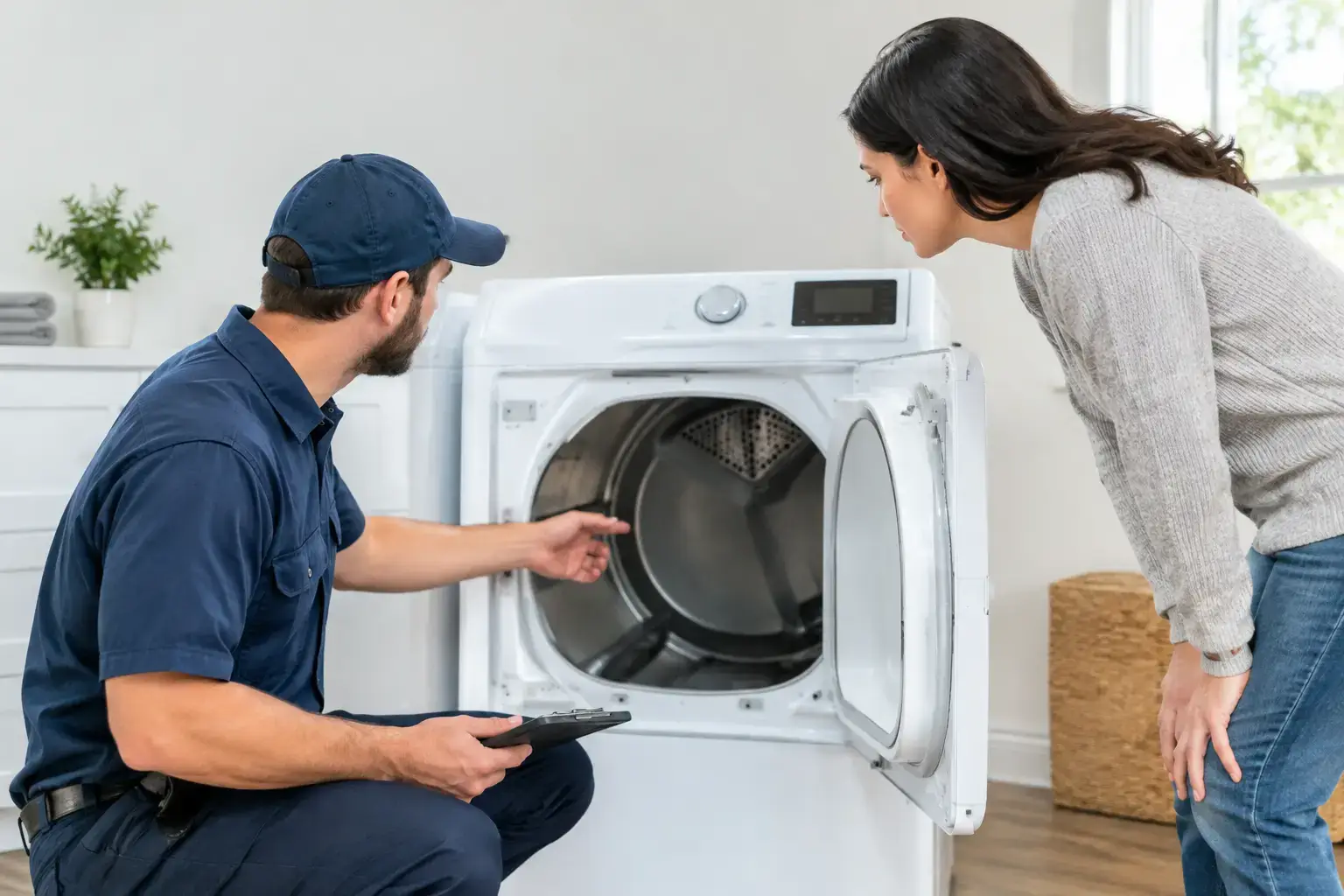
A dryer that suddenly stops heating can turn one load of laundry into a household problem fast. The right dryer repair questions help you separate a simple maintenance issue from a repair that needs a trained technician – before damp clothes, rising energy use, or a safety concern creates more disruption.
Dryer Repair Questions to Ask First
Start with the symptom, not a guess about the part. A dryer may tumble normally but produce no heat, run far too long, make a new noise, stop mid-cycle, or leave clothes unusually hot or damp. Each symptom can have several causes, and replacing a part based on a hunch often adds cost without fixing the actual problem.
The first question is: Is the dryer receiving the power or fuel it needs? For an electric dryer, a partially tripped double breaker can allow the drum to turn while preventing the heating element from operating. For a gas dryer, a closed gas valve, igniter failure, or burner problem may be involved. If you smell gas, stop using the appliance, leave the area if the smell is strong, and contact the appropriate emergency utility service. Do not try to locate or repair a gas leak yourself.
Next, ask whether airflow is restricted. A blocked vent is one of the most common explanations for long drying times and overheating. It can also be a fire risk. Clean the lint screen after every load, but remember that a clean screen does not confirm a clean vent path. Lint can build up in the duct behind the dryer, at bends in the run, and at the exterior vent hood.
Why Is My Dryer Running but Not Heating?
This is one of the most common dryer repair questions because the appliance appears to be working. The drum turns, the controls light up, and the timer may advance, yet clothes come out cold and wet.
On an electric dryer, possible causes include a failed heating element, thermal fuse, thermostat, damaged wiring, or a power supply issue. On a gas model, the cause may be an igniter, gas valve solenoid, flame sensor, or control problem. The exact diagnosis depends on the model and what happens during the cycle.
A homeowner can safely check a few basics: confirm the dryer is set to a heated cycle rather than air fluff, check the household breaker, and make sure the lint filter and exterior vent opening are clear. Beyond that, testing electrical components requires the appliance to be unplugged and the correct use of a meter. Gas dryers add another level of risk. Professional diagnosis is usually the sensible choice when basic checks do not restore heat.
Can a clogged vent cause no heat?
Sometimes, but not always. Severe vent blockage can cause overheating and trigger a safety device that interrupts heat. More often, restricted airflow causes long cycles, hot dryer surfaces, a burning smell, or laundry that is still damp after a full cycle. A technician should determine whether the root problem is the vent, a failed safety component, or both.
Why Does My Dryer Take So Long to Dry Clothes?
If one normal load now takes two or three cycles, airflow is the first place to look. Check whether the lint screen is clean, the flexible duct behind the dryer is crushed or kinked, and the outdoor vent flap opens while the dryer is running. Heavy items such as towels and bedding naturally take longer, but a clear change in performance deserves attention.
Poor airflow is not the only possibility. A weak heating element, failing gas burner, moisture sensor issue, worn blower wheel, or improperly selected cycle can also extend drying time. Overloading the drum can contribute as well, since clothes need room for warm air to move through the load.
Do not keep running extra cycles for weeks to work around the issue. That approach increases utility costs, puts more wear on the dryer, and may allow a vent-related safety problem to worsen. A proper service visit should identify the cause instead of treating slow drying as normal.
What Do New Dryer Noises Mean?
Dryers are not silent, but a sudden squeal, thump, scrape, or rumble is worth investigating. A rhythmic thump may come from a shoe, zipper, or other item in the drum, especially after drying bulky loads. If the sound continues with an empty drum, worn support rollers, a damaged belt, an idler pulley, drum glides, or a blower wheel may be responsible.
A metal-on-metal scraping sound should not be ignored. Continuing to operate the dryer can turn a manageable wear-part repair into damage to the drum or motor. Stop using the dryer if the noise is severe, the drum appears to sag, or you notice a burning odor.
It also helps to mention when the sound occurs when scheduling service. Is it only at startup, only when the drum is full, or throughout the cycle? That detail can help the technician arrive prepared to diagnose the issue efficiently.
Is It Worth Repairing an Older Dryer?
The answer depends on the machine’s age, condition, repair needed, and history. A dryer with one worn roller, a broken belt, a faulty thermostat, or a heating component issue can often be a worthwhile repair. These are common problems, and a dependable repair may extend the appliance’s useful life for years.
Replacement may make more sense when the dryer has repeated failures, significant rust or structural damage, a failing motor or control board combined with other wear, or a repair estimate that is a large share of the price of a comparable new unit. Availability of parts also matters, particularly for older or discontinued models.
An honest diagnosis should give you the information to decide, not pressure you toward the most expensive option. Ask for a clear explanation of the failed component, the repair cost, and whether the technician sees other conditions likely to cause near-term trouble. Fasteny Appliance Repair focuses on transparent quotes so Massachusetts customers can make that decision with confidence.
What Can I Check Before Calling for Dryer Repair?
A few safe checks can prevent an unnecessary visit. Make sure the dryer door closes firmly, the controls are set correctly, the lint screen is clean, and the breaker has not tripped. For dryers that will not start, check whether the child lock or control lock feature is on and whether the door switch is engaging.
Do not remove panels, bypass a door switch, reset thermal fuses repeatedly, or attempt electrical testing while the dryer is plugged in. Those shortcuts can create shock, fire, or mechanical hazards. The same caution applies to moving a heavy dryer without help, especially if the vent or gas connection could be damaged.
When you call, have the brand, model number, approximate age, and a brief description of the symptom ready. If an error code appears, write it down exactly. This makes the appointment more productive and helps set clear expectations about possible parts and repair options.
When Is Dryer Repair Urgent?
Stop using the dryer and arrange service promptly if you smell burning, see smoke, hear electrical buzzing, notice repeated breaker trips, find the exterior of the dryer extremely hot, or suspect a gas issue. These signs are not inconveniences to monitor through another load.
You should also act quickly if lint is collecting around the dryer, the room feels unusually humid during operation, or the outdoor vent produces little airflow. Those conditions can point to a restricted exhaust path. A dryer needs both heat and ventilation to operate safely.
A broken dryer rarely improves on its own. Asking focused questions early, checking the safe basics, and choosing qualified service when the cause is unclear can protect your home, your schedule, and the appliance you already own.