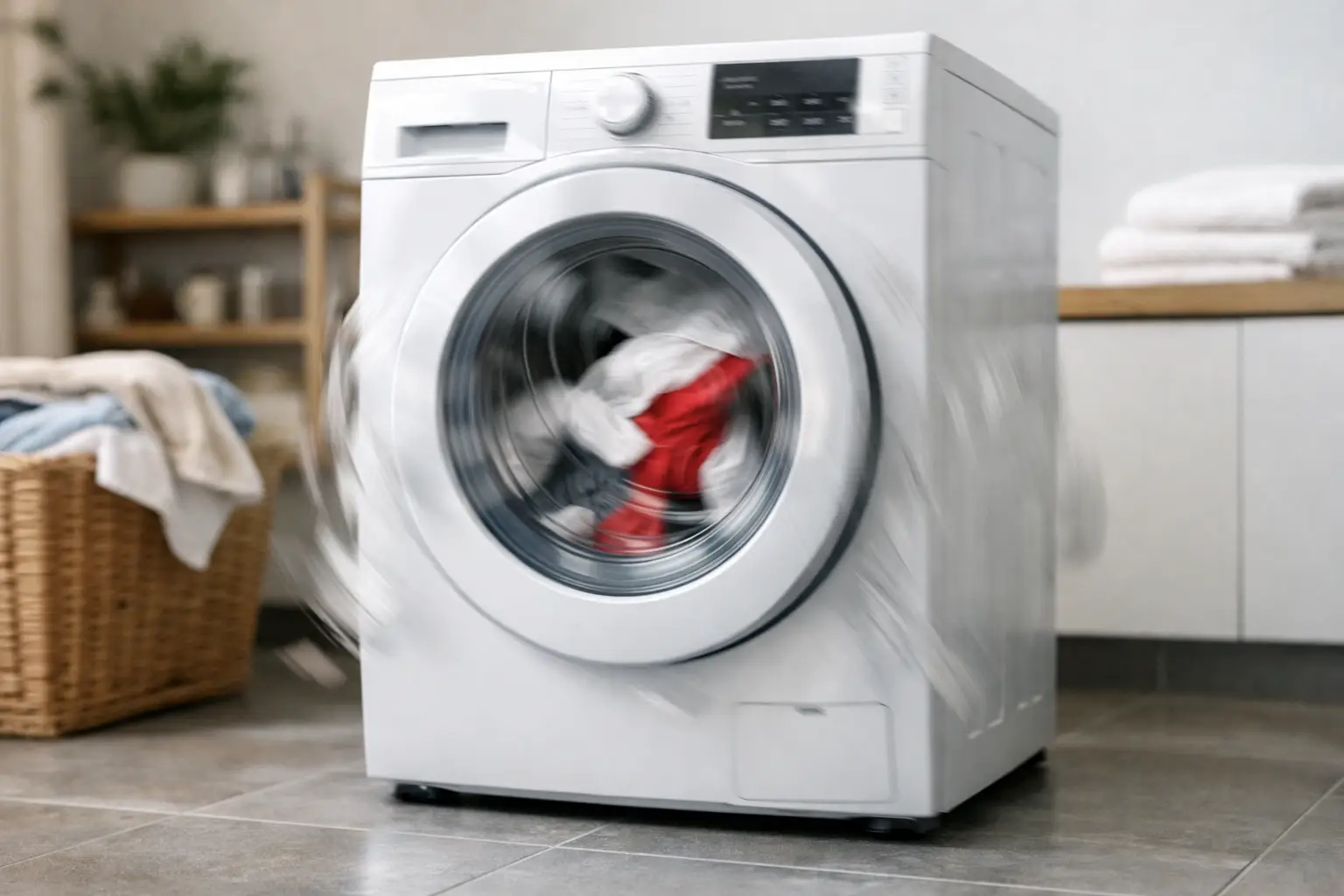
A washing machine that starts slamming, banging, or walking across the floor gets your attention fast. If you are asking why your washing machine is shaking violently, the short answer is that the machine is out of balance, unsupported, or dealing with a worn internal part. Sometimes the fix is simple, and sometimes it is a sign that running another load could make the damage worse. Fasteny Appliance Repair diagnoses shaking washers for homeowners across Billerica, Reading, and nearby Massachusetts towns.
The good news is that violent shaking usually leaves clues. The sound, the timing, and the type of load all help narrow down the cause. If your washer only shakes during the spin cycle, that points in one direction. If it rocks constantly from the start, that points in another.
Why is washer shaking violently during the spin cycle?
The spin cycle is when your washer moves the fastest, so even a small problem becomes obvious. A tub that is slightly off balance at low speed can turn into heavy banging once the drum ramps up.
One of the most common causes is an uneven load. Bulky items like comforters, bath mats, towels, and sweatshirts can bunch up on one side of the drum. When that happens, the washer cannot distribute weight evenly. The machine tries to correct itself, but if the imbalance is too severe, it will shake hard, hit the cabinet, or pause mid-cycle.
This is especially common with a single heavy item. Washing one blanket by itself may sound efficient, but it often creates a lopsided spin. Adding a couple of towels to help balance the load can sometimes reduce that problem.
Another frequent issue is leveling. Washers need a stable, flat surface with all four feet firmly contacting the floor. If one foot is slightly raised or the floor is uneven, the machine will wobble more as speed increases. That wobble can quickly become violent shaking.
Simple things you can check first
Before assuming the washer needs a repair, start with the basics. Open the drum and look at the load. If everything is packed tightly to one side, redistribute the items and run a drain and spin cycle again. If the washer is overloaded, remove a few pieces and try again.
Next, check whether the washer feels steady when it is off. Press gently on the top corners. If it rocks, the leveling legs may need adjustment. LG’s guide to washer vibration issues notes that a machine must sit level on a solid floor to spin without excess movement, so this simple check solves many cases. Many homeowners never realize the machine has shifted slightly over time, especially after repeated heavy loads.
Also look at the floor underneath. A washer installed on weak flooring, slick tile, or an uneven basement surface can shake more than it should. Even a properly working washer can become noisy and unstable if the floor flexes during spin.
If the machine is new, one more possibility stands out: shipping bolts. Front-load washers are often shipped with bolts that lock the tub in place for transport. If those bolts were not removed during installation, the washer can shake violently almost immediately. This is a serious setup issue, not normal break-in behavior.
Common mechanical reasons a washer shakes hard
If balancing the load and checking the level do not solve the problem, worn or damaged parts become more likely. This is where the answer to why is washer shaking violently shifts from a user issue to a repair issue.
Worn shock absorbers or dampers
Many front-load washers use shock absorbers to control tub movement. When these wear out, the tub can bounce too freely during spin. That often causes repeated thumping, cabinet banging, and strong vibration that gets worse over time.
A washer with bad shocks may still complete cycles, but it will not do so smoothly. In many cases, customers notice the machine getting progressively louder for weeks before the shaking becomes severe.
Suspension rods on top-load washers
Top-load models often rely on suspension rods to keep the tub centered. If one rod weakens or breaks, the tub can lean and swing more than it should. That creates a sharp off-balance motion, especially with medium or heavy loads.
This kind of problem can be easy to mistake for simple load imbalance at first. The difference is consistency. If the washer shakes with many different loads, not just bulky ones, the suspension system deserves a closer look.
Worn tub bearings
Tub bearings help the drum spin smoothly. When they begin to fail, the washer may produce a roaring noise along with heavy vibration. Bearing problems tend to worsen steadily and can eventually lead to major internal damage if ignored.
This is not usually a do-it-yourself fix for the average homeowner. It often requires deep disassembly and model-specific parts.
Broken or loose counterweights
Some washers use concrete or weighted blocks to stabilize the tub. If a counterweight cracks or comes loose, the washer can shake aggressively and make a deep knocking sound. Because these parts help manage force during high-speed spin, a damaged counterweight can create immediate instability.
Worn drive components
In some cases, the problem is connected to the drive system, such as a worn belt, pulley issue, or damaged motor coupling. These parts do not always cause shaking on their own, but if the drum is not turning properly or is jerking unevenly, vibration can follow.
Front-load vs. top-load washer shaking
The type of washer matters. Front-load washers naturally spin faster and can feel more forceful, especially on upper floors or older framing. Some vibration is normal. Violent shaking is not.
Top-load washers are often more sensitive to uneven loads. A few towels twisted to one side can be enough to trigger loud banging. Front-load machines, on the other hand, more commonly show issues tied to shipping bolts, shock absorbers, or installation problems.
That is why the same symptom does not always point to the same repair. It depends on the washer design, age, and what the machine is doing when the shaking starts.
When shaking means you should stop using the washer
If the washer is moving across the floor, slamming the walls, or making metal-on-metal noises, stop the cycle. Continuing to run it can damage the cabinet, drum, hoses, flooring, or nearby appliances.
Leaks are another warning sign. A violently shaking washer can loosen hose connections or stress the door seal. If you see water on the floor along with strong vibration, it is best not to keep testing it.
The same goes for a burning smell or repeated cycle failures. Those signs suggest the machine is struggling beyond a simple balance issue.
What you can do safely and what is better left to a technician
It is reasonable to rebalance a load, adjust leveling legs, and confirm that a new washer had its shipping bolts removed. Those are safe first steps and often solve the issue.
If the shaking continues after those checks, the cause is usually internal, and professional washer repair in Peabody, Waltham, or Brookline is the safer route than running the machine while guessing.
What is not as simple is opening the machine to diagnose suspension parts, bearings, counterweights, or drive components. Modern washers pack a lot of moving parts into a tight cabinet. A wrong diagnosis can waste time and money, and running the machine while guessing can make a repair more expensive.
A professional diagnosis is especially helpful when the shaking is intermittent. Some washers behave normally with light loads and fail only under heavier spin speeds. That can make the problem hard to pin down without testing and experience.
For homeowners and small business operators, speed matters too. If a rental unit laundry setup or back-room washer is out of service, waiting too long can create bigger headaches than the repair itself. In those cases, getting a clear diagnosis quickly is usually the most cost-effective move.
How to reduce future washer vibration
A few habits can help prevent the problem from returning. Avoid stuffing the drum past capacity, and do not wash single bulky items without balancing them with smaller pieces. Make sure the washer remains level, especially if it has been moved or if the floor settles over time. Our washing machine maintenance guide covers the routine checks that keep vibration and other problems from building up.
It also helps to pay attention to early warning signs. A little extra banging, a new rattling sound, or stronger-than-usual vibration during spin often shows up before a major failure. Catching it early can mean a smaller repair and less downtime.
If you are still wondering why is washer shaking violently after checking the obvious causes, the machine is telling you something is no longer working the way it should. A washer should spin with control, not force you to stand nearby in case it takes off across the room. When the shaking goes beyond a one-time load issue, getting it diagnosed promptly is the best way to protect the appliance and get your laundry routine back to normal.
Frequently Asked Questions
Why is my washing machine shaking violently during the spin cycle?
The most common cause is an unbalanced load, but violent spin-cycle shaking also points to worn shock absorbers, failing suspension rods, bad tub bearings, or loose counterweights. Start by redistributing the load and checking that the machine is level before assuming a part has failed.
How do I stop my washing machine from shaking?
First redistribute or reduce the load, then confirm the washer is level by pressing on the top corners and adjusting the leveling feet if it rocks. On a new machine, make sure the shipping bolts were removed. If it still shakes hard after these steps, an internal part likely needs professional repair.
Is it safe to keep using a washer that shakes violently?
No. Running a washer that shakes hard can damage the tub, bearings, and surrounding parts, and a machine that walks can pull hoses loose and cause leaks. Stop using it and have it checked if the shaking is severe or getting worse.
Can an unbalanced load really make a washing machine shake that much?
Yes. A single heavy item like a comforter, or laundry bunched to one side, throws the drum off balance and creates dramatic shaking during spin. Pausing the cycle and spreading the load evenly often fixes it immediately.
When should I call a professional about a shaking washing machine?
Call a technician if the shaking continues after you level the machine and balance the load, or if you hear grinding, knocking, or see movement severe enough to move the washer. Homeowners in Billerica, Reading, and across Massachusetts can have Fasteny Appliance Repair diagnose suspension, bearing, and counterweight problems.
Conclusion
A washing machine shaking violently is usually trying to tell you something, whether it is a load pushed to one side, a machine that has drifted out of level, or a worn suspension or bearing that needs replacing. Start with the safe checks, balance the load, and confirm the machine is level and solid on the floor. If the shaking persists, do not keep running it.
Whether you are in Billerica, Reading, Peabody, or Waltham, Fasteny Appliance Repair can find the cause and steady your washer again across Massachusetts. Request service online or call (617) 618-3311 before a shaking washer turns into a bigger repair.