You open the refrigerator for milk or leftovers and the air inside feels wrong right away — but the freezer is still rock solid. If you are asking why your fridge is warm but the freezer is cold, the good news is that this specific pattern usually points to a fixable airflow problem, not a dead appliance. At Fasteny Appliance Repair, we diagnose cooling issues for homes across Massachusetts — from Billerica and Reading to Peabody and Waltham. This guide explains the common causes, what you can safely check yourself, and when to call a technician.
Why Is My Fridge Warm but the Freezer Cold?
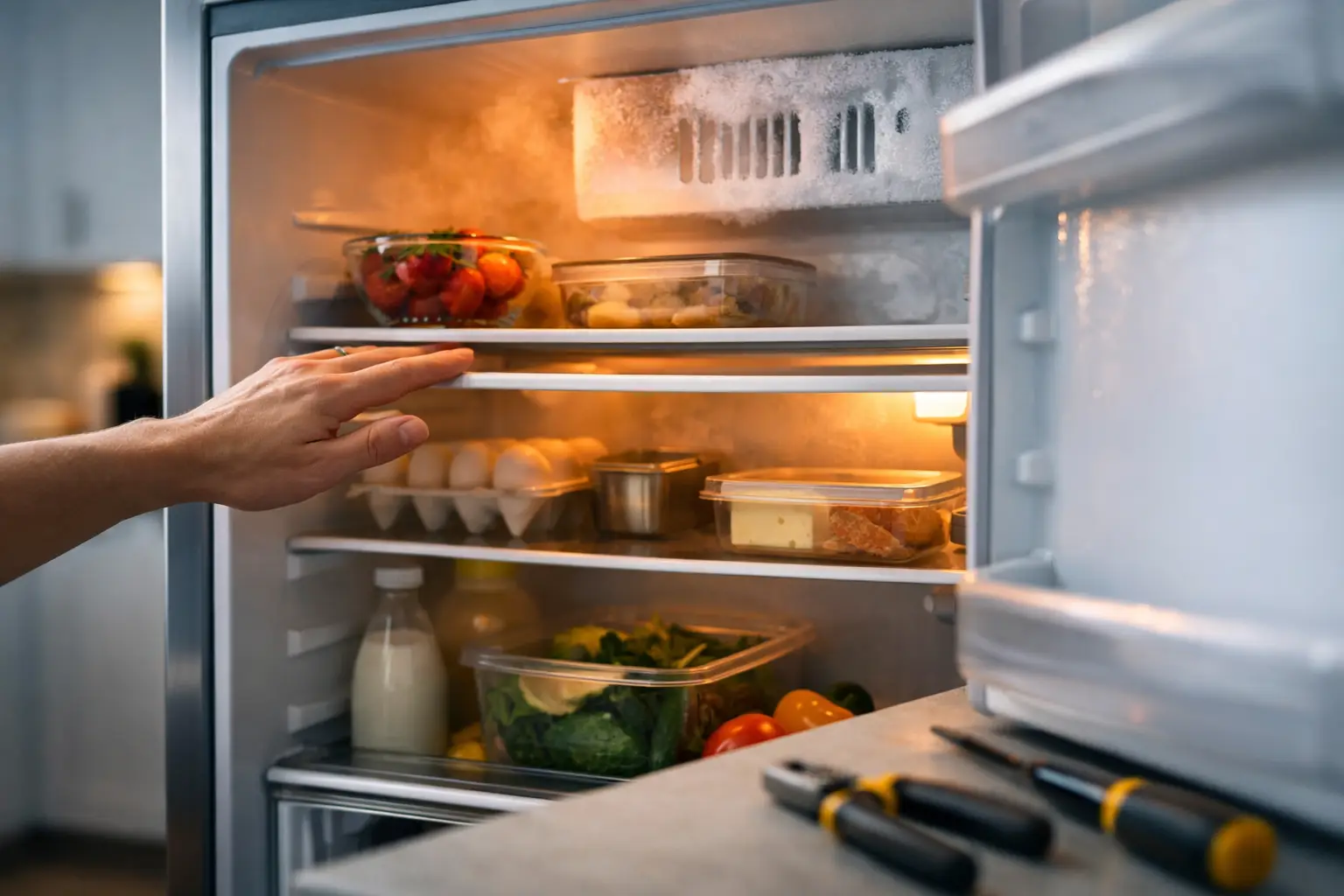
In most modern refrigerators, the freezer cools first and then cold air is circulated up into the fridge compartment by a fan. That design is exactly why you can end up with a freezer cold but fridge warm: if the airflow or defrost system fails, the freezer keeps freezing while the fridge slowly warms. Understanding this split is the key to diagnosing the problem correctly.
The Most Common Reasons a Fridge Gets Warm
Failed evaporator fan
The fan that pushes cold air from the freezer into the fridge is the number-one cause. If it stops, the freezer stays cold but the fridge warms up fast.
Frosted-over defrost system
A failed defrost heater, timer, or sensor lets frost build on the evaporator coils, blocking airflow until the fridge can no longer stay cold.
Stuck air damper
The damper controls how much cold air reaches the fridge. If it sticks shut, the compartment warms even though the freezer is fine.
Dirty condenser coils
Coils caked in dust make the whole system work harder and cool less efficiently — a common, easily overlooked cause.
Faulty thermostat or control board
A failing temperature sensor or main control board can misread conditions and stop calling for cooling in the fridge section.
What You Can Check Before Calling for Service
A few safe checks can save a service visit:
- Confirm the temperature setting has not been bumped or reset.
- Make sure interior vents are not blocked by tall containers or packed food.
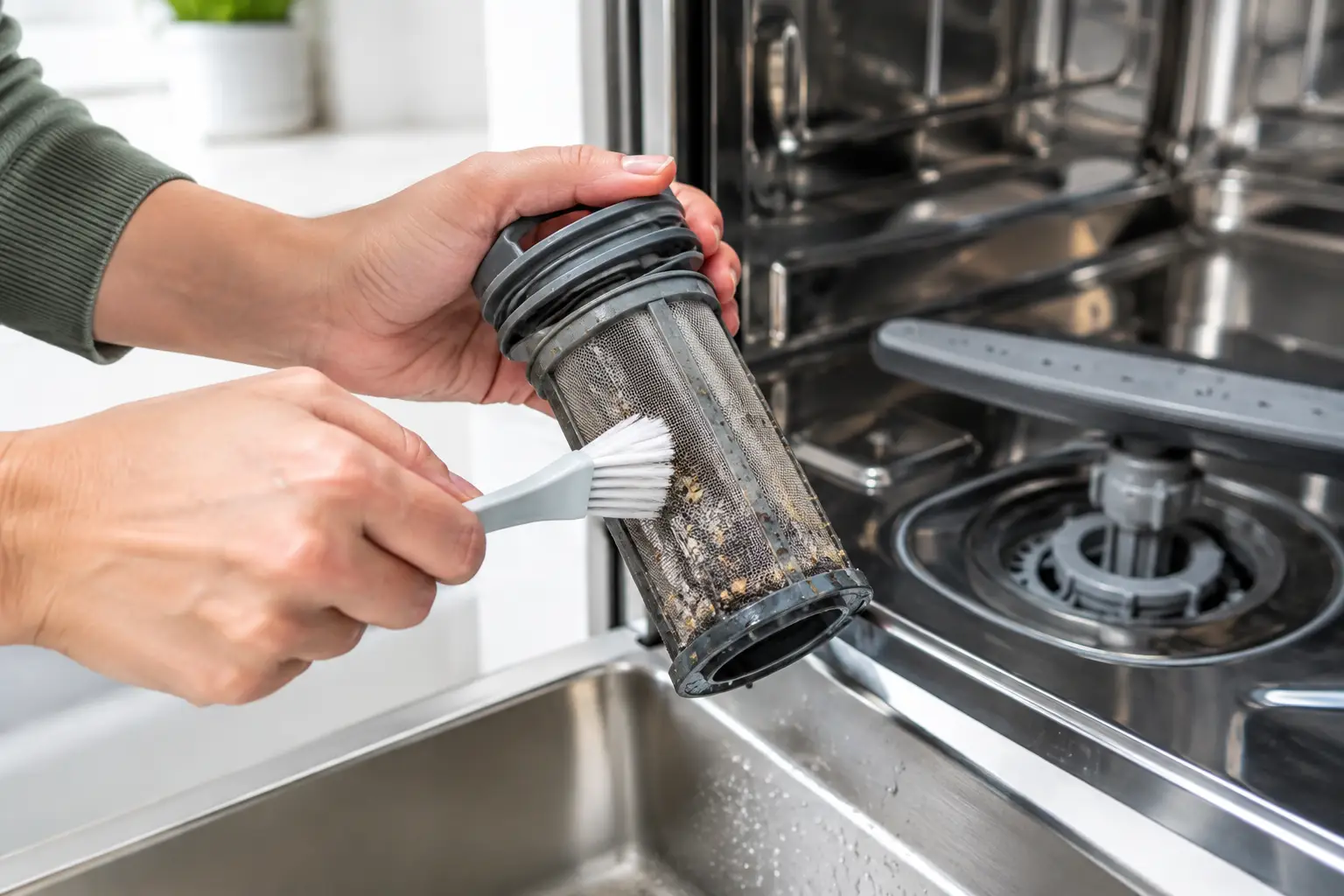
- Vacuum the condenser coils underneath or behind the unit.
- Listen for the evaporator fan running when the doors are closed (press the door switch).
Why Is My Fridge Warm After a Power Outage or Move?
If the warmth follows a power outage or a recent move, give the fridge up to 24 hours to stabilize before assuming a fault — compressors need time to recover, and a unit laid on its side needs to settle. After a power outage, food safety comes first: the FDA advises keeping the fridge at or below 40°F, and discarding perishables held above that temperature for more than two hours.
When a Warm Fridge Becomes Urgent
Once the interior climbs above 40°F, perishable food enters the bacterial danger zone. If checks do not restore cooling within a few hours, treat it as urgent — same-day refrigerator repair can save both the appliance and the contents. You can also review the full range of common refrigerator problems to describe your symptom accurately.
Signs You Should Skip DIY and Call a Technician
Call a professional if you see frost rebuilding after you clear it, hear the compressor short-cycling, or find the fridge still warm after a full day. These point to internal faults — a certified technician’s training matters here, as we explain in why certified repair technicians matter. Our refrigerator repair service covers every major brand, including Samsung, LG, Whirlpool, and GE.
What to Expect from a Proper Diagnosis
A good technician tests the fan, defrost components, damper, and control board rather than guessing, then quotes the full price before starting — see how to choose a diagnostic service and what a repair typically costs in our refrigerator repair cost guide. Clear, transparent pricing means no surprises on the bill.
Frequently Asked Questions
Why is my fridge warm but the freezer still cold?
This is the most common refrigerator complaint, and it usually points to airflow, not a total failure. In most modern fridges the freezer cools first and air is then circulated to the fridge compartment. If the evaporator fan, defrost system, or air damper fails, the freezer stays cold while the fridge warms up. It is often a repairable fault rather than a dead appliance.
What are the most common causes of a warm refrigerator?
The usual culprits are a failed evaporator fan, a frosted-over defrost system, a stuck air damper, dirty condenser coils, or a faulty thermostat or control board. Each restricts cooling or airflow in a different way, which is why an accurate diagnosis matters before replacing parts.
How cold should my refrigerator be?
The FDA recommends keeping your refrigerator at or below 40°F and the freezer at 0°F. Above 40°F, perishable food enters the danger zone where bacteria multiply quickly, so a warm fridge is a food-safety issue, not just an inconvenience.
Can I fix a warm fridge myself?
A few checks are safe: confirm the temperature setting, make sure vents inside are not blocked by food, clean the condenser coils, and give it 24 hours after a power outage or move. If it is still warm, the cause is usually an internal component that needs a technician.
Do you repair warm refrigerators across Massachusetts?
Yes. Fasteny Appliance Repair diagnoses and fixes cooling problems for homes and businesses across Massachusetts, including Billerica, Reading, Peabody, Waltham, and Brookline, with upfront pricing before any work begins.
Conclusion
A fridge that is warm while the freezer stays cold is usually an airflow or defrost problem — often repairable and rarely a reason to replace the whole appliance. If your refrigerator needs attention in Billerica, Reading, Peabody, Waltham, Brookline, or anywhere across Massachusetts, request a service visit or visit our homepage to get started. You can also call us directly at +1 (617) 618-3311 — fast diagnosis, honest pricing, and your fridge cooling properly again.