A refrigerator that suddenly runs all night, a washer that leaves water on the floor, or an oven that takes twice as long to heat can throw off an entire household. The top appliance repair warning signs are often easy to spot, but waiting to address them can turn a manageable repair into a larger expense, food loss, water damage, or a safety concern. Fasteny Appliance Repair helps homeowners across Billerica, Reading, and nearby Massachusetts towns catch these problems early.
Most appliances do not fail without giving some indication that something is wrong. Paying attention to changes in performance, sounds, smells, and utility use can help you decide when to schedule professional service. Here are the warning signs that deserve prompt attention.
Top Appliance Repair Warning Signs You Should Not Ignore
New, loud, or repeated noises
Appliances make normal operating sounds. Refrigerators hum, dishwashers swish, and dryers tumble. What is not normal is a sound that is new, unusually loud, or happens repeatedly during every cycle.
Grinding from a washer may point to a worn bearing, motor issue, or a foreign object caught where it should not be. A dryer that squeals or thumps may have worn rollers, a damaged belt, or a failing idler pulley. Clicking from a refrigerator can be related to the compressor relay, while loud buzzing may signal a problem with the fan, ice maker, or compressor.
Do not assume a noisy appliance will simply settle down. Some noises are minor, but others indicate moving parts are wearing against each other. Continued use can create additional damage and raise the final repair cost.
Leaks, puddles, or unexplained moisture
Water around an appliance is a clear reason to act quickly. A small puddle beneath a dishwasher, refrigerator, washer, or ice maker may come from a loose hose, worn door seal, clogged drain, damaged inlet valve, or cracked internal component. The source is not always visible from the outside.
A washer leak can damage flooring, walls, and nearby belongings in a single cycle. Dishwasher leaks can spread slowly beneath cabinets, where they may go unnoticed until the subfloor is affected. Refrigerators can also create moisture problems when a defrost drain is blocked or a water line is failing.
Turn off the appliance if water is reaching an electrical connection or pooling heavily. Then shut off the water supply when possible and arrange for a diagnosis. Towels can control the immediate mess, but they do not solve the cause.
Burning smells, smoke, or hot electrical odors
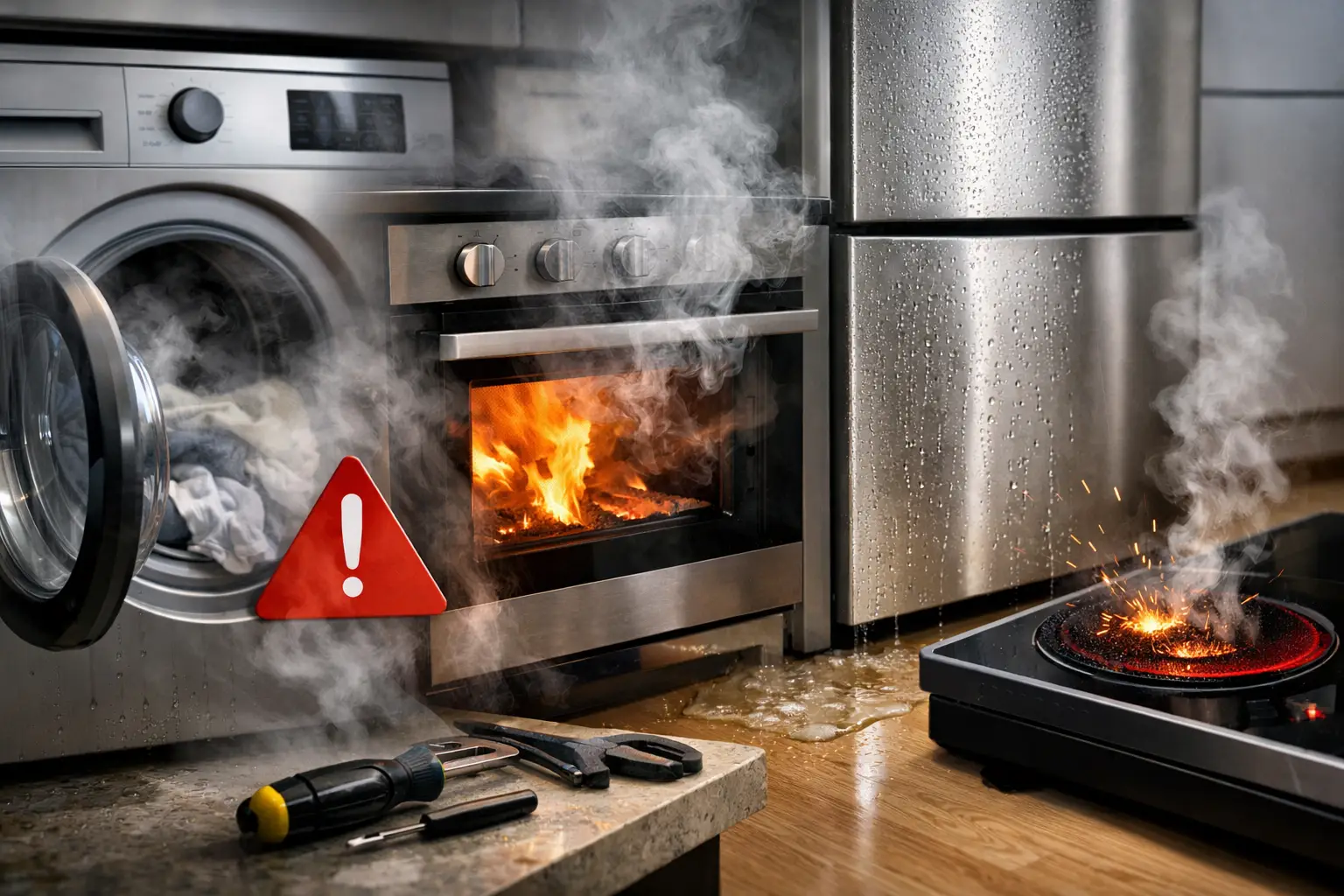
A burning smell is one of the most urgent appliance warning signs. It can come from overheating wiring, a failing motor, a damaged control board, a worn belt, or lint buildup in a dryer. Smoke, sparks, or a strong odor like melting plastic requires immediate action. The Electrical Safety Foundation lists overheating appliances and worn wiring among the leading causes of home electrical fires, so a burning smell is never something to wait out.
Stop using the appliance and disconnect power if it is safe to do so. Do not keep testing it to see whether the smell returns. For a gas range or oven, a persistent gas odor is also an emergency concern. Leave the area, avoid creating a spark, and contact the appropriate emergency utility service before scheduling appliance repair.
A brief smell from a brand-new oven during initial use can be normal as manufacturing residues burn off. A new odor from an appliance that has been in service for months or years is different and should be treated seriously.
Poor heating, cooling, or drying performance
When an appliance still turns on but no longer does its main job, repair is often more cost-effective than replacing it. A refrigerator that is warm inside, a freezer with soft food, an oven that bakes unevenly, or a dryer that leaves clothes damp all need attention.
With refrigerators, check the temperature first. The refrigerator compartment should generally stay at or below 40°F, and the freezer should remain at 0°F. If food is warming, move perishables to another safe location while you arrange service. Cleaning accessible condenser dust may help in some cases, but it will not fix a bad fan, sealed-system issue, or failing compressor component.
Dryers deserve particular caution. A cycle that takes much longer than usual may be caused by a blocked vent, restricted airflow, heating element problem, or failing thermostat. Clean the lint screen after every load, but do not assume that is enough. A clogged vent can create a fire risk and should be addressed promptly.
Tripped breakers, flickering displays, or loss of power
An appliance that trips a breaker repeatedly is not just inconvenient. It can indicate an electrical fault inside the unit, a damaged cord, an overloaded circuit, or moisture affecting a component. Resetting the breaker once may be reasonable after checking for an obvious overload, but repeated trips are a reason to stop using the appliance.
The same applies to flickering display panels, buttons that work inconsistently, or an appliance that starts and stops on its own. Modern appliances rely on electronic control boards and sensors. These failures can be difficult to identify without proper testing, and replacing parts based on guesswork can waste money.
If the power cord is frayed, warm to the touch, or shows discoloration near the plug, do not use the appliance. A qualified technician can determine whether the problem is within the appliance or requires an electrician.
Strange odors, residue, or changes in cleaning results
Dishwashers, washers, and refrigerators can develop unpleasant odors for simple reasons, such as food debris, a dirty filter, or mildew in a gasket. Regular cleaning may resolve these issues. But if the odor returns quickly, appears with poor performance, or is accompanied by standing water, the appliance may have a drainage, pump, or seal problem.
A dishwasher that leaves grit on dishes, a washer that leaves clothes overly wet, or an oven that produces uneven results is also signaling that a component may be failing. These symptoms are not always dramatic, yet they affect daily use and can worsen over time.
For example, a dishwasher may seem to run normally while a weak circulation pump prevents water from reaching every rack. An oven may reach the selected temperature eventually, but a failing sensor or heating element can make temperatures inaccurate enough to ruin meals. A professional diagnosis identifies the actual cause before unnecessary parts are replaced.
When Is It Safe to Troubleshoot Yourself?
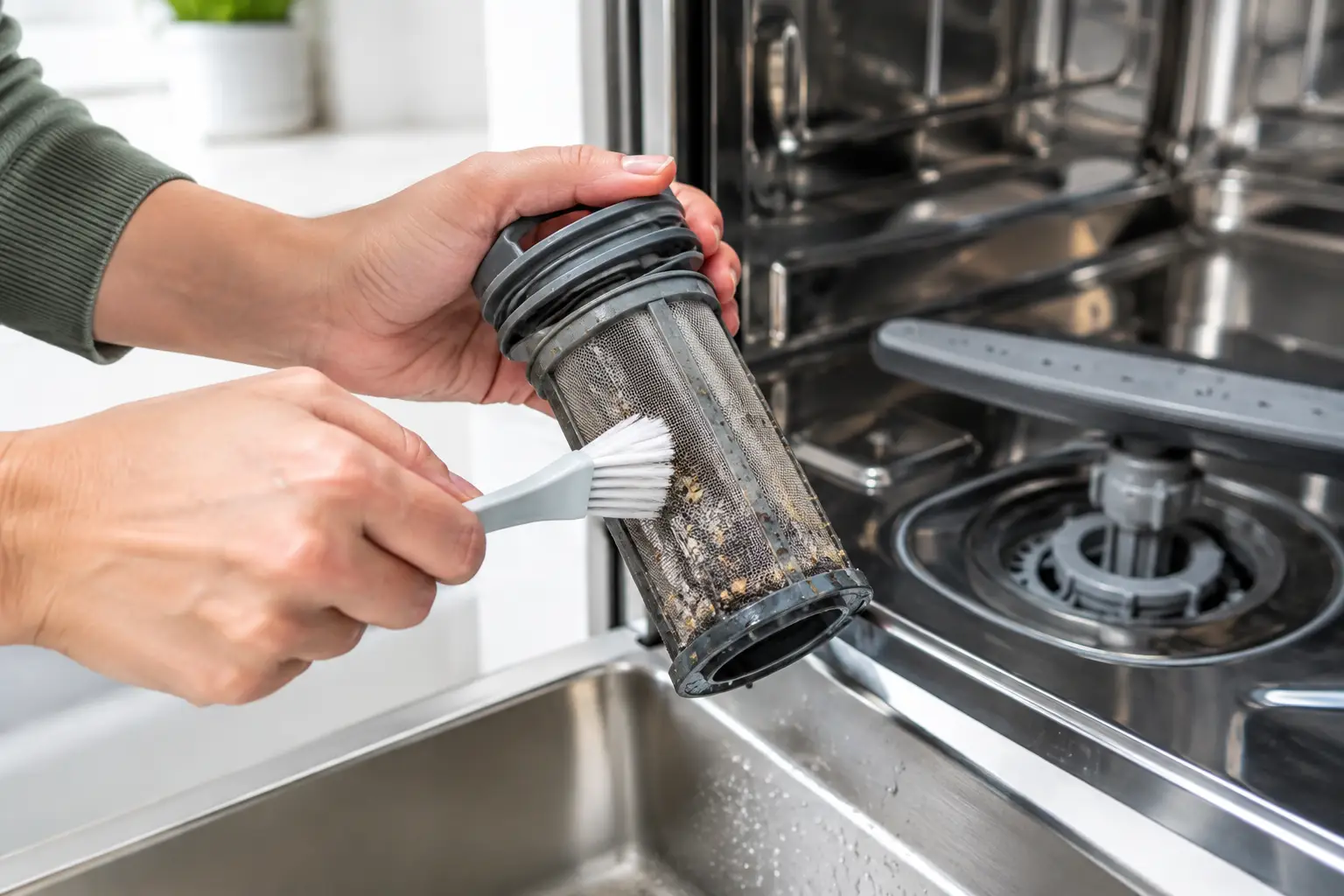
A few checks are reasonable before calling for service. Confirm that the appliance is plugged in, the breaker is on, and the door or lid is fully closed. Clean the refrigerator coils if they are accessible, clear food debris from a dishwasher filter, and make sure a dryer lint screen is clean. For a washer or dishwasher, inspect visible supply hoses for obvious kinks or loose connections.
Stop there if you notice leaking water, electrical symptoms, burning odors, gas odors, sparks, or unusual heat. Avoid opening panels, bypassing safety switches, or trying to repair internal wiring. Appliance repairs often involve high voltage, sharp metal edges, heavy components, water connections, or gas lines.
Why Fast Service Can Save Money
Timing matters with appliance repairs. A refrigerator cooling issue can lead to spoiled groceries. A small washer leak can become flooring damage. A dryer airflow problem can increase drying time, raise energy use, and create a safety hazard. Addressing the problem early gives a technician a better chance to repair a single worn component before related parts are affected.
Repair versus replacement depends on the appliance’s age, condition, repair cost, and the type of failure. A minor part replacement on an otherwise dependable appliance is often worthwhile. A major sealed-system failure in an older refrigerator may require a more careful cost comparison. Clear diagnosis and an honest quote make that decision easier.
For homeowners and local businesses across Greater Massachusetts, Fasteny Appliance Repair helps restore essential appliances with responsive scheduling, transparent pricing, and professional troubleshooting. The goal is not to sell a repair you do not need. It is to identify the cause, explain the options clearly, and get your equipment working properly again.
If an appliance is making new noises, leaking, overheating, or no longer performing as it should, trust the change you are seeing. A prompt service call can protect your home, your schedule, and the appliance you rely on every day.
Frequently Asked Questions
What are the most common appliance repair warning signs?
The big ones are new or louder noises, leaks or unexplained moisture, burning or electrical smells, a drop in heating, cooling, or drying performance, and repeated tripped breakers. Any sudden change from how an appliance normally runs is worth investigating.
Is a burning smell from an appliance an emergency?
Often, yes. A burning or melting-plastic smell can mean overheating wiring, a failing motor, or a damaged control board. Stop using the appliance, disconnect power if it is safe, and call a technician. For a gas range, treat any persistent gas odor as an emergency and leave the area.
When should I stop using an appliance and call a technician?
Stop immediately for smoke, sparks, burning smells, a gas odor, or water pooling near electrical parts. For quieter warning signs like mild noises or slower performance, you can finish the cycle, but schedule service before the problem grows.
Can I troubleshoot appliance warning signs myself?
Some checks are safe: cleaning filters, clearing a drain hose, resetting a breaker, or leveling a machine. Anything involving gas, sealed refrigeration systems, or internal electrical parts should be left to a professional to avoid injury or further damage.
Does fixing an appliance early really save money?
Usually. Catching a worn part early is far cheaper than repairing the secondary damage it causes — a leaking washer can ruin flooring, and a struggling fridge can spoil a full load of food. Prompt service protects both the appliance and your home.
Conclusion
The best time to act on appliance repair warning signs is when they first appear. A new noise, a small leak, a burning smell, or a drop in performance is your appliance telling you something has changed — and catching it early usually means a smaller, cheaper fix. When a symptom points to a safety issue like smoke or a gas odor, stop using the appliance and get help right away.
Whether you are in Billerica, Reading, Peabody, or Waltham, Fasteny Appliance Repair can diagnose the problem and explain your options across Massachusetts. Explore our appliance repair services, request service online, or call (617) 618-3311 to book a visit.