Your refrigerator runs around the clock, longer than any other appliance in the house, and a little upkeep goes a long way toward keeping it that way. Good refrigerator maintenance protects your food, trims your energy bill, and heads off the kind of breakdown that always seems to strike on a holiday weekend. Homeowners in Billerica, Peabody, and across Massachusetts can handle nearly all of it themselves, and Fasteny Appliance Repair put these eight habits together to make it simple.
Why Refrigerator Maintenance Matters
A refrigerator is a sealed system that constantly moves heat out of the cabinet. When coils are caked with dust, seals leak cold air, or the interior is overpacked, the compressor works harder, wears faster, and drives up your electricity use. A few minutes of routine care each month keeps that system efficient and can add years to the appliance’s life.
8 Refrigerator Maintenance Habits That Prevent Repairs
1. Keep the Temperature in the Safe Range
Set the refrigerator at or below 40°F and the freezer at 0°F, and confirm it with a separate appliance thermometer rather than trusting the dial. FoodSafety.gov’s cold food storage chart shows why those numbers matter for keeping food safe and fresh. Correct temperatures also keep the compressor from overworking to compensate.
2. Give Food Room for Airflow
Cold air needs to circulate. Overpacking blocks the vents and creates warm spots, while a nearly empty freezer struggles to hold temperature. Leave space around the vents, and if the freezer is sparse, a few containers of water help it stay cold and stable.
3. Clean Spills Before They Spread
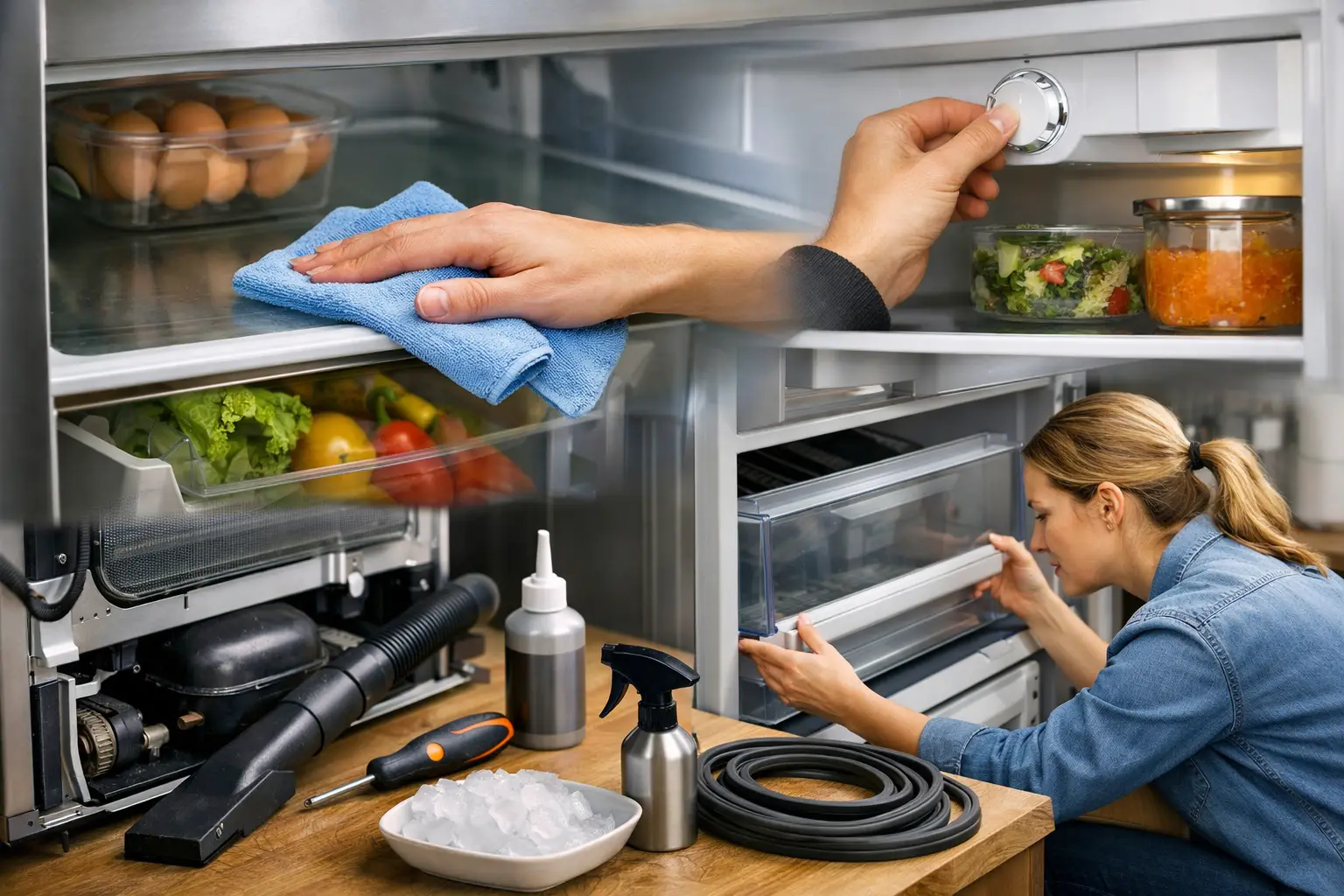
Wipe up drips and crumbs as they happen so they don’t harden, smell, or reach the drain and vents. A monthly wipe-down of the shelves and drawers with mild soapy water keeps odors down and lets you spot small problems early.
4. Wipe and Inspect the Door Gaskets
The rubber gaskets seal cold air inside. Clean them with warm soapy water so grime doesn’t break down the rubber, and test the seal by closing the door on a dollar bill — if it slides out easily, the gasket is letting cold air escape and should be replaced.
5. Clean the Condenser Coils When Your Model Allows It
Dusty coils are one of the most common causes of poor cooling and high energy bills. Every six to twelve months, unplug the fridge and vacuum the coils at the back or behind the front kick plate. Households with pets should do this more often.
6. Replace Water Filters on Schedule
If your refrigerator has a water or ice dispenser, change the filter about every six months. An old filter slows water flow, affects taste, and can strain the dispenser. Sound cooling habits pair well with efficiency, and our guide on reducing refrigerator energy consumption covers how upkeep lowers running costs.
7. Keep the Refrigerator Level and the Area Around It Clear
A level refrigerator lets the doors self-close and seal, and clearance around the unit gives the coils room to shed heat. Leave a few inches of space at the back and sides, and avoid pushing it tight against a wall or cabinet.
8. Treat Unusual Sounds, Frost, and Leaks as Early Warnings
New rattles, excessive frost, puddles, or a compressor that never cycles off are early signs of trouble. Catching them early — a clogged defrost drain, a failing fan, a tired gasket — usually means a small fix instead of a major repair.
When to Call a Professional
Most of these habits are quick and safe to do yourself, but some issues point to the sealed system or electrical parts. If the refrigerator won’t hold temperature after you’ve cleaned the coils and checked the seals, or you notice a refrigerant smell or a compressor that runs without cooling, those are jobs for a technician. Fasteny Appliance Repair’s team serves Reading, Waltham, and communities across Massachusetts, and you’re welcome to learn more about our refrigerator repair service or review our transparent pricing whenever it helps.
Frequently Asked Questions
How often should I clean my refrigerator’s condenser coils?
For most homes, every six to twelve months, and more often if you have pets, since fur and dust insulate the coils and force the compressor to work harder. Unplug the fridge, vacuum the coils at the back or beneath the unit, and you’ll often notice quieter running and lower energy use.
What temperature should my refrigerator and freezer be set to?
Keep the refrigerator at or below 40°F and the freezer at 0°F. A separate appliance thermometer is the reliable way to confirm the real temperature, because the dial setting is not always accurate and the difference matters for food safety.
How often should I replace my refrigerator’s water filter?
Most manufacturers recommend every six months, though heavy use or hard water may call for sooner. A filter left in too long slows water flow and can affect taste, and many models flash a filter indicator when a change is due.
Why is my refrigerator running constantly?
Dirty condenser coils, a worn door gasket, an overpacked interior, or a warm room can all make the compressor run non-stop. Start with the coils and gaskets; if it keeps running after that, have a technician check the thermostat and sealed system.
Can regular maintenance really extend a refrigerator’s life?
Yes. Clean coils, tight door seals, correct temperatures, and prompt attention to odd sounds all reduce strain on the compressor and help a refrigerator last well past a decade, while cutting the odds of a sudden, costly breakdown.
Conclusion
Refrigerator maintenance is one of the highest-return habits in the home: a few minutes on coils, seals, temperatures, and filters keeps your food safe, your energy bill lower, and your appliance running for years. When a problem goes beyond routine care, don’t wait for a full breakdown. Request service from Fasteny Appliance Repair or explore our full range of appliance repair services, and a technician serving Billerica, Peabody, Reading, and communities across Massachusetts will keep your refrigerator in top shape. Call +1 (617) 618-3311 or visit fastenyappliance.com to book.