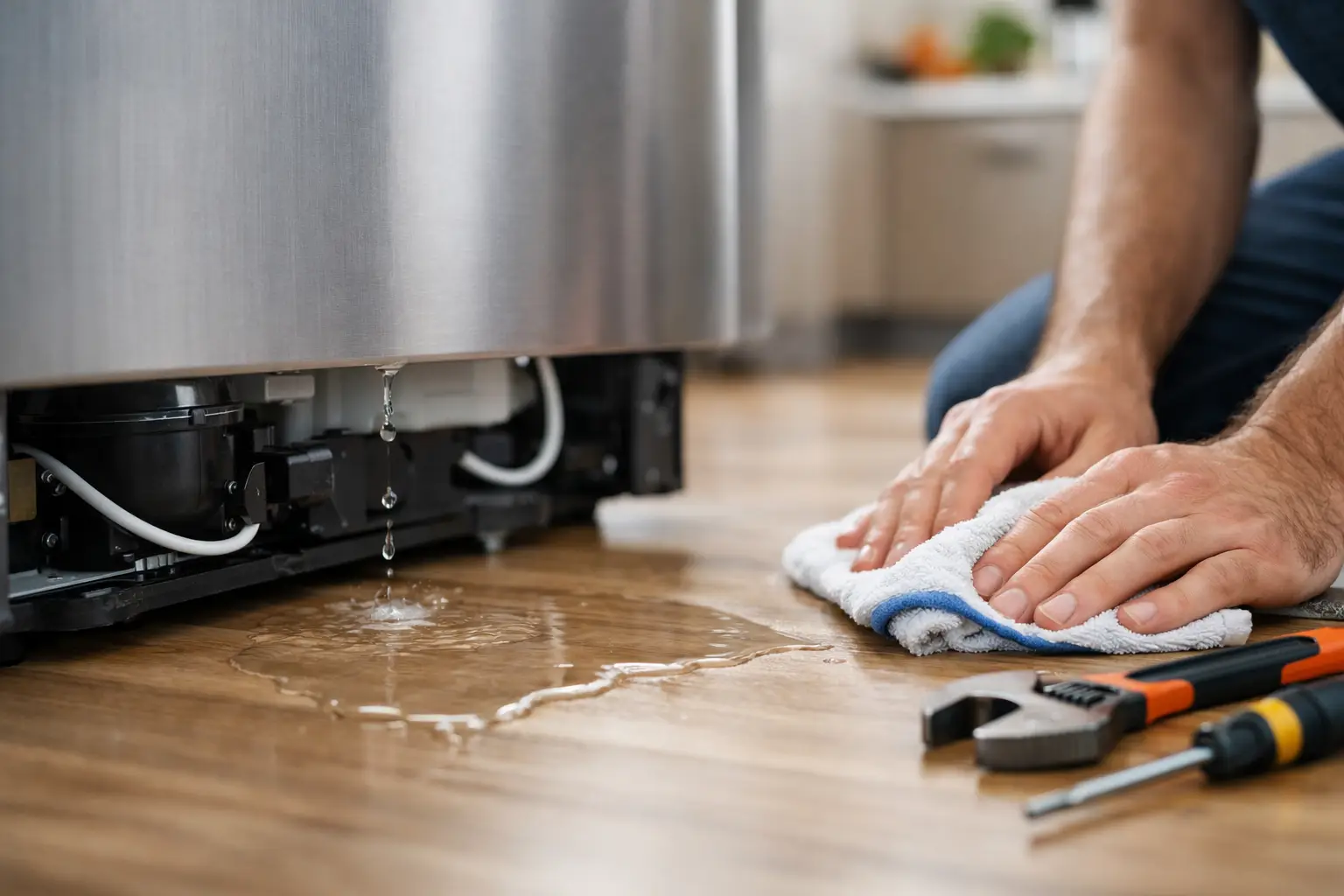
A puddle beneath the refrigerator can turn from a small inconvenience into damaged flooring, warped cabinets, or a costly cleanup surprisingly quickly. Many refrigerator water leak causes are straightforward, but the visible water is not always close to the actual problem. A careful check can help you protect your home and determine whether you need professional refrigerator repair.
At Fasteny Appliance Repair, serving Reading, Waltham, and homes across Massachusetts, we help homeowners figure out why a refrigerator leaking water is happening and how to stop it. Here’s what causes it, what you can safely check, and when to call a technician.
First, Protect the Area Around the Refrigerator
Before looking for the source, unplug the refrigerator if water is near the power cord, outlet, or any exposed electrical connection. Mop up standing water and move rugs, boxes, and other absorbent items away from the area. If the leak is substantial, turn off the refrigerator’s water supply valve if it has an ice maker or water dispenser.
Do not pull a heavy refrigerator out by yourself if the floor is slick or if the water line is connected tightly behind the unit. You can often inspect the front, interior, and accessible rear connections safely, but a refrigerator is heavy enough to damage flooring, pinch a water line, or cause injury when moved without care.
Common Refrigerator Water Leak Causes
A clogged or frozen defrost drain
A blocked defrost drain is one of the most common reasons water appears inside the fresh-food compartment or on the floor near the front of the refrigerator. During normal defrost cycles, melted frost should flow through a drain tube into a pan beneath the appliance. Food debris, ice, or residue can block that path, causing water to back up and spill where it should not.
Signs often include a sheet of ice under the crisper drawers, water pooling inside the refrigerator, or recurring drips at the front. Removing visible debris and checking that the drain opening is not iced over may help. However, repeated freezing can point to a deeper issue with the drain tube, defrost system, or refrigerator temperature control.
A damaged or loose water supply line
If your refrigerator has an ice maker or dispenser, inspect the water line and its connections. A loose fitting, cracked plastic tube, worn copper line, or damaged valve can leak slowly behind the refrigerator. Because this area is hidden, the problem may continue for days before it becomes obvious.
Look for moisture around the connection at the back of the refrigerator and around the shutoff valve. Do not overtighten fittings. A connection that is too tight can damage threads or seals and make a small problem worse. If the line is brittle, kinked, or visibly cracked, it should be replaced rather than patched.
A leaking water filter or filter housing
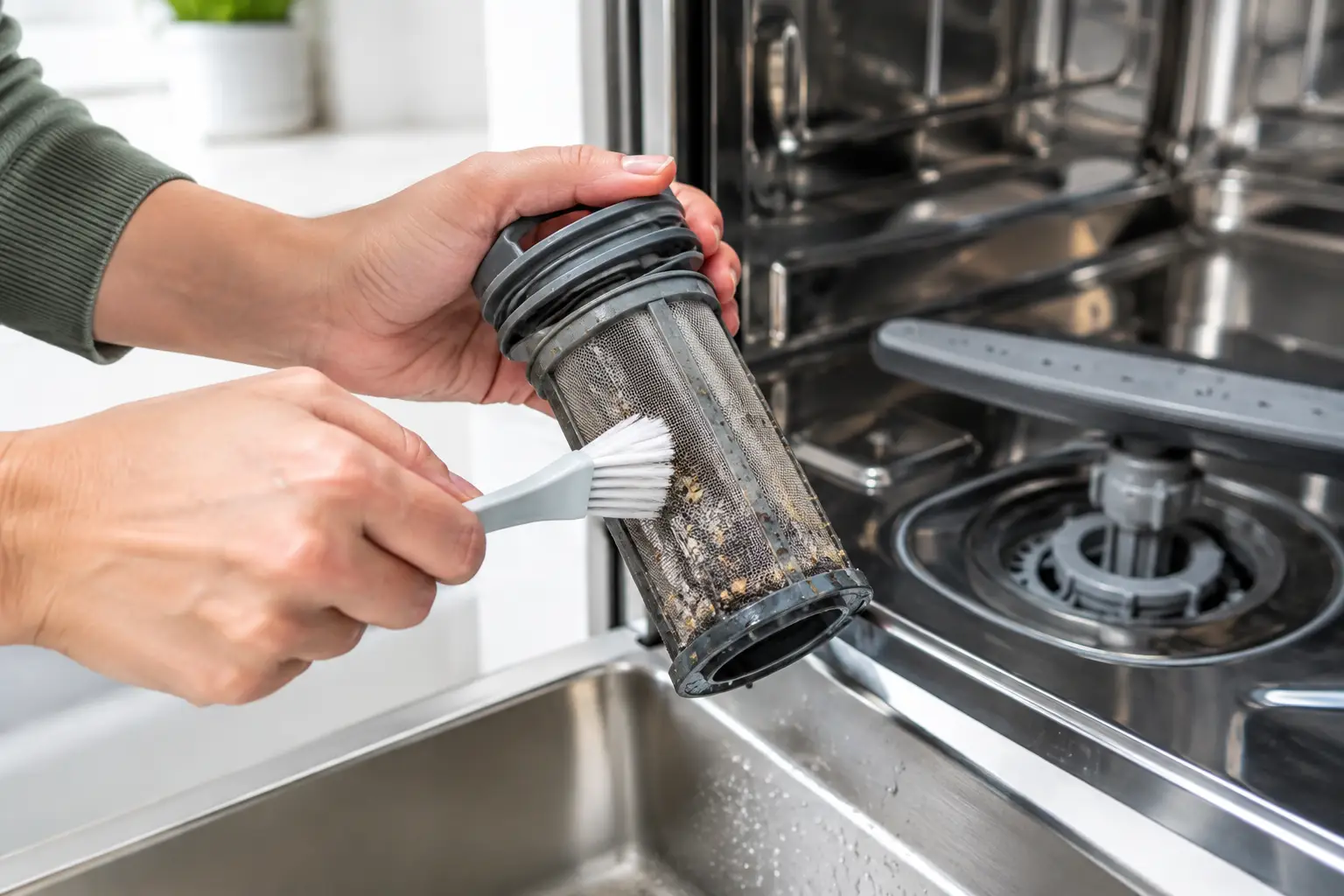
A refrigerator water filter can leak after replacement when it is not fully seated, the wrong filter was installed, or an O-ring is damaged. Water may collect beneath the filter compartment, run down an interior wall, or drip from the front dispenser area.
Remove and reinstall the filter according to the refrigerator’s instructions, making sure it is the correct type and locked into place. Check the filter for cracks and inspect the housing for damage. If a new filter continues to leak, stop using the dispenser and arrange service. The housing or internal water line may need repair.
A cracked drain pan
The drain pan beneath the refrigerator collects water from the defrost cycle, where it normally evaporates from the warmth of the compressor. A pan that is cracked, displaced, or overflowing can leave water on the floor below the unit.
Some drain pans are easy to access, while others require partial disassembly. If you can safely see the pan, check for standing water, cracks, or a pan that has shifted out of position. Excessive water in the pan can also signal another problem, such as a blocked defrost drain or a refrigerator that is not cooling correctly.
A door gasket that is not sealing
A torn, dirty, or warped door gasket allows warm, humid kitchen air into the refrigerator. That moisture can create excess condensation and frost, eventually overwhelming the defrost drain and leading to leaks. You may also notice the refrigerator running longer than usual, uneven temperatures, or condensation around the door frame.
Wipe the gasket with warm, soapy water and check for food particles that prevent a full seal. If it is split, loose, or misshapen, replacement is usually the dependable fix. A poor seal costs more than convenience because it can force the compressor to work harder over time.
A refrigerator that is not level
Refrigerators need a slight backward tilt so the doors close properly and defrost water drains as designed. If the appliance tilts forward or rocks on the floor, water may not reach the drain path correctly. A door may also remain slightly open, adding condensation inside the cabinet.
Check whether the refrigerator is stable and whether both doors close on their own from a few inches open. Adjusting the front leveling legs can help, but do not force them if they are corroded or difficult to turn. On older units, an uneven floor and worn rollers may complicate the adjustment.
Where the Water Appears Can Narrow Down the Problem
The location of the puddle offers useful clues. Water inside the refrigerator or beneath the crisper drawers often points to a defrost drain issue. Water at the back of the appliance is more likely related to the supply line, inlet valve, or drain pan. A leak around the filter compartment or dispenser area suggests a filter, housing, or internal water connection problem.
Still, water travels. A rear leak can run under the refrigerator and appear at the front, while condensation can drip from an interior location that is hard to see. That is why a professional diagnosis is often worth it when the leak returns after basic checks.
What You Can Safely Check Before Scheduling Repair
Start with the simple items: confirm the refrigerator doors are closing, inspect the water filter, look for an obvious kink or loose connection in the external water line, and check for ice beneath the drawers. Keep an eye on the leak after drying the area completely. A fresh trail of water can reveal whether the problem begins inside the cabinet, at the filter, or behind the appliance.
Avoid using sharp objects to chip ice from a drain opening or freezer panel. It is easy to puncture a liner, refrigerant line, or internal component. Avoid pouring large amounts of hot water into the refrigerator as well. Rapid temperature changes can damage plastic parts and may simply move the water problem somewhere else.
When a Refrigerator Leak Needs Professional Service
Call for service promptly if the water leak is recurring, if you see cracked tubing, or if the refrigerator is not cooling normally. You should also schedule repair if the leak is near electrical components, the water dispenser stops working, the ice maker is producing small or hollow cubes, or the floor beneath the refrigerator feels soft or swollen.
For homeowners, landlords, and small businesses across Greater Massachusetts, a refrigerator leak is a time-sensitive repair. Fasteny Appliance Repair can identify the actual failure, explain the repair clearly, and provide a fair quote before work begins. The goal is to stop the leak without replacing parts that do not need replacement.
Drying the floor is necessary, but stopping the source is what protects your kitchen, your food, and the appliance itself. If the water returns, treat it as an early warning and get the refrigerator checked before a manageable repair becomes water damage.
Frequently Asked Questions
Why is my refrigerator leaking water?
The most common causes are a clogged or frozen defrost drain, a damaged water supply line, a leaking water filter or housing, a cracked drain pan, a worn door gasket, or a fridge that isn’t level. The visible puddle often isn’t right next to the actual source.
Why is water leaking inside my refrigerator?
Water pooling inside, often under the crisper drawers, usually points to a clogged defrost drain. Ice and food debris block the drain so melt water backs up into the compartment instead of draining away.
Can I fix a leaking refrigerator myself?
Some causes are DIY-friendly: clearing a clogged defrost drain, leveling the unit, or reseating the water filter. Whirlpool’s guide on how to fix a refrigerator that is leaking water walks through the basics. A damaged water line or sealed-system issue is best left to a technician.
Is a leaking refrigerator an emergency?
It’s rarely an immediate danger, but standing water is a slip hazard and can damage flooring, cabinets, and wiring over time, plus encourage mold. It’s worth addressing quickly rather than letting it sit.
How much does it cost to fix a refrigerator leak?
It depends on the cause. Clearing a defrost drain is inexpensive, while replacing a water inlet valve or supply line costs more. A technician can confirm the source and give an up-front quote before any work begins.
Conclusion
Most refrigerator leaks trace back to a clogged defrost drain, a water-line problem, or a worn gasket, and all of them are far cheaper to fix early than after water damages your floor. Fasteny Appliance Repair serves Billerica, Peabody, and communities across Massachusetts with clear pricing and dependable work. Request a repair, explore our appliance repair services, or call +1 (617) 618-3311. For prevention tips, see our guide to refrigerator maintenance habits.