
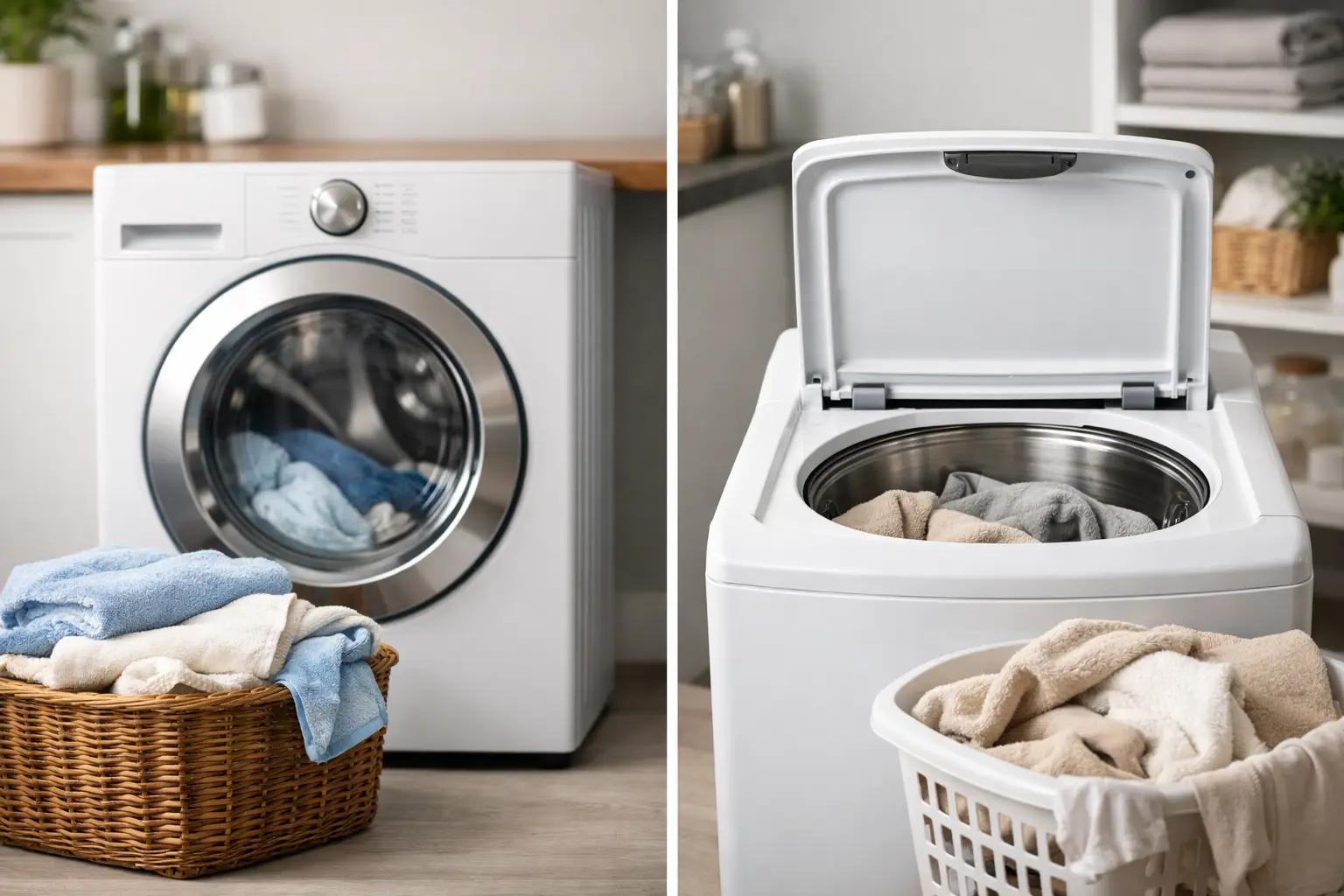
A washer decision becomes very real when you are facing a laundry room remodel, replacing a machine that quit midweek, or trying to keep up with a busy household. The front load versus top load washer question is not about which style is universally better. It is about which machine fits your space, laundry habits, budget, and willingness to handle routine maintenance.
Washer acting up? Book washer repair in Massachusetts — same-day service for front-load & top-load machines across 90+ MA cities.
Both designs can clean clothes well. The differences show up in water use, cycle times, access, capacity, and the types of problems that can develop over years of use. Here is what Massachusetts homeowners and property managers should weigh before choosing a new washer.
At Fasteny Appliance Repair, serving Reading, Waltham, and homes across Massachusetts, we repair both styles every day, so we’ll keep this front load vs top load washer comparison practical: how they clean, what they cost to run, and which one fits your household.
Front Load Versus Top Load Washer: The Key Differences
A front-load washer turns clothes through a small amount of water as the drum rotates. Because laundry repeatedly tumbles through the water and detergent, front-load models generally use less water and can extract more moisture during the final spin.
A traditional top-load washer uses an agitator or a low-profile wash plate at the bottom of the tub. Agitator models move clothing through the water with a central post. Impeller models use a flat plate that creates movement in the water while leaving more open room in the drum.
This basic difference affects nearly every part of ownership. Front-load machines are usually more efficient and gentler on fabric, while top-load models tend to be easier to load, more familiar to operate, and less demanding about post-cycle care.
Cleaning Performance and Fabric Care
Front-load washers have a strong reputation for cleaning heavily soiled clothing. Their tumbling action is effective without relying on a center agitator that can pull, twist, or rub garments against itself. This can be a practical advantage for activewear, delicates, towels, bedding, and loads that need more thorough rinsing.
Top-load washers can also provide excellent cleaning, especially when the cycle, water level, and detergent are matched to the load. An agitator-style top loader may be a solid choice for work clothes, uniforms, and durable cotton items that come home with ground-in dirt. The trade-off is that the agitator takes up usable tub space and can be harder on delicate fabrics over time.
High-efficiency top-load washers with impellers offer a middle ground. They usually provide more capacity than agitator models and use less water than traditional designs. Still, some owners find that bulky loads need careful placement to avoid items bunching up or coming out unevenly cleaned.
Water, Energy, and Drying Time
For households that run several loads each week, efficiency can make a noticeable difference. Front-load washers typically use less water because they do not need to fill the tub around the laundry. Less hot water also means lower energy use.
Their high spin speeds are another advantage. Clothes leave the washer with less water in them, which can reduce dryer time. That matters if your dryer is older, your utility costs are high, or the laundry room gets humid during busy weeks.
Top-load washers, particularly traditional agitator models, often use more water per cycle. Some people prefer this because they like seeing clothes fully submerged. However, more water does not automatically mean cleaner laundry. It can mean longer fill times, more energy used to heat water, and wetter clothing at the end of the cycle.
If you choose a top loader for convenience or accessibility, newer high-efficiency models can narrow the efficiency gap. Check the machine’s cycle options and capacity rather than assuming every top loader operates the same way.
Space, Loading, and Everyday Convenience
A top-load washer is often the easiest choice for someone who does not want to bend over to load and unload clothing. This can be especially helpful for people with back, knee, or mobility concerns. There is also no door seal at the front, and opening the lid to add a forgotten sock is simple on many models.
The limitation is vertical clearance. A top-load washer cannot sit under a counter, and its lid needs room to open fully. In a tight closet or a compact laundry area, that can rule it out.
Front-load washers need clear space in front for the door, but they can often fit under a countertop or be stacked with a compatible dryer. Stacking is valuable in condos, smaller homes, and rental units where floor space is limited. Pedestals can raise the door opening and add storage, though they add cost and may make the machine taller.
Capacity deserves a closer look. A front-load washer often handles bulky blankets and comforters well because there is no center agitator. Large impeller top loaders also offer generous capacity. An agitator top loader may have a smaller usable space despite similar exterior dimensions.
Maintenance: Where Front Loaders Need More Attention
The most common concern with front-load washers is odor. The rubber door gasket can retain moisture, detergent residue, hair, and small debris. If the washer stays closed between loads, that damp environment can develop mildew odors that transfer to laundry.
This is manageable, but it requires a routine. Leave the washer door and detergent drawer slightly open after use, wipe the gasket periodically, use the correct amount of high-efficiency detergent, and run the manufacturer-recommended cleaning cycle when needed. Too much detergent is a frequent cause of residue and odor problems, even when the detergent is labeled for high-efficiency machines.
Top-load washers are generally less prone to gasket-related odor because the open tub design dries more easily. They still need cleaning. Detergent buildup, fabric softener residue, and hard-water minerals can affect either style. A washer that smells musty, leaves residue on clothing, or drains slowly deserves attention before the issue becomes more expensive.
Reliability and Repair Considerations
No washer type is immune to repairs. Modern machines use electronic controls, sensors, pumps, locks, valves, and suspension components regardless of whether they load from the front or top. The right choice is less about avoiding every possible repair and more about choosing a model you can maintain properly.
Front-load washers commonly develop issues involving door locks, door gaskets, drain pumps, bearings, and vibration. A machine that shakes violently may need leveling, load adjustment, suspension work, or a closer inspection of internal components. Water around the front door should never be ignored, since a damaged gasket or latch problem can lead to leaks.
Top-load washers may experience problems with lid locks, agitators, drive systems, suspension rods, transmission components, or drainage. If a top loader bangs during spin, stops before draining, or leaves clothes soaking wet, the cause may range from an unbalanced load to a worn mechanical part.
Repair cost depends on the machine’s age, model, condition, and the failed component. In general, a newer washer with a clear, isolated issue is often worth repairing. A machine that has repeated failures, major tub or bearing damage, or an out-of-warranty repair approaching the cost of replacement may be a better candidate for a new unit.
Which Washer Fits Your Household?
Choose a front-load washer if lowering water use and dryer time matters to you, if you need a stackable setup, or if you wash lots of large bedding and performance fabrics. It is also a strong option for households willing to follow a simple door-gasket cleaning routine.
Choose a top-load washer if easy loading is your priority, if you prefer a familiar design, or if you want less concern about a front-door seal staying damp. An agitator model may suit especially dirty, durable laundry, while an impeller model is worth considering when you want more capacity and better efficiency.
For rental properties and small commercial settings, the decision can also come down to user habits. A top loader may be more forgiving when many people use the machine. A front loader can save water and space, but it performs best when users avoid detergent overuse and leave the door open after cycles.
When a Washer Problem Is Not a Replacement Problem
A leaking washer, loud spin cycle, standing water in the tub, error code, or burning smell can make replacement feel urgent. But many of these symptoms are repairable when diagnosed early. A clogged drain pump, failing lid switch, worn door gasket, damaged hose, or faulty inlet valve can often be corrected without replacing the entire appliance.
If your washer is interrupting daily life, do not keep running it in hopes the problem will clear itself. Continued use can turn a minor leak or drainage issue into floor damage, mold concerns, or a larger mechanical failure. Fasteny Appliance Repair provides prompt washer diagnostics for homeowners and businesses across Greater Massachusetts, with clear recommendations based on the condition of the machine.
The best washer is the one that works reliably for your household and is cared for before small warning signs become a bigger disruption. Whether you choose front load or top load, keeping the machine level, using the right detergent amount, and scheduling service at the first sign of trouble will help protect your laundry routine.
Frequently Asked Questions
Is a front load or top load washer better?
It depends on your priorities. Front loaders generally clean gently, use less water and energy, and spin clothes drier, while top loaders cost less up front, are easier to load without bending, and need less maintenance. Neither is universally better.
Do front load washers actually clean better?
In most tests they clean very well. Their tumbling action lifts and drops clothes through the detergent repeatedly, which is effective even with less water. Heavily soiled loads do fine in either type with the right cycle.
Which washer uses less water and energy?
Front loaders typically use noticeably less water and energy per load. If efficiency matters to you, the U.S. Federal Trade Commission’s EnergyGuide label lets you compare estimated annual use before you buy.
Why do front load washers get moldy or smell?
Their door gasket traps moisture, so residue and odor can build up if the door stays shut. Leaving the door ajar between loads and cleaning the gasket helps; see our guide on how to prevent washer mold.
Which type needs fewer repairs?
Both are reliable when maintained. Front loaders have more seals and bearings that can eventually need service, while top loaders are mechanically simpler. Regular upkeep matters more than the format for long-term reliability.
Conclusion
In the front load vs top load washer debate, the winner is the one that fits how your household actually does laundry: front loaders for efficiency and gentle, thorough cleaning, top loaders for lower cost and easy, low-maintenance use. Whichever you own, a repair is often smarter than a replacement. Fasteny Appliance Repair serves Billerica, Peabody, and communities across Massachusetts. Request a repair, explore our appliance repair services, or call +1 (617) 618-3311. To keep either type running well, see our washer maintenance guide.