A sheet of ice on the freezer floor, frost packed around food, or a drawer frozen shut is more than an annoyance. Freezer ice buildup repair starts with identifying where the moisture is coming from. The right fix may be as simple as replacing a worn door gasket, but recurring ice can also point to a failed defrost component, clogged drain, or airflow problem that needs professional service.
At Fasteny Appliance Repair, we handle freezer ice buildup repair for homeowners across Billerica, Reading, and Peabody — restoring proper cooling fast.
Start With the Type of Ice You See
Not all freezer ice points to the same problem. Thick white frost on food packages and freezer walls usually means humid kitchen air is entering the compartment. That often happens when the door is not closing fully, the gasket is dirty or torn, or an overfilled freezer keeps a package from clearing the door.
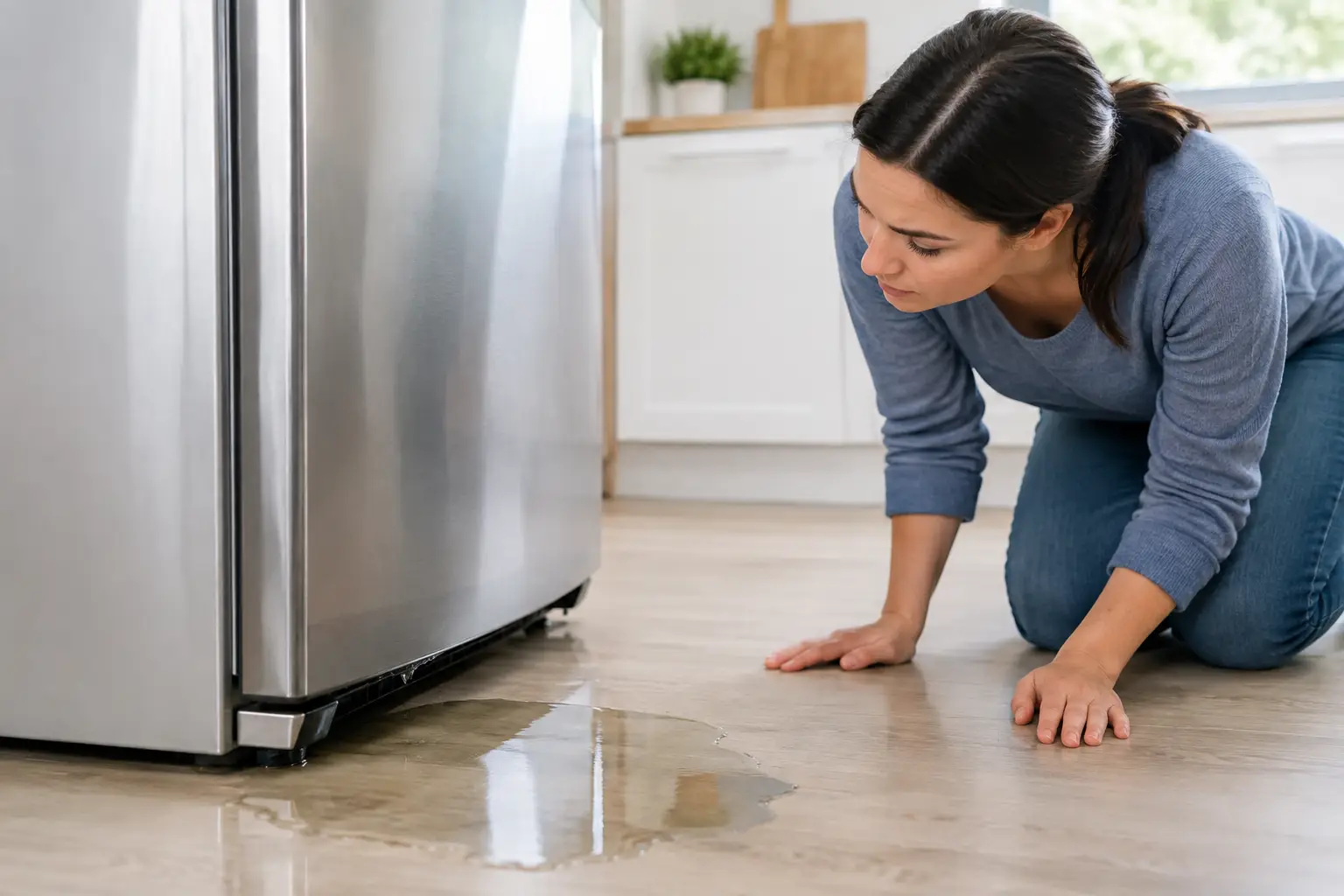
A solid layer of clear ice on the bottom of the freezer is different. In many frost-free refrigerators, meltwater from the automatic defrost cycle should flow through a drain tube to a pan underneath the appliance. If that drain freezes or clogs, the water can back up, refreeze on the freezer floor, and eventually leak onto the kitchen floor.
Ice covering the rear interior panel is another important clue. Behind that panel sits the evaporator coil and the defrost system. When the system does not melt frost as designed, ice accumulates on the coil, blocks airflow, and can leave the refrigerator section warm even though the freezer still seems cold.
Safe Freezer Ice Buildup Repair You Can Try
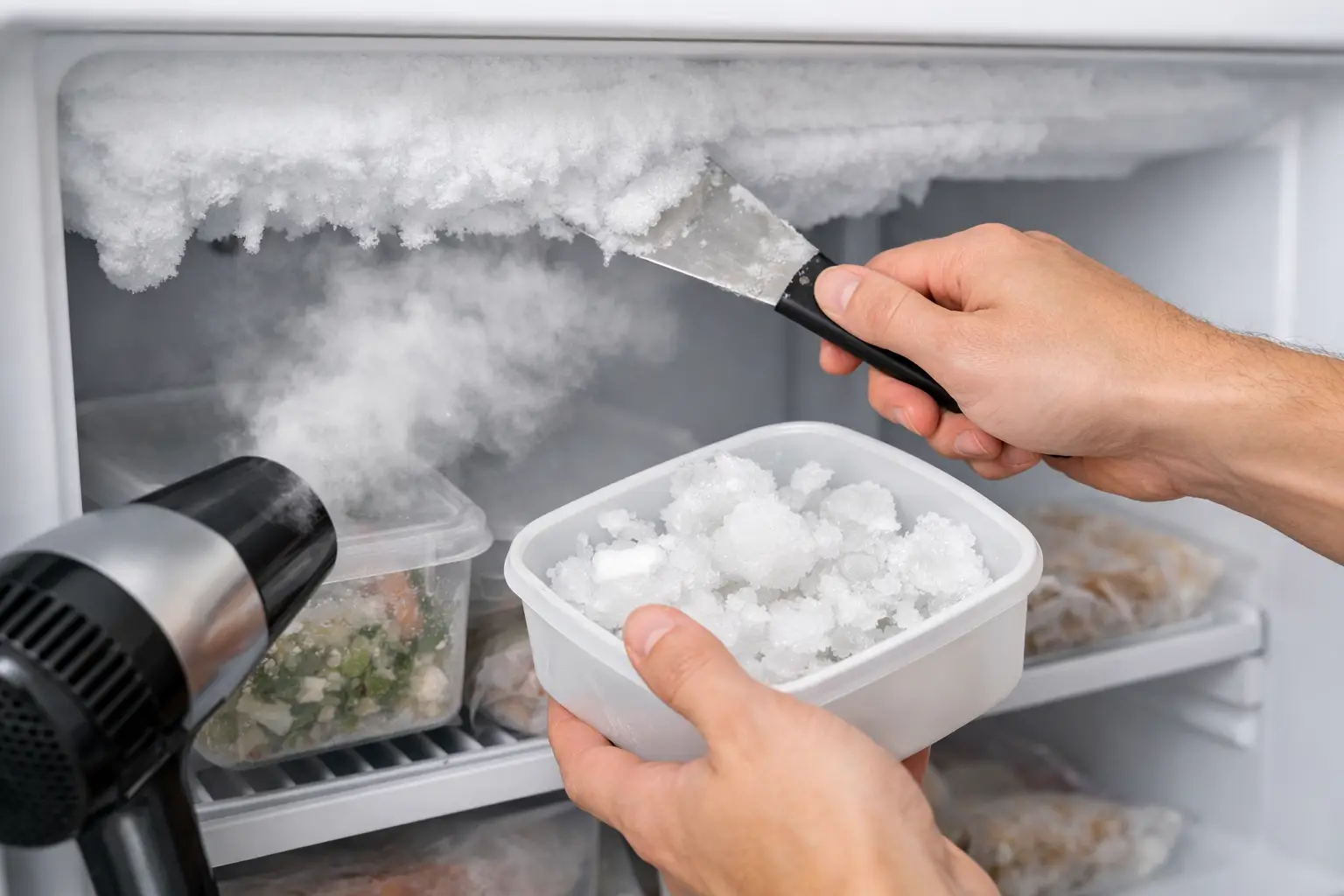
Before removing ice, protect the food and the appliance. Move frozen items to a cooler with ice packs or another freezer. Then unplug the refrigerator or turn off power at the breaker. Never chip at ice with a knife, screwdriver, or other sharp tool. One puncture to a refrigerant line or interior wall can turn a manageable repair into a costly replacement decision.
Leave the doors open and place towels around the base of the refrigerator. A bowl of warm water set inside the freezer can speed thawing, but do not use boiling water directly on plastic parts. A hair dryer is also risky around standing water and can warp liners or damage wiring. Time, towels, and warm air are slower, but safer.
Once the freezer is fully thawed, wipe it dry and inspect the door seal. Clean the gasket and the surface it contacts with mild soap and water. Look for splits, hardened areas, loose corners, or sections that remain flattened instead of springing back into shape. Close the door on a strip of paper in several spots. If the paper slides out with almost no resistance, the seal may not be making reliable contact.
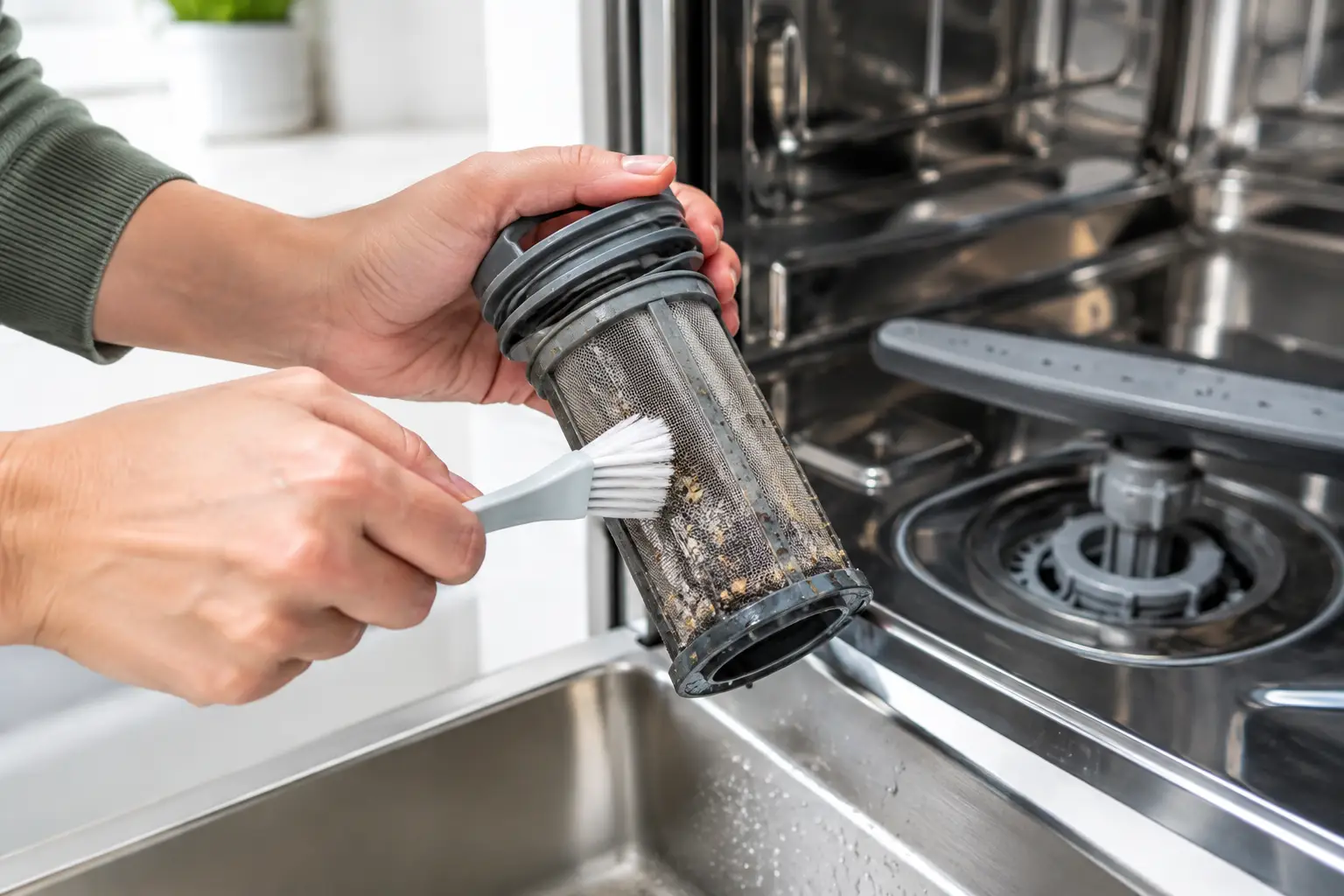
If the ice was concentrated on the bottom, look for the defrost drain opening near the back of the freezer floor or behind the rear panel, depending on the model. After thawing, gently flush the drain with warm water using a turkey baster or squeeze bottle. Stop if water does not move through the drain or if access requires removing panels you are not comfortable handling. The goal is to clear a simple ice plug, not force water into electrical components.
After restoring power, allow the refrigerator time to return to temperature. A typical freezer should hold close to 0°F, while the refrigerator compartment is generally best around 37°F. Avoid setting controls colder than necessary. Excessively low settings can contribute to frost problems in some models and do not correct a failing defrost system.
Why Ice Comes Back After You Defrost It
A complete manual defrost can remove the symptom, but it does not always remove the cause. If frost returns within days or a couple of weeks, the refrigerator is telling you something useful.
A Door Seal or Door Alignment Problem
A gasket can look acceptable while still leaking air. Food containers, warped shelves, or a misaligned door can also create a small opening that pulls moisture into the freezer every time the compressor runs. This is especially common in busy households where the freezer is opened often or packed tightly after a grocery trip.
Door adjustments vary widely by model. A technician can determine whether the issue is the gasket, hinge, cam, leveling, or a damaged door liner. Replacing a gasket without correcting the underlying alignment problem may only provide a temporary improvement.
A Clogged or Frozen Defrost Drain
When freezer-floor ice returns after a thaw, a blocked drain is a leading possibility. Food debris, dust, or a recurring freeze point in the drain tube can prevent defrost water from reaching the pan. Some refrigerators need a drain tube cleaned from both the freezer and lower rear access areas.
This repair is usually straightforward for an experienced technician, but it can become messy if the ice has spread beneath panels or into the fresh-food section. Address it early to reduce the chance of water damage to flooring or cabinets.
A Defrost System Failure
Frost-free refrigerators use several parts to control defrosting. Depending on the model, that can include a heater, defrost thermostat or sensor, control board, timer, wiring, and temperature sensors. A failure in any one of these parts can allow frost to build across the evaporator coil.
The early warning sign is often reduced cooling in the refrigerator section. Cold air cannot move properly from an iced-over coil, so milk and produce may feel warmer while the freezer begins to frost up. Manually thawing the appliance may restore cooling for a short time, but the ice will return until the failed component is diagnosed and replaced.
Airflow or Fan Issues
A freezer needs clear airflow to maintain stable temperatures. Frost can form when vents are blocked by food, when the evaporator fan is failing, or when a damaged air duct changes how cold air circulates. You may notice uneven freezing, a fan that is unusually loud, or no fan sound when the door switch is held closed.
Do not assume a quiet fan is the only issue. A fan can run normally while the coil behind the panel is completely iced over. Proper diagnosis requires checking the ice pattern, fan operation, sensors, and defrost circuit rather than replacing parts based on one symptom.
When to Call for Professional Freezer Ice Buildup Repair
Call for service when the freezer repeatedly frosts over, the refrigerator compartment is warming up, water is leaking from the appliance, or ice returns soon after a full defrost. Those are signs that the problem is not ordinary humidity from a door left open once or twice.
Professional diagnosis is also the safer choice if you need to remove interior panels, test electrical parts, work near wiring, or access the rear of a built-in or tightly installed refrigerator. Modern refrigerators use electronic controls and model-specific parts. Guessing can lead to unnecessary replacement costs and another service visit.
For homeowners and local businesses across Greater Massachusetts, Fasteny Appliance Repair can diagnose the actual source of freezer ice and explain the repair before work begins. A clear diagnosis matters because a clogged drain, failed heater, worn gasket, and control-board issue can look similar from the outside but require very different repairs.
Preventing Frost After the Repair
Once the cause has been corrected, a few habits can help keep moisture out of the freezer. Let hot leftovers cool before storing them, cover foods well, and avoid holding the door open while deciding what to make. Keep packages from pressing against the rear panel or blocking vents, and make sure drawers slide fully closed.
Check the gasket occasionally for crumbs, sticky residue, and damage. If a refrigerator is not level, the doors may not close as intended, so that is worth checking after moving the appliance or changing flooring. For a freezer in a garage or basement, confirm that the refrigerator is rated for the surrounding temperatures. Extreme heat or cold can affect performance, depending on the model.
Ice is manageable when it happens once after a door is left open. When it keeps coming back, treat it as an early repair signal. Fixing the moisture source promptly protects food storage, reduces strain on the refrigerator, and helps prevent a small frost problem from becoming a no-cooling emergency.
Freezer Repair Serving Massachusetts
If freezer ice keeps coming back, Fasteny Appliance Repair offers same-day and next-day freezer repair across Massachusetts and all of Massachusetts — including Cambridge, Revere, Brookline, Waltham, Peabody, Reading, and Billerica. Our licensed technicians diagnose the real cause and fix it right the first time. Call (617) 618-3311 or explore our refrigerator and freezer repair services to book a visit.
Frequently Asked Questions
What causes ice buildup in my freezer?
The most common causes are a door that no longer seals, a worn gasket, frequent door openings that let in warm moist air, a clogged defrost drain, or a failing defrost heater, thermostat, or timer. Pinpointing which one applies is the key to a lasting fix.
Is some frost in the freezer normal?
A light, even frost can be normal, especially in manual-defrost units. As GE Appliances notes, some frost or ice crystals inside the freezer are a normal occurrence — but thick, recurring ice sheets or ice on the freezer floor point to a sealing or defrost-system problem.
Why does the ice come back after I defrost it?
Manual defrosting only removes the symptom. If the underlying cause — such as a bad door seal or a clogged drain — remains, the ice returns within days or weeks.
Can I fix freezer ice buildup myself?
Basic steps like checking the door seal, clearing the defrost drain, and leveling the unit are DIY-friendly. Electrical parts such as the defrost heater, thermostat, or timer are best handled by a licensed technician.
How much does professional freezer repair cost?
It depends on the part: clearing a drain is inexpensive, while a defrost heater or control board replacement costs more. A technician can confirm the exact cause on the first visit and quote the repair up front.