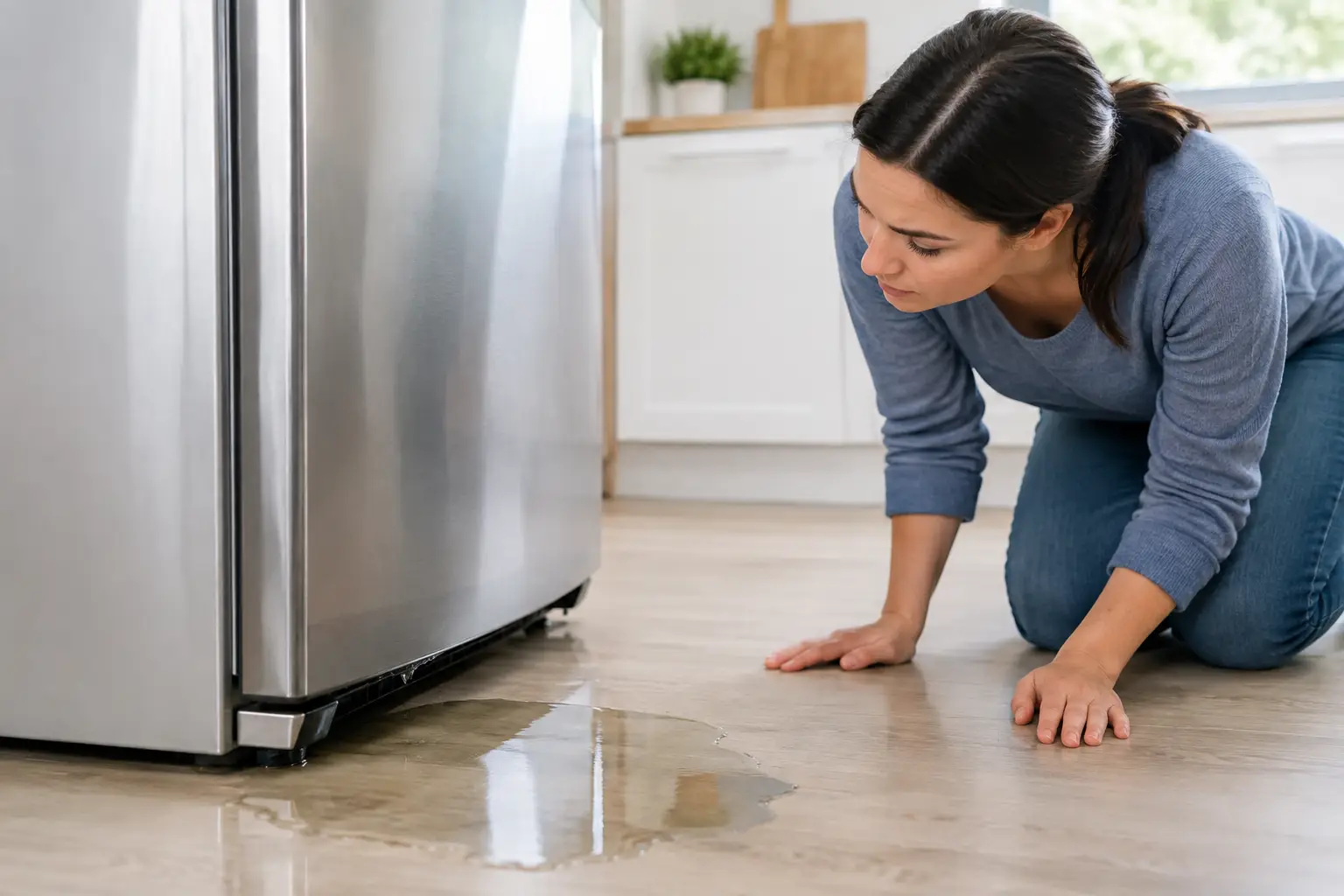
A puddle beneath the refrigerator can turn from an inconvenience into warped flooring, cabinet damage, or a slip hazard quickly. Knowing how to stop refrigerator leaking starts with finding where the water is coming from, not simply mopping it up. A leak may be caused by normal defrost water going in the wrong direction, a loose water connection, condensation, or a component that needs professional repair.
Before moving the appliance, dry the floor and remove any standing water. If water is close to an outlet, unplug the refrigerator only if you can do so safely without stepping in water. Then turn off the refrigerator’s water supply if it has an ice maker or water dispenser. This prevents a small line leak from becoming a larger one while you inspect the problem.
How to Stop Refrigerator Leaking Safely
Start by identifying the location and timing of the leak. Water at the front of the refrigerator often points to a blocked defrost drain or excess condensation. Water behind the unit is more likely related to the water supply line, inlet valve, or drain pan. If the water appears only when the ice maker runs or when someone uses the dispenser, focus on the water connections first.
Do not tip a refrigerator forward or pull it out aggressively. Refrigerators are heavy, and the water line, power cord, flooring, or wall can be damaged in the process. If you need to move it, have another adult help and slide it carefully after protecting the floor.
Check the water supply line and connections
A refrigerator with a dispenser or ice maker is connected to a household water line. Inspect the line behind the appliance for drips, cracks, kinks, or wet spots. Pay close attention to the fitting where the line connects to the refrigerator and to the shutoff valve on the wall or floor.
If a fitting is visibly loose, gently tighten it by hand. Avoid overtightening plastic connectors, which can crack. A damaged, brittle, or pinched water line should be replaced rather than taped. Tape may slow a drip temporarily, but it is not a reliable repair and can fail without warning.
Also check whether the leak occurs while the refrigerator is idle. A steady drip from the rear after the water supply is shut off may indicate water already trapped in the line or a problem unrelated to the supply line. If water continues to appear after several hours with the valve off, move on to the defrost and drain-pan checks.
Clear a blocked defrost drain
Most modern refrigerators periodically defrost themselves. Melted frost travels through a small drain opening inside the freezer or fresh-food compartment, down a tube, and into a pan beneath the refrigerator, where it evaporates. When that drain becomes blocked by ice, food debris, or residue, water can overflow into the refrigerator and onto the floor.
Look for water pooling under crisper drawers, ice buildup on the freezer floor, or water running from the front of the unit. These are common signs of a clogged defrost drain. Remove food from the affected area and locate the drain opening, usually near the back wall of the freezer or beneath a rear panel.
Use warm water to flush the drain gently with a turkey baster or small squeeze bottle. Do not use boiling water, sharp tools, or excessive force. Hot water can damage plastic parts, and sharp objects can puncture the drain tube or evaporator area. If ice is blocking the opening, allow it to thaw gradually with the refrigerator unplugged, using towels to contain meltwater.
A drain that repeatedly clogs may have a deeper blockage in the tube or a failed drain-heater component. That is a good point to schedule service rather than repeatedly forcing water through the system.
Inspect the drain pan
The drain pan sits below the refrigerator and collects defrost water. In normal operation, the heat from the compressor and surrounding airflow evaporates that water. A cracked, misaligned, or overflowing pan can leave water underneath the appliance.
With the refrigerator unplugged, inspect the pan if it is safely accessible. Some pans slide out from the front or rear, while others are fixed in place and are difficult to reach without disassembly. Look for cracks, heavy buildup, or a pan that is not seated correctly.
A small amount of water in the pan is normal. A full pan, especially if the refrigerator is not cooling properly, may indicate a defrost-system issue or poor airflow around the unit. Do not assume the pan is the only problem just because it is wet.
Other Reasons a Refrigerator May Leak
Not every puddle is a plumbing leak. Refrigerators also produce condensation when warm, humid air enters the cabinet or when airflow is restricted. The repair depends on the symptom.
Examine the door gaskets
A worn, torn, or dirty door gasket can allow humid room air into the refrigerator. That moisture condenses inside the cabinet and can collect near drawers or drip onto the floor. Check that the doors close fully and that food containers are not preventing a tight seal.
Clean the gasket with mild soap and warm water, then dry it thoroughly. Look for splits, flattened sections, or areas that pull away from the door. If the seal is damaged, replacement is usually the long-term fix. Adjusting the refrigerator’s level may also help the doors close properly.
Make sure the refrigerator is level
A refrigerator generally needs a slight backward tilt so the doors close on their own and defrost water flows toward the drain as designed. If it leans forward or rocks, water may not reach the correct drainage path. Use a level across the top of the appliance and adjust the front leveling legs according to the manufacturer’s instructions.
Leveling will not repair a cracked line or blocked drain, but it can resolve minor door-seal and drainage issues. If the refrigerator was recently moved, this is one of the first things worth checking.
Consider temperature and airflow problems
A refrigerator that is too warm can create more condensation, while one that is freezing food may develop excess frost that later melts and overflows. Make sure interior vents are not blocked by tightly packed groceries and that the temperature controls are set to the recommended range.
For most refrigerators, the fresh-food compartment should be around 37 to 40 degrees Fahrenheit, and the freezer should be near 0 degrees Fahrenheit. If temperatures fluctuate, frost keeps returning, or the unit runs constantly, the leak may be a symptom of a larger cooling or defrost problem.
When to Call for Refrigerator Leak Repair
A homeowner can often clean up a spill, confirm the water valve is off, clear a simple drain opening, or spot a loose fitting. More involved repairs should be handled by a qualified technician. Refrigerators contain electrical components, delicate plastic water fittings, and sealed cooling systems that are easy to damage during trial-and-error repairs.
Schedule professional service if the water line is cracked, the inlet valve is leaking, the drain tube is inaccessible or repeatedly clogged, the refrigerator is not cooling correctly, or water is reaching electrical connections. You should also call for help if you see recurring ice buildup, hear unusual noises, or notice water damage around the appliance despite shutting off the supply.
For homeowners and business operators across Greater Massachusetts, Fasteny Appliance Repair can diagnose the source of a refrigerator leak, explain the repair clearly, and provide a fair quote before work begins. Prompt service matters when water is threatening floors, inventory, or nearby cabinetry.
Keep towels in place until the area is fully dry, especially on hardwood, laminate, or around baseboards. A refrigerator leak is rarely something to ignore, but acting early can often limit the damage and get your kitchen back to normal much faster.