A refrigerator that stops cooling or a washer that will not drain can turn a normal day in an apartment into a scramble. This apartment appliance repair guide helps tenants, landlords, and property managers separate safe first checks from problems that need qualified service – without risking a bigger repair bill, water damage, or a lease violation.
Start With Safety and Your Lease
Before touching an appliance, pause the cycle, turn it off, or unplug it if it is safe to do so. If you smell gas, burning plastic, or smoke, do not investigate further. Leave the area if necessary, shut off power only if you can do it safely, and contact emergency services or the appropriate utility provider. Gas appliances, exposed wiring, sparking outlets, and major water leaks are never do-it-yourself repairs.
For renters, the lease matters just as much as the appliance symptom. Many apartment appliances belong to the landlord or property owner, which means unauthorized repairs can create liability or affect your security deposit. Take clear photos or a short video of the issue, note when it started, and report it in writing according to your building’s maintenance process.
If you own the unit, manage a rental property, or are responsible for a small commercial space, document the appliance model number and any error code before scheduling service. That information gives a technician a stronger starting point and can help avoid delays when a replacement part is needed.
Apartment Appliance Repair Guide: Safe Checks First
A few simple checks can solve minor issues and provide useful details for a repair appointment. The key is to stop before removing panels, disconnecting water lines, or attempting electrical work.
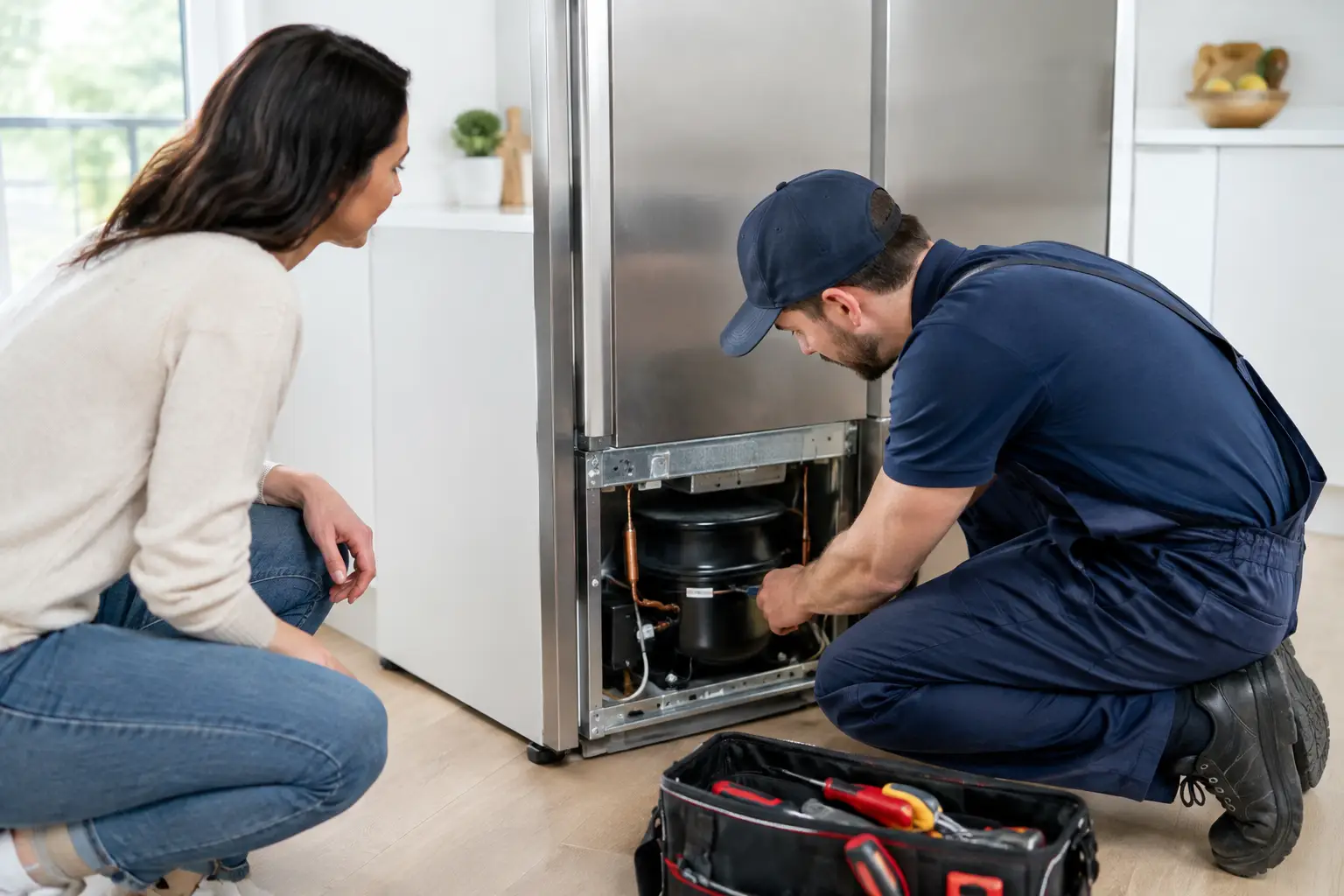
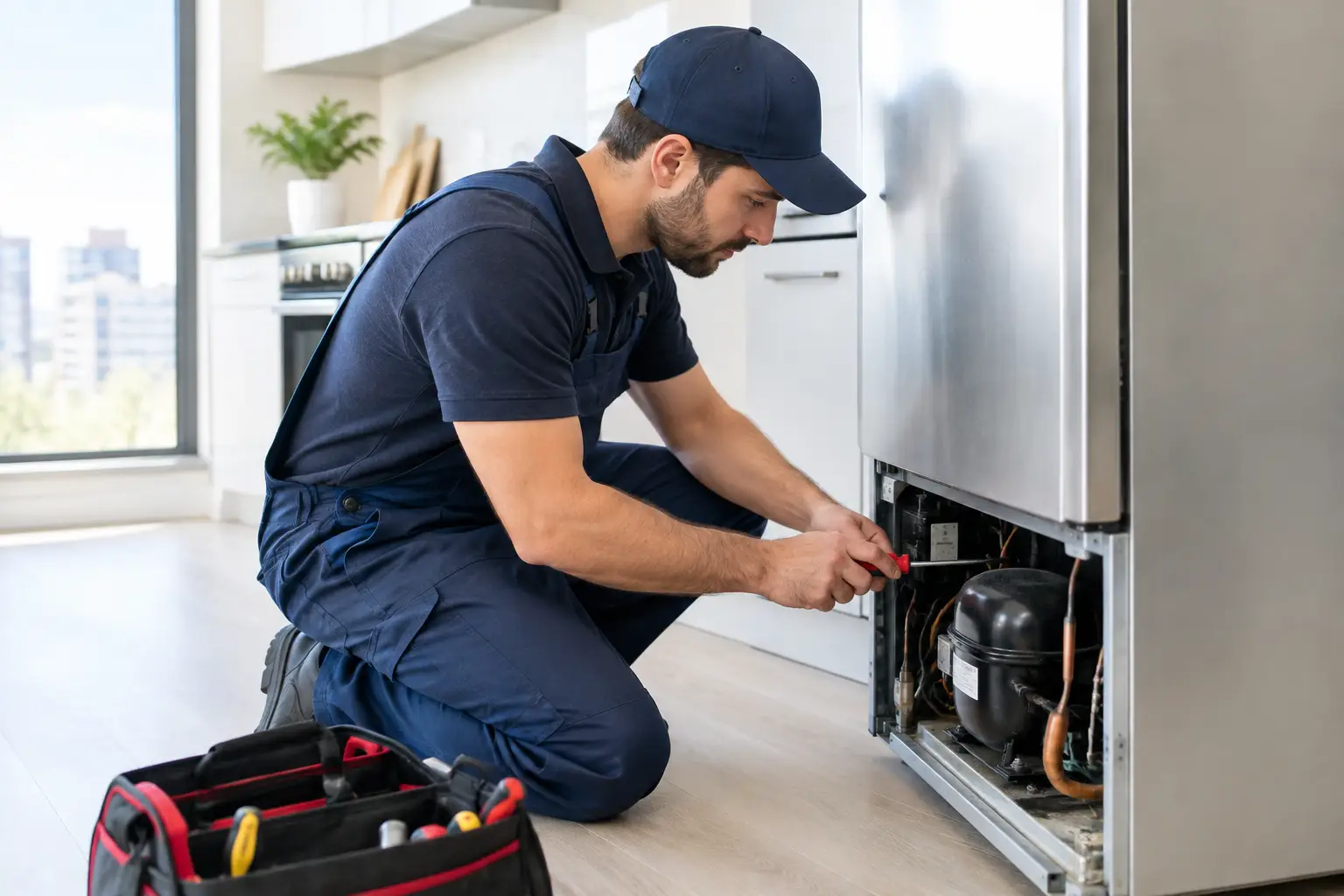
Refrigerator Not Cooling
First, make sure the refrigerator is receiving power. Check that the cord is secure and that a circuit breaker has not tripped. Confirm that the temperature controls were not accidentally changed and that air vents inside the refrigerator and freezer are not blocked by food containers.
Next, look at the door gasket. A dirty, torn, or loose seal lets warm air in and makes the compressor work harder. Wipe the gasket with mild soap and water, then close the door on a piece of paper. If the paper slides out with little resistance, the seal may need attention.
A refrigerator that runs constantly, makes clicking noises, builds heavy frost, or remains warm after several hours needs professional diagnosis. The cause could involve the compressor, start relay, fan motor, defrost system, or sealed refrigerant system. Those are not apartment maintenance issues to guess at.
Dishwasher Won’t Drain or Clean Properly
If standing water remains at the bottom of the dishwasher, cancel the cycle and check the filter for food debris. Remove loose debris carefully, rinse the filter, and make sure nothing is blocking the drain area. Also check that the kitchen sink is draining normally. A sink backup can point to a plumbing issue rather than a dishwasher failure.
Poor cleaning can be as simple as clogged spray arms, incorrect detergent, or dishes blocking the dispenser. Still, a dishwasher that leaks, trips the breaker, makes grinding sounds, or repeatedly leaves water behind should be serviced. A small leak beneath an apartment dishwasher can damage flooring, cabinets, and the unit below before anyone sees it.
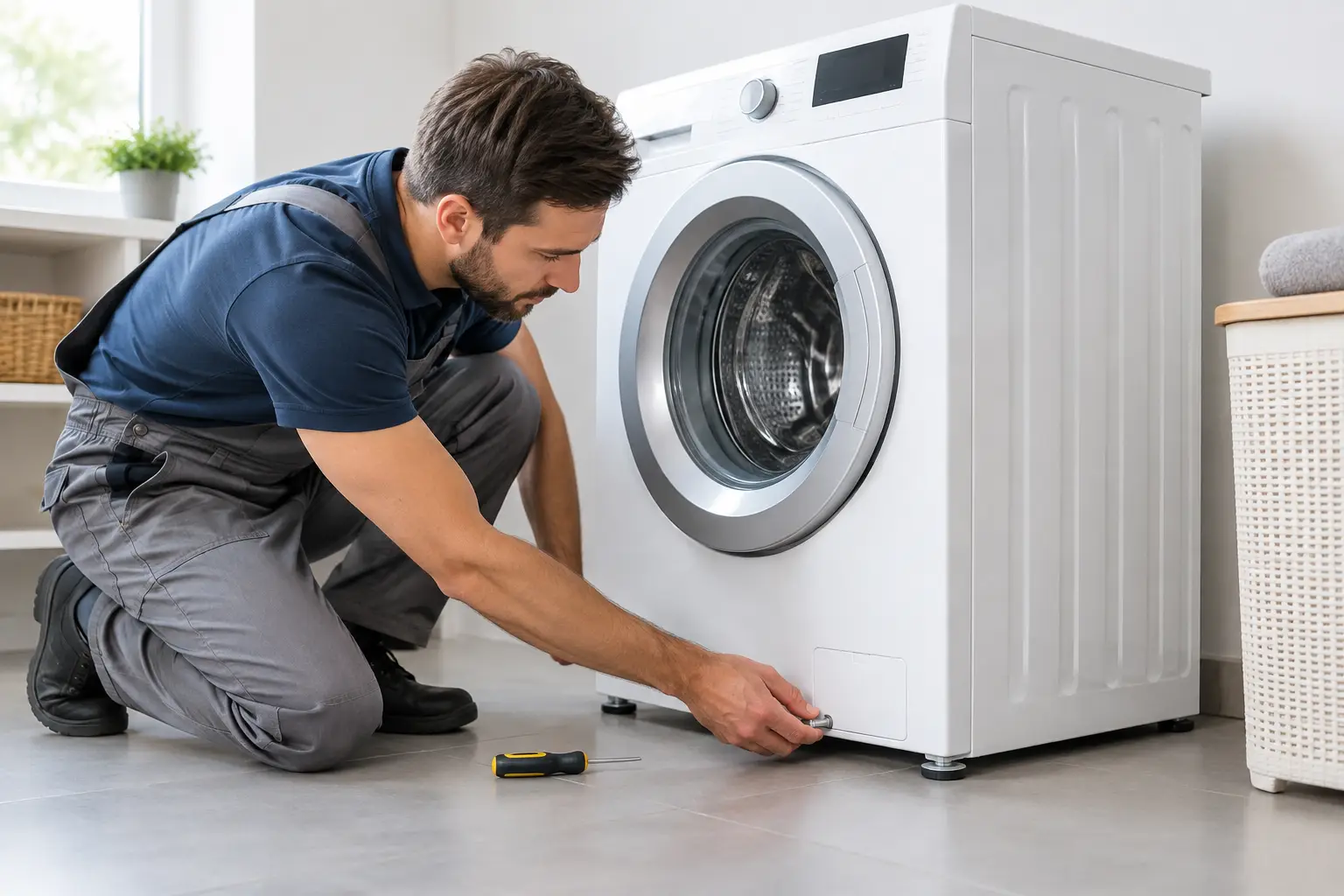
Washer Won’t Spin or Drain
Start by checking whether the washer is overloaded or off balance. Bulky items can shift during a cycle and prevent spinning. Redistribute the load, close the door firmly, and run a drain-and-spin cycle if the machine allows it.
Inspect the drain hose only from the outside. A hose that is kinked or crushed can restrict drainage. Do not pull the washer out or disconnect hoses if there is water on the floor, if the appliance is stacked, or if you are unsure how the connections are secured.
Water pooling around the washer, a burning smell, loud banging, or a machine that stops mid-cycle requires prompt service. Possible causes range from a failed drain pump or door lock to a worn belt, suspension problem, or electrical fault. Continuing to run the washer can make the damage worse.
Dryer Has No Heat or Takes Too Long
Clean the lint screen before every load and check that the dryer door closes fully. For vented dryers, restricted airflow is a common reason clothes take too long to dry. If you can safely see the exterior vent opening, make sure it is not blocked by lint, debris, or snow.
Do not disassemble the dryer or push a cleaning tool deep into an unknown vent path. Apartment venting can be shared, long, or difficult to access. A dryer that smells hot, shuts off unexpectedly, produces no heat, or leaves clothes damp after normal cycles should be inspected by a qualified technician. Lint buildup and failing heating components can create a serious fire risk.
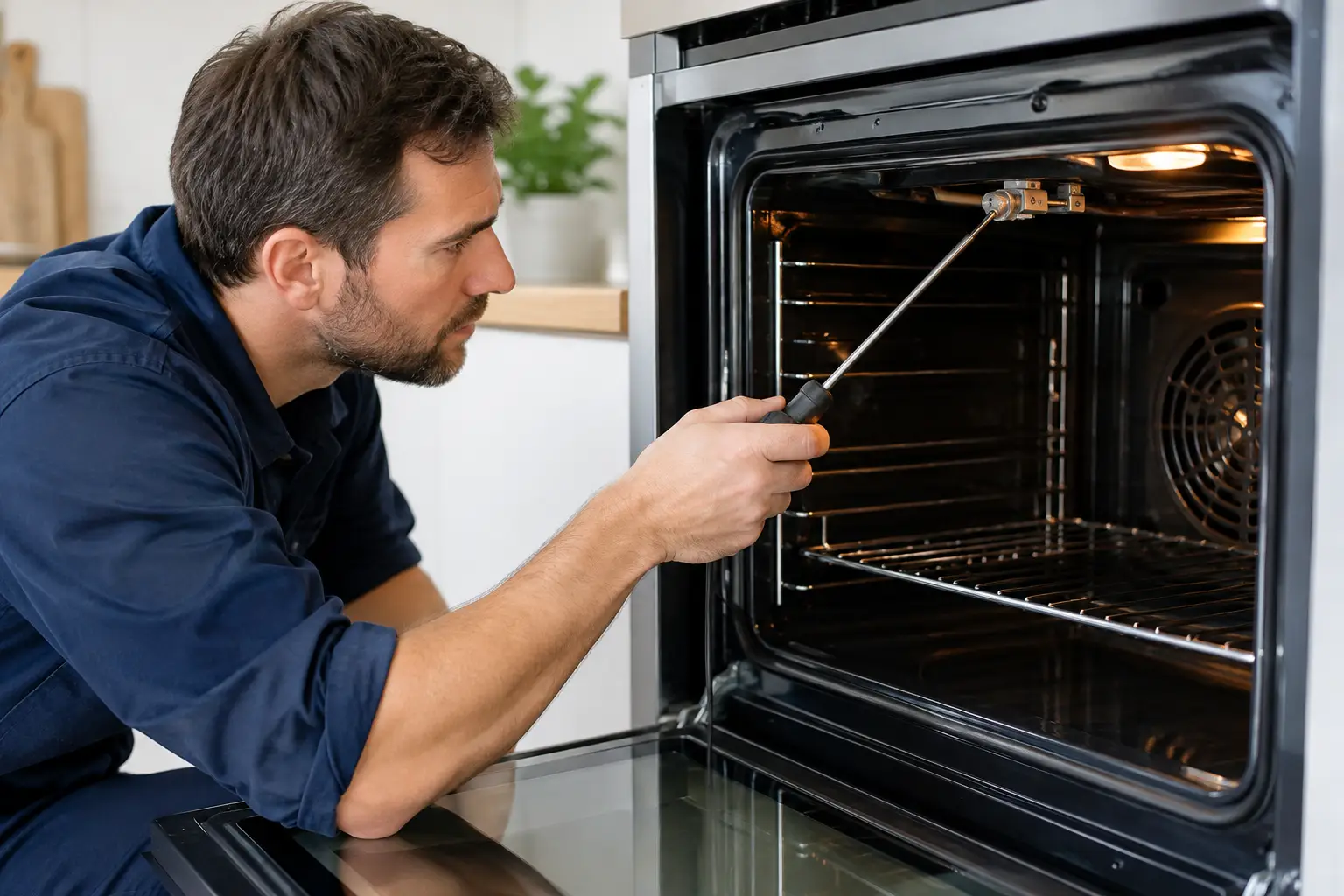
Oven, Cooktop, or Microwave Problems
For an electric range, confirm that the appliance has power and that no breaker has tripped. On a gas cooktop, check whether the burner cap is seated properly and whether food debris is blocking the igniter. If you smell gas, stop immediately and do not use switches, lighters, or open flames nearby.
An oven that will not heat evenly may have a failed heating element, igniter, temperature sensor, or control board. A microwave that sparks, has a damaged door seal, or runs without heating should be taken out of use. Microwaves store high voltage even after they are unplugged, so internal repairs should always be left to a trained professional.
Know When a Repair Request Is Urgent
Not every appliance problem requires emergency action, but some should be reported right away. Water actively leaking onto the floor, a refrigerator failing with perishable food inside, a dryer overheating, or a range with a gas odor all deserve immediate attention.
For renters, use your building’s emergency maintenance contact when the issue could cause property damage or create a safety concern. For less urgent problems, provide the model number, symptom, and photos when you submit the request. A report saying “washer not working” is less useful than “front-load washer stops after five minutes, displays an error code, and leaves water in the drum.”
Property owners should also consider the appliance’s age and repair history. Replacing a cheap part on a relatively new appliance can be the practical choice. Repeated failures, major sealed-system refrigerator repairs, or an older appliance with multiple worn components may make replacement more cost-effective. A clear diagnosis and transparent quote should come before that decision.
Avoid These Common Apartment Repair Mistakes
The fastest way to turn a manageable repair into a costly one is to keep running an appliance after obvious warning signs. A leaking dishwasher is not likely to fix itself after another cycle, and a noisy dryer should not be used until the source is identified.
Avoid using extension cords for major appliances, bypassing door switches, forcing a stuck appliance door, or trying online “fixes” that require cutting wires or opening sealed components. These shortcuts can create shock, fire, flood, and warranty risks.
It also helps to avoid assuming the appliance is always at fault. A tripped breaker, clogged sink drain, closed water valve, or building plumbing issue can produce similar symptoms. A qualified technician can identify the real cause instead of replacing parts unnecessarily.
Get the Right Details Before Service Arrives
A little preparation helps make a service visit more efficient. Clear a path to the appliance, remove fragile items nearby, and have the model and serial number available if possible. Describe what happens before, during, and after the failure, including unusual sounds, odors, leaks, or error messages.
If service is needed in Greater Massachusetts, Fasteny Appliance Repair can diagnose major household appliance problems with clear communication, fair quotes, and same-day or next-day availability when scheduling allows. The goal is not just to get the appliance running, but to make sure the repair addresses the reason it failed.
A broken appliance is disruptive, but the next step does not have to be confusing. Protect the space, document the symptoms, handle only the safe basics, and bring in experienced help before a small problem spreads beyond the appliance itself.