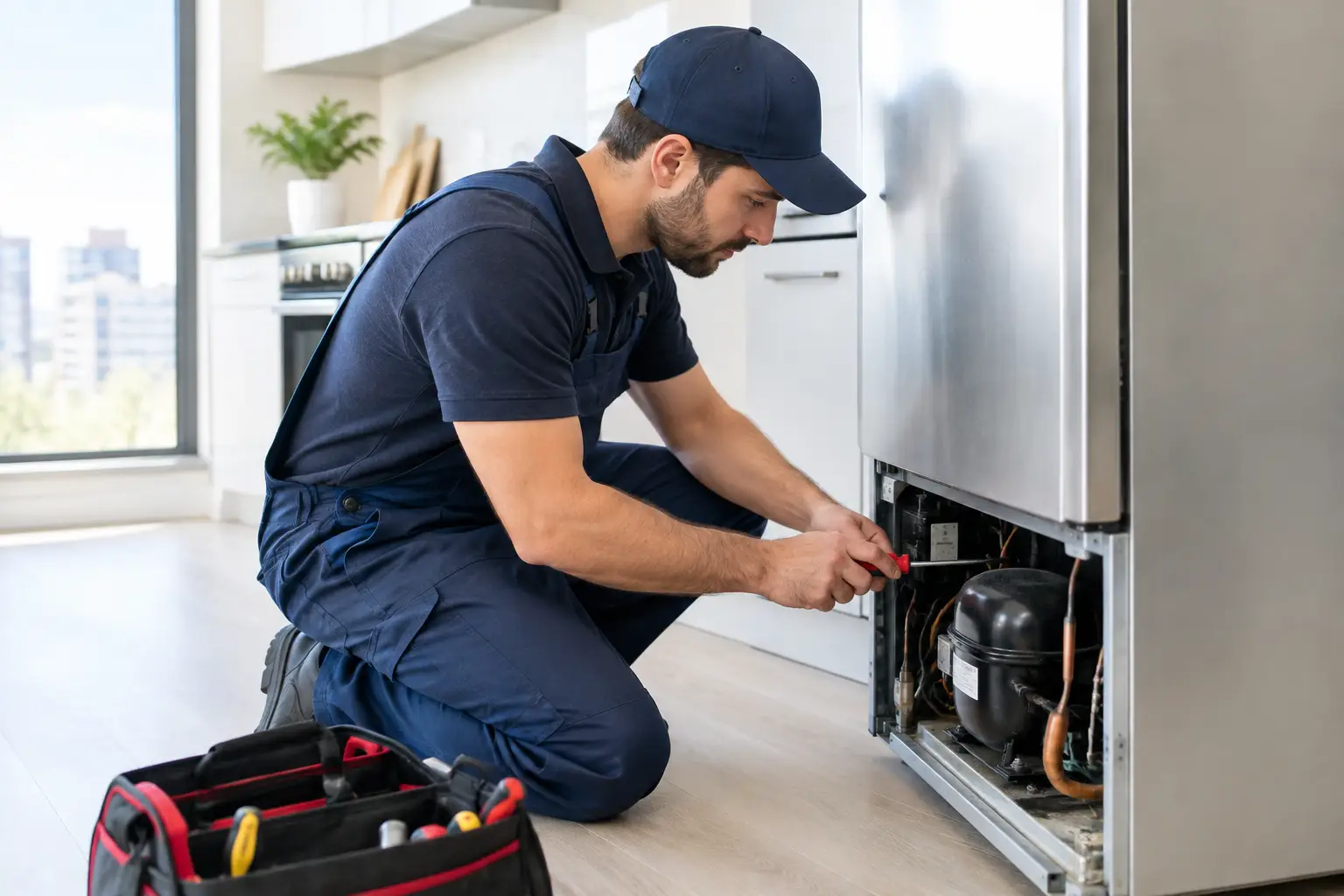
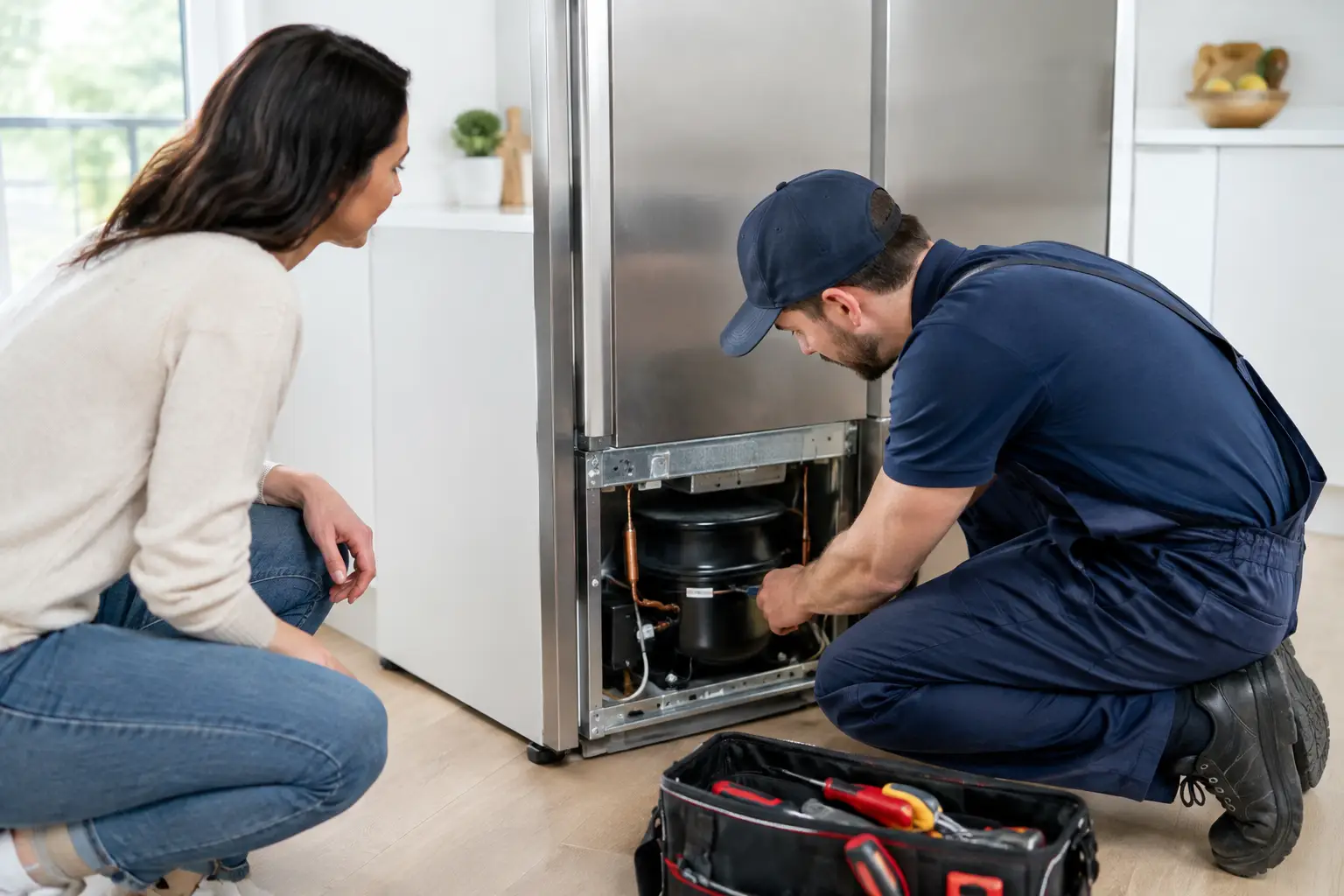
A refrigerator failure rarely happens at a convenient time. You may notice warm milk at breakfast, a puddle under the freezer before work, or an ice maker that quits just before guests arrive. Prompt refrigerator repair protects your food, prevents water damage, and can keep a small problem from becoming a costly replacement.
Some issues have a simple cause that you can safely check yourself. Others involve electrical components, refrigerant, sealed systems, or water connections that need a trained technician. Knowing the difference helps you act quickly without risking the appliance, your home, or your groceries.
Refrigerator Repair Starts With the Symptom
The most useful detail for a technician is not that the refrigerator is “broken.” It is what changed, when it changed, and whether the freezer and refrigerator compartments are affected in the same way. A unit that runs constantly has a different likely cause than one that is completely silent.
Warm temperatures are the most urgent concern. The refrigerator compartment should generally stay at or below 40°F, while the freezer should be near 0°F. If food is not staying cold, move perishables to a cooler with ice or another working refrigerator right away. Do not assume food is safe just because it still feels somewhat cool.
A refrigerator that is warm but still running may have blocked airflow, heavy frost buildup, dirty condenser coils, a failed evaporator fan, a defrost problem, or a more serious sealed-system issue. The exact cause depends on the model and the pattern of cooling. For example, a freezer that is cold while the fresh-food section is warm often points to an airflow or defrost-related problem rather than a total cooling failure.
Water on the floor calls for attention, too. A loose water-line connection, cracked filter housing, clogged defrost drain, damaged door gasket, or leaking ice maker can all create puddles. Even a small leak can damage flooring or cabinetry over time, especially in a kitchen where it goes unnoticed overnight.
Unusual sounds are another common reason to schedule service. A light hum and occasional clicks are normal. Loud buzzing, repeated clicking, grinding, rattling, or a fan-like scraping sound are not. Noise may come from the compressor, fan motor, ice maker, condenser area, or simply an appliance that is not level. A proper diagnosis matters because replacing the wrong part wastes time and money.
Safe Checks Before You Schedule Service
A few basic checks can rule out simple operating issues. These steps are safe for most homeowners, but stop if you see damaged wiring, smell burning, hear a loud electrical crackling sound, or notice a significant water leak. In those situations, unplug the unit if it is safe to do so and arrange professional help.
First, confirm that the refrigerator has power. Check that the plug is secure and that the outlet has not tripped. Avoid using extension cords for a refrigerator, since they can create a safety concern and may not provide reliable power for the compressor.
Next, check the temperature controls. They can be bumped during cleaning or while loading groceries. Give the appliance time to respond after any adjustment – typically several hours, not a few minutes. Setting the control to its coldest position is not always the answer; it can sometimes cause freezing in the refrigerator compartment without resolving the underlying issue.
Make sure the doors are closing fully. Food containers, shelves, or a warped door gasket can hold a door slightly open, allowing warm air and humidity inside. Look for visible tears, dirt, or gaps around the gasket. Cleaning it with mild soap and water may improve the seal, but a cracked or loose gasket usually needs replacement.
If your model has accessible condenser coils, inspect them for heavy dust or pet hair. Restricted airflow can make the refrigerator work harder and reduce cooling performance. Unplug the appliance before cleaning around the back or lower front area, and use a vacuum brush attachment carefully. Not all modern refrigerators have owner-accessible coils, so do not force open panels or remove components you are not comfortable reinstalling.
For refrigerators with a water dispenser or ice maker, check whether the household water supply valve is open and whether the filter is overdue for replacement. A filter issue can reduce water flow, but it will not explain every ice-maker problem. Frozen fill tubes, failed inlet valves, faulty sensors, and ice-maker motor problems require further testing.
When DIY Refrigerator Repair Can Make Things Worse
Online videos can make refrigerator repair look straightforward, but modern units rely on multiple sensors, control boards, fans, heaters, and safety switches working together. A symptom does not always reveal the failed part. Replacing a thermostat when the real problem is an evaporator fan, for instance, can leave you with the same failure and an unnecessary parts bill.
Refrigerant work is not a do-it-yourself project. If the refrigerator has a sealed-system leak, compressor concern, or suspected refrigerant issue, it needs qualified service. These repairs require specialized equipment and accurate diagnosis. They also involve a practical repair-versus-replace decision based on the appliance’s age, condition, model, and estimated cost.
Electrical repairs deserve the same caution. Capacitors, relays, control boards, and wiring can hold or carry electrical current. Incorrect installation may damage the appliance or create a fire risk. If your refrigerator trips the breaker, smells hot, shows scorch marks, or repeatedly clicks without starting, professional service is the safer choice.
Defrost problems are also easy to misdiagnose. You may see frost on the freezer’s back wall and assume the refrigerator only needs to be thawed. Manually defrosting it may restore cooling temporarily, but the frost will return if a defrost heater, thermostat, sensor, timer, or control board has failed. A technician can identify why the system is icing over rather than treating the symptom alone.
What to Expect From Professional Refrigerator Repair
A reliable service visit should begin with listening. The technician should ask what you have noticed, when the issue started, whether the refrigerator has been moved recently, and whether there have been power outages, leaks, or temperature changes. Those details help narrow the diagnosis before parts are tested.
The inspection may include checking temperatures, airflow, door seals, fans, electrical connections, defrost components, compressor operation, water lines, and diagnostic error codes. The goal is to identify the root cause, not make a guess based on one symptom.
Before work begins, you should receive a clear explanation of the problem and an honest quote. The best repair decision is not always the cheapest immediate option. A repair can be the sensible choice for a newer, well-maintained refrigerator with a replaceable component. On the other hand, an older appliance with a costly compressor or sealed-system failure may be better replaced. A trustworthy technician will explain that trade-off clearly rather than pushing a repair that does not make financial sense.
For households and small businesses, response time matters. A refrigerator outage affects food safety, daily routines, inventory, and customer operations. Fasteny Appliance Repair provides responsive refrigerator service across Greater Massachusetts, including Peabody, Waltham, Brookline, and more than 130 surrounding communities. The focus is straightforward: diagnose the issue accurately, provide transparent pricing, and complete the repair correctly whenever parts and conditions allow.
Ways to Help Your Refrigerator Last Longer
No refrigerator lasts forever, but routine care can reduce avoidable breakdowns. Keep enough space around vents for airflow, avoid overpacking the compartments, and do not block interior air passages with large containers. Clean spills promptly, especially near the door gasket, because residue can prevent a proper seal.
Replace water filters according to the manufacturer’s guidance, and address small leaks or unusual noises before they become larger repairs. During a move, keep the refrigerator upright whenever possible. If it must be tilted, follow the manufacturer’s recommendations before plugging it back in, since compressor oil needs time to settle.
A refrigerator does quiet, essential work every hour of the day. When it stops cooling, leaks, freezes food, or makes unfamiliar noises, early action gives you the best chance of protecting your kitchen, your groceries, and your budget.