A cold oven at dinner time is more than an inconvenience. It can interrupt family routines, delay prep at a small food business, and leave you wondering whether the appliance needs a simple adjustment or a major repair. The best oven repair options depend on the symptom, the oven’s age, and whether the issue involves heat, gas, electricity, or safety.
The right next step is not always replacement. Many common oven failures come down to a worn heating element, failed igniter, faulty temperature sensor, damaged control board, or loose electrical connection. A professional diagnosis identifies the actual cause before money is spent on parts that may not solve the problem.
Start With the Safe, Simple Checks
Before scheduling service, check the basics that do not require disassembling the appliance. Confirm that the oven is receiving power, the circuit breaker has not tripped, and the controls are set correctly. If the clock is flashing after a power outage, some models will not heat until the clock is reset.
For an electric oven, look through the door window while the bake or broil setting is on. A heating element that remains completely dark, has visible cracks, or shows blistering may have failed. Do not touch the element or remove panels while the oven is connected to power.
For a gas oven, a faint gas odor, repeated clicking, delayed ignition, or an oven that will not light calls for more caution. Turn the appliance off, ventilate the area, and avoid using matches, lighters, or electrical switches nearby. Gas-related problems are not a DIY repair. A qualified technician should inspect the igniter, burner assembly, gas valve, and related safety components.
These checks can clarify the situation, but they should not become a troubleshooting project involving exposed wiring, gas connections, or high-voltage components. Ovens create heat in a confined space, and an incorrect repair can create a fire, shock, or carbon monoxide risk.
Best Oven Repair Options by Problem
The oven will not heat at all
When an electric oven has lights and a working display but produces no heat, the bake element, broil element, thermal fuse, wiring, or electronic control board could be responsible. In many cases, replacing a failed element is a practical repair that restores normal operation quickly.
Gas ovens that will not heat often have a weak or failed igniter. An igniter can glow without becoming hot enough to open the gas valve, which is why a visual inspection alone may not identify the failure. Testing the component correctly is the safest way to avoid replacing the wrong part.
The oven heats, but food cooks unevenly
Uneven baking, hot spots, burned edges, or food that takes much longer than expected often point to temperature control problems. The oven may be running 25, 50, or more degrees away from the selected temperature because of a failing sensor, thermostat, control board, or heating element.
An oven thermometer can indicate that there is a problem, but it does not always reveal why the temperature fluctuates. A technician can test the sensor and heating circuits, then determine whether calibration is appropriate or a part needs replacement. This matters because repeatedly adjusting the temperature setting can hide a growing fault rather than correct it.
The oven door will not close, lock, or seal
A door that hangs unevenly or will not fully close lets heat escape and forces the appliance to work harder. Worn hinges, broken springs, a damaged gasket, or a misaligned door can cause the issue. If the door lock fails after a self-cleaning cycle, the lock assembly or control may need attention.
Do not force a locked door open or pry at the latch. That can damage the glass, frame, or lock mechanism and turn a manageable repair into a larger one.
The display, buttons, or self-clean feature are failing
Unresponsive buttons, error codes, a flickering display, or a control panel that changes settings on its own usually require professional diagnosis. Moisture, heat exposure, normal wear, and electrical surges can affect an electronic control board.
The self-cleaning cycle deserves special care. It exposes the oven to extreme heat and can reveal weak components, particularly older door locks and control boards. If the oven shows an error, will not unlock, or loses power after self-cleaning, leave it off until it can be inspected.
DIY Repair, Local Service, or Replacement?
The best choice comes down to risk and value. Replacing an oven light bulb, resetting a breaker, or checking a simple setting may be reasonable for a homeowner. Repairs involving heating elements, igniters, wiring, sensors, controls, or gas lines are better handled by a certified appliance technician.
Professional repair offers a clearer answer when symptoms overlap. For example, an oven that does not heat could have a failed element, but it could also have a damaged relay on the control board. Guessing often means buying parts unnecessarily, waiting longer for a solution, and still having an unusable oven.
Replacement may make more sense when the oven is near the end of its expected service life, has multiple expensive failures, or needs a major part that is no longer available. However, age alone does not decide the issue. A well-maintained oven with one failed igniter or heating element is frequently worth repairing, especially when the rest of the appliance is in good condition.
For rental properties and small commercial kitchens, downtime has its own cost. Fast diagnosis and a clear repair quote can be more valuable than trying several low-cost fixes that delay the return to normal service.
What a Dependable Oven Repair Visit Should Include
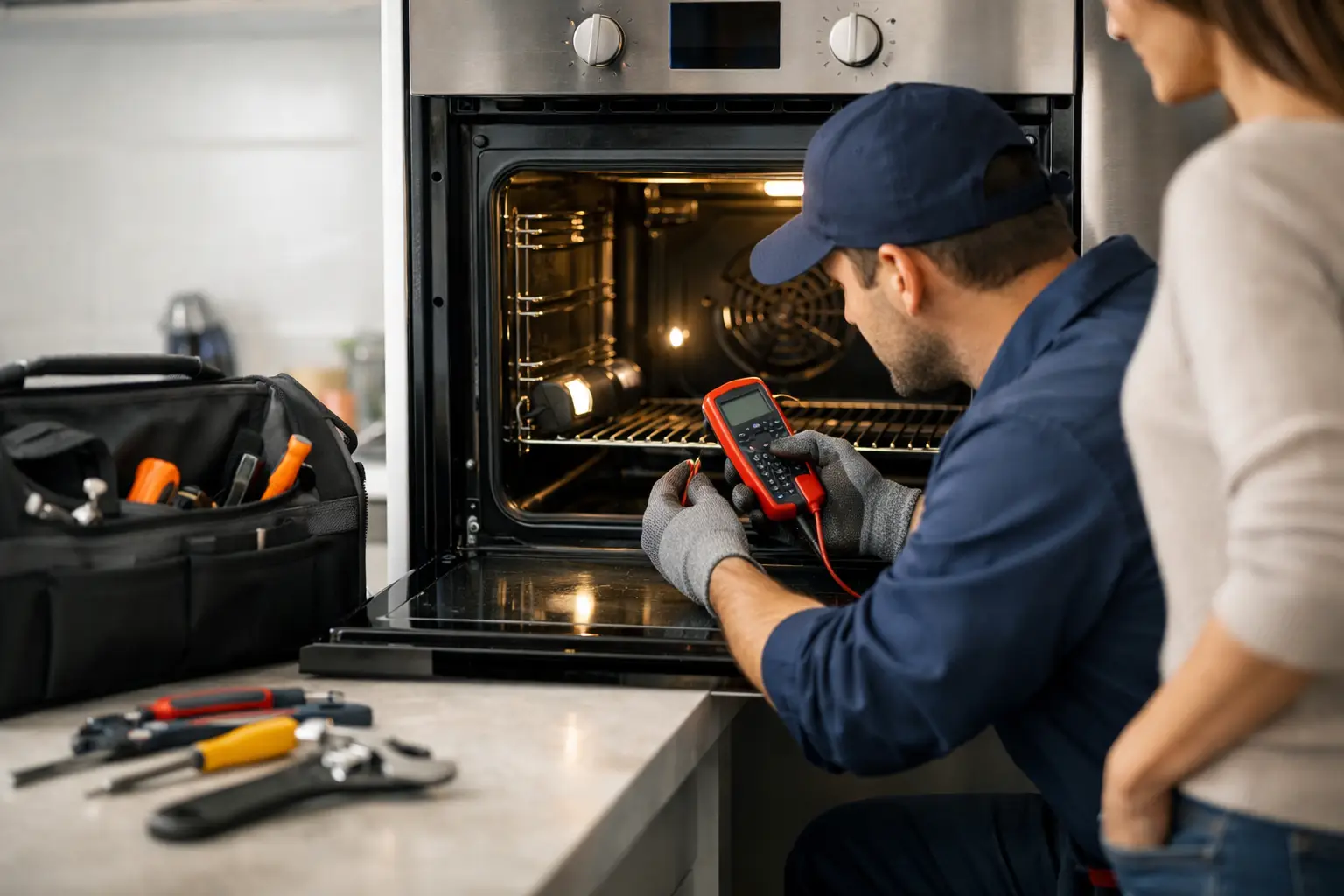
A trustworthy repair company should begin with diagnosis, not assumptions. The technician should listen to the symptoms, inspect the appliance, test the relevant components, and explain what failed in plain language. You should receive a clear quote before repair work begins, including labor and any recommended parts.
Ask whether the technician has experience with your oven type and fuel source, whether the needed part is available, and what warranty or satisfaction policy applies to the repair. A good service experience is not just about getting heat back. It is about understanding the work, knowing the price, and having confidence that the repair addresses the cause.
For homeowners and businesses in Greater Massachusetts, Fasteny Appliance Repair provides professional oven diagnosis with same-day and next-day availability when scheduling permits. That responsive approach is especially useful when an oven failure disrupts meal planning, tenants, or daily business operations.
When to Schedule Service Right Away
Some oven problems should not wait for a convenient time. Schedule professional service promptly if you notice a gas smell, sparking, smoke, a burning-wire odor, a breaker that repeatedly trips, damaged wiring, shattered door glass, or an oven that overheats beyond the selected temperature.
Also arrange service if the appliance only works intermittently. A problem that appears and disappears can still indicate a loose connection, failing control, or overheating component. Continuing to use the oven may increase the chance of a complete breakdown at the worst possible moment.
Keep a Small Problem From Becoming a Bigger One
Avoid lining the oven floor with foil unless the manufacturer specifically permits it. Foil can block airflow, reflect heat onto components, and damage finishes or sensors. Clean spills after the oven cools, keep door gaskets free of heavy residue, and do not slam the door or rest heavy cookware on it.
If your oven is taking longer to preheat, producing uneven results, or showing an occasional error code, schedule a diagnosis before it stops working altogether. A fast, honest repair decision can protect your kitchen routine and help you get more dependable years from an appliance that still has plenty of life left.