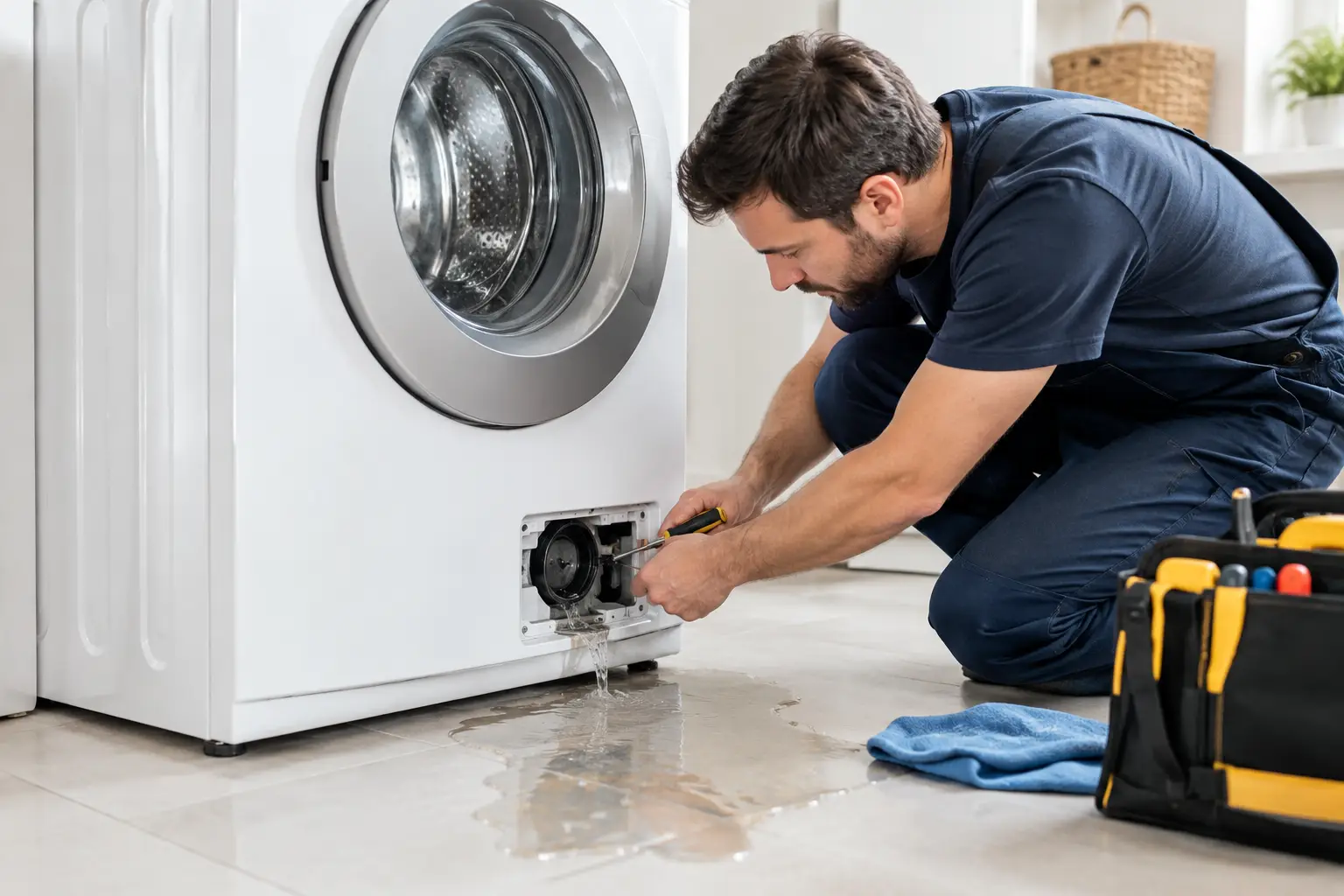
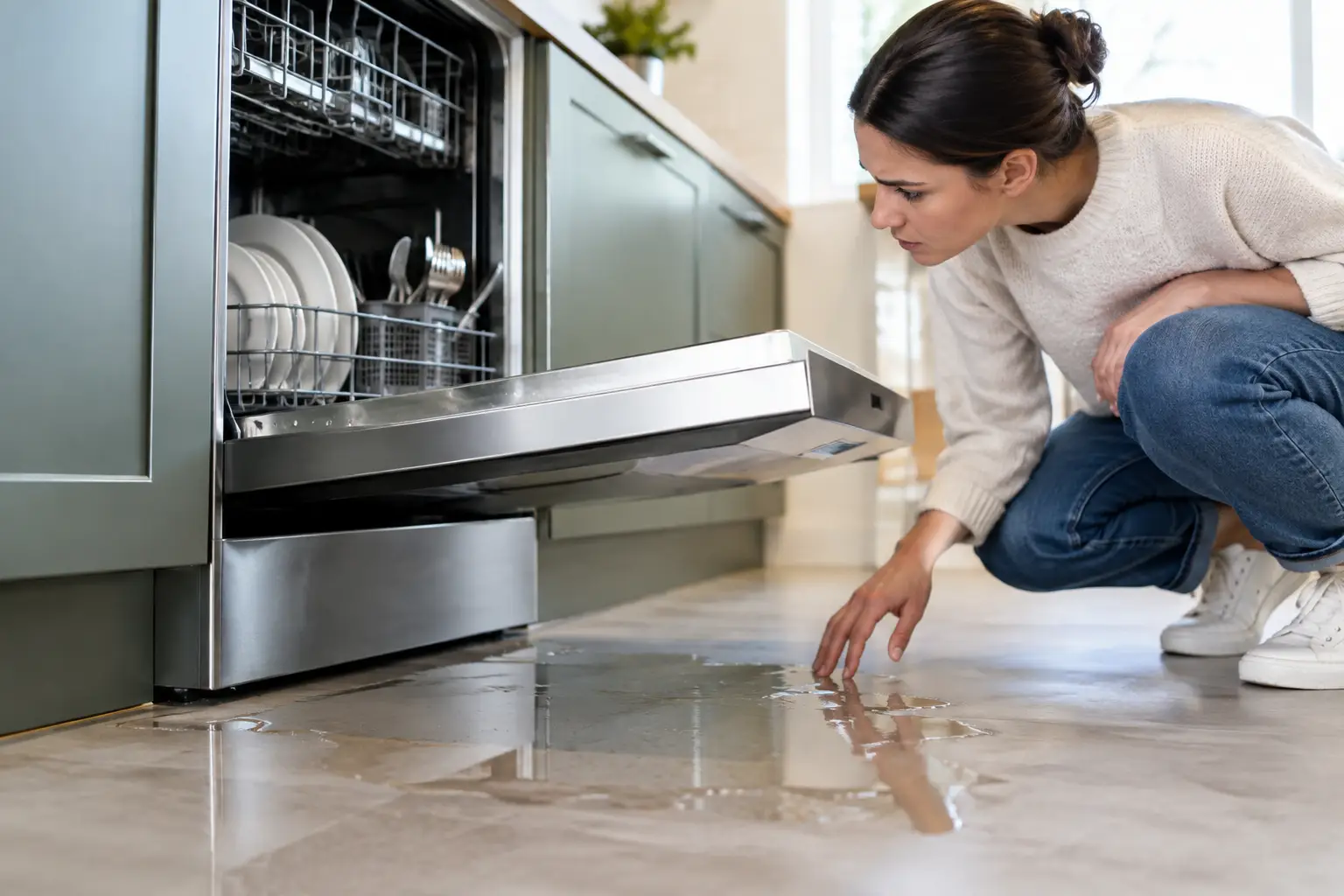
A puddle near the dishwasher after a cycle is more than an inconvenience. Can a dishwasher leak? Absolutely – and even a small amount of water can damage flooring, cabinets, subfloors, and nearby electrical connections if it is ignored. The good news is that many dishwasher leaks have identifiable causes, from a worn door gasket to a drain connection that needs repair.
The first priority is stopping the water and narrowing down where it is coming from. Do not keep running cycles to see whether the problem repeats. A dishwasher that leaks once may leak more heavily during the next fill or drain phase.
What to Do When a Dishwasher Is Leaking
If water is actively spreading across the floor, cancel the cycle and turn off the dishwasher’s power at the breaker if you can do so without stepping in standing water. Shut off the water supply valve under the sink, then place towels around the appliance to contain the water.
Avoid pulling a built-in dishwasher out of its opening while it is connected to power and plumbing. The supply line, drain hose, and electrical connection can be damaged or create a larger problem. Once the area is safe, note when the leak appeared: at the beginning of the cycle, during washing, or as the dishwasher drained. That detail helps identify the likely source.
If water has reached outlets, electrical wiring, or the area below the kitchen floor, treat it as an urgent repair situation. Dry the visible water, but have the appliance and affected area evaluated before using the dishwasher again.
Can a Dishwasher Leak From the Door?
A leak from the front or sides of the door is one of the most common dishwasher problems. The rubber gasket around the door creates the seal that keeps wash water inside. Over time, it can flatten, crack, loosen, or collect food residue that prevents the door from closing tightly.
Check the gasket for obvious tears, gaps, or hardened sections. Wipe away grease and debris with a soft cloth and mild soap, then inspect whether the gasket sits evenly in its channel. Cleaning may solve a minor sealing issue, but a damaged gasket needs replacement.
The door itself can also be the issue. A dishwasher that is not level may allow water to pool toward one side of the door. Loose or misaligned hinges and a worn door latch can keep the door from closing with enough pressure to seal properly. These repairs may look simple, but alignment matters. An incorrectly adjusted door can continue leaking even after a new gasket is installed.
Too Many Suds Can Push Water Out
Using regular hand dish soap in a dishwasher can create a surprising amount of foam. Suds expand, force their way past the door seal, and can look like a major appliance failure. Only use detergent labeled for automatic dishwashers, and use the amount recommended for your water conditions.
Too much dishwasher detergent can also contribute to excess sudsing, particularly in homes with soft water. If the leak began after changing detergent or using more than usual, that is a useful clue. Still, do not assume suds are the only cause if water continues to appear after the machine has been cleaned and reset.
Leaks Under the Dishwasher Usually Point to Plumbing or Parts
Water showing up beneath the dishwasher can come from several places. The water inlet valve controls the flow of water into the appliance. If the valve body, its fittings, or the supply line is loose or worn, a leak may occur while the dishwasher fills – sometimes even when it is not running.
A damaged tub is another possibility. Plastic tubs can crack, and older dishwasher racks with exposed metal may rust and damage certain interior components over time. A crack may be difficult to see because it can leak only under the heat and pressure of an active cycle.
The pump and pump seal are also common sources of under-unit leaks. The pump circulates wash water and sends wastewater to the drain. As seals age, they can fail gradually, creating a small drip that becomes more noticeable over several cycles. Replacing a pump seal or pump assembly requires access to the bottom of the appliance and an accurate diagnosis, since a nearby hose or connection can produce similar symptoms.
Drain Hose and Sink Connections Matter Too
A dishwasher often leaks during the drain portion of a cycle, which points toward the drain hose, air gap, garbage disposal connection, or sink plumbing. A loose clamp, split hose, or clogged drain path can send water into the cabinet under the sink or onto the floor behind the dishwasher.
Look under the sink for moisture around the hose connection. If the dishwasher was recently installed, replaced, or moved, an installation-related connection issue is more likely. New garbage disposals can also cause drainage problems when the dishwasher knockout plug has not been removed. That typically causes poor draining rather than a direct floor leak, but backed-up water can contribute to overflow and should be corrected.
Do not tape a cracked drain hose or overtighten fittings in an attempt to stop a leak. These temporary fixes often fail during a later cycle. A secure, properly routed hose and correctly fitted connections are the safer long-term repair.
Why a Dishwasher May Leak Only During Certain Cycles
The timing of the leak provides useful information. Water appearing shortly after the cycle starts may involve the inlet valve, supply line, or float system. A leak during washing often suggests a door seal, spray arm, pump, or tub issue. Water that appears near the end of the cycle is more likely connected to drainage.
A damaged spray arm deserves attention because it can direct water toward the door with unusual force. Check whether the arm spins freely and whether it has cracks or blocked holes. A spray arm that is loose or distorted can create a leak that seems like a door-gasket problem.
Dishwashers also have a float or water-level system designed to prevent overfilling. If that system is blocked, stuck, or malfunctioning, the appliance may take in too much water. This is less common than a gasket or hose issue, but it should be checked by a qualified technician because the underlying cause may involve electrical components or the inlet valve.
When You Can Troubleshoot and When to Call for Repair
Homeowners can safely handle a few basic checks: remove excess detergent, clean visible debris from the door gasket, confirm that the dishwasher is loaded without blocking the door, and inspect accessible plumbing connections under the sink for obvious moisture.
A professional repair is the better choice when the source is underneath the unit, water returns after basic cleaning, the dishwasher leaks from multiple areas, or you see signs of a failed pump, valve, or cracked tub. It is also wise to schedule service if the appliance is hardwired, built into cabinetry, or leaking near electrical components.
Fasteny Appliance Repair helps homeowners and local businesses across Greater Massachusetts identify the actual cause before recommending a repair. A clear diagnosis matters because replacing the wrong part can waste time and leave water damage risk unresolved. A qualified technician can inspect seals, pumps, hoses, valves, alignment, and drainage connections in one visit, then provide an honest quote before work begins.
Preventing Another Dishwasher Leak
Regular care lowers the chance of a future leak. Wipe the door gasket periodically, use the correct automatic dishwasher detergent, and avoid overloading racks so dishes do not interfere with the door or spray arm. Clean the filter according to the appliance manufacturer’s instructions, since poor drainage can put unnecessary stress on the system.
It also helps to look under the sink and around the dishwasher every few months, especially after plumbing work or a new appliance installation. A small drip is far easier to repair than a warped cabinet base or damaged kitchen floor.
A dishwasher should leave dishes clean, not leave you checking for water under the cabinets. If the leak is not clearly caused by detergent or a dirty gasket, keeping the unit off until it is properly diagnosed is the safest way to protect your kitchen.