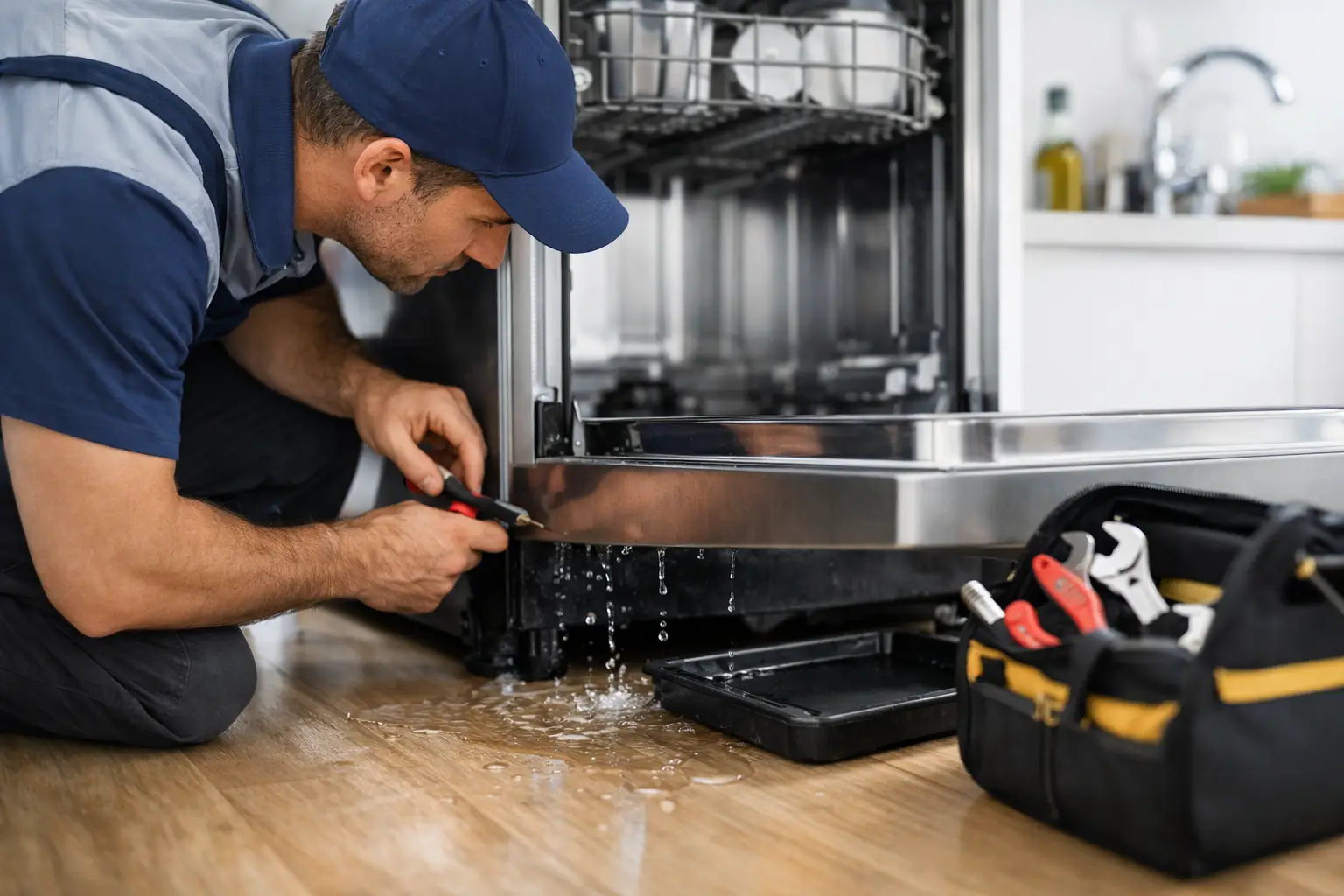
A puddle under the dishwasher usually shows up at the worst possible time – right before guests arrive, during a busy week, or after a full dinner cleanup. If you are searching for dishwasher leaking repair service, you probably do not need a long theory lesson. You need to know what the leak might mean, what to do right away, and when it makes more sense to call a professional before water damage gets worse.
Dishwasher leaks can start small and still point to a real mechanical problem. In some homes, the issue is as simple as a damaged door gasket. In others, the leak comes from a cracked hose, a failing pump seal, poor drainage, or an installation problem that keeps sending water where it should not go. The tricky part is that the water on the floor does not always tell you where the actual failure started.
When a dishwasher leak needs fast attention
A leaking dishwasher is not just a nuisance. Repeated leaks can damage flooring, swell cabinet panels, stain ceilings below, and create conditions for mold. For homeowners, that means a repair that gets more expensive the longer it sits. For landlords and small commercial properties, it can quickly turn into a tenant complaint or downtime problem.
That is why timing matters. If the leak happens once and then disappears, it is still worth checking. Some dishwasher leaks only show up during certain parts of the cycle, such as filling, washing, draining, or drying. A machine can appear fine during one load and still leak badly during the next.
If you see active water around the unit, the safest first step is to stop the cycle, turn off power to the dishwasher if needed, and avoid running another load until the source is diagnosed. Towels can help contain the mess, but they do not solve the cause.
Common problems a dishwasher leaking repair service can fix
Most leaking dishwashers fall into a handful of repair categories. The exact fix depends on the brand, age of the unit, and where the water appears.
Door gasket and door seal failures
The door gasket is one of the most common reasons water escapes from the front of the dishwasher. Over time, the rubber can dry out, flatten, crack, or pull away from the frame. When that happens, spray inside the tub can push water past the seal and onto the floor.
This is a fairly straightforward repair in many cases, but not always. A leak at the front can also be caused by a door that is misaligned, a latch problem, or racks that prevent the door from closing properly. That is why replacing the gasket without checking the rest of the door assembly can lead to a repeat service call.
Damaged inlet valve or water supply line
If the leak happens while the dishwasher is filling, the water inlet valve or supply connection may be the issue. A loose fitting, worn valve, or cracked supply line can let water drip or spray underneath the unit.
These parts are easy to overlook because the leak often stays hidden until enough water collects under the dishwasher. In some kitchens, the water can travel under cabinets before you notice it, making the source harder to pinpoint.
Drain hose and pump problems
Leaks under the dishwasher often come from the drain hose, circulation pump, or pump seal. Hoses can split with age, slip loose at the connection point, or clog in a way that creates backup pressure. Pump seals can also wear out, especially in older machines.
This is one of those repairs where it depends on the condition of the whole unit. If the dishwasher is otherwise in good shape, replacing a hose or seal is often worthwhile. If the machine is older and multiple components are failing, a technician may advise weighing repair cost against replacement value.
Float switch or overfilling issues
Dishwashers are designed to stop filling at the right water level. If the float switch sticks or another control issue causes overfilling, water can spill out during the cycle. Sometimes the problem looks like a door leak when the real issue is too much water inside the tub.
That is why diagnosis matters. Treating the symptom instead of the cause can waste time and money.
Clogged filters and drainage issues
Not every leak starts with a broken part. A clogged filter, blocked drain path, or standing water issue can force water into places it should not be. Food debris, grease buildup, and improper detergent use can all contribute.
In these cases, cleaning may be part of the fix, but a professional should still confirm there is not a second issue hiding behind the blockage. Drain problems sometimes show up alongside pump wear or hose damage.
What to do before you call for repair
There are a few practical steps you can take without getting too far into disassembly. First, stop using the dishwasher until the leak is identified. Running more cycles can spread water farther under the flooring or cabinets.
Next, check where the water appears. A front leak suggests a door seal, overfilling, or loading issue. Water from underneath may point to a hose, valve, or pump problem. Water near the sink connection may involve the drain line or garbage disposal hookup.
You can also look for obvious signs such as torn gasket material, visible cracks in accessible tubing, or detergent buildup. Just be careful not to assume the first visible clue is the full answer. Many dishwasher leaks have more than one contributing factor.
If the unit was recently installed or moved, mention that when you schedule service. Leveling errors, loose connections, and drain routing problems are common after installation work.
Why professional dishwasher leaking repair service is usually the better call
Dishwashers combine water, electricity, drainage, and tightly packed mechanical parts. That is not a great setup for trial-and-error repairs. A professional technician can test components, access hidden connections, and identify whether the leak is coming from a failed part, improper operation, or a secondary issue that has not shown up yet.
A good service visit should also give you clarity on cost before the work moves forward. That matters because leak repairs vary. Replacing a gasket is very different from replacing a pump assembly or correcting multiple worn parts in an older machine.
For customers across Greater Massachusetts, speed is also part of the value. When a dishwasher is leaking, waiting several days for a diagnosis can mean more cleanup, more disruption, and more risk to the surrounding kitchen area. Fast scheduling and honest quotes make a real difference in these situations.
Choosing the right dishwasher leaking repair service
Not every repair company handles urgent appliance problems the same way. If your dishwasher is leaking, look for a service provider that offers prompt availability, clear pricing, and technicians with direct experience on major appliance brands.
It also helps to work with a local company that understands the practical side of home service. You want someone who shows up on time, explains the issue in plain language, and focuses on fixing the actual problem instead of pushing unnecessary parts. Fasteny Appliance Repair is built around that kind of service – responsive scheduling, transparent pricing, and repairs done right the first time.
There is also a trust factor here. When a technician works in your kitchen, around your cabinets and flooring, confidence matters. A professional repair should leave you with answers, not more uncertainty.
Repair or replace? It depends on the dishwasher
Some leaks are absolutely worth repairing. If the dishwasher is newer, the issue is isolated, and the rest of the machine is performing well, repair is often the most cost-effective path. A seal, hose, or valve replacement can restore normal function without much downtime.
But there are cases where replacement is the smarter move. If the dishwasher is near the end of its expected life, leaking from multiple areas, or already struggling with drainage, cleaning, or control problems, a larger repair may not offer lasting value. A qualified technician should be able to walk you through that honestly.
That honesty matters just as much as technical skill. Homeowners and business operators want a clear recommendation, not pressure.
Preventing the next leak
No dishwasher lasts forever, but a few habits can reduce the chance of another leak. Clean the filter regularly, avoid overloading the racks, use the correct detergent, and pay attention to small changes such as new drips, unusual sounds, or water left in the tub after a cycle.
It is also smart to act early. A dishwasher rarely starts with a major leak on day one. More often, there are warning signs first – a slight drip, a musty smell, a warped toe kick panel, or moisture under the unit. Catching those signs early usually leads to a simpler repair.
If your dishwasher is leaking now, the main goal is simple: protect your kitchen, get the problem diagnosed correctly, and fix it before a small puddle turns into a bigger repair than it needed to be.