
How to Effectively Unclog a Dishwasher that Isn’t Draining
Few kitchen problems are as frustrating as opening your dishwasher and finding a pool of dirty water sitting at the bottom. When a dishwasher isn’t draining, it usually means something is blocking the water’s path out of the tub — and the good news is that most of these clogs can be cleared at home in under an hour. This guide explains exactly how to unclog a dishwasher that won’t drain, what causes the problem, and when it’s smart to call a professional.
What Causes a Dishwasher Not to Drain?
A dishwasher drains by pumping used water through a filter, a drain hose, and (in most homes) the garbage disposal or sink drain. When any point along that path is blocked, water backs up into the tub. The most common causes include:
- A clogged filter packed with food debris, grease, or glass fragments.
- A blocked or kinked drain hose between the dishwasher and the sink.
- A plugged garbage disposal — especially if a new disposal was installed and the knockout plug was never removed.
- A clogged air gap on the countertop or sink.
- Hard water deposits that build up inside hoses and valves over time.
- A failing drain pump, which needs professional diagnosis.
Before You Start: Safety First
Turn off power to the dishwasher at the breaker before reaching inside or working near the drain. Lay down a towel to catch spills, and keep a shallow container and cup handy for removing standing water. Never use harsh chemical drain cleaners inside a dishwasher — they can damage the seals and pump.
How to Unclog a Dishwasher: Step by Step
Step 1: Remove the standing water
Scoop out as much water as you can with a cup, then soak up the rest with towels. Clearing the tub first makes it much easier to reach the filter and inspect for clogs.
Step 2: Clean the dishwasher filter
Remove the lower rack and twist out the cylindrical filter at the bottom of the tub. Rinse it under warm water and use a soft brush to clear trapped food, grease, and debris. A clogged filter is the single most common reason a dishwasher won’t drain.
Step 3: Check the drain hose and garbage disposal
Inspect the drain hose for kinks or clogs where it connects to the sink or disposal. If you have a garbage disposal, run it to clear any blockage and confirm the knockout plug was removed during installation — a common oversight that stops the dishwasher from draining entirely.
Step 4: Address hard water deposits
If your home has hard water deposits, mineral scale can slowly restrict hoses and valves. Run an empty cycle with a cup of white vinegar placed upright in the bottom rack to help dissolve light buildup.
Step 5: Inspect the air gap
If your sink has an air gap (the small cylinder next to the faucet), unscrew the cap and clear any debris inside. A blocked air gap can prevent proper drainage even when everything else is clean.
When to Call a Professional
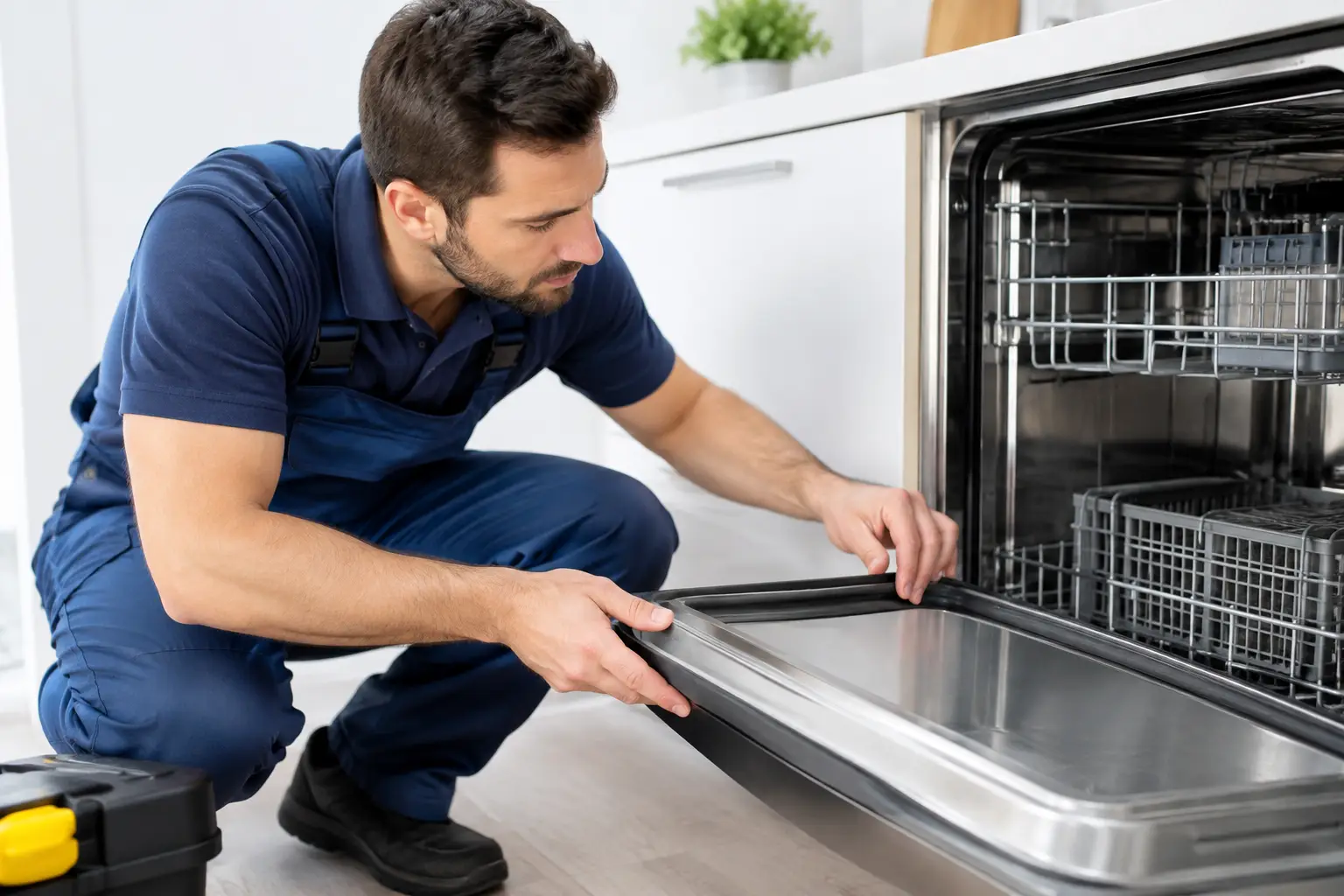
If the dishwasher still won’t drain after cleaning the filter, hose, and air gap — or if you notice leaks, error codes, a burning smell, or a pump that hums without moving water — it’s time for a professional diagnosis. A technician can safely test the drain pump, valves, and control board and fix the actual fault instead of guessing.
For more dishwasher troubleshooting, read our guides on why your dishwasher isn’t cleaning properly and how to handle a leaking dishwasher.
Frequently Asked Questions
Why is there standing water in my dishwasher after every cycle?
Standing water almost always points to a clog in the filter, drain hose, garbage disposal, or air gap. Clear each in turn; if water remains, the drain pump may be failing.
Can I use a chemical drain cleaner in my dishwasher?
No. Chemical drain cleaners can damage the pump, hoses, and seals. Use a filter cleaning and a vinegar cycle instead, or call a professional.
How much does dishwasher repair cost?
It depends on the part and the issue, but you’ll always receive a transparent, upfront quote before any work begins.
Conclusion
Most dishwasher drainage problems come down to a clogged filter, hose, disposal, or air gap — all of which you can check yourself in under an hour. If the water still won’t clear, don’t keep running the cycle; a quick professional diagnosis prevents a minor clog from turning into a pump or motor repair.
Fasteny Appliance Repair offers same-day dishwasher repair across Billerica, Reading, and other Massachusetts communities. Fill out our online request form or visit the Fasteny Appliance Repair homepage to book service — or call +1 (617) 618-3311 for all your appliance repair needs.