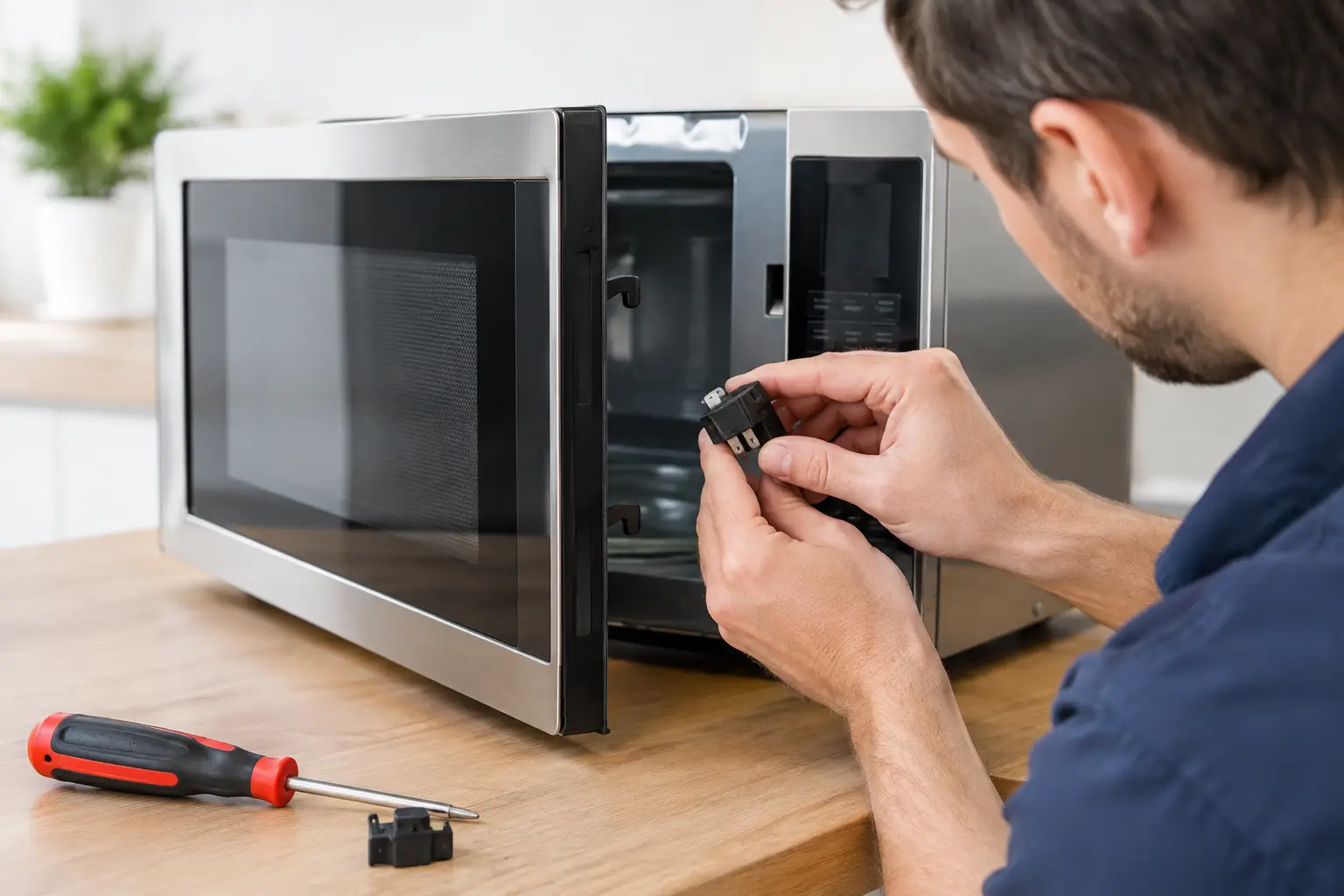
A microwave that suddenly refuses to start after the door closes can stop a busy kitchen in its tracks. In many cases, microwave door switch repair is the right place to investigate – but this is not a repair to approach casually. The switches behind the door latch are part of the appliance’s safety system, and a correct diagnosis protects both your microwave and your household.
What the Microwave Door Switch Does
Your microwave is designed not to create heat unless the door is fully closed and latched. Small safety switches, often called door interlock switches, sit behind the control panel area where the door hooks enter the cabinet. When you close the door, the hooks activate those switches and signal that it is safe for the microwave to operate.
Most models use more than one switch. A primary switch and secondary switch confirm the door is closed, while a monitor switch helps prevent operation if the interlock system is out of sequence. The exact setup varies by manufacturer and model, but the purpose remains the same: the microwave should not run with an open or improperly secured door.
Because these parts are used every time someone heats coffee, reheats leftovers, or defrosts dinner, they can eventually wear out. A worn switch, loose mounting bracket, damaged latch hook, or burned electrical connection can interrupt the safety circuit.
Signs You May Need Microwave Door Switch Repair
A defective door switch does not always cause the same symptom. Some microwaves appear completely dead, while others power on normally but will not begin a cooking cycle. If the display works, the clock is still visible, and the microwave refuses to run when you press Start, a door interlock problem is one possibility.
Other common signs include a microwave that starts only when the door is lifted or pressed in a certain direction, a light that stays on when the door is closed, or a unit that stops mid-cycle after the door is moved. You may also hear an unusual clicking sound when closing the door. In some cases, the microwave may blow a fuse or trip a circuit breaker when the door opens or closes.
Those symptoms deserve prompt attention. Do not keep forcing the door, slamming it shut, or repeatedly trying to start the unit. A failing switch or latch assembly can worsen with use, and repeated attempts can damage related components.
Not Every No-Start Problem Is a Bad Switch
The door switch is a frequent cause of no-start complaints, but it is not the only cause. A failed control board, faulty thermal fuse, damaged door latch, broken wiring, or a problem with the internal high-voltage system can create similar symptoms.
That is why replacing a switch based on symptoms alone can be a frustrating and expensive guess. A technician should inspect the latch alignment, test the switches in the correct sequence, examine the mounting hardware, and check for signs of heat damage or loose terminals before recommending a repair.
Why This Repair Requires Professional Care
Microwave ovens are different from most countertop appliances. Even after a microwave is unplugged, its high-voltage capacitor can retain a dangerous electrical charge. Removing the cabinet without the right training and equipment creates a serious shock risk.
There is also a safety issue beyond the electrical hazard. Door interlock components must be installed and aligned precisely. Using the wrong replacement part, fitting a switch incorrectly, or overlooking a cracked latch support may leave the microwave unreliable or compromise the system that prevents operation with the door open.
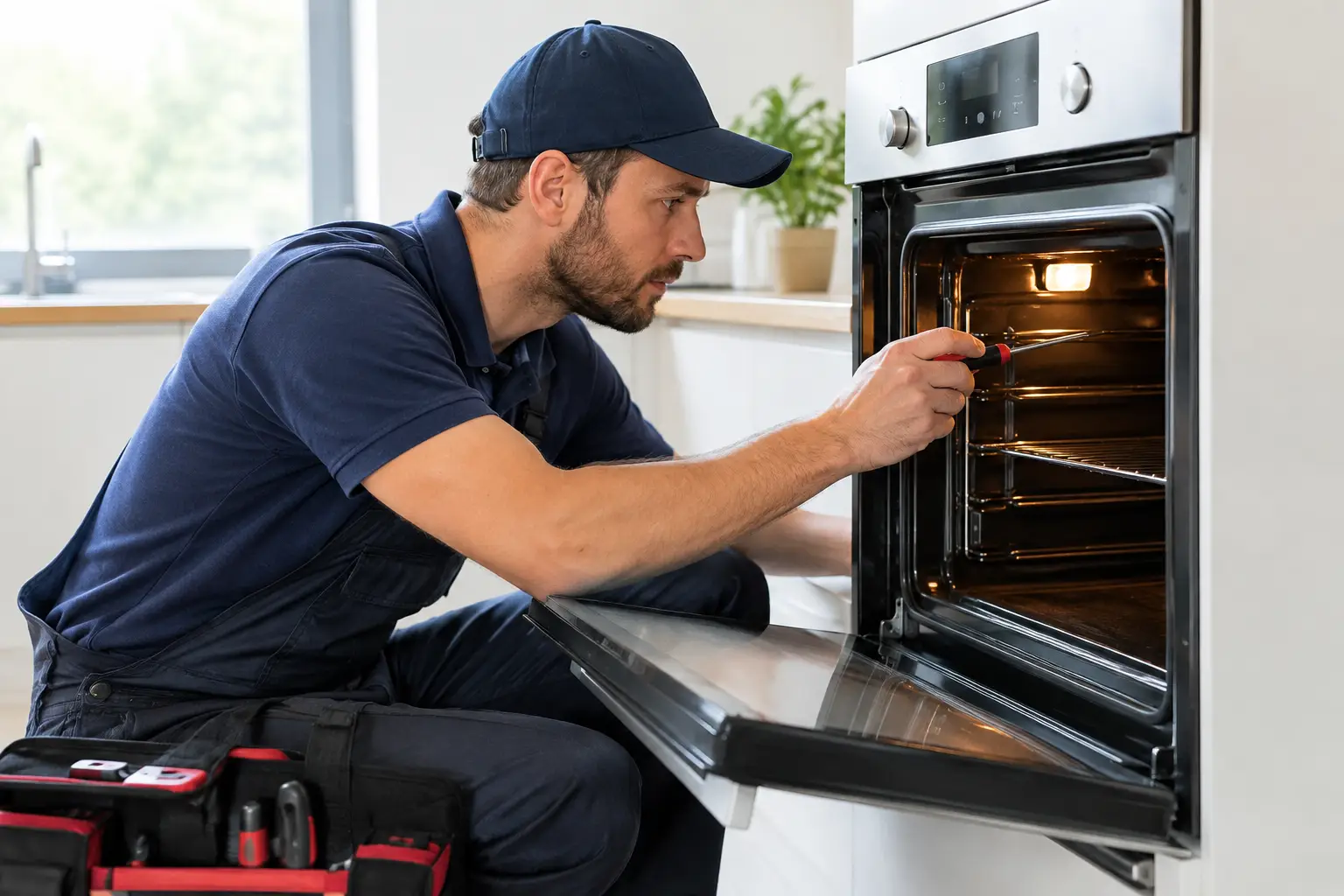
A certified appliance technician can safely access the internal components, discharge and test the appliance properly, confirm the correct replacement part, and verify that the door closes and operates as intended. That approach is especially worthwhile for over-the-range microwaves, where removal and reinstallation can be difficult and may involve the venting system or mounting hardware.
Safe Steps to Take Before Service
You can help narrow down the issue without opening the microwave cabinet. Start by unplugging the microwave if it is safe to reach the plug. For an over-the-range model with a hard-to-access outlet, turn off power at the appropriate circuit breaker instead.
Then inspect the door from the outside. Look for crumbs, grease buildup, or food debris around the latch openings that could prevent the hooks from seating fully. Clean the visible areas with a soft cloth and mild cleaner, but do not spray liquid into the latch openings or attempt to remove internal panels.
Check whether the door looks level and closes evenly. A sagging door, loose handle, cracked inner door panel, or latch hook that does not move smoothly can point to a mechanical issue rather than the switch itself. It is also helpful to note exactly what happens: Does the display remain on? Does the interior light change when the door closes? Does a fuse trip? Clear details help speed up the diagnosis.
Do not bypass, tape down, or attempt to defeat any door switch. The microwave should never be operated with the door open, damaged, or misaligned.
What a Professional Microwave Door Switch Repair Visit Includes
A reliable repair begins with diagnosis, not a rushed part swap. The technician will typically check the door hooks and latch assembly for wear, inspect the interlock switch holder and brackets, test each switch for proper continuity and sequence, and examine the wiring connections for heat damage.
If a switch has failed, the technician will replace it with a compatible part and make sure it is seated correctly. If the switch is functioning but the bracket is loose or the door is not engaging properly, the repair may involve correcting the alignment or replacing the damaged latch-related component instead. This distinction matters because a new switch cannot solve a door that does not activate it consistently.
After repair, the microwave should be tested through normal door-opening and cooking-cycle operation. The goal is more than getting the unit to turn on once. It is confirming that the appliance responds correctly every time the door opens and closes.
Repair or Replace: Which Choice Makes Sense?
For many microwaves, a door switch or latch repair is more affordable than replacing the entire appliance. The parts are generally smaller and less costly than a magnetron, inverter board, or major electronic control. If the microwave is otherwise heating properly, the door is in good condition, and the unit fits your kitchen well, repair is often the practical choice.
Replacement may make more sense when the microwave has several problems at once, such as poor heating, a failing display, excessive noise, rust inside the cavity, or repeated electrical issues. Age also matters. An older unit with multiple worn components can become less cost-effective to maintain than a newer model.
For landlords and small business operators, downtime can affect tenants, staff, or customers. A professional assessment provides a clear repair recommendation before money is spent on unnecessary parts or a premature replacement.
When to Schedule Service Right Away
Stop using the microwave and arrange professional service if it runs with the door open, sparks, emits a burning smell, repeatedly trips a breaker, or has a visibly broken door or latch. These are not wait-and-see issues.
Fasteny Appliance Repair helps homeowners and businesses across Greater Massachusetts identify microwave problems accurately and repair them with clear, upfront communication. A trained technician can determine whether the door switch, latch assembly, wiring, or another component is behind the failure, so you can make a confident decision without guesswork.
A microwave door that does not close or start properly is more than an inconvenience. Treat it as the safety issue it is, keep the appliance off until it is checked, and let a qualified technician restore dependable operation.