A dinner that should take 40 minutes can turn into an expensive takeout night when an oven will not heat, burns food on one side, or flashes an error code. Professional oven repair gets to the actual cause quickly, whether it is a failed heating element, a faulty temperature sensor, an igniter issue, or a control board problem. The goal is not just to make the display light up again. It is to restore safe, dependable cooking without guesswork or repeat visits.
For homeowners, landlords, and small business operators, the right next step depends on the symptom, the oven’s fuel type, and the age and condition of the appliance. Some checks are safe to make at home. Others involve high voltage, gas connections, or internal components that should be handled by an experienced technician.
When an Oven Problem Needs Professional Repair
An oven can appear to be working while still producing unreliable results. The clock may be on, the interior light may work, and the control panel may respond, but none of those signs confirm that the oven is heating correctly. If meals take much longer than usual, baked goods come out unevenly cooked, or the oven never reaches the selected temperature, a diagnosis is worthwhile.
A complete no-heat condition is another clear service call. In an electric oven, the bake element, broil element, wiring, thermal fuse, temperature sensor, or electronic control may be at fault. In a gas oven, the igniter is often the problem, but gas flow and safety components also need to be tested correctly. Replacing a part based only on a symptom can waste time and money when the underlying issue is elsewhere.
Call for service promptly if you notice a burning odor that does not fade after normal use, sparking, visible damage to an element, repeated breaker trips, a gas smell, or smoke coming from the control panel. Turn the appliance off and avoid using it until it has been inspected. If you smell gas, leave the area, avoid switches or open flames, and contact your gas utility or emergency services as appropriate before scheduling appliance service.
Common Oven Repair Problems and What They Mean
The oven will not heat at all
For electric models, a burned-out bake element is a common culprit. It may show blistering, cracks, or an obvious break, although some failed elements look normal from the outside. A defective relay on the control board, a failed sensor, or an interrupted power supply can create the same no-heat complaint.
Gas ovens may glow without igniting, or they may not glow at all. A weak igniter can draw enough power to glow orange but not enough to open the gas valve. This is why a visual inspection alone is not enough. Proper testing confirms which component has failed before a repair is recommended.
Food cooks unevenly or takes too long
Temperature accuracy matters more than the number shown on the display. If a 350-degree setting behaves like 300 degrees, food may dry out before it is cooked through. If the oven runs hot, cookies can scorch at the edges and casseroles may overcook.
An oven thermometer can help confirm a problem, but it should not be the only diagnostic tool. Oven temperatures naturally cycle above and below the set point, and an inexpensive thermometer may not reflect the average temperature accurately. A technician can test the sensor, heating operation, airflow, calibration, and control response to determine whether calibration is enough or a part needs replacement.
The oven heats but the broiler does not work
The broil function uses a separate heating element or burner system. A working bake cycle does not rule out a broil-side problem. A failed broil element, damaged wiring, bad relay, or control issue may prevent the upper heat source from operating.
This matters for more than browning food. On some electric ovens, the broil element also contributes to normal preheating. When it fails, the oven may heat slowly or struggle to maintain temperature.
The display shows an error code or will not respond
Error codes are useful clues, not complete diagnoses. They can point to sensor faults, communication issues, stuck keys, overheating, or control board failures. Writing down the exact code and noting when it appears can save time during a service visit.
A frozen display may sometimes respond after the appliance has been safely reset at the breaker for a few minutes. If the code returns, the controls are blank, or the oven starts acting unpredictably, do not keep resetting it. Repeated resets can mask an intermittent electrical problem and leave you without a reliable appliance when you need it most.
Safe Checks to Make Before Scheduling Oven Repair
A few basic checks can rule out simple causes without taking apart the appliance. First, make sure the oven is not set to a delayed-start, Sabbath, lock, or timer mode that prevents normal operation. Check that the clock is set correctly after a power outage, especially on models that require it before baking functions will start.
For an electric range, check the household breaker panel. A range can lose one side of its 240-volt power supply and still show lights or a functioning display. If a breaker has tripped, reset it once. If it trips again, stop there and arrange service rather than repeatedly forcing it on.
Look inside the oven for a visibly damaged heating element, loose racks touching an element, or heavy buildup that may cause smoke. Do not spray cleaner into vents, remove panels, bypass a door lock, or attempt to repair wiring yourself. Gas and electric ovens both contain components where a small mistake can create a much larger safety issue.
What a Professional Oven Repair Visit Should Include
A dependable repair starts with questions about the problem: when it began, whether it affects bake, broil, convection, or self-cleaning, and whether there were power outages, strange noises, odors, or error codes. That information helps narrow the diagnosis before testing begins.
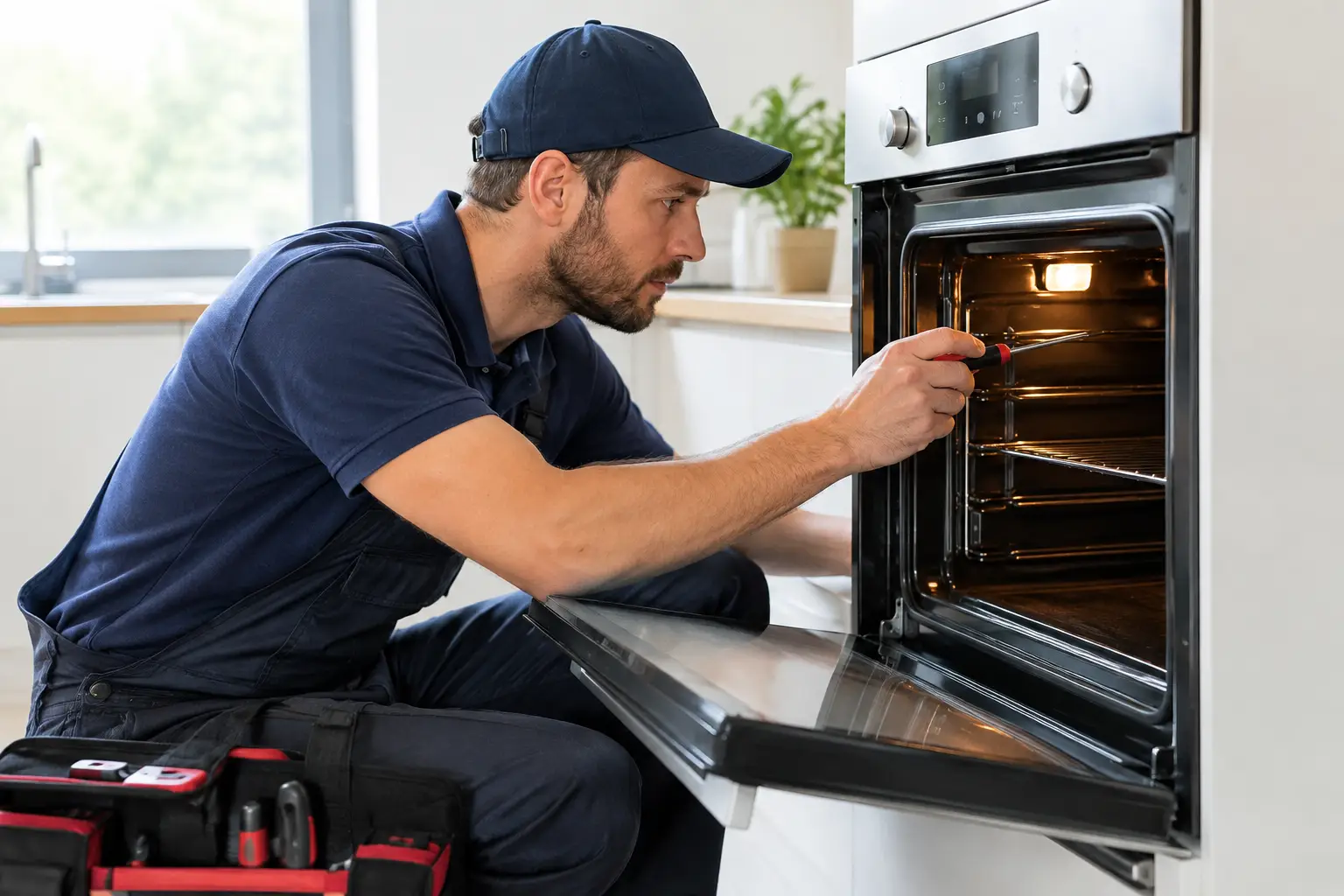
On site, a qualified technician should inspect the appliance, verify the power or gas supply, test relevant components, and explain the findings in plain language. You should know what part has failed, whether repair is practical, and what the expected cost is before work moves forward. Clear pricing matters because an oven problem should not be replaced by uncertainty about the bill.
The repair itself may be straightforward, such as replacing an element or igniter. Other jobs can involve a sensor, door latch, fan motor, control board, or internal wiring. Part availability can affect timing, particularly for older or less common models. A trustworthy technician will be direct about that trade-off instead of promising a same-day fix when the needed part is not available.
Repair or Replace: How to Make the Call
Age is part of the decision, but it is not the whole decision. A well-maintained oven with a failed igniter, heating element, or sensor is often a strong repair candidate, even when it is several years old. These repairs can restore normal performance without the cost, delivery wait, and installation work of replacement.
Replacement may make more sense when an oven has repeated failures, extensive electrical damage, a severely damaged cavity, unavailable parts, or repair costs that approach a meaningful share of a comparable new unit. For built-in wall ovens and commercial-style ranges, replacement can also involve cabinet changes, electrical work, or gas-line considerations. In those cases, a repair estimate provides useful information even if you ultimately choose a new appliance.
For rental properties and small businesses, downtime is another factor. A fast repair may be the better financial choice when tenants, staff, or customers rely on the appliance daily. The best decision balances repair cost, appliance condition, expected remaining life, and how urgently you need reliable cooking again.
Preventing Repeat Oven Problems
Regular care will not prevent every component failure, but it reduces avoidable strain. Clean spills once the oven has cooled, especially sugary or greasy spills that can smoke and bake onto surfaces. Avoid lining the oven floor or racks with foil unless the manufacturer specifically allows it. Foil can block airflow, trap heat, and damage heating elements or finishes.
Use the self-clean cycle carefully. It operates at extremely high temperatures and can expose weak latches, fuses, controls, and older components. If your oven already has heating issues, error codes, or a loose door seal, schedule service before running a self-clean cycle.
When an oven stops performing the way it should, waiting rarely makes the repair simpler. Fasteny Appliance Repair helps Greater Massachusetts homeowners and businesses identify the problem, understand the options, and get back to dependable cooking with clear communication and service focused on getting the job done right.