A puddle at the base of the dishwasher can turn a normal cleanup routine into a concern about damaged flooring, cabinets, or a slipping hazard. If you searched for “seal dishwasher door leak,” the good news is that many door leaks trace back to a visible, repairable issue. The key is identifying whether the door gasket is actually at fault before applying anything that could make the problem worse.
A dishwasher door is designed to seal with a molded rubber gasket, proper door alignment, and the correct water level inside the tub. It is not meant to be sealed with caulk, tape, or household adhesives. Those quick fixes can interfere with closing, trap moisture, and hide a leak that needs a different repair.
First, Find Where the Dishwasher Is Leaking
Before touching the seal, run a short cycle while watching carefully. Keep towels nearby, and stop the machine if water begins spreading across the floor. The location of the water offers useful clues.
Water coming from the top or sides of the door often points to a dirty, warped, loose, or worn gasket. Water appearing at the lower corners may still involve the gasket, but it can also come from a bent door, damaged lower door seal, excessive suds, or a spray arm that is directing water toward the door.
If the leak starts only after the dishwasher has been running for several minutes, look beyond the door itself. A failing inlet valve, split hose, loose pump connection, or drain issue can send water underneath the appliance and make it seem as if the door is leaking. Pulling the dishwasher out without experience can create additional plumbing or electrical problems, so it is usually best to leave that step to a qualified technician.
How to Seal a Dishwasher Door Leak the Right Way
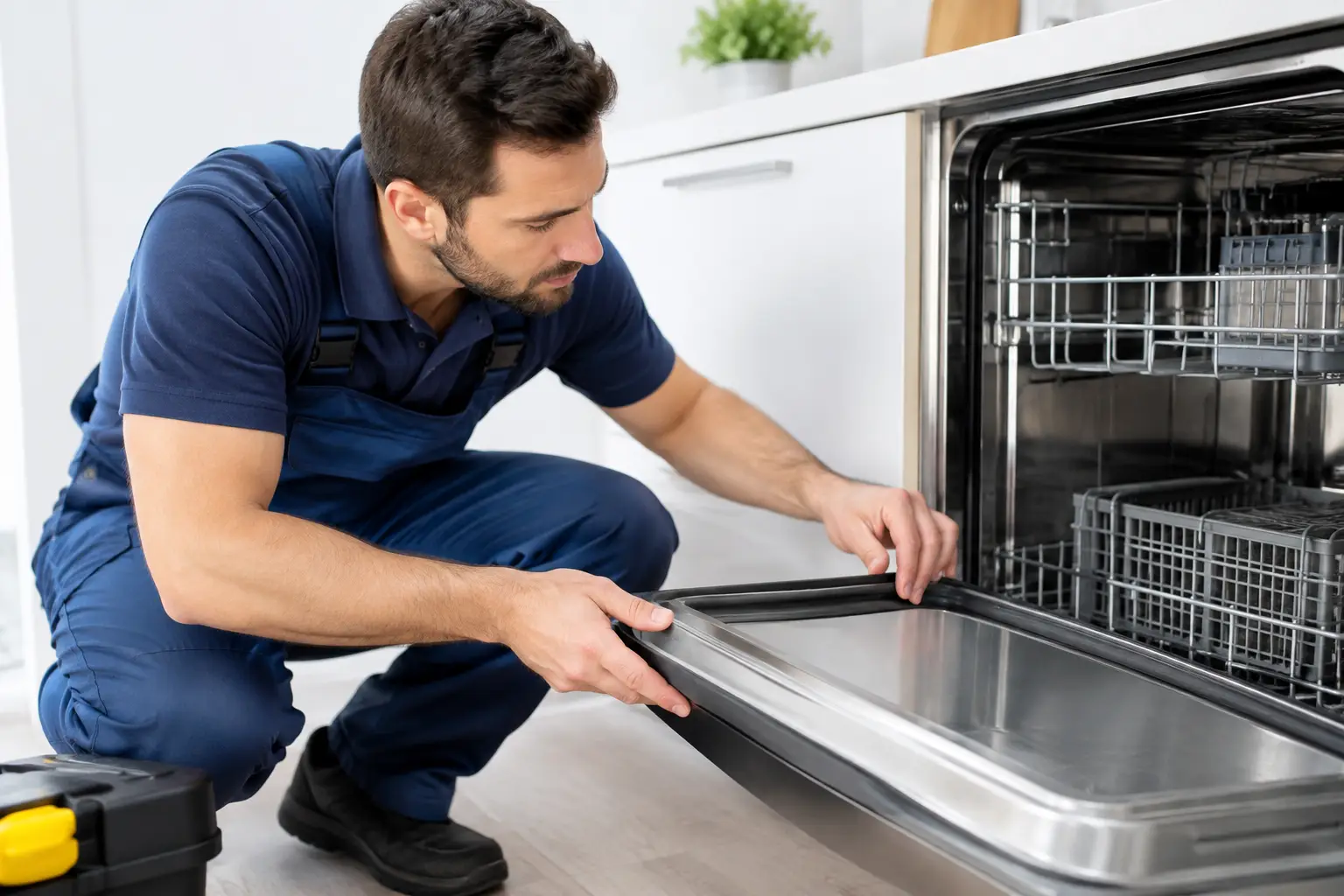
The correct approach depends on the condition of the gasket. Start by turning off the dishwasher and allowing it to cool. Open the door and inspect the rubber seal around the tub opening. It should sit evenly in its channel, feel flexible, and have no cracks, flattened areas, torn sections, or hardened spots.
Clean the gasket and the door contact area
Food residue, grease, detergent buildup, and small debris can prevent the door from making full contact with the gasket. Wipe the gasket gently with a soft cloth and warm water. Clean the edge of the door that presses against it as well.
Avoid harsh abrasives, bleach, or petroleum-based cleaners. They can dry out or damage the rubber. Once cleaned, dry the gasket and check that it has not slipped out of its groove.
Reseat a gasket that has come loose
If part of the gasket is visibly displaced but otherwise in good condition, it may simply need to be pressed back into place. Begin at one end and work gradually around the channel with clean fingers. Do not stretch the rubber as you go. A stretched gasket can buckle or leave gaps at the corners.
After reseating it, close the door. It should latch without needing excessive force. If the door suddenly feels difficult to close, stop and inspect the gasket placement again rather than forcing the latch.
Replace a damaged or worn door gasket
A cracked, permanently flattened, brittle, or torn gasket will not reliably seal again. Replacement is usually the lasting repair. The exact gasket is specific to the dishwasher model, and an incorrect part may look similar while fitting poorly.
On many models, the old gasket pulls out of its channel and the new one presses in. That sounds simple, but fitment matters. Corners must be seated correctly, and some new gaskets need time to conform to the door after installation. If the gasket continues to pop out, the door does not align correctly, or the leak persists after replacement, the cause is likely more than the seal itself.
Do not use glue unless the dishwasher manufacturer specifically calls for it. Adhesive can make future service harder and may damage the gasket channel. A properly matched gasket should stay in place on its own.
Problems That Can Look Like a Bad Door Seal
A door gasket is a common cause of leaks, but replacing it without diagnosing the dishwasher can waste time and money. Several issues produce nearly identical symptoms.
Too much detergent is one of the most overlooked causes. Using regular dish soap, adding more detergent than needed, or dealing with a rinse-aid spill can create heavy suds. Suds push water past the door area even when the gasket is in acceptable condition. If foam is visible inside the machine or around the door, stop the cycle and avoid adding more detergent. A technician can help confirm whether the leak is a sealing problem or a sudsing issue.
A damaged spray arm can also send a concentrated stream of water directly at the door. Check for cracks, blocked holes, or an arm that is not spinning freely because of a tall pan or utensil. Improper loading is less likely to cause a major leak than a failed seal, but it can expose an existing weakness.
Door alignment matters, too. Loose or worn hinges, a bent latch, or a door panel that has been pulled on can keep the door from sitting squarely against the gasket. You may notice that the door needs to be lifted to latch, has visible gaps, or leaks from one specific side. In that case, a new gasket alone may not solve the problem.
Some dishwashers have a lower door sweep or splash guard that helps control water near the bottom edge. This part is different from the main tub gasket. If water appears primarily along the bottom of the door, especially near the corners, that lower component should be inspected along with the gasket and door alignment.
When a DIY Fix Is Reasonable – and When to Schedule Repair
Cleaning a dirty gasket or gently reseating one that has slipped can be a reasonable homeowner task. It is also sensible to check detergent use and make sure nothing is blocking the spray arm. These steps are low-risk and may resolve a minor leak quickly.
Schedule professional service if the gasket is torn, the door is misaligned, water is coming from beneath the dishwasher, or the leak returns after cleaning and reseating the seal. You should also call for help if the dishwasher trips a breaker, shows an error code, fails to drain, or has already caused cabinet or floor damage. Water and electrical components do not leave much room for trial and error.
For Massachusetts homeowners and small businesses, Fasteny Appliance Repair can diagnose the full source of a dishwasher leak rather than replacing parts based on guesswork. A trained technician can inspect the gasket, hinges, latch, spray arms, water level, pumps, hoses, and installation position, then provide a clear quote before repair work begins.
Protect the Floor While You Wait for Service
If the dishwasher is actively leaking, turn it off at the control panel and, if necessary, at the circuit breaker. Shut off the water supply valve under the sink if water continues entering the appliance. Dry standing water promptly with towels, especially on wood, laminate, or engineered flooring.
Do not keep running cycles to “test” a leak after it has been confirmed. One extra load can turn a small gasket problem into swollen cabinetry, damaged subflooring, or moisture beneath the appliance. Take a photo of the leak location and note when it begins during the cycle. That information helps speed up diagnosis.
A dishwasher door should close firmly, run quietly, and leave the floor dry. If it does not, treat the leak as an early warning rather than an inconvenience. Addressing a worn seal or misaligned door promptly is usually far easier than repairing the water damage it can cause.
Frequently Asked Questions
Can I use caulk or sealant to stop a dishwasher door leak?
No. A dishwasher door is built to seal with a molded rubber gasket, not caulk, tape, or glue. Sealants can trap moisture, keep the door from closing, and hide a leak that needs a real repair. Clean, reseat, or replace the gasket instead.
Why is my dishwasher leaking from the bottom of the door?
Water at the lower corners often means a worn or displaced door gasket, but it can also come from a lower splash guard, a misaligned door, heavy suds, or a spray arm aimed at the door. If cleaning and reseating the seal does not help, review what causes dishwasher leaks beyond the door.
How much does it cost to fix a dishwasher door seal?
The gasket itself is usually inexpensive, but the correct part is model-specific and fitment matters. If a new gasket does not hold, the real problem may be the hinges, latch, or another reason a dishwasher leaks. A technician can confirm the true source before you spend on parts.
When should I call a professional for a dishwasher door leak?
Call for service if the gasket is torn, the door will not align, water comes from under the dishwasher, or the leak returns after cleaning and reseating. Also call if it trips a breaker, will not drain, or has already reached your cabinets or floor. Fasteny Appliance Repair serves Greater Boston and 130+ MA communities.