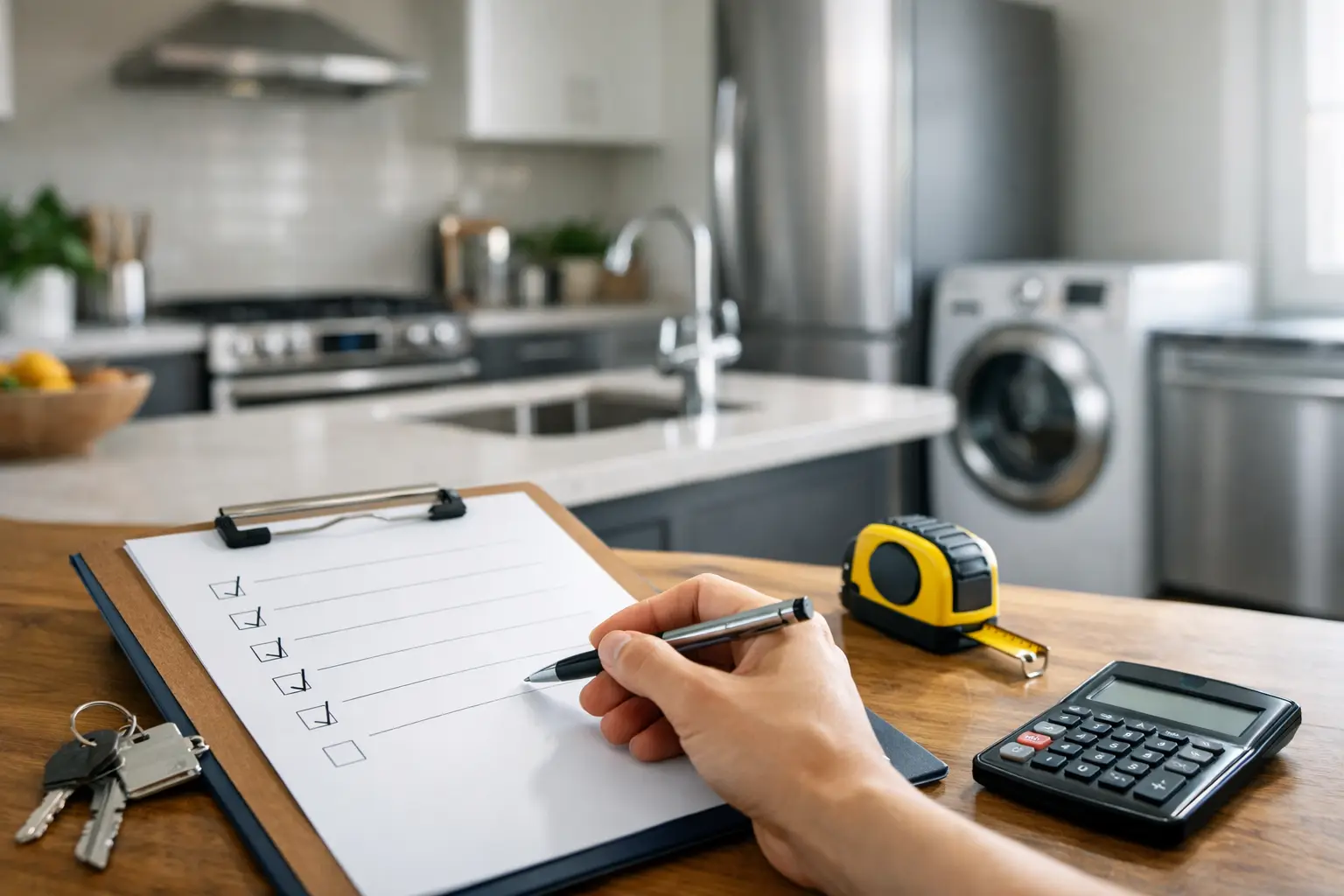
When an appliance breaks down, the last thing you want is a bill that looks nothing like what you were told. A clear, written appliance repair estimate is your best protection against surprise charges, and knowing what a fair quote should contain lets you compare companies with confidence. Homeowners in Waltham, Brookline, and across Massachusetts can use this checklist from Fasteny Appliance Repair to make sure every quote spells out the full picture before any work starts.
What a Transparent Appliance Repair Estimate Should Tell You
A good estimate answers three questions in writing: what is wrong, what it will cost, and what happens if the job changes. If a quote is vague on any of those — a single lump sum with no breakdown, or a verbal “we’ll see when we get in there” — that is your cue to ask for detail. The nine items below are what a trustworthy company should be happy to confirm.
Appliance Repair Estimate Checklist: 9 Details to Confirm
1. The Diagnostic or Service-Call Fee
Find out whether there is a fee just to come out and diagnose the problem, how much it is, and whether it is credited toward the repair if you proceed. This single detail is the most common source of confusion on a final bill.
2. The Diagnosed Problem in Plain Language
The estimate should name the actual fault — a failed drain pump, a worn igniter, a bad control board — not just “needs repair.” A clear diagnosis lets you understand what you are paying for and compare quotes accurately.
3. Labor Cost and What the Labor Includes
Ask whether labor is a flat rate or hourly, and what it covers. Knowing whether the number includes installation, testing, and cleanup keeps the final total from drifting upward.
4. Parts Pricing and Part Type
Confirm the price of each part and whether it is an original manufacturer (OEM) or aftermarket component. OEM parts often cost more but can carry better warranties, and you deserve to know which you are getting.
5. Taxes, Trip Charges, and Other Fees
Ask for every add-on up front: sales tax, mileage or trip charges, disposal fees, or after-hours rates. A transparent quote lists these rather than tacking them on at the end.
6. The Total Repair Price or Approved Range
You should leave the conversation with either a firm total or a clearly stated range, along with the promise that you will be contacted before that range is exceeded.
7. Parts Availability and Timeline
Ask whether the part is in stock or must be ordered, and how long the repair will take. A realistic timeline prevents a fast quote from turning into a slow, uncertain wait.
8. Warranty Coverage for Parts and Labor
Confirm how long the parts and the workmanship are guaranteed. A solid warranty signals a company that stands behind its repairs, and it protects you if the same issue returns.
9. Approval Before Work Begins
The best companies do not start billable work until you have signed off on the estimate. Getting that agreement in writing means no work — and no charge — happens without your okay.
How to Compare Repair Quotes Without Comparing Only the Bottom Line
The cheapest quote can end up the most expensive if it leaves out parts, warranty, or fees that show up later. Put estimates side by side and weigh what each one actually includes. The Federal Trade Commission’s guidance on home repair scams makes the same point: get the details in writing and be wary of anyone who resists putting a clear estimate on paper. For a closer look at the extra line items that catch people off guard, see our guide on how to spot hidden repair fees fast, and review our own transparent pricing to see what an upfront quote looks like.
When an Estimate Should Lead to a Replacement Conversation
Sometimes the smartest response to a repair estimate is to consider a new appliance instead. If the quote nears half the price of a comparable replacement, or the unit is old and out of warranty, it is worth doing the math. Our guide on whether to repair or replace an appliance and a look at typical appliance repair costs can help you decide with clear numbers rather than pressure.
When to Call a Professional
A fair estimate starts with an honest diagnosis, and that is where a qualified technician earns their keep. If you would like a clear, written quote with no vague line items, Fasteny Appliance Repair’s certified technicians serve Waltham, Brookline, and communities across Massachusetts, and we are glad to explain every part of the estimate before any work begins.
Frequently Asked Questions
Should an appliance repair estimate be free?
Many companies offer a free estimate, while others apply a diagnostic or service-call fee that may be credited toward the repair if you go ahead. Ask up front which applies and get the answer in writing so there are no surprises later.
What should a good appliance repair quote include?
A clear quote names the diagnosed problem, the parts and their type (OEM or aftermarket), the labor charge, any trip or diagnostic fees, applicable taxes, and a total price or approved range — plus written approval before any work begins.
Why do appliance repair estimates vary so much between companies?
Differences come from labor rates, whether parts are OEM or aftermarket, trip and diagnostic fees, and warranty terms. The lowest number is not always the best value, so compare what each estimate actually covers rather than just the total.
Can a repair company charge more than the estimate?
A reputable company contacts you for approval before exceeding an agreed estimate or range. Ask for that commitment in writing so you are never billed for work you did not authorize.
When should I ask about replacing instead of repairing?
If the estimate approaches roughly half the cost of a comparable new appliance, or the unit is old and out of warranty, it is worth weighing replacement. A trustworthy technician will discuss that openly rather than pushing an expensive repair.
Conclusion
A transparent appliance repair estimate is really about trust: when the diagnosis, parts, labor, fees, and warranty are all spelled out, you can make a confident decision instead of a hopeful guess. Keep this checklist handy the next time an appliance quits, and don’t settle for a number without the details behind it. Request service from Fasteny Appliance Repair or explore our appliance repair services, and a technician serving Waltham, Brookline, and communities across Massachusetts will give you a clear, upfront estimate. Call +1 (617) 618-3311 or visit fastenyappliance.com to get started.