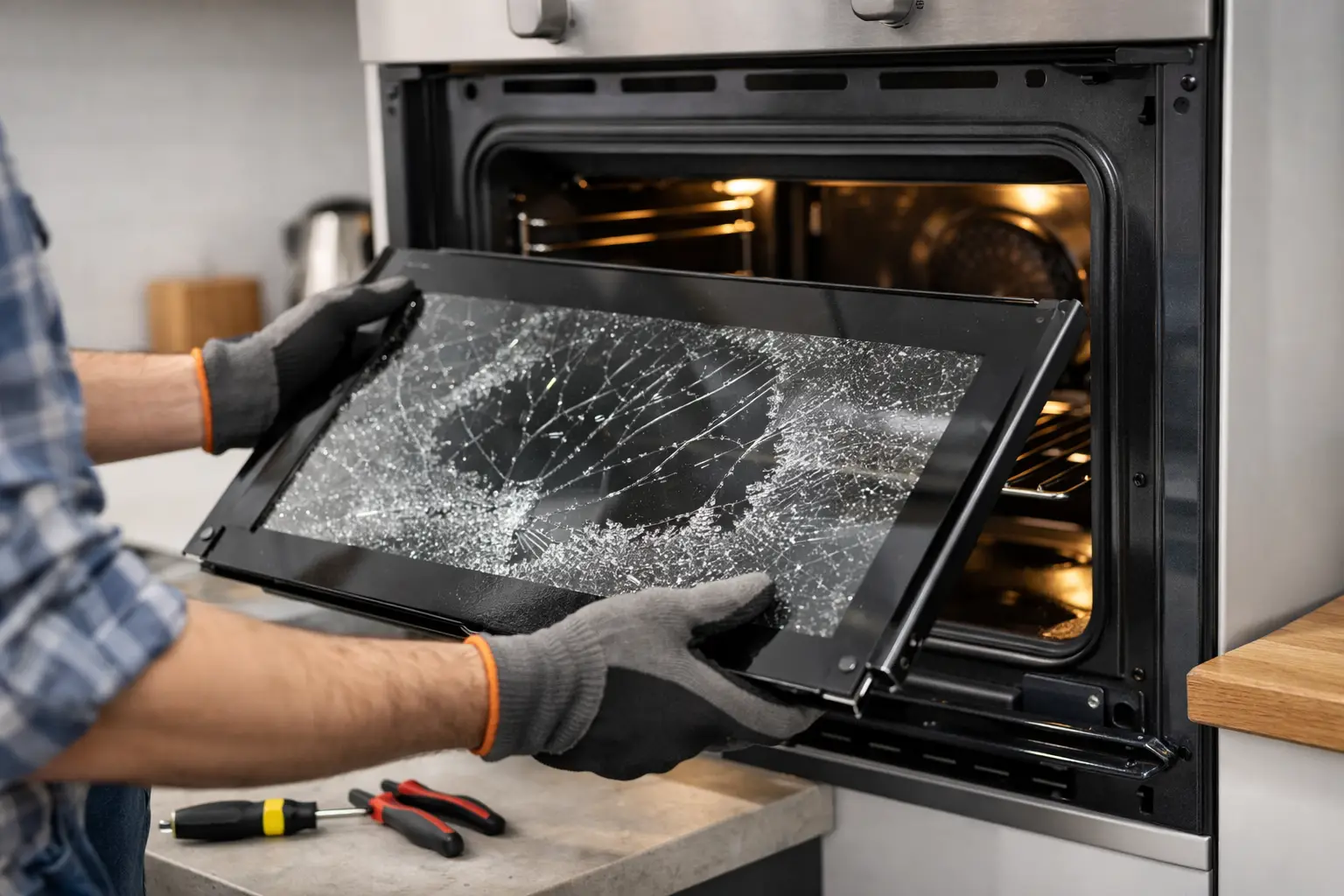
A broken oven door is more than an inconvenience — a door that won’t close, seal, or latch wastes energy, ruins baking results, and can be a real safety hazard around heat and glass. The good news is that many problems come down to a hinge, gasket, or latch, and a careful approach to oven door repair keeps a small issue from becoming a dangerous one. Homeowners in Reading, Peabody, and across Massachusetts can use this guide from Fasteny Appliance Repair to handle a broken oven door safely and know when to bring in help.
First, Make the Oven Safe
Before you inspect anything, turn the oven off and let it cool completely. Unplug an electric oven at the outlet, or shut off the gas supply for a gas model, so it can’t turn on while you work. If the door glass is cracked or shattered, wear gloves, keep children and pets away, and clean up fragments carefully — tempered glass breaks into small, sharp pieces.
What’s Actually Broken? Common Oven Door Problems
Broken or Misaligned Hinges
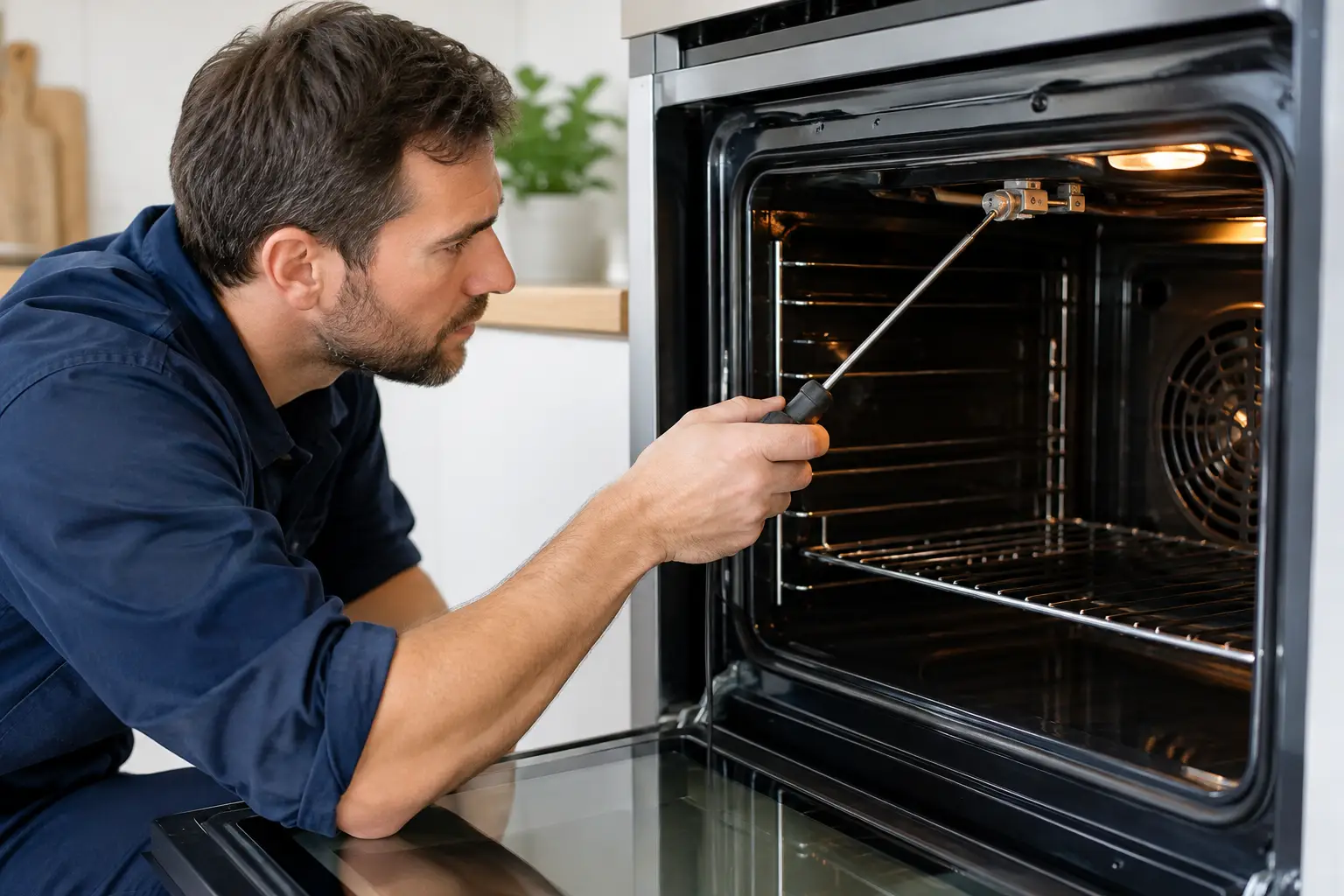
Hinges carry the full weight of the door, so a bent arm, a worn spring, or a hinge that slipped out of its slot is the most common reason a door sags or won’t close square. Doors that were removed for cleaning and reseated incorrectly land here too.
A Worn Door Gasket or Seal
The gasket around the door keeps heat inside. When it hardens, tears, or falls out of its channel, the oven leaks heat, cooks unevenly, and runs longer. Replacing the gasket is often a straightforward fix once you confirm it is the culprit.
Cracked or Shattered Door Glass
A chip can spread into a full crack, and tempered panels can shatter from thermal stress or impact. Damaged glass affects both insulation and safety, and replacing it usually means partially disassembling the door.
A Faulty Door Latch or Lock
If the self-clean latch or door lock jams, the door may not close or may stay stuck shut. A misadjusted or failed latch mechanism keeps the door from sealing and can trigger error codes on some models.
What You Can Check Without Taking the Door Apart
Plenty of quick checks are safe to do yourself. Look for a hinge that has popped out of its slot, debris or spilled food blocking the door from closing, or a gasket that has slipped out of its channel and can be pressed back into place. If your door was recently removed, reseating it often solves the problem — GE’s guide on removing or reseating an oven door shows how the hinges lock into position. If none of that resolves it, the issue is likely inside the door or hinge assembly.
When Oven Door Repair Beats Replacement
An oven that heats and cooks well but has a bad door is almost always worth repairing rather than replacing. A hinge, gasket, or latch is an affordable part, and fixing it restores full efficiency and safety. Weighing the numbers helps: reviewing typical transparent pricing alongside the age of the oven usually makes the decision clear. If the door problem comes with other faults, our guide on an oven not working can help you see the bigger picture.
Mistakes to Avoid
Don’t lift a door by its handle — it can bend or detach. Don’t force a stuck door or pry at the glass, which risks shattering it. Avoid running the oven with a door that won’t seal, and never attempt a repair while the oven is hot or still connected to power or gas. When a repair calls for disassembling the door or handling broken tempered glass, that is the moment to step back.
When to Call a Professional
Hinge springs under tension, shattered glass, and latch mechanisms tied into the control board are jobs where a technician saves you time and injury. If you’d like the door fixed safely and sealed properly, Fasteny Appliance Repair’s certified technicians handle oven repair across Massachusetts, serving Reading, Peabody, and nearby communities, and we’ll make sure the door closes and seals the way it should.
Frequently Asked Questions
Is it safe to use an oven with a broken door?
Usually not. A door that won’t close or seal lets heat escape, wastes energy, and can expose you to burns, and on a gas oven it can affect combustion. If the glass is cracked or the door won’t latch, stop using the oven until it is repaired.
Why won’t my oven door close all the way?
The most common causes are bent or unseated hinges, a broken hinge spring, or debris caught in the hinge track. Sometimes a door removed for cleaning simply wasn’t reseated correctly. Check and reseat the hinges before assuming a larger problem.
Can I replace oven door glass myself?
Interior glass panels can sometimes be reseated, but shattered tempered glass creates sharp fragments and the door often has to be disassembled. Because alignment affects both the seal and safety, glass replacement is usually best handled by a technician.
How much does oven door repair cost?
It depends on the part. A hinge, gasket, or latch is a modest parts-plus-labor job, while a full glass panel or door assembly costs more. A technician can identify the exact part and give you a firm quote before starting.
Should I repair or replace an oven with a broken door?
If the oven otherwise works well and is out of warranty, a door repair is almost always cheaper than a new appliance. If the unit is very old or has other failing parts, replacement may be the better long-term value.
Conclusion
A broken oven door usually traces back to a hinge, gasket, latch, or pane of glass — and handling it safely means cooling the oven, cutting the power, and knowing which checks are yours to make and which belong to a pro. Don’t keep baking behind a door that won’t seal. Request service from Fasteny Appliance Repair or browse our full range of appliance repair services, and a technician serving Reading, Peabody, Waltham, and communities across Massachusetts will get your oven door back in safe working order. Call +1 (617) 618-3311 or visit fastenyappliance.com to book.