A dishwasher can run for two hours and still leave a bowl with dried oatmeal on it, a glass with grit inside, or a fork blocking the spray arm. In many cases, the machine is not failing. The load is preventing water, detergent, and heat from doing their jobs. These best dishwasher loading practices help your dishes come out cleaner while reducing unnecessary wear on the appliance.
At Fasteny Appliance Repair, serving Reading, Waltham, and homes across Massachusetts, we see plenty of “broken” dishwashers that are really just loaded wrong. Learning how to load a dishwasher the right way gets cleaner dishes from the same machine, so here’s what actually works.
Best Dishwasher Loading Practices Start With Water Access
Your dishwasher is designed around moving water. Spray arms send water upward and outward, detergent needs clear access to dish surfaces, and dirty water must drain away freely. When dishes overlap, face the wrong direction, or block moving parts, the cycle may finish without actually cleaning everything.
Before loading, check that the lower and upper spray arms can spin without hitting a pan handle, tall plate, or utensil. This takes only a few seconds and can prevent a full load of dishes from needing to be washed again. Also make sure the detergent dispenser can open completely. A cutting board or large pan placed too close to the door can stop it from releasing detergent at the right point in the cycle.
Scrape Food, but Do Not Over-Rinse
Scrape off bones, peels, toothpicks, large pieces of food, and thick sauces before dishes go into the machine. Those materials can collect in the filter, clog the drain path, or leave residue on otherwise clean dishes.
You generally do not need to wash every plate under the faucet first. Modern dishwasher detergents are made to work with food soils, and excessive pre-rinsing wastes water. The exception is food that has dried hard after sitting for many hours, such as baked-on egg, cheese, rice, or cereal. Soak those items briefly or use a cycle with a soak or heavy-cleaning option if your model has one.
Load the Lower Rack for the Toughest Jobs
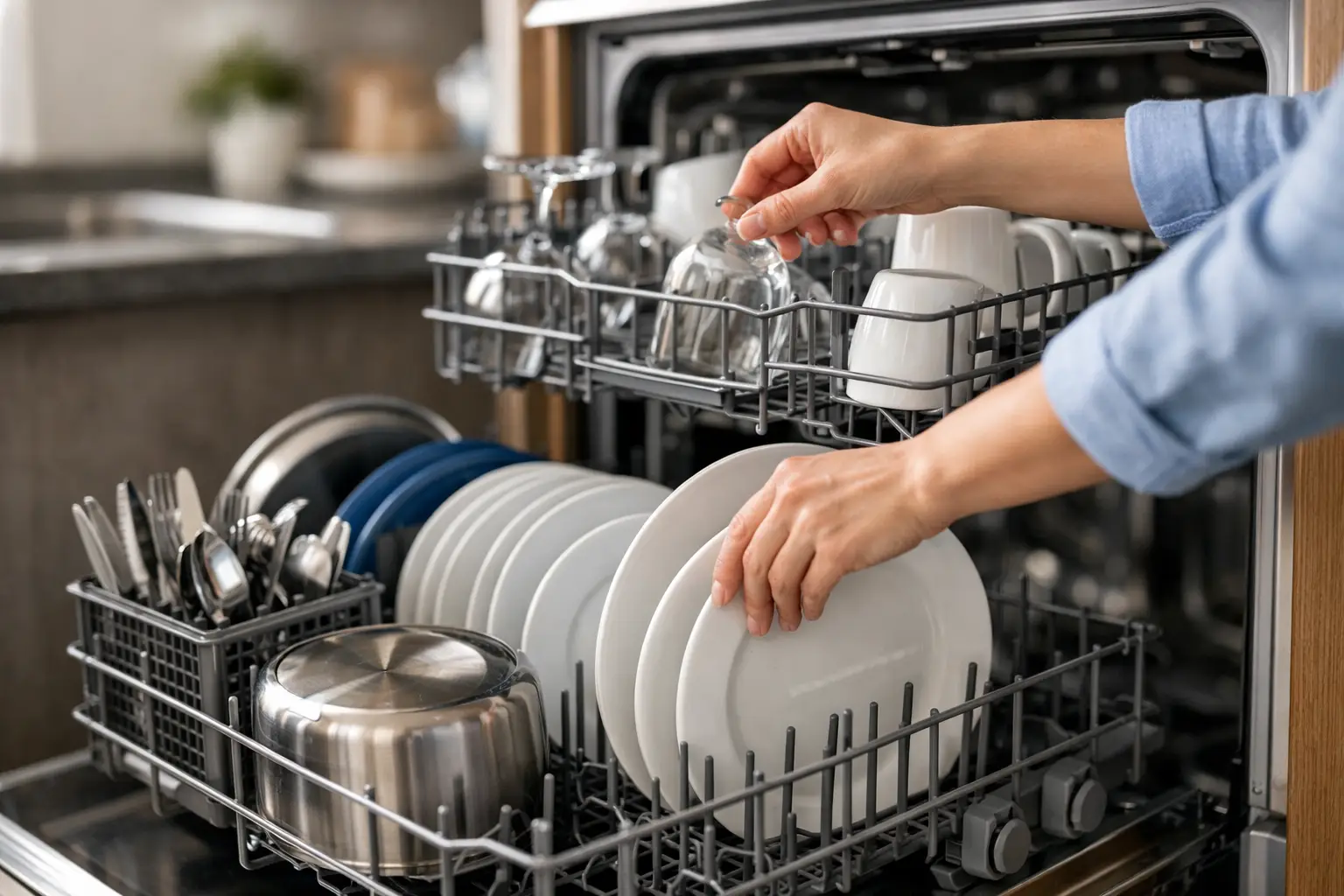
The lower rack is built for dinner plates, cookware, serving bowls, and other larger items. Place plates in the slots with their dirty sides facing toward the center, where the water spray is strongest. Avoid nesting bowls or setting them directly over one another. Every surface needs room for water to reach it.
Large pots and pans belong along the sides or back of the lower rack, angled downward so water can drain. Do not lay a baking sheet flat across the rack. It can act like a wall, blocking water from reaching dishes above it and restricting the lower spray arm.
Plastic containers can go on the lower rack only if they are labeled dishwasher-safe and can be secured away from the heating element. Lightweight items may flip during the cycle, fill with dirty water, or melt if they fall too close to the heat source. When in doubt, place them on the top rack.
Use the Upper Rack for Glasses, Cups, and Plastics
The upper rack is best for glasses, mugs, small bowls, and dishwasher-safe plastic items. Set cups and glasses upside down at an angle so water can wash the inside and drain afterward. A glass placed upright can collect cloudy water and leave a dirty ring after the cycle.
Keep glassware separated enough that it does not touch. Vibration during washing can cause chips or cracks, especially with delicate stemware. If your dishwasher has a stemware holder, use it for wine glasses or tall narrow items.
Do not place tall utensils or cooking tools where they can extend down into the lower spray arm’s path. Spatulas, ladles, and oversized spoons may fit better along the upper rack’s side clips, depending on the design of your machine.
Load Silverware With Safety and Cleaning in Mind
Silverware needs spacing just as much as dishes do. If forks and spoons nest together, water may not reach the surfaces pressed against each other. Mix types of utensils in the basket so similar items do not stack tightly.
Place forks and spoons with handles down when the basket design allows. Put sharp knives with handles up, or lay them flat on the upper rack if your dishwasher includes a dedicated utensil tray. This reduces the risk of injury when unloading. Avoid putting wood-handled knives, quality chef’s knives, or delicate cookware in the dishwasher, since high heat and detergent can damage them over time.
How to Avoid a Dishwasher Load That Cleans Poorly
Overloading is the most common mistake, but it is not the only one. A full dishwasher is efficient. A packed dishwasher is often inefficient because it leaves food residue behind and forces you to rerun the cycle or hand-wash items afterward.
Keep these four rules in mind when the racks start filling up:
- Do not block the spray arms with tall dishes, pan handles, or loose utensils.
- Do not stack bowls, plates, or containers so tightly that water cannot reach between them.
- Do not cover the detergent dispenser or prevent its door from opening.
- Do not let small items fall through the rack, where they can interfere with moving parts or melt near the heating element.
Some loading choices depend on your dishwasher. Third-rack models give utensils and small cups more room, while adjustable upper racks can make space for tall pots or glasses. Check your owner’s manual when you are unsure about a specific item or rack position. The layout of the racks is not accidental – it is designed to direct water where it is needed.
Detergent, Filter Care, and Cycle Choice Matter Too
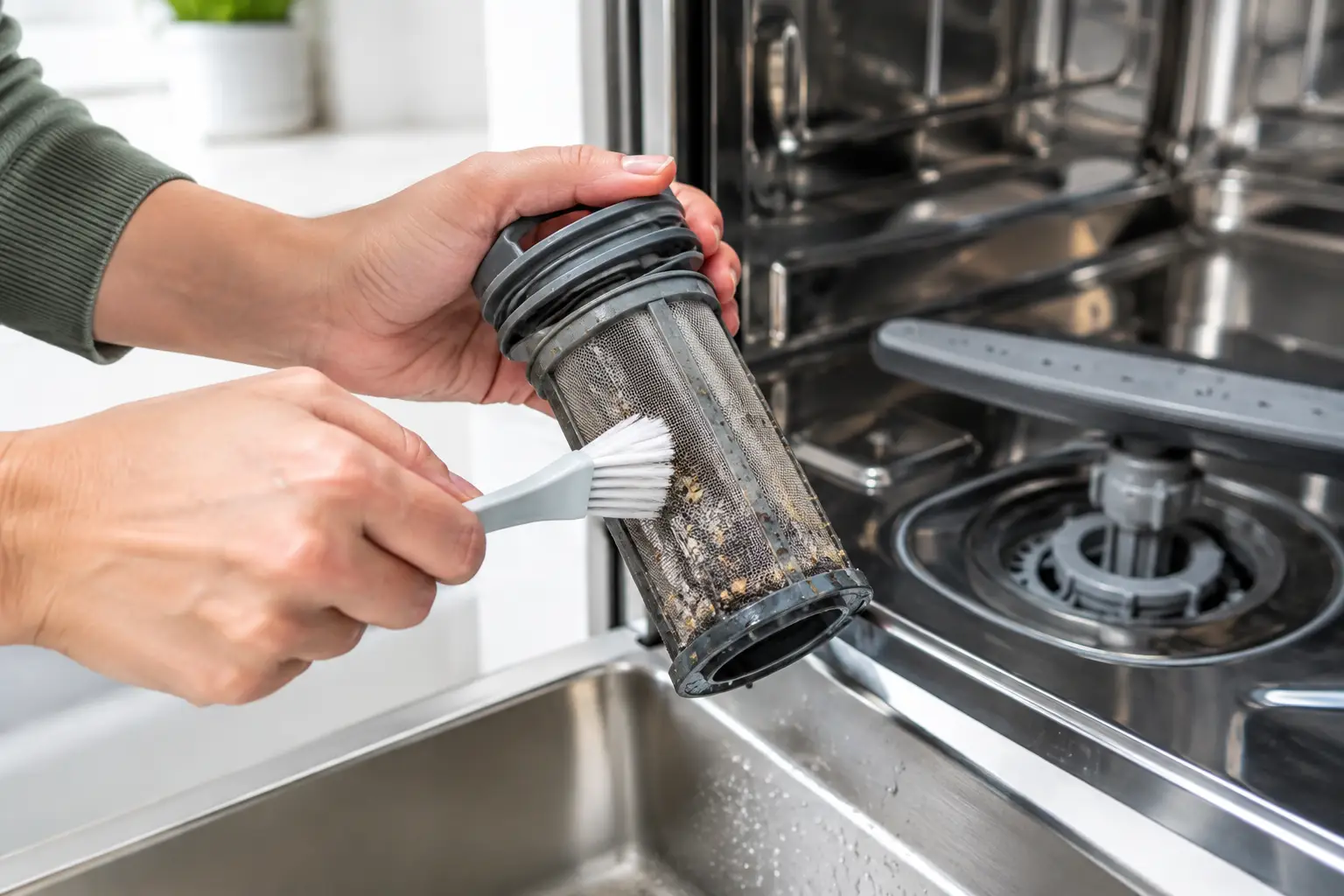
Even the best dishwasher loading practices cannot make up for a clogged filter or the wrong detergent amount. If dishes look sandy, smell unpleasant, or come out with food particles stuck to them, inspect the filter at the bottom of the tub. Many dishwashers have a removable filter that should be rinsed regularly under warm running water. Follow the manufacturer’s instructions, especially if the filter uses a specific locking position.
Use fresh dishwasher detergent and store it in a dry place. Old or damp detergent may not dissolve well. If you have hard water, which is common in parts of Massachusetts, mineral deposits can leave glasses cloudy and affect cleaning performance. Rinse aid can improve drying and reduce spotting, while the right detergent for your water conditions can make a noticeable difference.
Choose the cycle based on how dirty the load is. A normal cycle works for everyday dishes, while heavily soiled cookware may need a heavy or pots-and-pans cycle. Quick cycles save time but may not provide enough washing and drying power for baked-on food. Running a short cycle on a difficult load can lead to disappointing results even when everything was loaded correctly.
When Poor Cleaning May Be a Dishwasher Problem
If you have adjusted the load, cleaned the filter, used proper detergent, and still see consistent poor results, the dishwasher may need attention. Dishes that remain dirty on one rack, water left in the bottom of the tub, a spray arm that will not turn, or detergent left in the dispenser can point to a mechanical issue.
Other warning signs include unusual grinding sounds, leaks around the door, recurring odors after filter cleaning, or cloudy glasses that continue despite proper detergent and rinse aid. These symptoms may involve a circulation pump, drain system, inlet valve, heating component, spray arm, or door seal. Continuing to run the appliance without identifying the cause can sometimes create a larger repair issue or lead to water damage.
For homeowners and local businesses across Greater Massachusetts, Fasteny Appliance Repair can diagnose dishwasher cleaning, draining, leaking, and drying problems with clear recommendations and fair quotes. A trained technician can determine whether the issue is a simple maintenance concern or a part that needs repair.
The goal is not to arrange every dish perfectly. It is to give water a clear path, give dishes room to drain, and keep the dishwasher’s moving parts unobstructed. A few deliberate loading habits can make every cycle more reliable and help you recognize sooner when your appliance needs professional service.
Frequently Asked Questions
How do you properly load a dishwasher?
Angle dishes toward the spray, put the toughest, most heat-safe items on the lower rack, and reserve the upper rack for glasses, cups, and plastics. Keep everything from blocking the spray arms so water reaches every surface.
Should you rinse dishes before loading the dishwasher?
Scrape off large food scraps, but don’t over-rinse. Modern detergents rely on some food residue to work properly, and a fully pre-rinsed load can actually clean less well while wasting water.
Which way should silverware face in the dishwasher?
Mix directions and spread pieces out so they don’t nest together. Placing sharp knives handle-up is safer, while spoons and forks clean well handle-down; the key is separation so water flows between them.
Why isn’t my dishwasher cleaning even when I load it correctly?
If loading is right and dishes still come out dirty, the spray arm, filter, or a component may be at fault. Our guide on why a dishwasher isn’t cleaning covers what to check next.
Can overloading a dishwasher damage it?
Overloading mainly causes poor cleaning and can bend racks or block the spray arm over time. Loading to the manufacturer’s capacity protects the machine and gets consistently cleaner results.
Conclusion
Knowing how to load a dishwasher well is the cheapest upgrade you can make to your dish results: angle items toward the spray, scrape instead of over-rinsing, and keep the arms clear. For a manufacturer’s take, KitchenAid’s dishwasher loading guide is a helpful reference. If dishes stay dirty after all that, it may be a repair issue. Fasteny Appliance Repair serves Billerica, Peabody, and communities across Massachusetts. Request a repair, explore our appliance repair services, or call +1 (617) 618-3311.