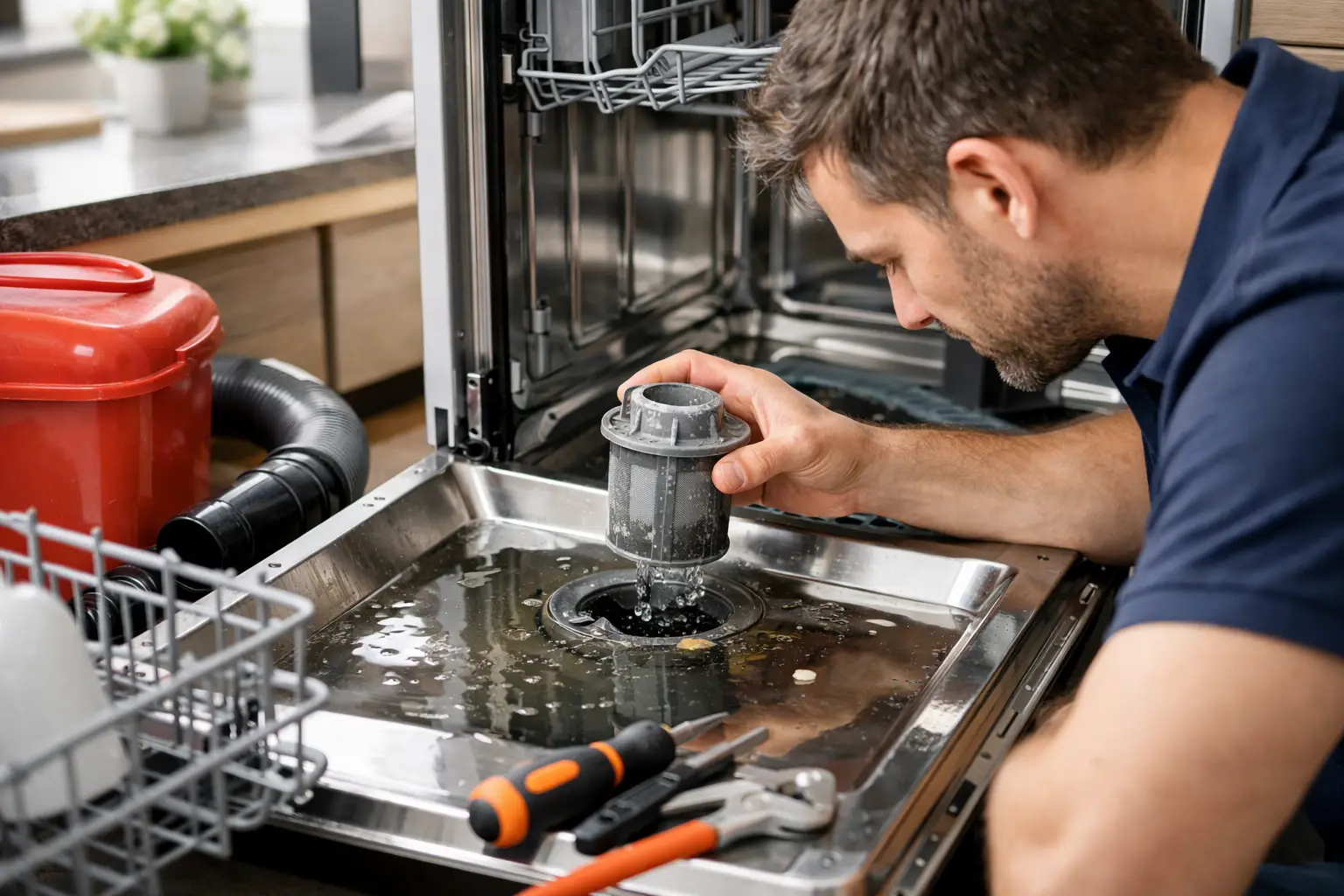
Opening the dishwasher to find dirty water pooled at the bottom is frustrating, and it usually means the appliance never finished draining. A dishwasher not draining can leave dishes filthy, breed odors, and hint at a blockage that only gets worse with the next cycle. The good news for homeowners in Billerica, Reading, and across Massachusetts is that many drainage problems are quick fixes, and the exact steps often depend on which brand you own. Fasteny Appliance Repair put together this brand-by-brand guide to help you sort out the easy fixes from the ones that need a technician.
If you want the full step-by-step process for clearing a clog, our companion guide on how to unclog a dishwasher that isn’t draining walks through it in detail. This article focuses on the brand-specific quirks that trip people up.
What Causes a Dishwasher Not to Drain?
No matter the brand, standing water comes down to a handful of causes: a filter packed with food debris, a kinked or clogged drain hose, a blocked air gap, a full garbage disposal, or a failed drain pump. Whirlpool’s own guidance on how to unclog a dishwasher drain confirms the filter is the single most common offender, followed by the pump and hose. Before you dig into brand specifics, clean the filter, run the disposal, and make sure the drain hose isn’t crimped behind the unit.
Dishwasher Not Draining Fixes by Brand
Whirlpool and KitchenAid Dishwasher Not Draining
Whirlpool and KitchenAid share much of the same design, so the fix is usually the same. Twist out the cylindrical filter at the bottom of the tub, rinse away the trapped food, and run the garbage disposal, since these models drain through it. If water still sits after a Cancel/Drain cycle, check the drain hose for a kink and confirm the disposal knockout plug was removed on any recent install. A stuck check valve in the pump outlet is the next thing a technician will inspect.
Bosch Dishwasher Not Draining
Bosch dishwashers use their own drain pump rather than the garbage disposal, so standing water almost always points to the filter or pump. Remove the mesh filter and the plastic cover beneath it, then clear any glass shards or debris from the pump impeller and make sure it spins freely. Bosch models also require a high loop or air gap in the drain hose to drain properly; if the hose was installed flat, water can siphon back. A three-to-five-second press of the Start button resets many Bosch models after you clear the blockage.
GE Dishwasher Not Draining
On a GE dishwasher, start with the filter and the drain hose, then run the disposal, since most built-in GE units drain through it. Many GE models rely on a drain valve and solenoid rather than a reversing pump, so if the tub still holds water, that valve is a common failure point. A quick reset helps too: cut power at the breaker for about a minute, restore it, and run a short cycle to see whether the pump engages.
Frigidaire Dishwasher Not Draining
Frigidaire dishwashers tend to collect debris in the sump and around the drain impeller. Pull the filter, scoop out any standing water and gunk, and inspect the impeller for a lodged bit of glass or plastic. Check the air gap on the counter if your kitchen has one, and confirm the hose has a proper high loop. Pressing and holding Cancel to run a drain cycle, or power-cycling the unit, clears many Frigidaire drain faults.
Samsung Dishwasher Not Draining
Samsung dishwashers usually flag drainage trouble with an error code such as 5C, 5E, or OC. These point straight to a clog in the filter, sump, or drain hose. Clean the self-cleaning filter and sump area, check the drain hose and pump for debris, and clear any code by holding Start for about three seconds or cutting power for a minute. If the code returns immediately after cleaning, the drain pump itself is the likely fault.
When the Drain Pump or Control Board Fails
If you have cleaned the filter, cleared the hose, run the disposal, and the water still won’t leave, the problem has moved past routine maintenance. A drain pump that hums but doesn’t move water, a cracked check valve, or a control board that never sends the drain signal all require diagnosis and replacement parts. These repairs involve electrical connections and, in some cases, pulling the unit out from under the counter, so they are best left to a licensed technician who can test the pump and board directly rather than guessing at parts.
When to Call a Professional
Homeowners across Peabody, Waltham, and the rest of Massachusetts can handle filters and hoses on their own, but a repeat clog, a burning smell, or a pump that won’t run is a sign to bring in help. The team at Fasteny’s dishwasher repair service diagnoses the exact cause, carries common pump and valve parts, and gets your kitchen back to normal fast. Choosing a certified appliance repair technician also protects your warranty and prevents a small drain issue from turning into water damage.
Frequently Asked Questions
Why is my dishwasher full of water at the bottom?
Standing water almost always means the drain path is blocked. The usual culprits are a clogged filter, a kinked or clogged drain hose, or debris caught in the drain pump. Clear the filter and check the hose first; if water remains after a drain cycle, the pump or check valve may have failed.
How do I force my dishwasher to drain?
Run a Drain or Cancel cycle. On most models you press Start/Cancel and close the door for about two minutes so the pump can push the water out. If water stays put, bail it out with a cup and towel, then clean the filter and inspect the drain hose before running another cycle.
Can a clogged garbage disposal stop a dishwasher from draining?
Yes. Built-in dishwashers usually drain through the garbage disposal, so a full disposal blocks the water. On a newly installed dishwasher, an unremoved knockout plug inside the disposal inlet is a very common cause. Run the disposal and confirm the plug was knocked out.
Is a dishwasher not draining an easy DIY fix?
Often, yes. Cleaning the filter, clearing the drain hose, and running the disposal solve most cases in a few minutes. But if the drain pump, check valve, or control board has failed, that is a repair best handled by a licensed technician with the right parts and tools.
How much does dishwasher drain repair cost in Massachusetts?
A straightforward part swap such as a drain pump is a modest parts-plus-labor charge, while a failed control board costs more. A licensed technician can pinpoint the exact cause and give you a firm quote before any work begins, so there are no surprises.
Conclusion
A dishwasher not draining is one of the most common kitchen headaches, and most of the time the fix is as simple as cleaning the filter, clearing the hose, or running the disposal, with a few brand-specific twists along the way. When the drain pump or control board is to blame, don’t let standing water sit and risk odors or leaks. Request service from Fasteny Appliance Repair or explore our full range of appliance repair services, and a technician serving Billerica, Reading, Peabody, and communities across Massachusetts will get your dishwasher draining again. Call +1 (617) 618-3311 or visit fastenyappliance.com to book.