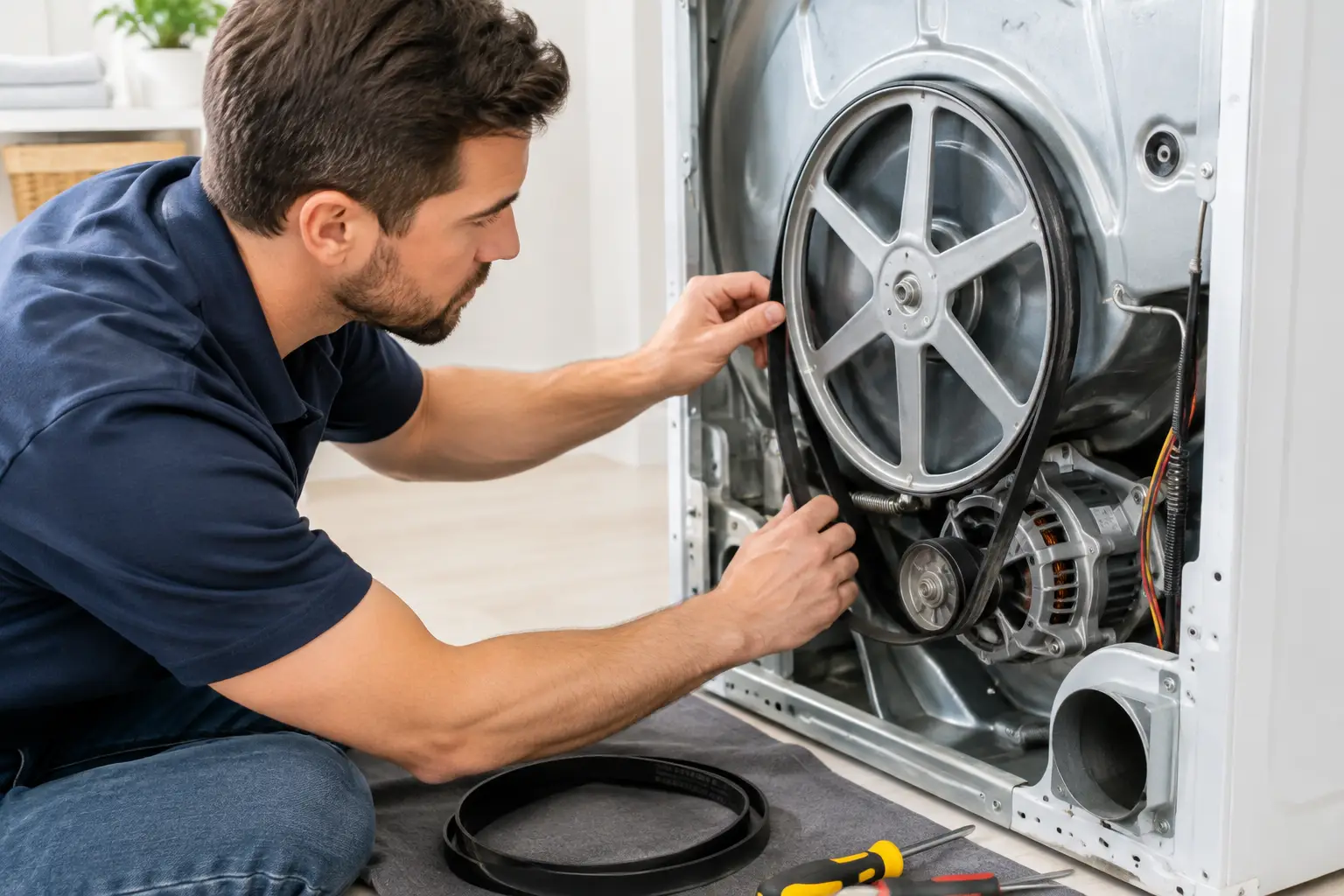
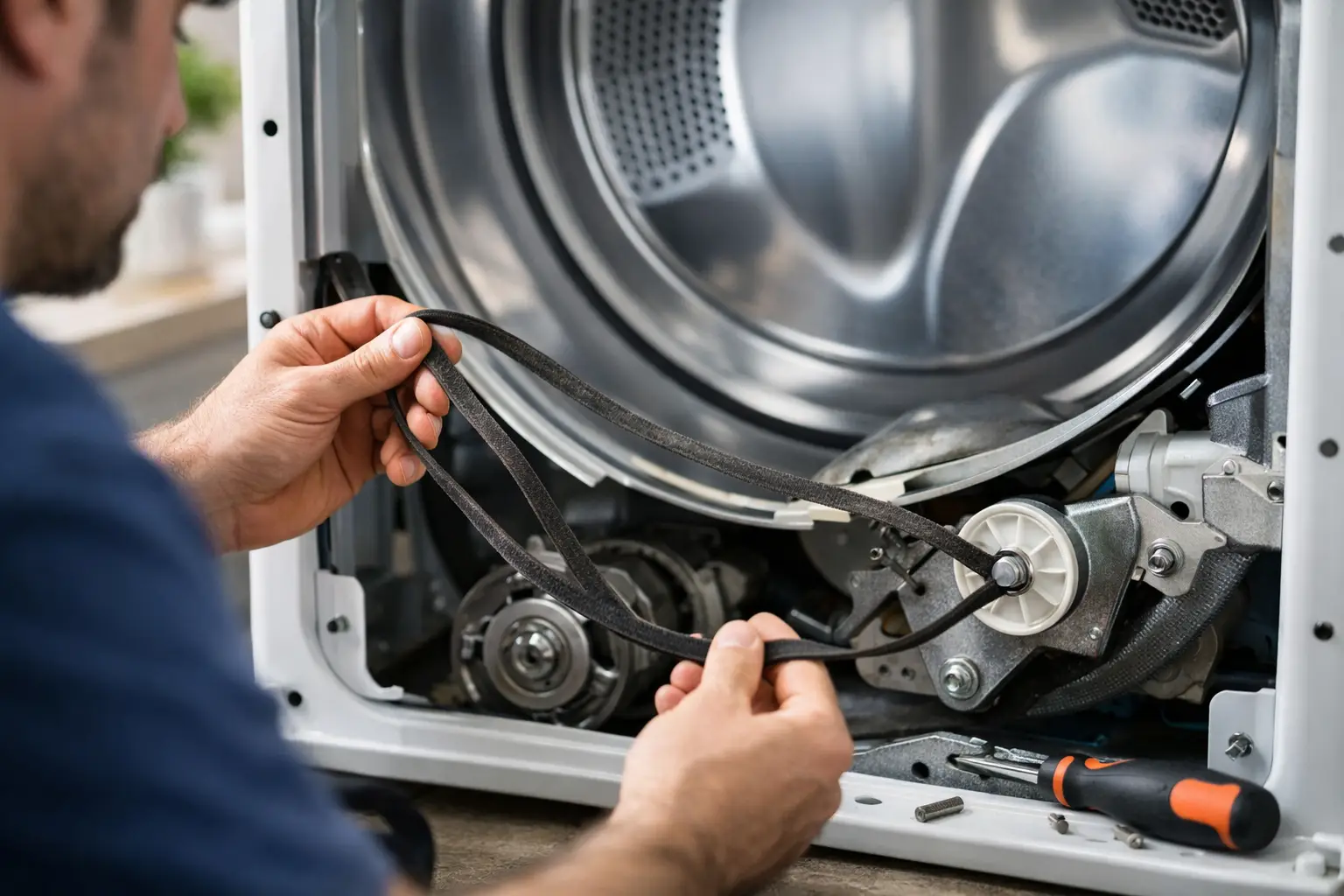
A dryer that hums but does not tumble can turn a normal laundry day into a frustrating delay. In many cases, dryer belt repair is the answer. The belt is a simple part, but it does essential work: it transfers power from the motor to the drum so clothes can tumble, dry evenly, and finish on time.
A broken or slipping belt is not always the only reason a dryer stops turning. A worn drum roller, damaged idler pulley, failed motor, or faulty door switch can create similar symptoms. That is why a clear diagnosis matters before replacing parts. The right repair restores your dryer without paying for work it does not need.
Signs You May Need Dryer Belt Repair
The most common sign is a dryer that powers on and makes a normal motor sound, but the drum stays still. If the machine heats up but your clothes sit in one place, a broken belt is a likely cause. Some dryers will continue to produce heat even when the drum cannot turn, which can leave laundry hot but damp and increases the risk of fabric damage from concentrated heat.
You may also hear a loud thumping, squealing, scraping, or rhythmic knocking before the drum stops moving altogether. Those sounds can point to a belt that is stretched, frayed, or slipping, the same wear behind a squeaking dryer, and Whirlpool’s guidance explains how the belt and pulley create these sounds. They can also indicate wear in the pulleys and rollers that support the belt, so the noise should be checked rather than ignored.
Another clue is a drum that turns too easily by hand when the dryer is off. A properly tensioned belt provides resistance. If the drum feels unusually loose, the belt may have broken or come off the pulley system.
There is one important exception: a dryer that is completely dead, will not start, or trips the breaker may have an electrical or control issue instead. A belt repair will not solve every no-tumble problem. A trained technician can test the appliance safely and pinpoint the failed component.
What Causes a Dryer Belt to Fail?
Dryer belts wear out over time. Each load places the belt under tension as it turns a heavy drum filled with towels, bedding, work clothes, or other laundry. Heat, age, and repeated use gradually weaken the rubber until it cracks, stretches, or snaps.
Overloading can speed up that wear. A large comforter or a tightly packed load puts extra strain on the drum and the belt system. The dryer may still run, but the parts work harder than designed. Regularly drying loads that are too heavy can also wear down drum rollers and the idler pulley, creating a more involved repair.
A belt can fail early when another part is creating resistance. Seized rollers, a damaged pulley, or an object caught between the drum and cabinet can force the belt to drag. Simply installing a new belt without addressing the underlying resistance may lead to another breakdown soon after.
For that reason, professional service usually includes more than replacing the belt. The technician checks the belt path, drum support components, motor pulley, and internal condition of the dryer. It is the best way to make sure the repair lasts.
Is It Safe to Use a Dryer With a Bad Belt?
If the drum is not turning, stop using the dryer until the issue is diagnosed. Running a dryer with a broken belt can cause unnecessary heat buildup, especially if the heating system remains active. Clothes may scorch or become damaged, and continued operation can put added stress on the motor.
If the belt is slipping rather than fully broken, the dryer may still tumble intermittently. That does not make it safe to postpone service. The slipping can create friction, uneven drying, loud noise, and additional wear on surrounding components.
Always unplug the dryer before inspecting it. For gas dryers, shut off the gas supply if you plan to move the appliance. These machines have sharp interior edges, electrical connections, and heavy components. A quick look from outside is reasonable, but disassembling the cabinet without experience can create more problems than it solves.
Can You Repair a Dryer Belt Yourself?
For an experienced homeowner with the correct belt, tools, model information, and comfort working around appliances, dryer belt replacement can be a manageable project. The process often requires removing panels, releasing the drum, routing the new belt around the motor pulley and idler pulley, and reassembling the machine correctly.
The challenge is that dryer designs vary. Front-load, top-load, stacked, vented, and compact models do not all open or route belts the same way. A belt that appears to fit may not be the right length or profile for the specific model. Incorrect routing can cause the belt to slip off, wear quickly, or prevent the drum from turning.
There is also a practical cost question. A do-it-yourself repair may save on labor if the issue truly is only the belt. But if the real problem is a worn pulley, damaged roller, failing motor, or obstruction, the dryer may need to be taken apart again. Professional diagnosis can be the more cost-effective choice when you want the problem fixed correctly on the first visit.
What a Professional Dryer Repair Visit Includes
A reliable dryer repair starts with listening to the symptoms: whether the drum stopped suddenly, whether the machine makes noise, whether it heats, and whether the issue comes and goes. Those details help narrow the diagnosis, but the inspection confirms it.
The technician will check the belt for breakage, cracking, glazing, stretching, or improper tension. They will also inspect the idler pulley and drum rollers, which should rotate smoothly without excessive wobble or noise. If a pulley is worn or a roller is binding, replacing it at the same time can prevent the new belt from being damaged.
The motor, drum, door switch, and electrical connections may also be tested when needed. This matters because a dryer can have more than one issue, particularly in an older machine. You should receive a clear explanation of the findings and an honest quote before repair work begins.
For homeowners, landlords, and small businesses, speed matters when laundry equipment fails. Fasteny Appliance Repair provides responsive dryer service across Greater Massachusetts, with same-day and next-day appointments available when scheduling permits. The goal is straightforward: identify the real cause, explain the repair clearly, and get your appliance back to dependable operation without hidden fees.
How to Help Your New Dryer Belt Last Longer
A new belt should provide reliable service for years under normal conditions, but simple habits can reduce strain on the entire dryer. Do not pack the drum tightly. Laundry needs room to tumble, and smaller balanced loads are easier on the belt, motor, rollers, and bearings.
Clean the lint filter after every load and keep the venting system clear. Restricted airflow does not directly break a belt, but it makes the dryer run hotter and longer. Excess heat shortens the life of many internal parts while increasing drying time and energy use.
Pay attention to new sounds. A soft hum is normal, but squealing, repetitive thumping, metal-on-metal scraping, and loud vibration are not. Scheduling service while the dryer still runs can sometimes prevent a small worn component from becoming a larger repair.
If your dryer drum has stopped turning, avoid repeated start attempts and do not assume a new belt is the only fix. A prompt inspection can protect the appliance, your clothing, and your schedule – then put laundry day back where it belongs: moving along without a second thought.
Frequently Asked Questions
What are the signs of a bad dryer belt?
A loud thumping or squealing, a drum that will not turn while the motor hums, clothes that stay wet because the drum is not tumbling, or a belt you can see is cracked or frayed. Any of these points to belt wear.
Can I still use a dryer with a bad belt?
No. Running a dryer with a slipping or broken belt can strain the motor, overheat, and in rare cases create a fire risk. Stop using it until the belt is replaced.
What causes a dryer belt to break?
Age and heat cycling, an overloaded drum, worn idler pulley or rollers that add friction, or a belt that was already stretched. Fixing the belt without checking those parts often leads to another failure.
Can I replace a dryer belt myself?
With the correct belt, tools, and model information it is possible, but it means opening the cabinet and routing the belt around the motor and idler pulley correctly. Many homeowners prefer a technician to avoid a repeat failure.
How much does dryer belt repair cost?
The belt itself is inexpensive; most of the cost is labor and any worn rollers or pulley replaced at the same time. A technician confirms the parts and quotes the repair before starting. You can request service for a quote.