A refrigerator that suddenly gets warm while the light still works can turn a normal day into a race to save groceries. In many cases, refrigerator fan repair is the answer. The fan system moves air where it needs to go, and when it fails, your refrigerator may run constantly, cool unevenly, make alarming noises, or stop cooling altogether.
The good news is that fan problems are often repairable. The key is identifying the symptoms early and having the right component tested before a minor airflow problem leads to food loss, compressor strain, or a complete refrigerator breakdown.
What Refrigerator Fans Actually Do
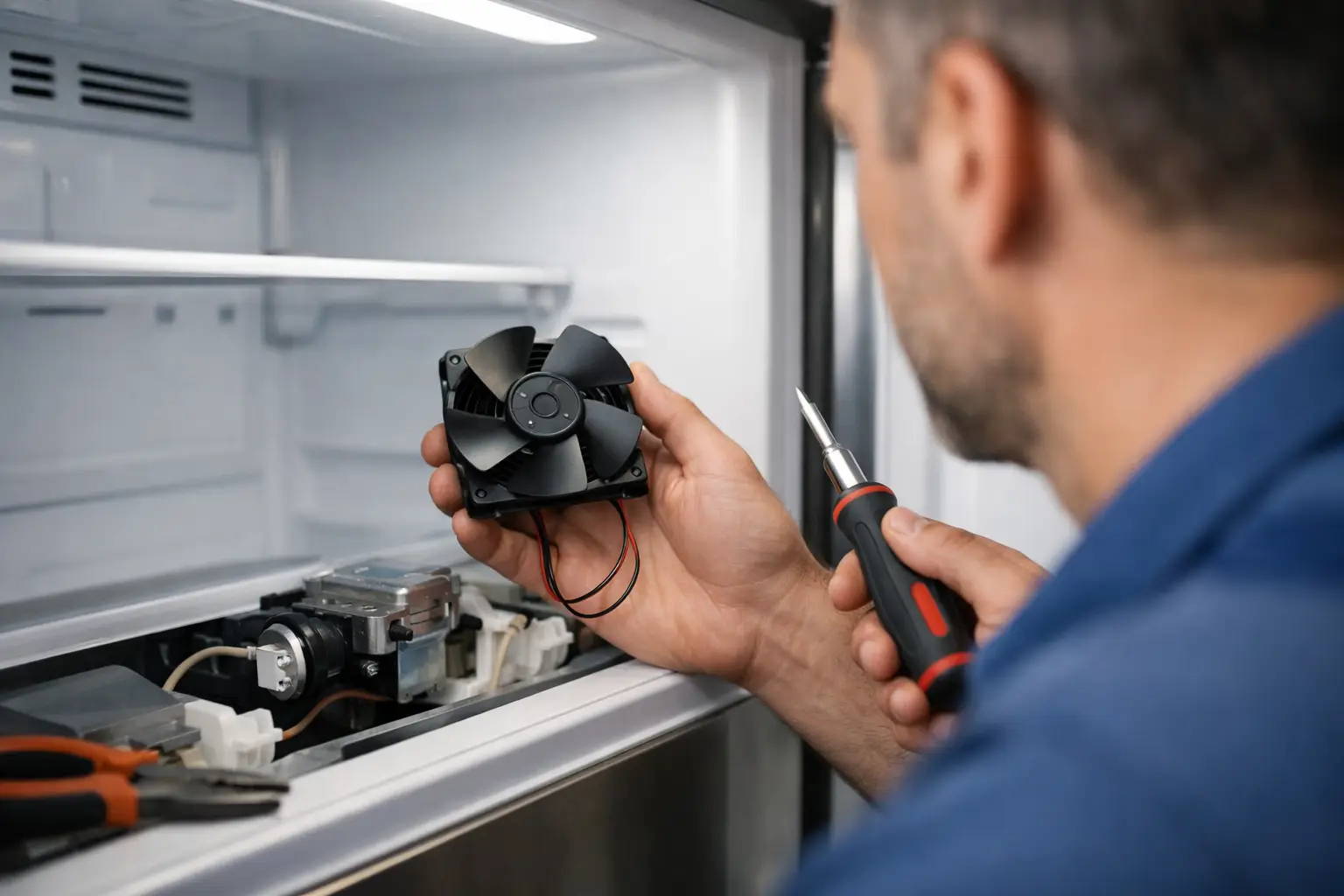
Most modern refrigerators rely on more than one fan. The evaporator fan is usually located inside the freezer compartment behind a rear panel. It circulates cold air over the evaporator coils and distributes it through the refrigerator and freezer sections. If it stops running, the freezer may remain somewhat cold while the fresh-food compartment becomes warm.
The condenser fan is generally located near the compressor at the bottom rear of the appliance. Its job is to move heat away from the condenser coils and compressor. When that fan fails, the refrigerator may feel unusually hot around the back or bottom, run for long periods, and struggle to maintain the set temperature.
Some units also use air dampers, variable-speed fans, or separate compartment fans. That is why a proper diagnosis matters. A noise near the freezer does not always mean the same repair as a noise near the compressor.
Common Signs You Need Refrigerator Fan Repair
A failed fan rarely goes unnoticed for long. Still, the first symptom can be easy to dismiss, especially if the refrigerator is still cooling a little.
The Refrigerator Is Warm but the Freezer Is Cold
This is one of the most common signs of an evaporator fan issue. Cold air is produced in the freezer area and then moved into the refrigerator compartment. If the fan is not circulating that air, milk, produce, and leftovers may get warm even though frozen food still feels solid.
Before assuming the fan is at fault, check that food packages are not blocking the interior air vents. Overpacking can restrict airflow and mimic a fan failure. If the vents are clear and the refrigerator section remains warm, the fan motor, fan blade, wiring, control board, or a frost-covered evaporator coil may need professional attention.
You Hear Grinding, Squealing, Clicking, or Buzzing
A refrigerator should make a low operating hum, occasional clicks, and the sound of ice dropping if it has an ice maker. Grinding, chirping, high-pitched squealing, or a repetitive buzzing sound is different.
An evaporator fan blade can strike ice buildup, a loose shroud, or another internal component. A worn fan motor bearing can also create a squeal or grinding noise before the motor stops completely. At the back of the refrigerator, a condenser fan can become noisy when dust, debris, or a failing motor interferes with the blade.
Ignoring a new noise can make the repair more expensive. A blade rubbing against ice may be a symptom of a defrost problem, while a motor that is straining can fail without warning.
The Refrigerator Runs Almost Constantly
Long run times can have several causes, including dirty condenser coils, worn door gaskets, high room temperatures, or a faulty thermostat. But a condenser fan that is not moving heat away from the compressor is also a serious possibility.
When heat cannot escape effectively, the cooling system has to work harder. That may increase energy use and put unnecessary stress on expensive components. If the outside of the refrigerator feels unusually hot and the unit rarely cycles off, schedule a diagnostic visit rather than waiting for it to stop cooling.
Frost Builds Up in the Freezer
Heavy frost on the freezer’s back wall can block airflow around the evaporator fan. In some cases, the fan is working but cannot move air through the ice. In others, ice physically prevents the fan blade from turning.
Manually defrosting the refrigerator may restore cooling temporarily, but it does not necessarily fix the underlying issue. A failed defrost heater, sensor, timer, door seal, or control component can cause the frost to return. A technician can determine whether the fan is the primary failure or a victim of another problem.
When a Simple Check Is Worth Trying
There are a few safe checks a homeowner or business owner can make before requesting service. First, confirm that the temperature controls were not accidentally changed and that the refrigerator doors are closing fully. Then make sure containers, boxes, or produce bins are not blocking interior vents.
You can also inspect the area around the refrigerator. A unit pushed tightly against a wall may have poor ventilation, and visible dust near the lower rear vent can contribute to overheating. If you can safely access the exterior, listen for whether the refrigerator changes sound when the compressor starts.
Do not remove internal freezer panels, force ice off components, or reach near a running fan. Refrigerators contain electrical connections, sharp sheet-metal edges, and delicate wiring. Unplugging the appliance before any basic cleaning is essential, but disassembly and electrical testing are best left to a qualified appliance technician.
Why Refrigerator Fan Problems Need an Accurate Diagnosis
Replacing a fan motor without testing the system can solve the wrong problem. A fan may not run because its motor has failed, but it may also be receiving no power due to a damaged wire, faulty door switch, failed control board, defrost issue, or sensor problem.
The reverse is also true. A fan that runs normally can still be unable to circulate air if its blade is cracked, obstructed by ice, or installed incorrectly after a previous repair. A complete refrigerator fan repair should address the cause of the airflow failure, not simply the part that appears suspicious.
Professional diagnosis typically includes checking fan operation, motor resistance or voltage where appropriate, frost patterns on the evaporator, condenser airflow, door switch function, and temperature response. This approach helps avoid repeat visits and prevents unnecessary part replacement.
What a Professional Refrigerator Fan Repair Visit Looks Like
A reliable service visit should begin with the symptoms you noticed: when the noise started, which compartment is warm, whether the problem comes and goes, and whether frost has appeared. Those details help narrow the diagnosis before the appliance is opened.
The technician will inspect the relevant fan assembly and surrounding components, then explain what has failed and what repair is recommended. Depending on the model and the cause, the repair may involve replacing a fan motor or blade, clearing an obstruction, repairing wiring, correcting a defrost failure, or addressing a control issue.
Cost depends on the refrigerator brand, model, fan location, part availability, and whether another component caused the fan to fail. Clear pricing matters because a low-cost fan part can still require careful disassembly and testing. Ask for an honest quote before work begins and make sure the repair includes a clear explanation of what was fixed.
For homeowners and small businesses across Greater Massachusetts, Fasteny Appliance Repair provides prompt, certified refrigerator diagnostics with transparent recommendations and service focused on getting essential cooling back quickly.
Protect Your Food While You Wait for Service
If the refrigerator compartment is above 40°F for more than two hours, perishable foods may no longer be safe. Move milk, meat, eggs, cooked leftovers, and other temperature-sensitive items to a cooler with ice or another working refrigerator when possible. Keep both doors closed as much as you can to preserve the remaining cold air.
Avoid repeatedly adjusting the controls to their coldest setting. If a fan or airflow component has failed, turning the dial down will not restore circulation and may make frost buildup worse. Take note of any error codes, sounds, or temperature changes so the technician has a clearer picture of the failure.
A refrigerator fan problem is rarely something to wait out. Prompt service can protect your groceries, reduce stress on the cooling system, and give you a straightforward answer before a small airflow issue becomes a full refrigerator emergency.