A refrigerator that suddenly growls, squeals, rattles, or chirps can make a quiet kitchen feel like a mechanical room. If you need to diagnose a noisy refrigerator fan, the sound itself is often the best clue. The key is identifying when it happens, where it comes from, and whether cooling performance has changed before attempting anything more than a safe inspection.
Most modern refrigerators use more than one fan. One circulates cold air inside the freezer and refrigerator compartments, while another helps release heat near the compressor. A problem with either fan can affect temperature control, energy use, and food safety, so it is worth addressing promptly.
Start by locating the refrigerator fan noise
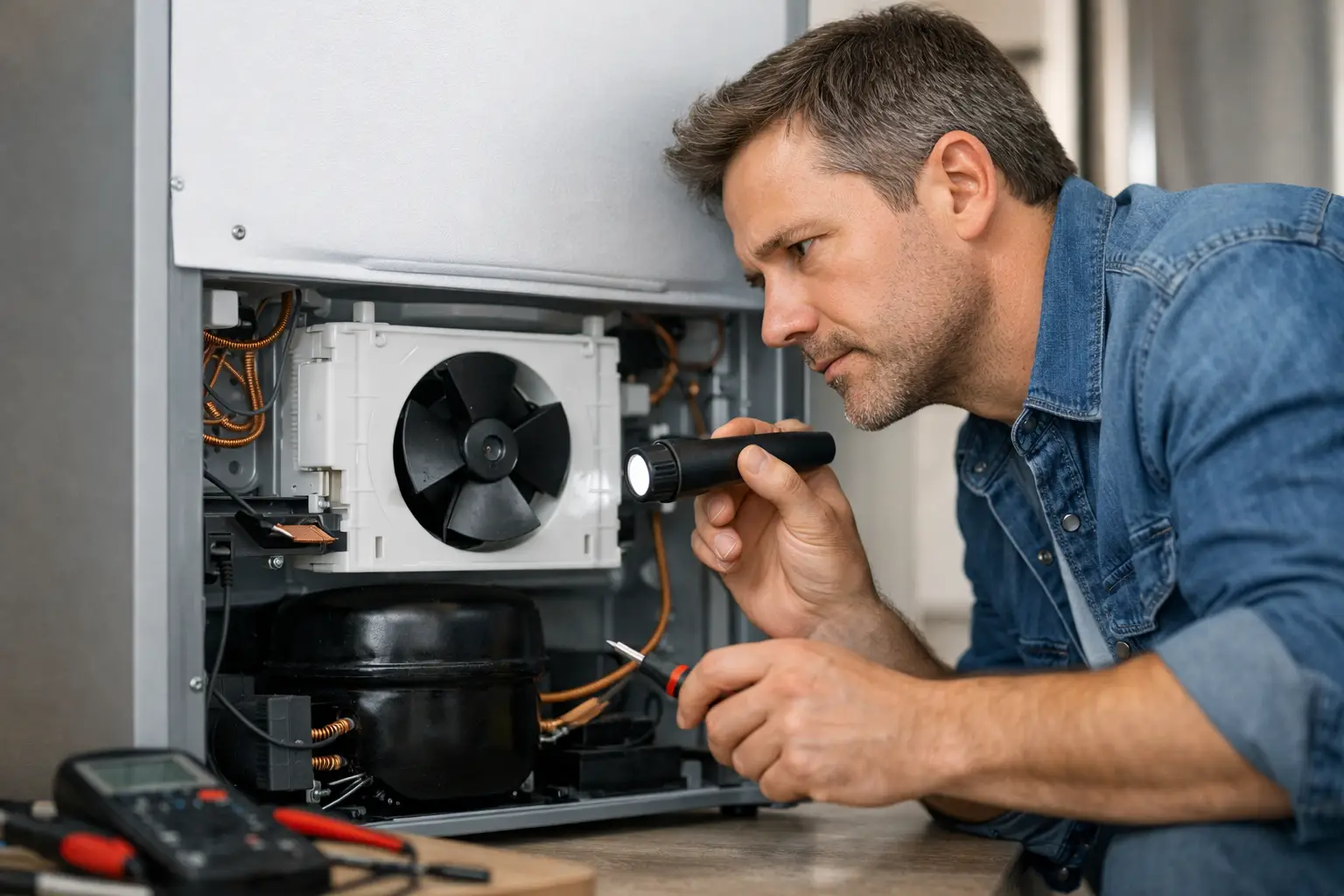
Listen from three places before moving the appliance or removing any panels: inside the freezer, behind the refrigerator, and underneath the unit. Keep the doors closed for a minute, then open the freezer door. On many models, the evaporator fan stops when the door switch is released. Press and hold the door switch with the door open to see whether the noise returns.
A noise that clearly comes from the freezer compartment usually points to the evaporator fan. This fan pulls air across the evaporator coils and sends cold air through the appliance. A sound from the lower rear of the refrigerator is more likely connected to the condenser fan, compressor area, or nearby components.
Timing matters, too. A fan-related sound may start and stop with the cooling cycle. If the noise happens only when the ice maker fills, dispenses ice, or harvests a batch, the fan may not be the cause at all. If it continues when the refrigerator is not actively cooling, a loose panel, cabinet vibration, or nearby item may be creating the noise.
What different refrigerator fan sounds can mean
The exact sound does not guarantee a diagnosis, but it helps narrow down the likely issue. A light ticking or scraping from the freezer often means the evaporator fan blade is contacting frost or ice. This can happen after a door has been left ajar, when humid air enters repeatedly, or when a defrost-system issue allows ice to build up around the fan housing.
A high-pitched squeal, chirp, or intermittent whine can indicate a fan motor with worn bearings. The motor may still run for a while, but it is likely to become louder and eventually fail. If your freezer temperature begins rising or air flow through the refrigerator feels weak, schedule service rather than waiting for the fan to stop completely.
A rattle or buzzing near the back of the unit may be a dirty condenser fan, a blade touching a wire, or a loose rear access panel. It can also be a vibrating drain pan or refrigerant line. Those problems are often simpler than a compressor failure, but the source must be confirmed before a repair is quoted.
A loud grinding noise deserves faster attention. A blade may be damaged, the motor shaft may be failing, or ice may be heavily packed around an evaporator fan. Continuing to run the refrigerator in that condition can strain the motor and lead to a cooling failure.
Safely check the simple causes first
Before inspecting anything, protect your food. Keep refrigerator and freezer doors closed as much as possible, and move perishable items to a cooler if cooling has noticeably weakened. Then unplug the refrigerator before touching a fan area or moving the appliance.
Start with the easy checks. Make sure the refrigerator is level and not pressed tightly against a wall or cabinet. A unit that rocks or touches surrounding surfaces can amplify normal operating sounds. Also check that bins, shelves, and items stored on top of the refrigerator are not vibrating.
If the noise is from the freezer, look for visible frost collecting on the back interior panel or around air vents. Do not chip ice away with a knife, screwdriver, or other sharp tool. You can puncture a liner or damage components behind the panel. A light frost issue may improve after the refrigerator is fully defrosted according to the manufacturer’s instructions, but recurring ice is a repair symptom, not a long-term maintenance issue.
For noise near the rear bottom of the appliance, carefully vacuum dust from the accessible vent and condenser area after unplugging it. Heavy dust can make the condenser fan work harder and may contribute to noise and poor cooling. Do not force the fan blade or reach into areas you cannot clearly see.
How to tell an evaporator fan from a condenser fan issue
An evaporator fan problem usually brings freezer-related symptoms. You may hear noise behind the freezer’s rear interior panel, notice frost buildup, find that the refrigerator section is warm while the freezer is still somewhat cold, or feel reduced air flow from refrigerator vents. On some models, the noise stops when the freezer door opens because the door switch turns the fan off.
A condenser fan issue is usually heard from behind or below the refrigerator, especially while the compressor runs. The exterior side walls may feel warmer than usual, cooling may become inconsistent, and the appliance may run for long periods. Since the condenser fan helps remove heat from the system, a failed motor can put extra load on the compressor.
It depends on the refrigerator design. Some newer models have variable-speed fans that naturally change pitch as operating conditions change. A quiet change in tone can be normal. A new, harsh, repeated, or increasingly loud noise is not something to ignore.
Common reasons refrigerator fans become noisy
Fan noise tends to come down to obstruction, wear, or vibration. The most common causes include:
- Frost or ice contacting an evaporator fan blade
- A worn evaporator or condenser fan motor
- Dust, debris, or a loose wire near a condenser fan
- A cracked, warped, or loose fan blade
- Loose mounting screws, rear panels, or drain pans
- An underlying defrost problem that keeps creating ice around the fan
The last cause is why simply thawing ice may not solve the issue. If the fan becomes noisy again after a few days or weeks, the refrigerator may have a failed defrost heater, sensor, control, door gasket, or drainage problem. A technician can test the related components and repair the actual source rather than repeatedly treating the symptom. If the fan or its motor is worn, our guide on refrigerator fan repair covers what to expect.
When a noisy refrigerator fan needs professional repair
A homeowner can reasonably check for cabinet vibration, blocked vents, visible frost, and dust in accessible areas. Fan replacement and electrical diagnosis are different. Panels may conceal wiring, sharp metal edges, delicate insulation, and components that need model-specific parts and testing.
Call for service when the refrigerator is not cooling correctly, the noise is grinding or severe, frost returns after defrosting, a fan does not run when it should, or you smell burning plastic or notice repeated clicking. Unplug the appliance and avoid using it if there is a burning smell, visible wire damage, or an electrical concern.
A qualified technician can confirm whether the issue is the evaporator fan motor, condenser fan motor, blade, control board, defrost system, or a vibration issue. That diagnosis matters because several refrigerator problems can sound similar from outside the appliance. Replacing a fan without addressing a defrost failure, for example, can result in another noisy fan soon after.
For homeowners and local businesses across Greater Massachusetts, Fasteny Appliance Repair can provide clear diagnosis, fair quotes, and same-day or next-day service when available. A working refrigerator is not a convenience you can put off indefinitely, particularly when groceries, medications, or business inventory are at risk.
Preventing fan noise from coming back
Leave enough clearance around the refrigerator for air to circulate, especially at the rear and lower vents. Keep the doors sealed tightly, and replace worn gaskets that allow warm, humid air into the freezer. Avoid overpacking the freezer so air can move freely through vents and around stored food.
Cleaning accessible dust from the lower rear area periodically can also reduce strain on the condenser fan. If you hear a new sound, take a short video with the location and timing of the noise documented. That small detail can help a technician identify the likely system involved and arrive prepared.
A refrigerator fan should usually blend into the background. When it becomes the loudest appliance in the room, treat that change as an early warning and get the cause identified before a minor noise turns into spoiled food or a complete cooling loss.
Frequently Asked Questions
Why is my refrigerator fan making noise?
Common causes are ice striking the evaporator fan blade, a worn fan motor bearing, debris on the condenser fan, or a fan working harder because of a dirty coil or failing defrost system. Locating which fan is loud is the first step.
What does a loud evaporator fan sound like?
Usually a chirping, squealing, or grinding that gets louder when the door is closed and the fan runs, and may quiet briefly right after a defrost cycle. It comes from behind the freezer back panel.
Is a noisy refrigerator fan dangerous?
The noise itself is not dangerous, but a failing fan reduces cold-air circulation, which can raise temperatures and put food at risk. Address it before cooling suffers.
Can I fix a noisy refrigerator fan myself?
Clearing frost or debris and cleaning the condenser coils are safe DIY steps. Replacing a fan motor means unplugging the unit and removing panels, and is best handled by a technician.
Should I repair or replace a noisy fridge fan?
A fan motor is usually an economical repair on an otherwise healthy refrigerator. Repeated failures on an old unit lean toward replacement. You can request service to confirm.