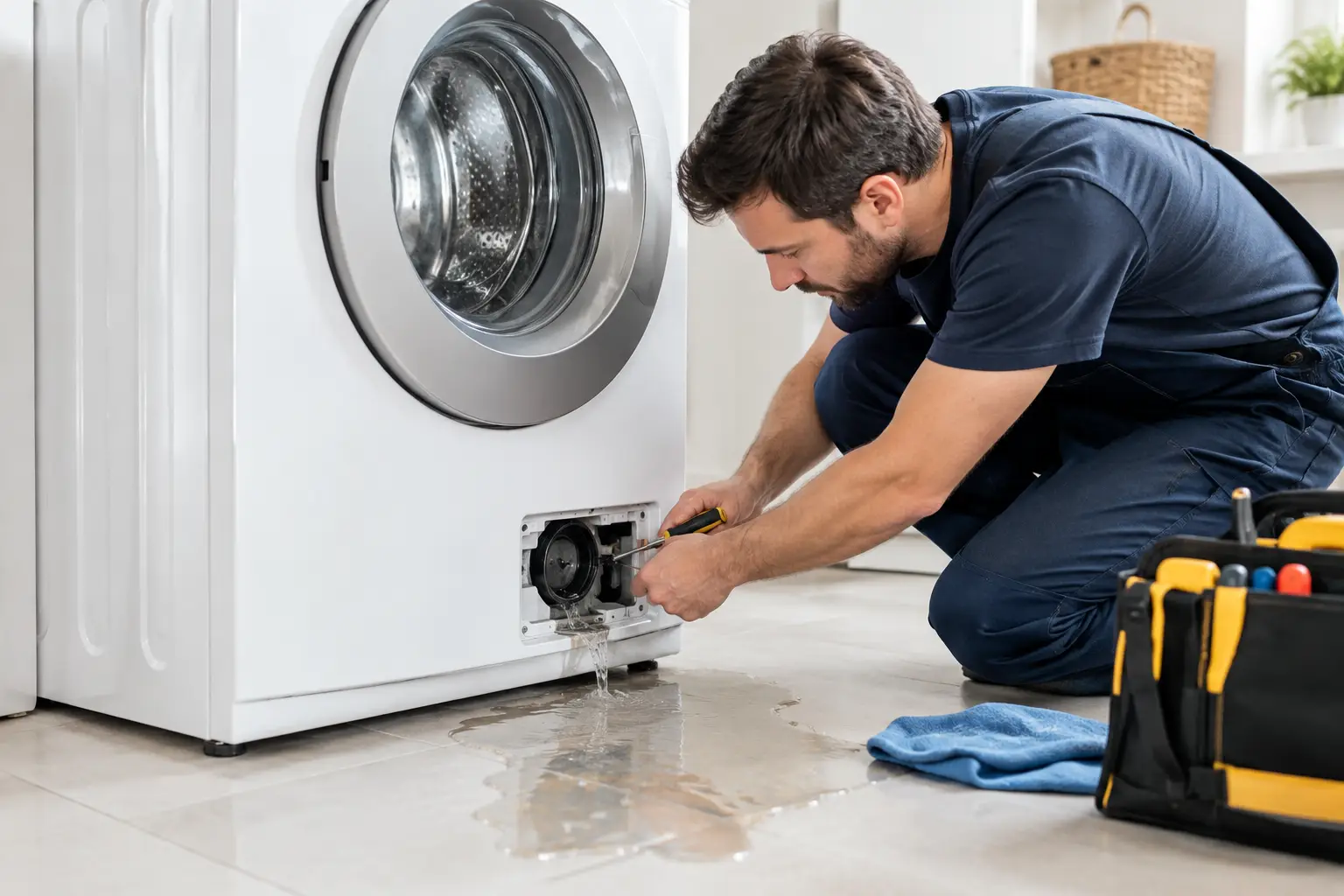
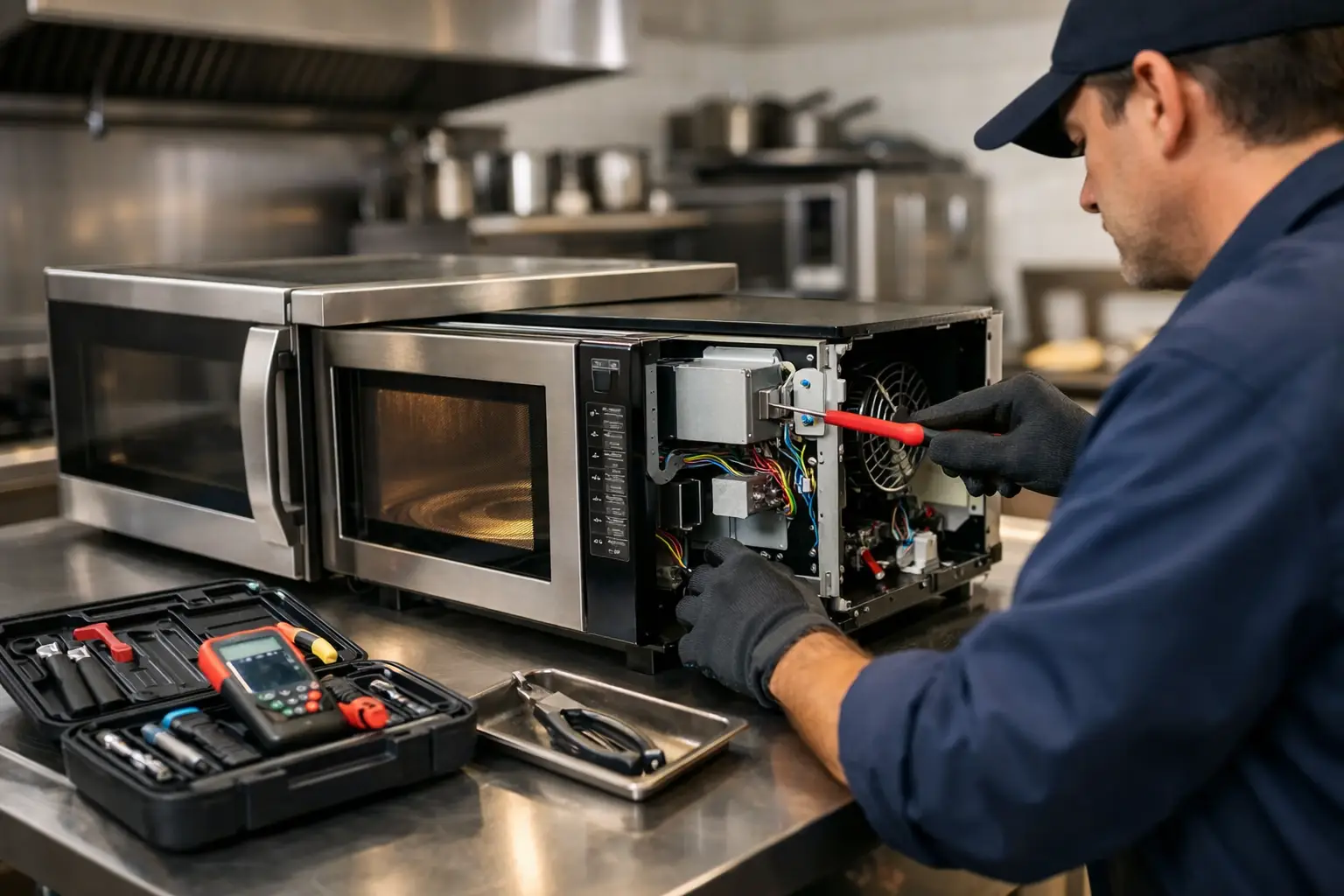
A microwave that stops heating during a lunch rush is more than a minor inconvenience. It can slow prep, interrupt service, and force staff to improvise around an appliance they rely on every day. This commercial microwave repair guide helps business owners and property managers recognize what they can safely check, what the symptoms may mean, and when a qualified technician should handle the repair.
Commercial microwaves are built for frequent use, but high-volume heating puts real strain on door components, cooling systems, control boards, and high-voltage parts. A quick response can limit downtime. A safe response protects your staff, equipment, and business.
Start With Safe, Simple Checks
Before assuming the microwave has failed, rule out the problems that do not require a repair. Make sure the unit is plugged directly into a properly rated outlet and that the circuit breaker has not tripped. Commercial units can draw significant power, so extension cords and overloaded power strips are not a reliable solution.
Check whether the display is powered on, whether the door closes fully, and whether the cooking cycle starts normally. If the microwave has a removable air filter, inspect it for grease and debris according to the manufacturer’s instructions. Restricted airflow can cause overheating and automatic shutdowns.
Unplug the microwave before cleaning its exterior or checking accessible components. Do not remove the cabinet or attempt to inspect internal wiring, fuses, capacitors, transformers, or the magnetron. Microwaves can retain a dangerous electrical charge even after they are unplugged. Internal repair is a job for a trained appliance technician.
Common Commercial Microwave Problems and What They Mean
The symptom often tells a technician where to begin. It does not always identify the failed part, but it can help you decide whether the equipment should be taken out of service immediately.
The Microwave Runs but Does Not Heat
A running microwave with cold food is one of the most common service calls. In a commercial unit, the cause may involve the magnetron, high-voltage diode, capacitor, transformer, inverter, or a related safety component. These parts work together to generate heat, and they should never be tested or replaced by an untrained person.
Do not continue cycling the unit in hopes that it will recover. Repeated use can worsen the underlying failure and may create additional stress on electrical components. Remove the microwave from service and arrange professional diagnosis.
The Door Will Not Close, Latch, or Start a Cycle
Commercial microwave doors experience constant use. A worn latch, damaged hinge, broken handle, or failed door switch can keep the unit from starting. The safety interlock system is designed to prevent microwave operation when the door is not secured, so a unit that will not run may be doing exactly what it should.
Avoid forcing the door shut or bypassing a door switch. A microwave with a damaged door, bent frame, loose hinges, or cracked window should not be used. Proper door alignment is a safety issue, not just a convenience issue.
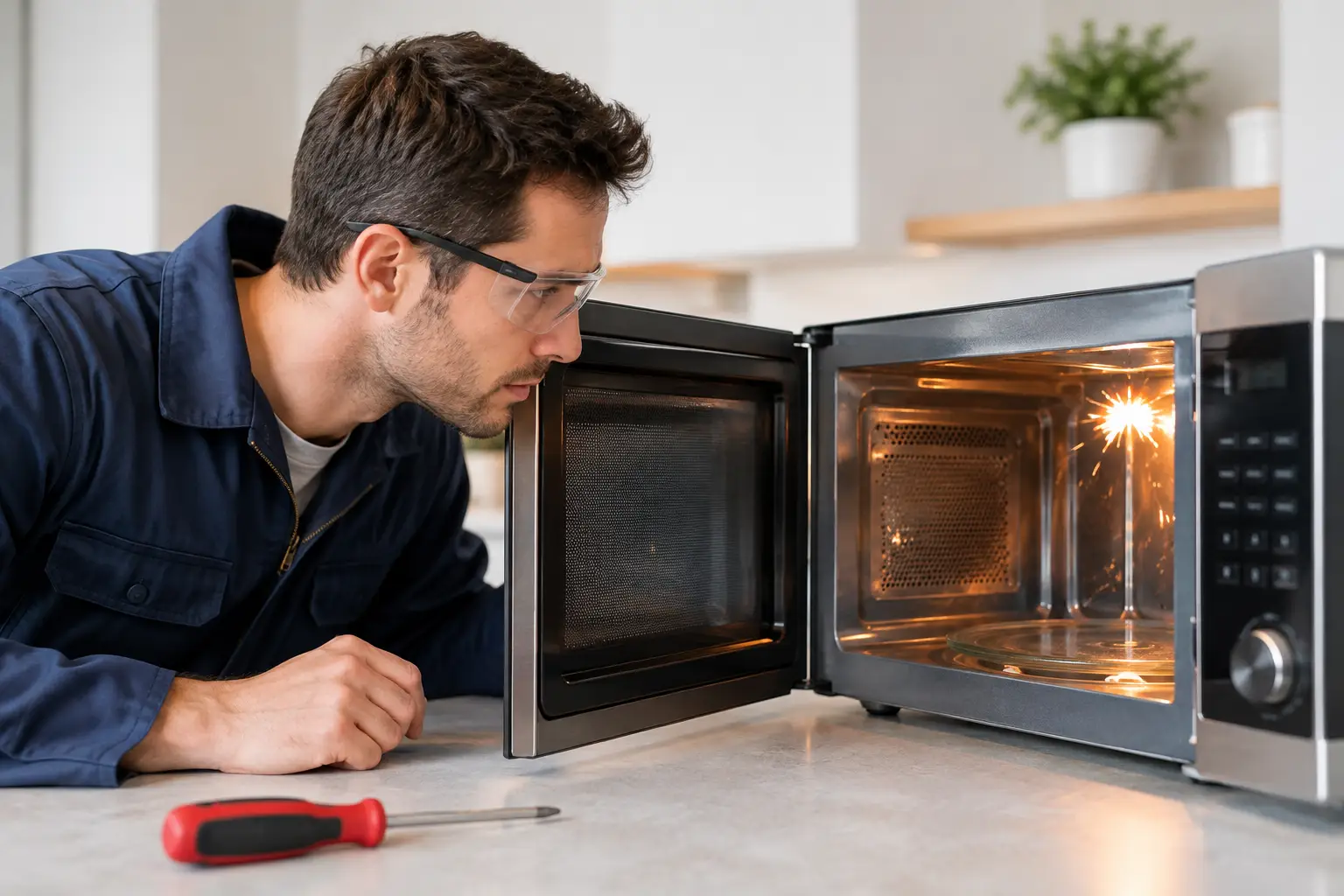
The Microwave Sparks or Arcs Inside
Stop the cycle immediately if you see sparks, flashes, or arcing. Remove the plug from the outlet once it is safe to do so. Common causes include metal items in the cavity, damaged waveguide covers, food buildup, chipped interior coatings, or failed internal components.
First, make sure no foil, utensils, twist ties, or metal-rimmed containers were used. If the interior is dirty, clean it once the appliance is cool and unplugged. If sparking continues with microwave-safe cookware and a clean cavity, leave the unit off. Continued arcing can damage the cavity and high-voltage system.
The Display Is Blank or the Controls Do Not Respond
A blank display may point to an outlet, breaker, power cord, line fuse, control board, or wiring issue. If the outlet is working and the unit still has no power, professional service is usually the next step.
When buttons are unresponsive, the issue may be a worn keypad or moisture and grease affecting the control panel. Staff should not spray cleaner directly onto the keypad. Apply cleaner to a cloth instead, then wipe the panel carefully. If controls remain inconsistent, schedule a repair before the microwave becomes unreliable during service.
The Unit Is Loud, Smells Burnt, or Shuts Off
A louder-than-normal hum, grinding sound, electrical smell, or repeated shutdown deserves prompt attention. A failing cooling fan can cause overheating. A damaged turntable motor, if the model uses one, may create noise during operation. Electrical odors, smoke, or visible damage require immediate shutdown and service.
Do not dismiss a microwave that trips the breaker. That can signal a serious electrical fault. Resetting the breaker repeatedly is not a repair and can put other equipment on the circuit at risk.
When to Call for Commercial Microwave Repair
For small businesses, the practical question is often whether repair makes financial sense. That depends on the microwave’s age, duty level, condition, replacement cost, and the availability of parts. A newer commercial unit with a door switch, keypad, fan, or power issue may be well worth repairing. A heavily used older unit with multiple high-voltage failures may be a better replacement candidate.
Call for service promptly when the microwave does not heat, sparks, has a damaged door, emits smoke or a burning smell, trips a breaker, makes unusual electrical noises, or shuts down repeatedly. These are not wait-and-see problems.
When requesting service, share the model number, serial number, error code if one appears, and a clear description of the symptom. Mention whether the unit powers on, heats inconsistently, makes noise, or fails at a particular point in the cycle. This information helps the technician arrive prepared and reduces avoidable delays.
Fasteny Appliance Repair serves business customers across Greater Massachusetts with clear communication, fair quotes, and qualified appliance diagnostics. If your microwave is affecting daily operations, arranging service early is usually less disruptive than waiting for a complete failure.
Preventing Downtime in a Busy Kitchen or Break Room
Commercial microwave maintenance is mostly about consistent habits. Keep the cavity clean, especially around the door seal and interior surfaces. Food splatter can carbonize, contribute to arcing, and make odors harder to remove. Use only microwave-safe containers, and train staff not to use foil, metal utensils, or containers with metallic trim.
Give the unit breathing room. Vents should stay clear of boxes, towels, grease buildup, and walls that block airflow. In a kitchen, routine filter cleaning matters more than many operators realize. A clogged filter can shorten the life of cooling components and lead to inconvenient shutdowns.
It also helps to match the appliance to the workload. A light-duty microwave used constantly in a restaurant, café, or high-traffic employee break room will wear out faster than a commercial-rated model designed for repeated cycles. Repair can restore a failing unit, but selecting the right duty level helps prevent recurring service calls.
Should You Keep Using a Microwave That Works Intermittently?
Usually, no. Intermittent heating, random shutdowns, unreliable controls, or a door that only latches sometimes are early warnings that can turn into a full outage at the worst possible time. The exception is a clearly identified external issue, such as a tripped breaker caused by an overloaded circuit. Even then, the electrical setup should be corrected before the microwave returns to regular use.
A reliable commercial microwave keeps service moving. If yours is showing warning signs, take it out of service, document the problem, and have it checked before a manageable repair becomes an emergency replacement.