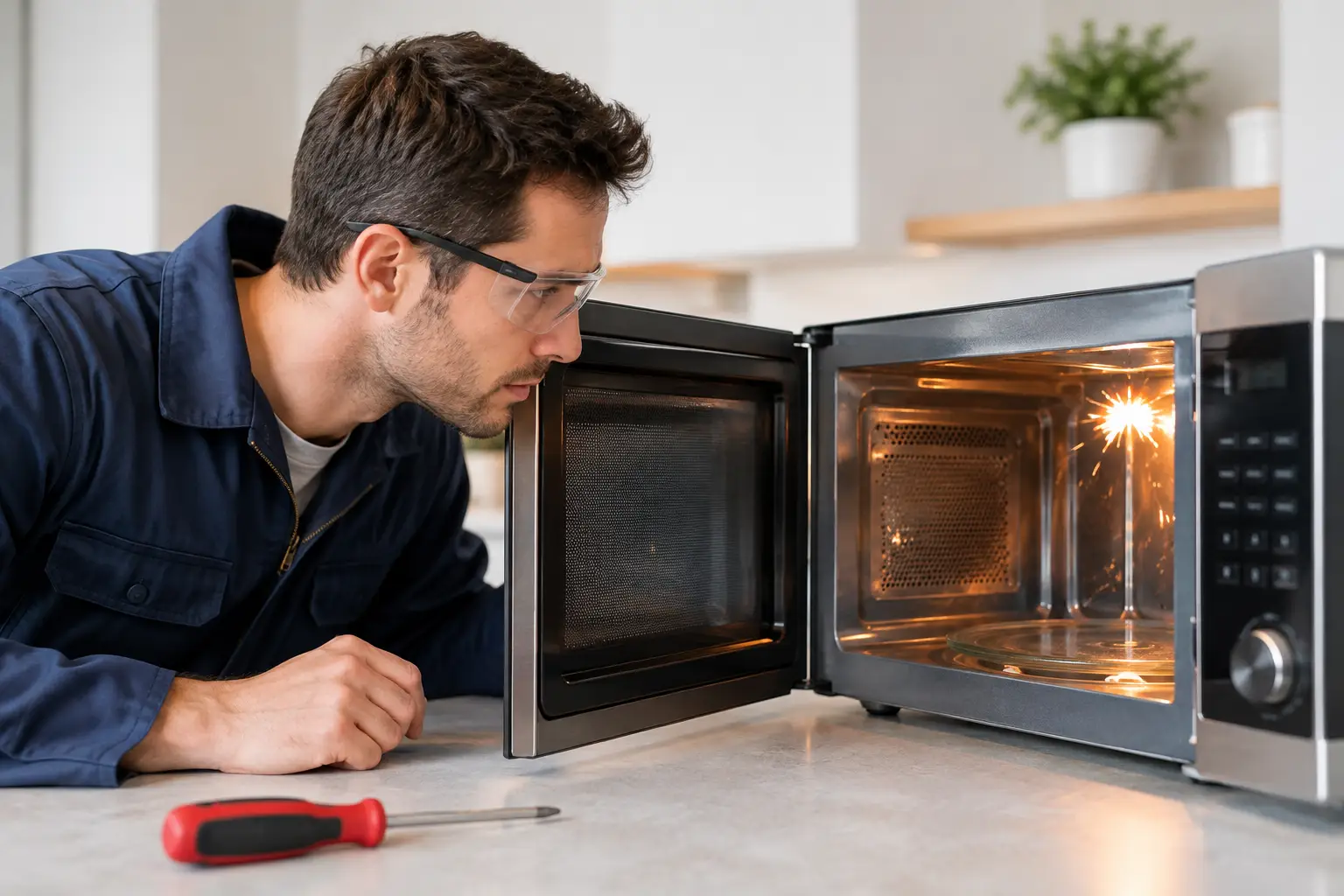
A flash inside the microwave is not a symptom to ignore or test repeatedly. When people search for microwave sparking inside repair, they usually want to know whether a quick cleaning will solve the problem or whether the appliance has become unsafe. The answer depends on where the spark came from, what it hit, and whether there is visible damage inside the cooking cavity.
Stop the microwave immediately if you see arcing, hear sharp popping, smell burning, or notice smoke. Remove the food, unplug the unit if it is safe to do so, and do not run another test cycle until you have checked for an obvious cause. A microwave contains high-voltage components that can retain a dangerous electrical charge even after it has been unplugged, so internal electrical repairs are not a DIY project.
Start With the Simple Causes of Microwave Sparking
Not every spark means a major failure. A forgotten piece of foil, a twist tie, metallic trim on a plate, or a spoon left in a cup can create immediate arcing. Even dishes marked microwave-safe can cause trouble if they have a metallic rim, gold decoration, or a crack that exposes embedded material.
Food buildup is another common cause. Grease and splattered food can carbonize on the cavity wall, ceiling, turntable area, or waveguide cover. Once residue is burned onto a surface, it may create a path for electrical arcing. If the spark was brief and clearly caused by food debris or metal, clean the microwave thoroughly after it has cooled.
Use a soft cloth, mild dish soap, and warm water. Pay close attention to the ceiling, side walls, door frame, and the area beneath the turntable. Avoid abrasive cleaners, steel wool, and harsh chemicals that can damage the interior coating. Let every surface dry completely before using the microwave again.
If you find a metal object or heavy food residue and there are no burn marks afterward, a short test with a cup of water may be reasonable. Stay nearby and stop it at once if the unit sparks again. If arcing returns, do not continue testing.
Check the Waveguide Cover for Damage
Many countertop and over-the-range microwaves have a small rectangular panel inside the cavity, often on a side wall. This is the waveguide cover, usually made from mica or a similar heat-resistant material. It protects the channel that directs microwave energy from the magnetron into the cooking cavity.
A waveguide cover can become stained with grease, warped from heat, or burned by repeated arcing. When it is damaged, you may see sparks concentrated around that panel, along with black spots, blistering, or a burnt smell.
A light surface stain may come off with careful cleaning. A cover that is cracked, charred, warped, or has a hole needs replacement before the microwave is used again. The replacement must be the correct type and size for the appliance. Operating a microwave with a missing or damaged waveguide cover can allow grease and moisture into areas where they do not belong and may lead to more expensive damage.
Replacing an accessible cover may be straightforward on some models, but it still depends on the condition of the microwave behind it. If the surrounding metal is burned, the cavity coating is damaged, or sparking continues after a proper replacement, the unit needs professional diagnosis.
When Microwave Sparking Inside Repair Requires a Technician
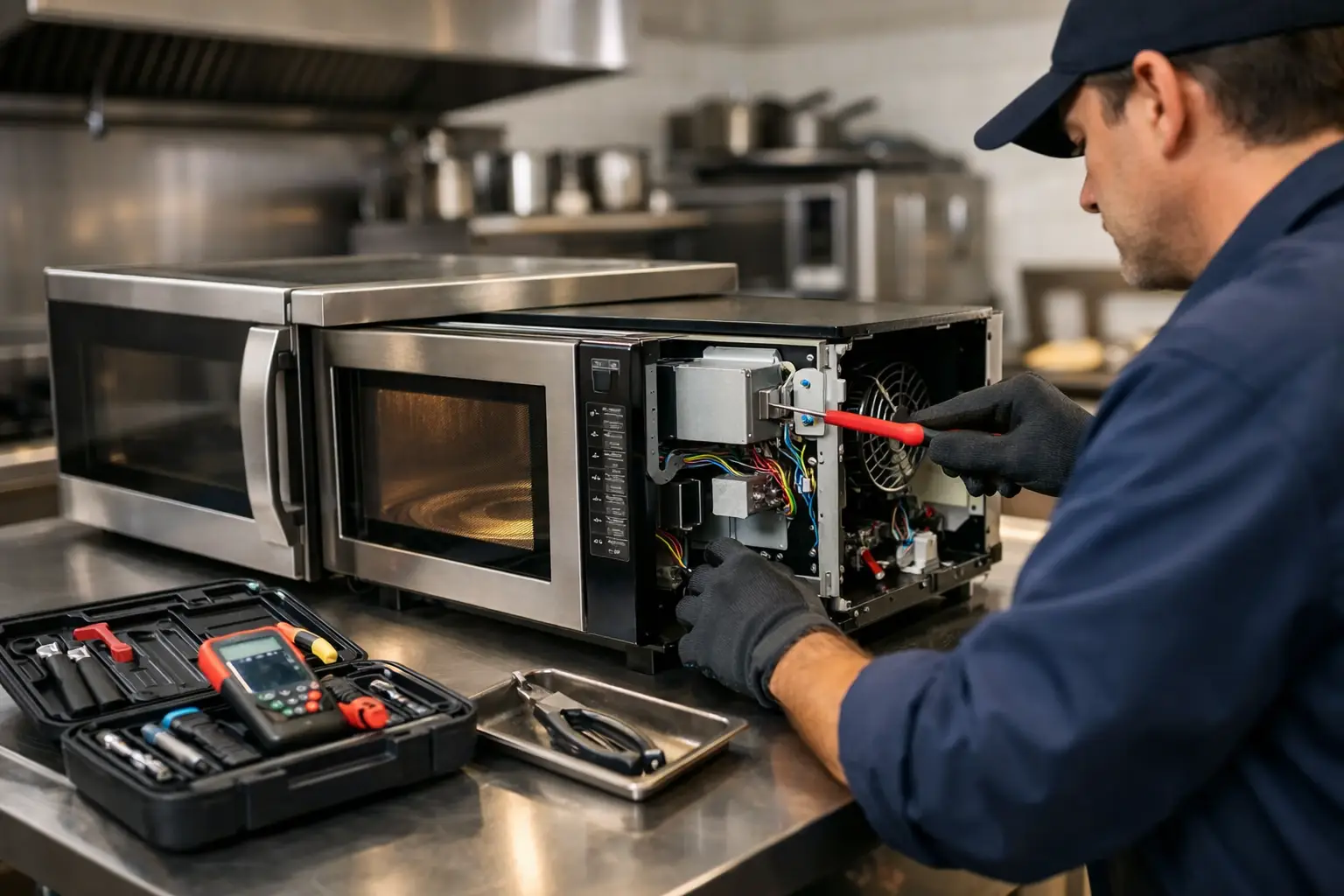
Sparking that occurs with no metal inside and no visible food residue is a stronger warning sign. It may point to a damaged interior cavity, failing high-voltage component, faulty stirrer system, worn rack support, or magnetron-related issue. These parts should only be inspected by a qualified appliance technician.
Never remove the outer cabinet to look for the problem. Microwaves are different from many household appliances because their high-voltage capacitor can store a potentially lethal charge. Turning the unit off at the outlet does not make internal repair safe.
Call for service when you notice any of the following:
- Sparks that return after the cavity has been cleaned and all metal items have been removed
- Black, scorched, peeling, or pitted spots on the microwave’s interior walls or ceiling
- A damaged waveguide cover, especially if the metal behind it is burned
- Sparking near a rack, turntable support, light cover, or door area
- Burning odors, smoke, loud buzzing, or a microwave that no longer heats consistently
A technician can determine whether the issue is confined to an interior panel or whether a high-voltage part has been affected. That distinction matters. Replacing a waveguide cover is generally a smaller repair than replacing a magnetron, diode, transformer, or damaged cavity component.
Can a Burned Microwave Interior Be Repaired?
It depends on the location and severity of the damage. Small marks on a removable waveguide cover or minor surface discoloration may be repairable. Deep rust, exposed metal, flaking cavity paint, holes, or severe pitting inside the cooking chamber are more concerning. Those conditions can keep creating arcs, even after cleaning.
Some cavity surfaces can be treated with an appliance-safe microwave cavity coating when the damage is minor and the underlying metal remains sound. This is not the same as applying ordinary paint. Household paint is not designed for microwave heat or food-area use and can release odors, peel, or create another hazard.
For an older microwave with severe cavity damage, replacement may be the more practical choice. A professional will consider the appliance’s age, model, repair cost, availability of parts, and whether the microwave is otherwise in good condition. Built-in and over-the-range models can be worth repairing because replacement also involves fit, venting, mounting, and installation work.
Avoid These Common Mistakes
The most costly mistake is repeatedly running a sparking microwave to “see if it happens again.” Each arc can worsen a small problem, burn the cavity coating, and damage components that were previously working properly.
Do not place foil over food unless the manufacturer’s instructions specifically allow it and explain how to use it. Do not use chipped dishes with metallic decoration, and do not assume a metal rack can be used in every mode. Some microwaves include a rack intended for particular cooking settings, but using it incorrectly or with the wrong cookware can cause arcing.
It is also wise to avoid using a damaged microwave until it has been checked. A unit may still heat food after sparking, but that does not mean it is operating safely. The goal is not simply to make the spark disappear. It is to identify what caused it and prevent the issue from returning.
Get a Clear Diagnosis Before You Replace the Microwave
A microwave failure can interrupt a busy household, a rental unit turnover, or a small business break area. Before replacing an appliance that may have a repairable issue, get a clear explanation of the cause, required parts, and expected cost.
Fasteny Appliance Repair helps homeowners and local businesses across Greater Massachusetts diagnose microwave problems with straightforward recommendations and transparent pricing. If the repair makes sense, a certified technician can address the issue correctly. If replacement is the smarter investment, you should know that before spending money on a temporary fix.
A spark is your microwave’s signal to stop and investigate, not to take chances. Clean away obvious residue, check for damaged accessories or a burned waveguide cover, and leave internal electrical work to a qualified professional.