You start the dishwasher, come back later, and it’s still running — leaving you wondering exactly how long does a dishwasher take and whether something is wrong. For most homeowners in Reading, Waltham, and across Massachusetts, the answer is longer than you might expect, and usually for good reason. Fasteny Appliance Repair put this guide together to explain normal cycle times, why modern dishwashers run so long, and how to tell when a long cycle actually points to a problem.
How Long Does a Dishwasher Take?
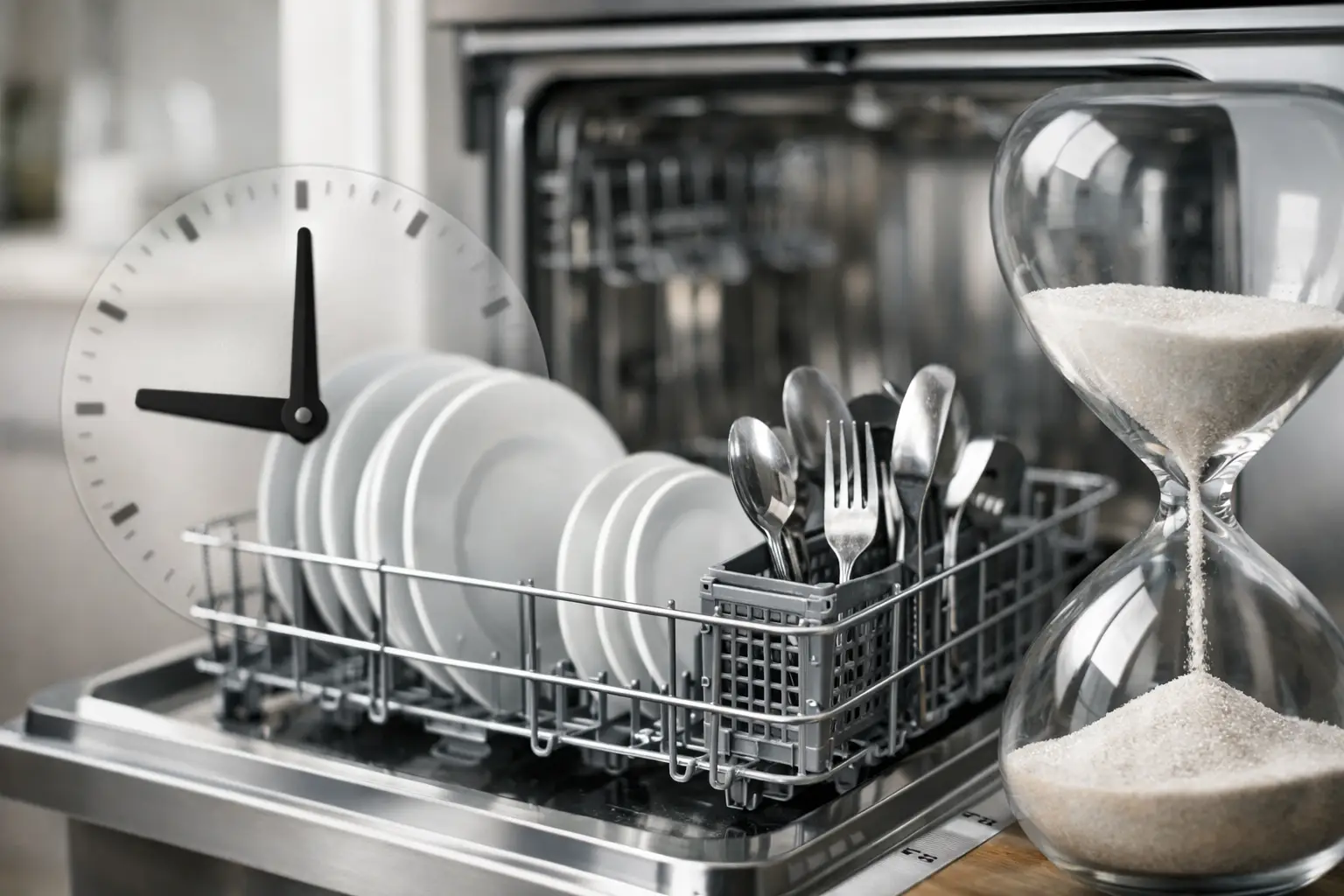
Most dishwashers run between about 1.5 and 4 hours depending on the cycle you choose. A quick or express wash finishes in roughly 30 to 60 minutes, a normal cycle runs about 90 minutes to 2 hours, and a heavy-duty or sanitize cycle can last up to four hours. Eco and auto cycles often run the longest of all, because they trade time for lower water and energy use.
Why Modern Dishwashers Run So Long
If your current dishwasher runs longer than one you owned years ago, that is by design. To meet energy and water efficiency standards, today’s dishwashers use less water and run longer to get the same clean, reheating and recirculating a smaller amount of water instead of dumping and refilling. Soil sensors also lengthen the cycle automatically when they detect dirtier dishes. Maytag’s overview of how long dishwashers run explains how efficiency drives those longer times. In short, a longer cycle usually means a lower utility bill.
Why Is My Dishwasher Taking Too Long? Common Causes
The Wrong Cycle or Option Is Selected
Heavy, sanitize, and heated-dry options all add time. If your dishwasher suddenly seems slow, check whether an auto, eco, or sanitize cycle is selected instead of normal or quick.
The Dishwasher Is Waiting for Water to Heat
Dishwashers pause to heat water to the proper temperature, often two or three times per cycle. If the incoming water is cold, those heating pauses get longer. Running the kitchen hot tap before you start gives the cycle a warm head start.
Water Is Entering Too Slowly
Low water pressure, a partially closed supply valve, or a clogged inlet screen can slow the fill and stretch the cycle. The dishwasher will wait until it has enough water before advancing.
Drainage Is Slowing the Cycle
If water drains sluggishly between phases, the cycle drags. A clogged filter or drain hose is a frequent cause, and our guide on a dishwasher not draining covers how to clear it.
A Sensor or Control Component Is Not Responding
Soil sensors, thermistors, and the control board manage cycle timing. When one misreads or fails, the dishwasher can run far longer than it should or stall mid-cycle, which is a sign it needs a professional look.
Safe Checks Before You Call for Service
Before scheduling a repair, confirm you’re on the cycle you intended, run the hot tap at the sink first, and clean the filter and spray arms so water moves freely. Check that the drain hose isn’t kinked and the supply valve is fully open. If dishes still come out dirty as well as slow, our guide on a dishwasher not cleaning can help you sort the two issues apart.
When a Dishwasher Cycle Ends Too Soon
The opposite problem — a cycle that finishes in just a few minutes — usually means the dishwasher isn’t filling, draining, or heating properly and is aborting the cycle. A door latch that isn’t catching, a failed water inlet valve, or an error code can all cut a cycle short, and these typically need a technician to diagnose.
When to Call for Dishwasher Repair
A long cycle is usually normal, but a dishwasher that runs for many hours, stalls, or ends abruptly is worth having checked. If the problem points to the heating element, inlet valve, drain pump, or control board, Fasteny Appliance Repair’s team serving Billerica, Peabody, and communities across Massachusetts can help. You’re welcome to learn more about our dishwasher repair service or read about our appliance diagnostic service whenever it helps.
Frequently Asked Questions
How long does a normal dishwasher cycle take?
Most normal cycles run about 90 minutes to 2 hours. Heavy or sanitize cycles can stretch to three or four hours, while a quick or express wash finishes in 30 to 60 minutes. Exact times vary by brand, soil level, and incoming water temperature.
Why does my dishwasher take 3 or 4 hours?
Longer run times are usually by design. Energy- and water-efficient dishwashers run longer and reuse heated water to clean thoroughly with fewer resources, and soil sensors extend the cycle when dishes are dirtier. A cycle that suddenly runs far longer than normal, though, can signal a heating, water-inlet, or drainage problem.
Is it cheaper to run a longer eco cycle?
Usually yes. Eco and auto cycles take more time but use less hot water and energy, which lowers your running costs even though the clock runs longer.
Why won’t my dishwasher cycle advance or finish?
A cycle that stalls often points to slow water fill, a failing heating element that can’t reach temperature, a drainage restriction, or a stuck control sensor. Checking the water supply, filter, and drain hose is a good first step before calling for service.
How can I make my dishwasher run faster?
Select a shorter cycle for lightly soiled loads, skip heated-dry or sanitize options when you don’t need them, and run the hot tap at the sink first so the dishwasher starts with hot water. Keeping the filter and spray arms clean also helps it finish efficiently.
Conclusion
So, how long does a dishwasher take? For most cycles, anywhere from about 90 minutes to four hours — and a longer run is usually your dishwasher working efficiently, not failing. When a cycle stretches well beyond normal, stalls, or ends too soon, that’s the time to look closer. Request service from Fasteny Appliance Repair or explore our full range of appliance repair services, and a technician serving Reading, Waltham, and communities across Massachusetts will get your dishwasher back on schedule. Call +1 (617) 618-3311 or visit fastenyappliance.com to book.