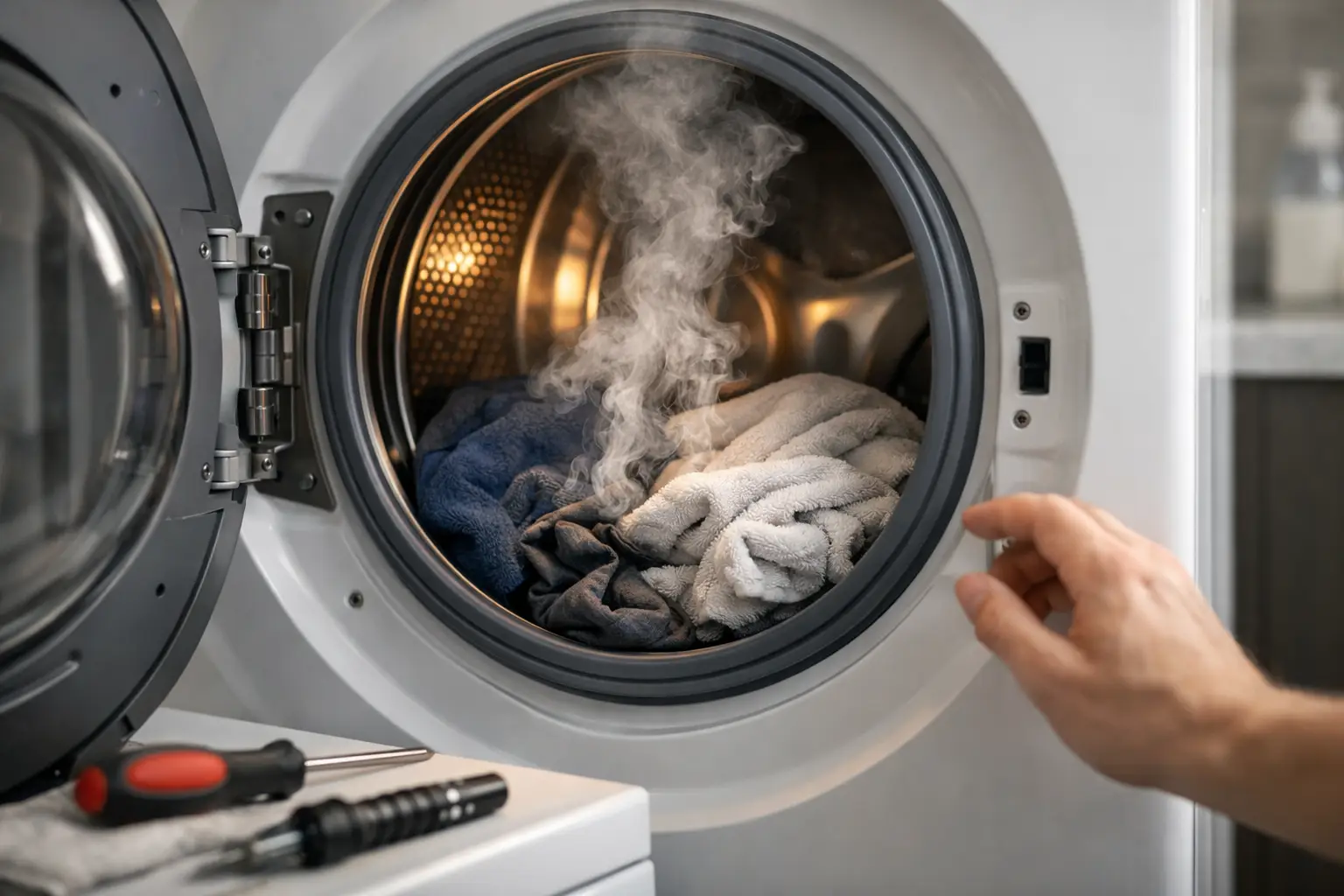
That hot, scorched smell coming from the laundry room is not something to ignore. When a dryer smells burning, the cause may be as simple as lint near a heat source, or it may point to an electrical or mechanical problem that can worsen quickly. The safest choice is to stop the cycle, unplug the dryer if it is safe to do so, and identify whether the smell is coming from clothing, lint, wiring, or an overheating component.
A dryer generates high heat by design, but it should not produce a persistent burning odor, smoke, sparks, or unusually hot surfaces. Acting early can protect your appliance, your clothing, and your home.
When a Dryer Smells Burning, Stop Using It
Turn the dryer off immediately if you smell burning plastic, rubber, electrical wiring, or smoke. Do not run another load just to see whether the smell goes away. If you see smoke, notice sparking, or smell a strong electrical odor, unplug the unit only if you can do so safely and contact emergency services if there is an active fire risk.
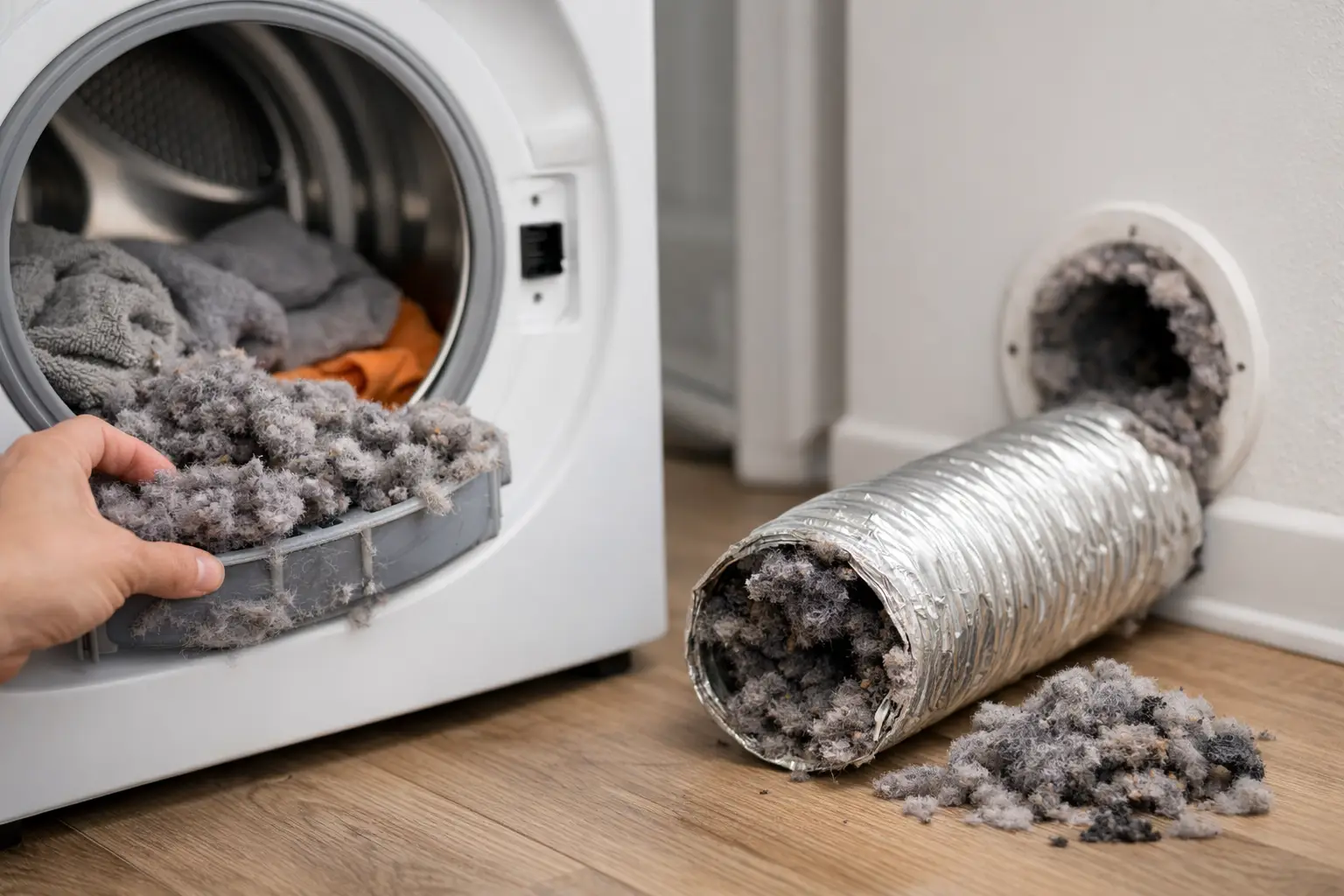
For a mild odor that appears only during the first few minutes of a cycle, inspect the lint screen and the area around the dryer before doing anything else. A clogged lint screen or vent is one of the most common reasons a dryer overheats. Still, a clean screen does not guarantee that the vent system is clear. Lint can collect in the exhaust hose, wall duct, and outdoor vent hood where it is harder to see.
Common Reasons Your Dryer Smells Burning
Lint buildup and restricted airflow
Every dryer relies on airflow to remove heat and moisture. When lint blocks that airflow, heat stays inside the cabinet longer than it should. The dryer has to work harder, drying times increase, and lint near hot internal components can create a burning smell.
Clean the lint filter before every load, but also look beyond it. Check whether the exhaust hose is crushed behind the dryer or packed with lint. Outside, make sure the vent flap opens fully while the dryer is running. If clothes are taking more than one cycle to dry, the top of the dryer feels very hot, or the laundry room becomes unusually humid, restricted venting is a likely concern.
Vent cleaning is sometimes a homeowner task, but not always. Long duct runs, rooftop exits, multiple bends, or vents shared in a commercial setting require the right equipment and a complete inspection. Removing only the lint at the ends can leave the main blockage in place.
A foreign object caught in the drum or blower
A coin, bra underwire, small screw, piece of plastic, or other item can slip past the drum and contact a moving or heated part. You may hear scraping, thumping, rattling, or a metallic sound along with the odor. In some cases, an item melts against the heater housing or gets caught in the blower wheel.
Check the drum carefully after the dryer has cooled. Look around the door seal and empty pockets before the next load. Do not disassemble the appliance or reach into internal areas to retrieve an object. Sharp edges, electrical connections, and hot components make that a repair job.
Worn drum rollers, belt, or idler pulley
A rubbery burning smell often comes from parts that help the drum turn. A worn drive belt can slip and overheat. Drum rollers and the idler pulley can also wear down, seize, or create enough friction to produce an odor.
These issues are usually paired with symptoms such as squealing, grinding, thumping, a drum that turns slowly, or a dryer that runs but stops tumbling. Continuing to use the dryer can turn a straightforward part replacement into damage to the motor or drum support system.
Electrical wiring, terminals, or heating element problems
A sharp burning-plastic or fishy electrical smell is more urgent. It can indicate an overheating wire, loose electrical terminal, damaged power cord, failing motor, control board problem, or heating element fault. You might also notice that the dryer trips a breaker, shuts off unexpectedly, heats inconsistently, or will not start again after cooling down.
Do not reset a tripped breaker repeatedly and keep running the dryer. A breaker that trips is doing its job by responding to an abnormal electrical load. A qualified technician should inspect the appliance and, when needed, the outlet and power connection.
New dryer odor or residue on clothes
A newly installed dryer can give off a light odor during its first few uses as manufacturing oils and coatings heat up. This should be mild and temporary, with no smoke or hot plastic smell. Run an empty cycle according to the manufacturer instructions and monitor it closely.
Residue on clothing can also cause an odor. Items with gasoline, paint thinner, cooking oil, solvents, or heavy chemical products should never go in a dryer. Even after washing, flammable residue can ignite or release dangerous fumes when exposed to high heat. Air-dry these items and follow the product care guidance.
Checks You Can Safely Make Before Scheduling Repair
Once the dryer is off and completely cool, start with a basic visual inspection. Remove and clean the lint filter. Vacuum visible lint from the filter housing if you can reach it without taking the machine apart. Inspect the exhaust hose for kinks, crushing, loose connections, or obvious buildup, and check the outdoor vent cover for blockage.
Then look inside the drum for foreign objects, melted material, or marks on clothing. Pay attention to what happened just before the smell started. Did the load include a rubber-backed bath mat, sneakers, heavily soiled work clothes, or an item with a chemical spill? Did the dryer begin making a new noise? Did drying time suddenly get longer?
Those details help narrow down the cause. They also help a service technician diagnose the problem faster, which can reduce repeat visits and prevent unnecessary part replacements.
Avoid using extension cords, opening the rear panel, bypassing safety switches, or attempting to repair heating components yourself. Dryers use high-voltage electrical connections and high-temperature parts. A quick fix that does not address the actual fault can create a larger safety problem.
When to Call a Dryer Repair Professional
Schedule professional service promptly if the burning smell returns after the lint screen and accessible vent areas are cleaned. You should also call for help if the dryer squeals, scrapes, trips the breaker, produces smoke, has a drum that does not turn properly, or leaves clothes unusually hot.
For landlords and small business operators, it is especially wise to take a dryer out of service at the first sign of overheating. A shared laundry appliance handles more loads, accumulates lint faster, and creates a bigger disruption when it fails. Clear documentation of the symptoms and a timely repair can help protect tenants, staff, and property.
A trained technician can inspect airflow, test electrical components, examine the belt and drum supports, and determine whether a repair is worthwhile. The right answer depends on the dryer’s age, condition, repair history, and the specific failed part. A good repair recommendation should be clear about the cause, the expected cost, and whether replacement may make more sense.
Fasteny Appliance Repair provides responsive dryer diagnosis for homeowners and local businesses across Greater Massachusetts, with clear quotes and service focused on getting essential appliances back in working order.
Prevent Burning Smells From Coming Back
The most effective prevention is simple: clean the lint screen every time, keep the area around the dryer free of lint and stored items, and make sure the exhaust system is inspected and cleaned regularly. Do not overload the drum, since heavy loads strain the belt, motor, and drum supports. Follow garment labels, particularly for foam, rubber, plastic-backed fabrics, and items exposed to chemicals.
Pay attention to small changes. A dryer that takes longer to dry, makes a new squeal, or feels hotter than usual is giving you an early warning. Taking care of that warning before it becomes a burning smell is usually safer, less stressful, and easier on your budget.