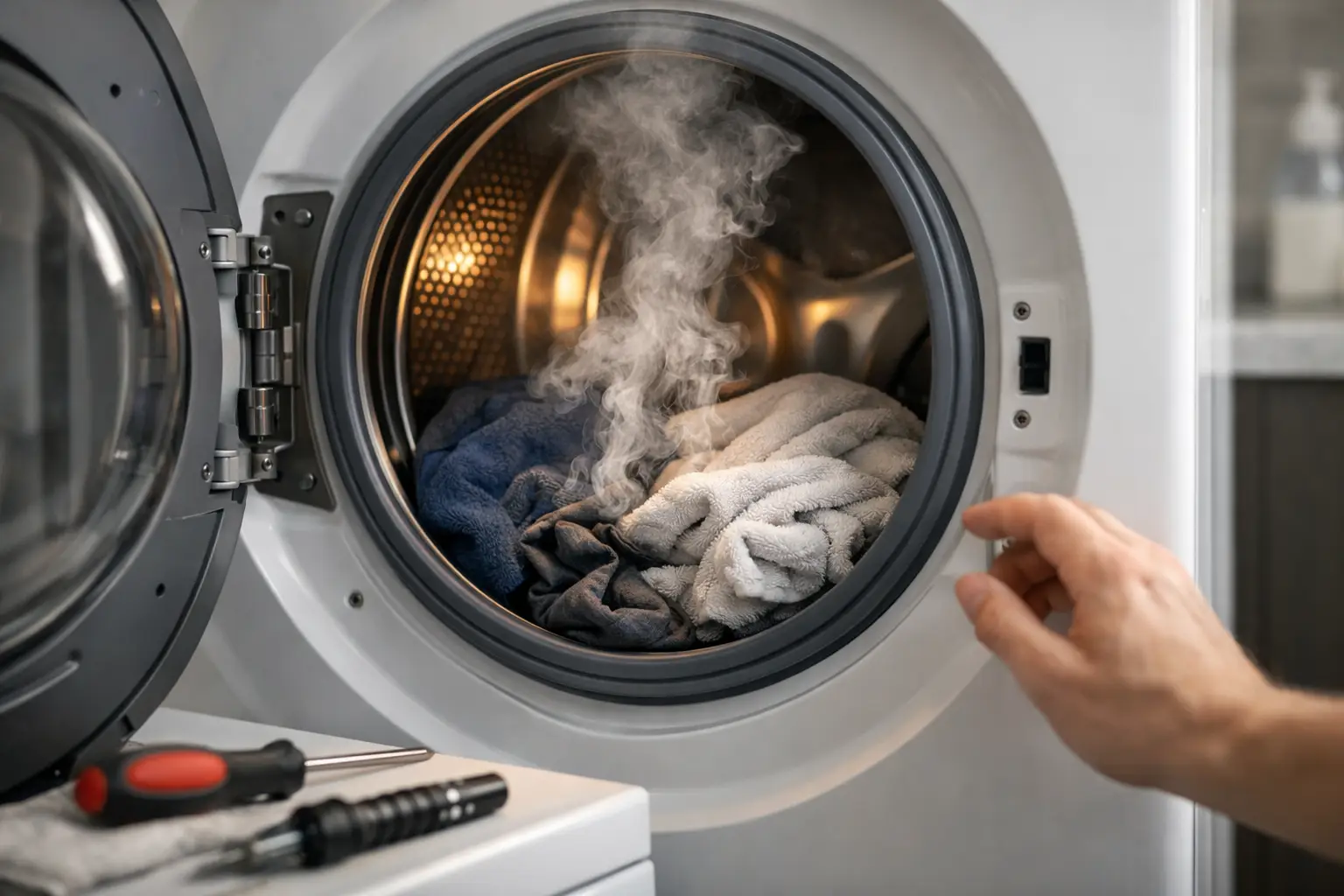
A dryer that suddenly needs two or three cycles to dry a normal load is not just frustrating. It can be a warning that hot, moist air is trapped where it should not be. Knowing the best signs of dryer vent blockage helps you act before a small maintenance issue becomes a damaged dryer, a costly repair, or a fire hazard.
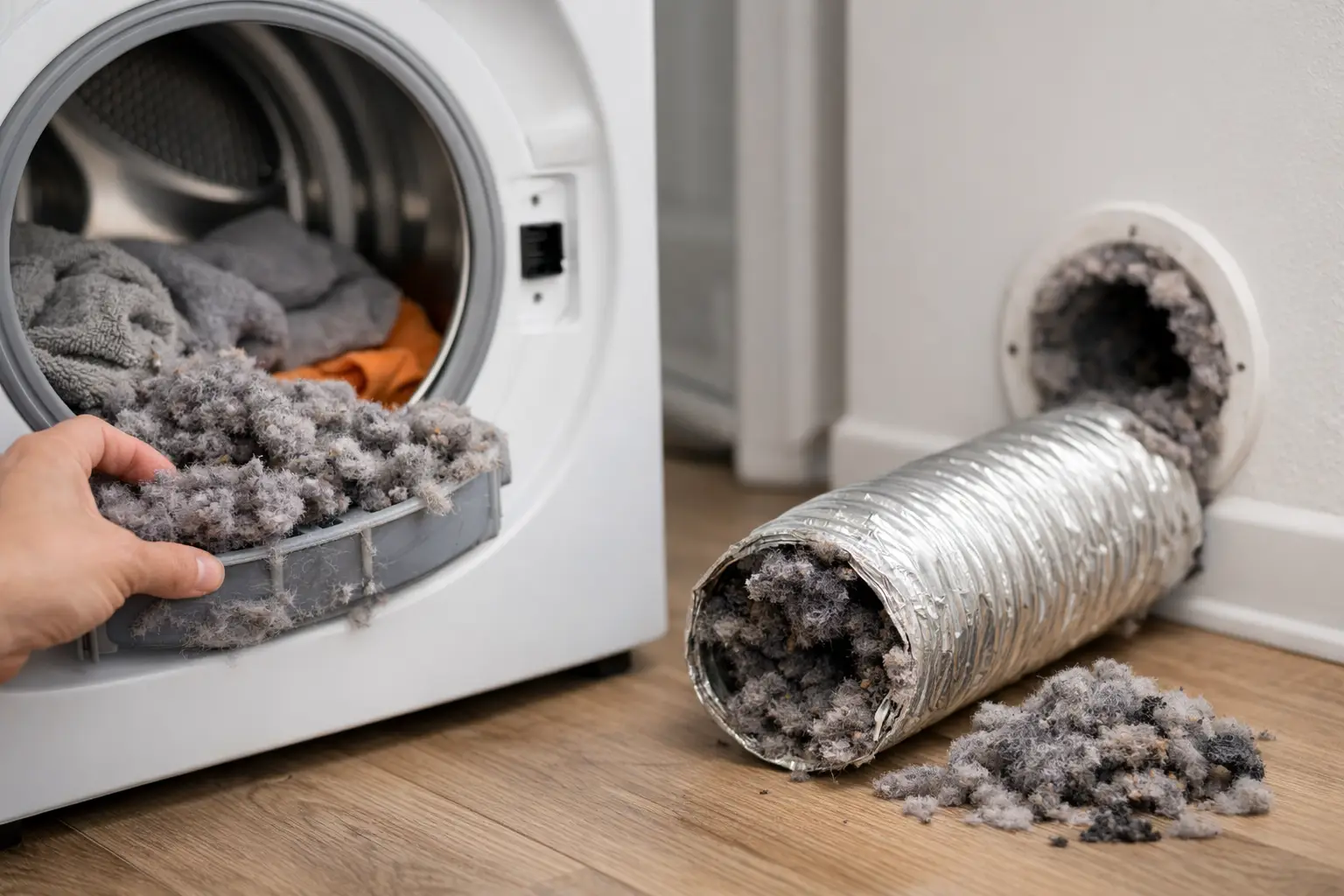
Lint does not only collect in the screen inside the dryer. It can build up in the vent hose, the ductwork behind the wall, and the exterior vent cap. Bird nests, leaves, snow, crushed flexible ducting, and poor installation can also restrict airflow. The result is the same: your dryer works harder while heat and lint accumulate.
Why a Blocked Dryer Vent Is a Safety Issue
Every dryer cycle needs a clear route to move hot air, moisture, and lint outside. When that route narrows or closes, heat stays inside the appliance and laundry area longer than it should. That added strain can overheat components, shorten the dryer’s life, and increase the chance that lint will ignite.
The risk is not limited to older machines. A newer dryer can also overheat if its vent is clogged, too long, kinked, or improperly routed. Gas dryers add another concern: poor exhaust ventilation may allow combustion gases to remain near the appliance instead of venting outdoors.
A blockage is not always the only explanation for poor drying. A failed heating element, thermostat problem, worn drum seal, or moisture-sensor issue can cause similar symptoms. That is why the pattern of symptoms matters, especially when several appear at once.
The Best Signs of Dryer Vent Blockage
Clothes Take Much Longer to Dry
Long drying times are usually the first sign homeowners notice. Towels, jeans, bedding, and other heavy loads naturally take longer than lightweight clothing, but a typical load should not need repeated cycles to become fully dry.
If clothes remain damp after a full cycle, check the lint screen first. If the screen is clean and the problem continues, restricted vent airflow is a likely cause. Do not respond by simply choosing a hotter setting every time. More heat without proper airflow can make the underlying problem worse.
The Dryer or Laundry Room Feels Excessively Hot
A dryer cabinet will feel warm while running. It should not feel unusually hot to the touch, and the laundry room should not become stifling after one load. Excessive heat means the appliance may be struggling to push air through the exhaust system.
Pay attention to hot walls, a warm floor behind the dryer, or heat lingering well after the cycle ends. These conditions deserve prompt attention, particularly in tight laundry closets and utility rooms with limited air circulation.
You Smell Something Burning
A burning odor is one of the most urgent warning signs. Lint near a hot component can scorch, producing a dusty or burning smell. An electrical issue, such as a failing motor or damaged wiring, can also create a similar odor.
Turn the dryer off immediately if you notice a burning smell. Do not keep running it to see whether the odor goes away. Unplug an electric dryer if it is safe to do so, avoid touching hot surfaces, and arrange a professional inspection before using the appliance again.
The Exterior Vent Flap Does Not Open Properly
While the dryer is running, the exterior vent hood should release a steady flow of warm, moist air. Its flap should open freely. If there is little or no airflow outside, or the flap barely moves, lint or another obstruction may be blocking the duct.
This simple check can be revealing, but it is not a complete diagnosis. A vent may have some airflow while still being restricted enough to cause overheating and poor drying. Exterior caps can also become blocked by debris or stuck because of paint, corrosion, or cold-weather buildup.
Lint Appears Around the Dryer or Vent Connection
The lint screen catches much of the lint produced during a cycle, but it does not catch all of it. Seeing lint around the dryer door, behind the machine, or near the vent connection can mean air is escaping through a loose or damaged duct joint.
A disconnected, crushed, or torn transition hose is especially common after a dryer has been moved. Besides reducing performance, a leak can release lint and moisture into the home rather than sending them outdoors.
The Dryer Shuts Off Before the Load Is Dry
Many dryers have a thermal safety device that stops the cycle when temperatures rise too high. If your dryer shuts down unexpectedly and the clothes are still wet, overheating from poor airflow is one possible reason.
Letting the dryer cool and restarting it may temporarily restore operation, but it does not solve the cause. Repeated overheating can damage thermostats, thermal fuses, heating elements, belts, and motors. A dryer that repeatedly stops mid-cycle needs a proper diagnosis, not repeated resets.
There Is More Humidity or Condensation in the Laundry Area
A vented dryer should send moisture outside. When the vent is blocked or disconnected, that moisture can remain indoors. You may notice condensation on windows, damp walls, a musty smell, or unusually high humidity in the laundry room.
This is easy to dismiss during a humid Massachusetts summer, but it should not be ignored. Ongoing moisture can contribute to mildew and damage nearby finishes, especially in basements, closets, and enclosed laundry spaces.
What to Do When You Notice a Possible Blockage
Start with the safe basics. Clean the lint screen before every load and remove visible lint from its housing only if you can do so without forcing tools into the dryer. Check that the dryer is not pushed so far back that its exhaust hose is crushed or sharply bent.
Then look at the outdoor vent while the dryer is operating. Weak airflow, a closed flap, or visible lint buildup points toward a venting issue. If you find a simple obstruction at the exterior cap, such as loose leaves, clear it only when the dryer is off and the area is safely accessible.
Do not take apart concealed ductwork, use improvised tools inside the vent, or run the dryer with the exhaust disconnected indoors. A blockage may be deep in the duct, and aggressive DIY cleaning can compact lint, damage the vent, or leave connections loose. Flexible plastic or foil-style ducts are also more prone to sagging and trapping lint than properly installed metal ducting.
If the dryer has a burning odor, is very hot, repeatedly trips a thermal device, or produces no outdoor airflow, stop using it until it has been inspected. These are not wait-and-see symptoms.
When the Dryer Needs Repair, Not Just Vent Cleaning
Vent cleaning can restore airflow, but it will not fix every drying problem. If the vent is clear and the dryer still runs cold, overheats, makes grinding noises, or fails to tumble, an appliance component may be at fault.
A qualified technician can check airflow along with the heating system, thermal fuses, sensors, motor, belt, and electrical connections. That distinction matters because replacing parts without addressing restricted venting can lead to repeat failures. Likewise, cleaning a vent will not restore a failed heating element or damaged control board.
For homeowners and property managers, a professional diagnosis offers a clearer path forward: identify whether the issue is vent-related, appliance-related, or both, then address the actual cause with transparent recommendations. Fasteny Appliance Repair helps customers across Greater Massachusetts diagnose dryer performance and safety concerns without guesswork.
Keep Airflow From Becoming a Future Problem
The most effective habit is simple: clean the lint screen before every load, not only when it looks full. Wash the screen occasionally with warm water and mild dish soap if fabric-softener residue makes it feel slick, then let it dry completely before reinstalling it.
Have the full vent path inspected and cleaned on a regular schedule based on how often the dryer is used. A busy household, multi-unit property, salon, or small business may need more frequent service than a home with occasional laundry. Also keep the exterior vent cap clear through every season, particularly after storms and during winter.
Your dryer should dry clothes efficiently, vent warm air outdoors, and operate without unusual heat or odors. If it does not, treating the warning early is the safer and often less expensive choice.