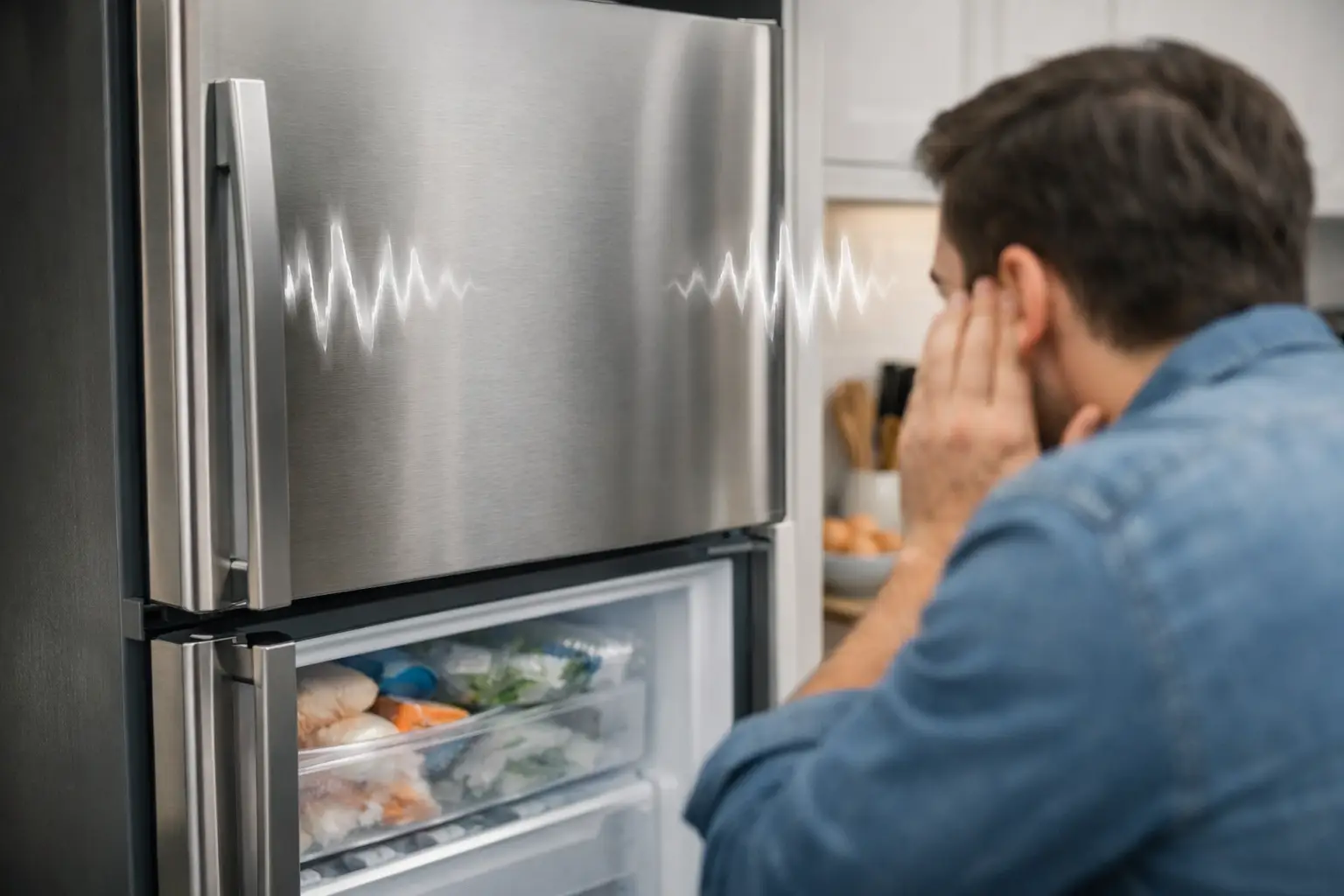
A freezer that suddenly gets loud is hard to ignore, especially when it is keeping food you cannot afford to lose. A freezer buzzing loudly may be doing something as ordinary as running a cooling cycle, but a new, constant, or harsh buzz can also point to a fan problem, ice buildup, a failing compressor component, or an electrical concern. The sound matters, but so does what the freezer is doing: Is it still holding temperature? Is there frost on the back wall? Does the noise stop when you open the door?
The good news is that a few safe observations can narrow down the cause. The key is knowing when a noise is normal and when it is time to schedule a professional repair before a small part failure turns into spoiled food or a more expensive breakdown.
When Is a Freezer Buzz Normal?
Most freezers make some sound during normal operation. The compressor cycles on and produces a low hum or soft buzz as it circulates refrigerant. You may also hear brief clicks, gurgling, or the sound of a fan moving air inside the compartment. These sounds generally come and go, and the freezer continues to maintain a steady temperature.
A normal operating buzz should not suddenly become much louder, rattle the appliance, or continue nonstop for hours. It also should not be paired with warm food, heavy frost, water on the floor, burning odors, or repeated clicking. If the noise has changed noticeably, treat that change as useful diagnostic information rather than background noise.
Common Reasons a Freezer Is Buzzing Loudly
Ice is hitting the evaporator fan
This is one of the most common causes of a loud buzz, humming sound, or intermittent scraping noise in a frost-free freezer. The evaporator fan sits behind an interior panel and circulates cold air. When frost or ice builds up around the fan, the blades can strike it as they turn.
A clue is that the sound may change or stop when the freezer door opens. On many models, opening the door turns off the interior fan. You may also see frost on the rear inside panel or notice that cooling is weaker than usual.
Do not chip at ice with a knife, screwdriver, or other sharp tool. It is easy to puncture a panel or refrigerant line. A full manual defrost can temporarily clear the ice, but recurring frost usually means there is an underlying issue, such as a damaged door gasket, a defrost-system failure, or a clogged drain that needs proper diagnosis.
The condenser fan is obstructed or failing
On many refrigerator-freezer units, a condenser fan near the bottom rear of the appliance helps remove heat. Dust, pet hair, a loose object, or a worn fan motor can create a louder buzz or vibration. This noise is often most noticeable behind the refrigerator or near the floor.
If it is safe to access the area, first confirm the appliance has enough clearance and is not pressed tightly against a wall. A unit that touches cabinetry, a water line, or a loose floor can amplify ordinary compressor vibration into a much louder sound.
Before removing any lower cover or attempting to clean around a fan, unplug the appliance. If the fan blade is visibly damaged, does not spin freely, or makes a harsh grinding buzz, a technician should replace the affected part. Continued operation can put extra strain on the cooling system.
The compressor or start relay is struggling
A compressor naturally makes a low buzz while running. A loud electrical buzz followed by a click, then silence, is more concerning. That pattern can indicate trouble with the compressor start relay, overload protector, control board, or the compressor itself.
Pay close attention to freezer temperature in this situation. If the compressor tries to start repeatedly but the freezer is getting warmer, move perishable food to another freezer or a cooler with ice as soon as possible. Do not keep resetting the appliance or repeatedly unplugging and plugging it back in. That rarely fixes the cause and can make diagnosis more difficult.
Compressor-related repairs are not a DIY project. The parts involve electrical components and a sealed refrigeration system. The right repair depends on testing rather than guessing, which is why an honest diagnosis is especially valuable here.
The freezer is vibrating against its surroundings
Sometimes the freezer itself is working properly, but vibration is being transferred to the floor, wall, cabinet, drain pan, or nearby items. A container on top of the unit, a loose rear panel, or uneven leveling legs can make a modest hum sound like a loud buzz.
Check that nothing is resting against the appliance and that it is sitting level and stable. If moving the unit slightly away from the wall reduces the sound, vibration may be the main issue. Keep enough space around the appliance for ventilation, particularly near the rear and sides where heat needs to escape.
This is usually the simplest fix, but it can also hide a developing mechanical problem. If the vibration keeps getting worse or is paired with poor cooling, have the appliance checked.
An ice maker or water valve is making noise
If your freezer has an ice maker, the buzzing may happen at specific times rather than continuously. A water inlet valve can buzz when it opens to fill the ice mold. A short sound during filling can be normal. A loud or prolonged buzz, especially when the ice maker is empty or the water supply is shut off, may mean the valve is trying to draw water without an adequate supply.
Confirm that the household water valve is open and the water line is not kinked. If the ice maker has been disconnected from water for an extended period, turning the ice maker off may stop the noise. A worn inlet valve or ice maker assembly may need replacement if the sound persists.
What You Can Safely Check First
Start by protecting the food. Confirm that the freezer is cold enough and that frozen items are still solid. If temperatures are rising, minimize door openings and transfer valuable perishables if possible.
Next, listen for the location of the buzz. Noise from inside the freezer points more often to an evaporator fan or ice buildup. Noise at the rear or bottom can involve the condenser fan, compressor area, drain pan, or vibration against a surface. Notice whether the noise changes when you open the door, when the compressor cycles on, or when the ice maker fills.
Look for visible frost, a door that does not seal evenly, blocked air vents, and anything touching the appliance. Vacuuming accessible dust from the exterior condenser area can help efficiency on models designed for that access, but always unplug the appliance first. Avoid disassembling sealed-system components, cutting ice away, or touching exposed wiring.
When a Loudly Buzzing Freezer Needs Service
Schedule service promptly if the freezer is buzzing loudly and not staying cold, if it repeatedly clicks on and off, or if you smell burning or see signs of electrical damage. These symptoms can indicate a problem that will not improve with a simple adjustment.
You should also call for repair when frost returns after defrosting, a fan makes a grinding or scraping sound, or a noise continues after you have ruled out external vibration. A technician can test the fan motors, start components, temperature controls, defrost system, and compressor operation without replacing parts based on guesswork.
For homeowners and small businesses across Greater Massachusetts, Fasteny Appliance Repair provides prompt freezer and refrigerator diagnostics with clear quotes and certified technical service. Same-day or next-day scheduling can help limit food loss when cooling performance is affected.
A loud buzz is the freezer’s way of telling you that something has changed. If the unit is still cold and the sound comes from vibration, a careful adjustment may be all it needs. If the sound is new, persistent, or tied to warming temperatures, acting early is the best way to protect your food and avoid a larger repair later.