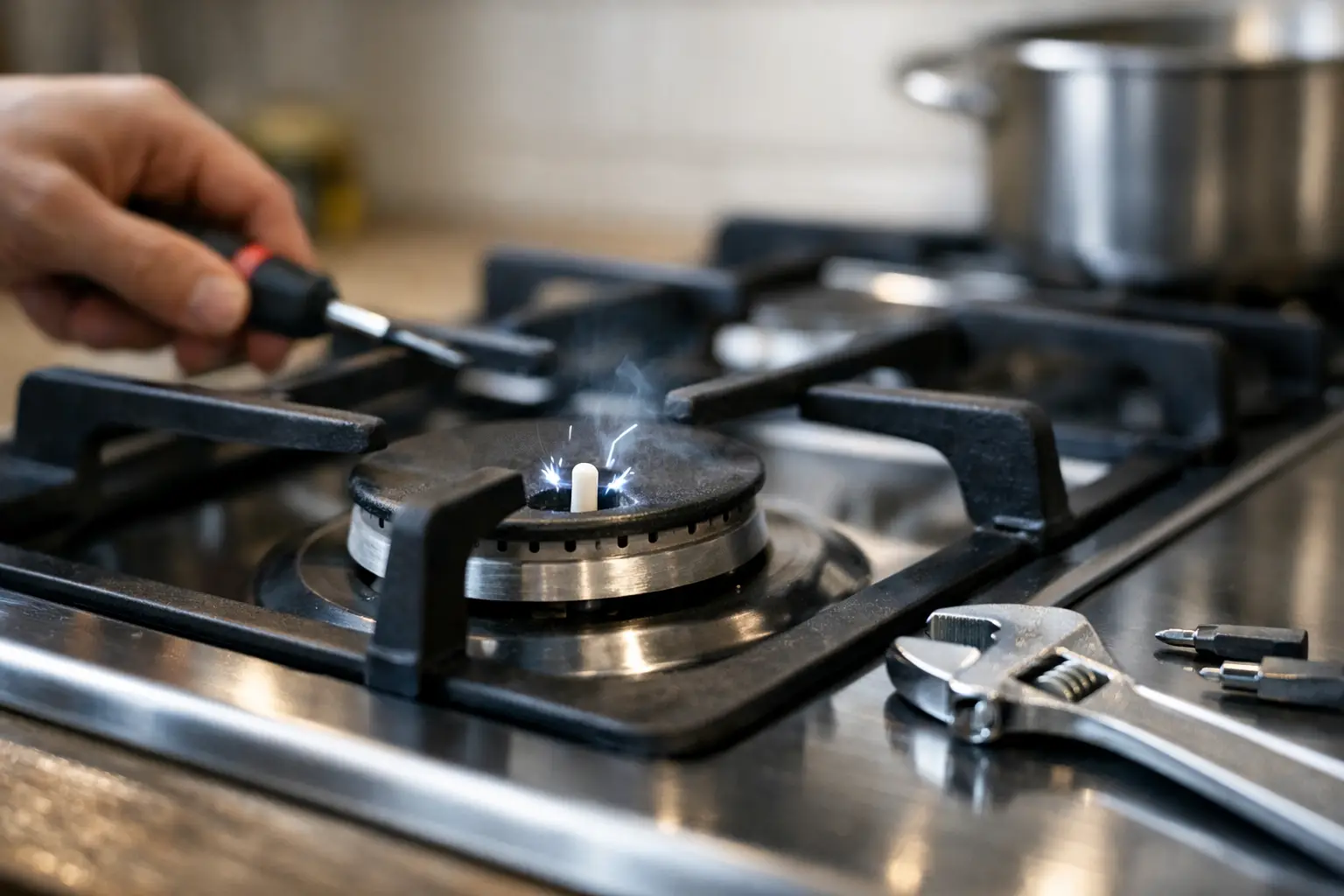
That rapid clicking from a gas stove is easy to ignore when it happens for a second during ignition. When the sound continues after the burner is lit, starts on its own, or keeps clicking while the stove is off, you have a stove igniter clicking issue that deserves attention. The cause may be as simple as a damp burner cap, but persistent clicking can also point to a failing switch, damaged wiring, or a spark module problem.
A gas range uses electricity to create a spark at the burner. That spark lights the gas flowing from the burner valve. Once the flame is established, the clicking should stop when you release the control knob. If it does not, avoid treating the noise as merely an annoyance. Repeated sparking can wear down ignition components and may leave you without a reliable way to light the burner when you need it.
Why a Stove Igniter Keeps Clicking
The most common cause is moisture around the burner. A boil-over, an enthusiastic wipe-down, steam from a large pot, or a dishwasher-like spray of cleaner can leave water beneath the burner cap or around the igniter electrode. The ignition system can interpret that moisture as a reason to keep sending sparks.
Food residue is another frequent culprit. Grease, sauce, and crumbs can interfere with the path of the spark or prevent the burner cap from sitting flat. A cap that is slightly out of position may cause the igniter to click repeatedly because the gas is not lighting as quickly as it should.
Sometimes the issue begins after cleaning, even if the surface appears dry. Water can remain under the burner head or near the electrode for several hours. In humid weather, drying can take longer than expected. This is why a burner that clicks after cleaning may return to normal after it has fully dried.
If there has been no spill, cleaning, or recent cooking event, the likely causes become more technical. The burner switch behind the control knob can stick or short, the spark electrode can crack, or the spark module can fail. Rodents, age, heat exposure, and ordinary wear can also damage insulation or wiring inside the range.
Start With Safety, Not a Repair Attempt
If you smell gas, hear hissing, see an unusually large or yellow flame, or suspect a gas leak, do not try to troubleshoot the igniter. Turn off the burner controls if it is safe to do so, leave the area, and follow your gas utility’s emergency instructions. Do not operate electrical switches, light matches, or use an open flame near a possible leak.
For a clicking problem without a gas odor, turn all burner knobs to the off position. If the clicking continues, disconnect power to the stove by unplugging it or switching off the circuit breaker. A gas range still needs electricity for its ignition system, clock, and other controls, so cutting power is the safest way to stop continuous sparking while you inspect the surface.
Do not remove panels, handle internal wires, or take apart the gas connections unless you are qualified to do that work. Ignition systems can store or produce high voltage, even though the appliance plugs into a standard household outlet. A professional diagnosis is the right call when the cause is not clearly limited to surface moisture or debris.
Simple Checks You Can Make Safely
Once the power is off and the cooktop is cool, remove the grates and lift off the burner caps. Set the parts aside in the same order they came off. On many ranges, caps look similar but are sized for specific burners, and placing one on the wrong burner can cause poor ignition or uneven flames.
Look for standing water, grease buildup, burned-on food, or a burner cap that was not seated evenly. Use a soft cloth or paper towel to dry the area around each burner thoroughly. Clean loose debris from the burner ports with a soft brush or a dry toothpick. Avoid metal tools that can enlarge or damage the small gas openings.
Pay close attention to the small ceramic-covered metal pin near the burner. That is the igniter electrode. It should be clean, dry, and positioned close to the burner. If the ceramic is chipped, the metal tip is bent far away from the burner, or the wire connection looks loose, stop there and arrange service. Those conditions usually require a technician.
After cleaning, allow the surface to air-dry completely. Depending on how much water reached the burner assembly, waiting a few hours may be enough. Some homeowners use a hair dryer on a low, cool setting from a safe distance, but do not use high heat or force air into openings where it can move moisture deeper into the appliance.
Reinstall each burner cap so it rests flat and does not rock. Restore power, then test one burner at a time. A normal burner should click briefly and light within a few seconds. If a burner does not light promptly, turn it off rather than allowing gas to build up. Wait for the gas odor to clear before attempting another test.
What the Clicking Pattern Can Tell You
A useful clue is whether one burner clicks or all burners click. On many gas ranges, turning one knob to the light position activates every igniter at once. That is normal during ignition. But if all burners spark continuously while every knob is off, a moisture-related short, stuck ignition switch, or spark module issue is more likely.
Clicking from one area after a spill often points to that burner assembly. Cleaning and drying may resolve it. Clicking that returns repeatedly, especially without any spills, suggests an electrical component is starting to fail.
A burner that clicks but will not light may have clogged burner ports, a misplaced cap, or an igniter that is sparking in the wrong location. If the burner lights with a match but not with the igniter, do not assume the repair is minor. Match lighting is only a temporary diagnostic clue, and it is not appropriate when you smell gas, see a damaged burner, or are unsure of the appliance’s condition.
Clicking that happens only when a particular knob is moved can indicate a failing burner switch. Clicking that begins randomly overnight or during dry weather is more concerning because it is less likely to be surface moisture. In that situation, leave the stove unplugged until it can be inspected.
When Professional Stove Igniter Repair Is the Better Choice
Schedule professional service if drying and reseating the burner caps does not stop the clicking, if the stove clicks with all knobs off, or if you see visible damage to an electrode, wire, or burner. You should also call for help when a burner fails to ignite consistently, flames are uneven, or the problem keeps returning after basic cleaning.
A trained appliance technician can test the ignition switches, spark module, electrodes, and wiring without guessing. That matters because several failures can create the same symptom. Replacing the wrong part may cost more than a proper diagnosis, and internal gas appliance work can create safety risks when handled incorrectly.
For homeowners and local businesses, a range that will not stop clicking can disrupt meal preparation quickly. Fasteny Appliance Repair provides responsive service across Greater Massachusetts, with clear repair recommendations and upfront pricing before work begins. A technician can identify whether the issue is a simple burner adjustment or a component that needs replacement.
Preventing Repeat Igniter Problems
Most preventable igniter issues come down to keeping the burner area clean and dry. Wipe spills after the cooktop cools, but avoid soaking the burner assembly. Use a damp cloth rather than spraying cleaner directly around the igniter. After deep cleaning, make sure burner caps are dry and seated correctly before using the stove.
It also helps to address slow ignition early. A burner that takes several seconds to light, produces an uneven flame, or clicks longer than usual is giving you a warning before it becomes a no-ignition problem. Small maintenance concerns are generally easier to diagnose than a range that has lost reliable ignition altogether.
A clicking igniter does not always mean an expensive repair, but it should never be dismissed when it persists. Dry and clean the accessible burner parts, restore power only after everything is properly reassembled, and let a qualified technician handle electrical or gas-related faults. That approach protects your kitchen, your schedule, and your confidence that the next time you turn the knob, the burner will light safely.