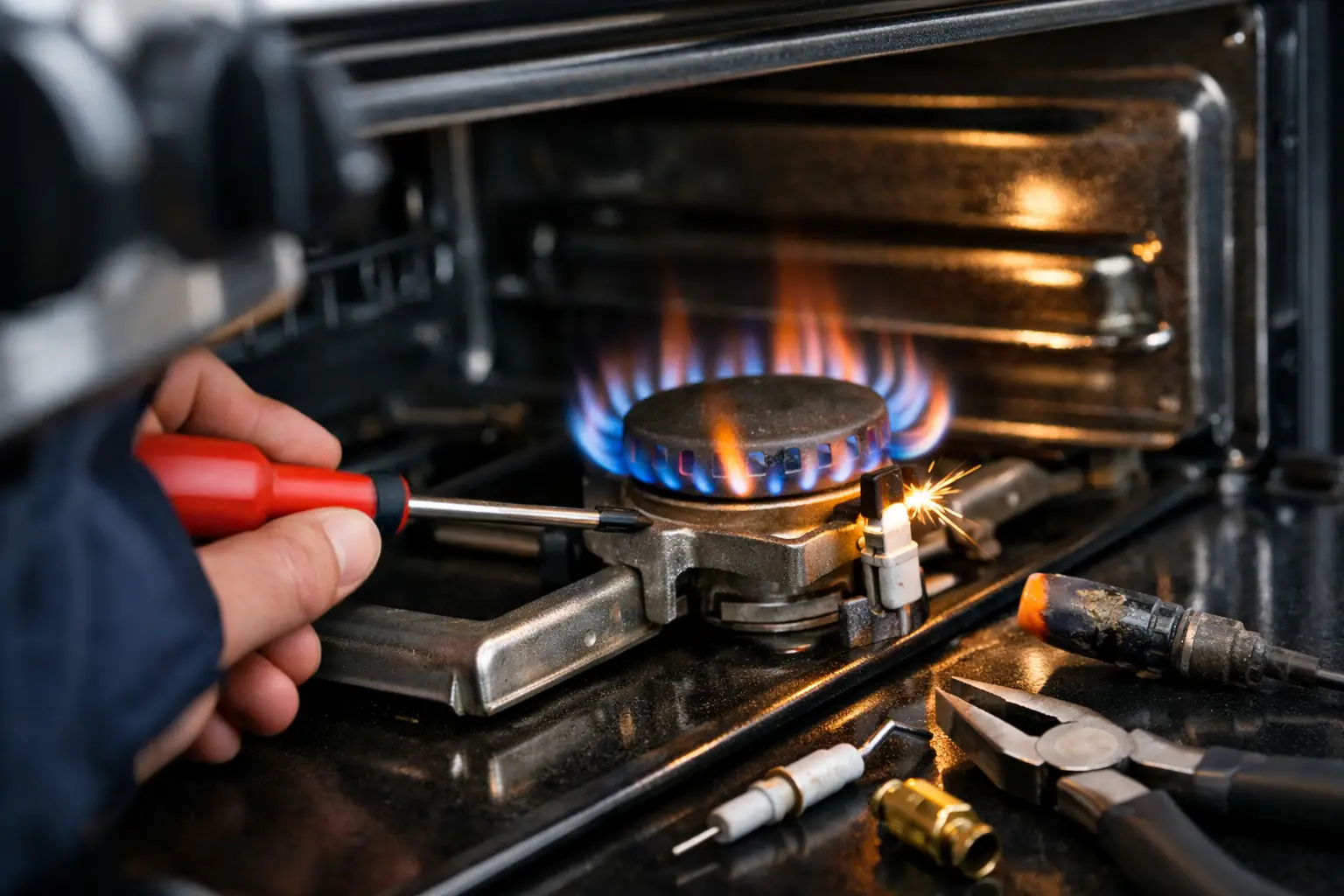
A gas oven that clicks but never lights can turn dinner into a frustrating guessing game. When you need oven ignition repair, the goal is not simply to get a flame back – it is to find out why the burner is not lighting reliably and correct the problem safely.
A weak igniter, a dirty burner, a failed safety valve, or an electrical issue can produce similar symptoms. For homeowners and local businesses, the smartest next step depends on what the oven is doing, whether you smell gas, and how comfortable you are working around a gas appliance.
What an Oven Ignition System Does
Most modern gas ovens use a hot-surface igniter. When you select Bake, the control sends power to the igniter. It heats until it glows bright orange or yellow-white. Once it draws enough electrical current, the oven safety valve opens and gas flows to the burner, where the heat from the igniter lights it.
This sequence happens quickly in a healthy oven. You may hear a faint click, see the igniter glow, and notice the burner flame appear within 30 to 90 seconds. Some older ovens use a pilot light or a spark ignition system, but the basic purpose is the same: ignite gas only when the appliance can do so safely.
When any part of that sequence fails, the oven may not heat at all, may take far too long to preheat, or may heat inconsistently. Those are problems worth addressing promptly, especially if you use the appliance every day.
Common Signs You Need Oven Ignition Repair
The clearest sign is an oven that will not light. But ignition trouble often starts more subtly, and catching it early may help prevent a complete failure during a busy week or before an event.
The igniter glows, but the burner never lights
A glowing igniter is not automatically a working igniter. Hot-surface igniters wear down over time. They can still glow but fail to reach the correct temperature or draw enough current to open the safety valve. The oven may sit glowing for several minutes with no flame, or it may eventually light after a long delay.
This is one of the most common oven ignition repair calls. Replacing the igniter may solve the issue, but a technician should also verify the valve, wiring, and burner condition before treating the igniter as the only cause.
The oven takes too long to preheat
If preheating suddenly takes 15, 20, or 30 minutes longer than usual, a weakening igniter is a likely suspect. The burner may be lighting late, cycling poorly, or not reaching full flame quickly. Because the oven eventually gets hot, this issue is easy to postpone. However, slow ignition can become no ignition without much warning.
You smell gas when trying to use the oven
A brief gas odor immediately after ignition can occur with some appliances, but a persistent or strong smell is not normal. Turn the oven off, avoid switches, flames, and electrical devices near the appliance, ventilate the space if you can do so safely, and leave the area if the odor is strong. Contact your gas utility or emergency services as appropriate.
Do not keep trying to relight an oven that smells of gas. Repeated attempts can allow unburned gas to build up.
The burner flame looks uneven or weak
A proper oven burner flame is generally steady and mostly blue. Yellow or lazy flames, flames that lift away from the burner, or flame appearing only on part of the burner can point to blocked burner ports, a burner alignment problem, or an air and gas flow issue. These conditions can affect ignition, heating performance, and cooking results.
The oven clicks continuously or sparks at the wrong time
Continuous clicking is more common with spark-based systems and cooktop burners, but it can also signal moisture, food residue, a damaged electrode, or a faulty spark module. If sparks continue after ignition or appear when another burner is used, the system needs professional evaluation.
Why Oven Ignition Problems Happen
Igniters are consumable components. Every heating cycle puts stress on the material, so age and normal use are frequent causes. A busy household that runs the oven daily may see igniter wear sooner than a home where the oven is used occasionally.
Grease, food spills, moisture, and cleaning residue can also interfere with burner ports or ignition components. A burner that is not seated correctly after cleaning may fail to light evenly. Rodent damage, loose wiring, control board faults, and a failing gas safety valve are less common, but they require more detailed diagnosis.
It depends on the appliance design, too. A gas range with an electronic hot-surface ignition has different failure points than an older unit with a standing pilot. The oven model matters when identifying the right repair and replacement part.
What You Can Safely Check Before Scheduling Service
Before arranging a repair, you can make a few basic observations without taking the appliance apart. Confirm that the range has electrical power and that the gas supply valve has not been turned off. Check whether the cooktop burners work, if your appliance has them. If a surface burner clicks but will not light, that is a different fault, covered in our guide on the stove igniter clicking issue. If they do, the home gas supply may be fine, though the oven can still have its own ignition problem.
Look through the oven window or carefully open the door after starting Bake to see whether the igniter glows. Do not touch it. A hot-surface igniter becomes extremely hot and is fragile even when cool.
You can also remove loose crumbs from the oven cavity once the appliance is fully cool. Avoid spraying cleaner directly on ignition parts, burner openings, or electrical connections. If the burner assembly needs to be removed for cleaning or inspection, that is usually the point where professional service is the safer choice.
Do not attempt a DIY repair if you notice a gas odor, damaged wires, visible scorching, repeated breaker trips, or delayed ignition. These symptoms call for a qualified appliance technician.
Why Professional Diagnosis Saves Time
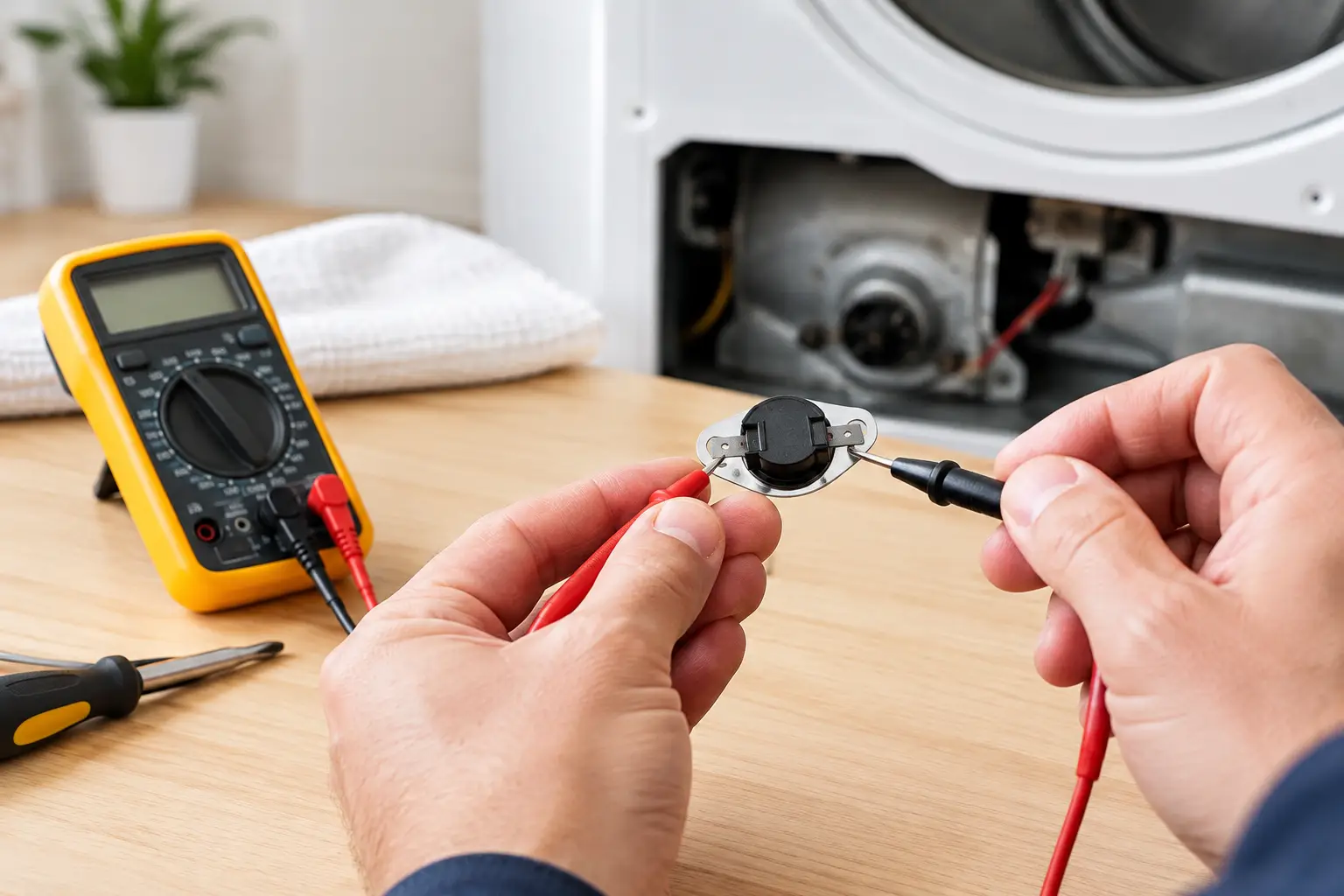
An oven that will not ignite does not always need the same part. Installing a new igniter without testing the electrical circuit and safety valve can lead to an unnecessary expense and another service call. A trained technician can measure igniter performance, inspect the burner and valve, test connections, and confirm that the oven is operating safely after the repair.
Professional service is particularly valuable for built-in ovens, commercial kitchen equipment, and ranges connected to gas lines in older homes. Access can be more complicated, and an incorrect repair can create a safety hazard or damage surrounding cabinetry, controls, or fittings.
Fasteny Appliance Repair provides practical diagnostics for gas oven problems across Greater Massachusetts. Customers should receive a clear explanation of the issue, a fair quote before work begins, and a repair focused on restoring dependable operation rather than guessing at parts.
How to Prevent Future Ignition Trouble
You cannot prevent normal igniter wear forever, but regular care helps the oven operate more reliably. Wipe up spills after the oven cools, use nonabrasive cleaning methods, and avoid allowing foil, food debris, or heavy residue to block burner areas. If you remove oven racks or components for cleaning, reinstall them carefully according to the manufacturer instructions.
Pay attention to changes in preheat time. A small delay may be the first sign that an igniter is weakening. Scheduling service before it fails completely is often more convenient than losing the oven when you need it most.
If your oven repeatedly has ignition issues, ask the technician to look beyond the immediate failed component. The right repair should account for burner condition, electrical supply, gas flow, and the appliance’s overall age. A reliable oven should light promptly, heat evenly, and let you get back to cooking without wondering whether it will work tonight.
Frequently Asked Questions
What are the signs my oven igniter is failing?
An oven that will not light, an igniter that glows but never ignites the burner, long preheat times, weak or uneven heat, or a gas smell that clears slowly. A glowing igniter is not proof it still works.
How long does an oven igniter last?
Most hot-surface igniters last several years, but repeated heat cycling wears them down. If yours is original to an older oven and heating has become slow or unreliable, the igniter is a common culprit.
Can I replace an oven igniter myself?
It is possible on some models, but it means disconnecting power and handling a fragile electrical part near a gas burner. Because the igniter is an electrical component, leave the work to a professional when in doubt. The Electrical Safety Foundation advises leaving electrical repairs to a qualified technician.
Is it safe to use an oven with a bad igniter?
No. A weak igniter can let gas flow before it lights, risking delayed ignition or gas buildup. Stop using the oven and have it inspected.
How much does oven igniter repair cost?
The igniter itself is usually an affordable part; total cost depends on the model and labor. A technician confirms the cause and quotes the repair before starting. You can request service to get started.