A dishwasher that finishes its cycle with dirty water pooled at the bottom creates an immediate problem: dishes are stuck, odors can build up, and a leak may not be far behind. Dishwasher pump repair addresses one of the most common causes, but the pump is not always the part at fault. A proper diagnosis matters because a clogged filter, blocked drain hose, failed sensor, or disposal connection can produce similar symptoms.
What the Dishwasher Pump Actually Does
Most dishwashers use two pump functions. The circulation pump moves clean water through the spray arms during the wash cycle. The drain pump removes used water through the drain hose at the end of each cycle. Depending on the model, these functions may be handled by separate parts or combined into one motor assembly.
When the circulation pump has a problem, the dishwasher may fill with water but leave food residue on every rack. You may hear a low hum, a grinding sound, or no wash sound at all after the tub fills. A failed drain pump, on the other hand, usually leaves standing water in the bottom of the tub or causes the machine to stop and display a drainage-related error code.
The distinction is useful, but it is not a final diagnosis. Water can remain in the tub because of a restriction outside the dishwasher, while poor cleaning can come from clogged spray arms or low water flow. Replacing a pump before checking those basics can turn a manageable repair into an unnecessary expense.
Signs You May Need Dishwasher Pump Repair
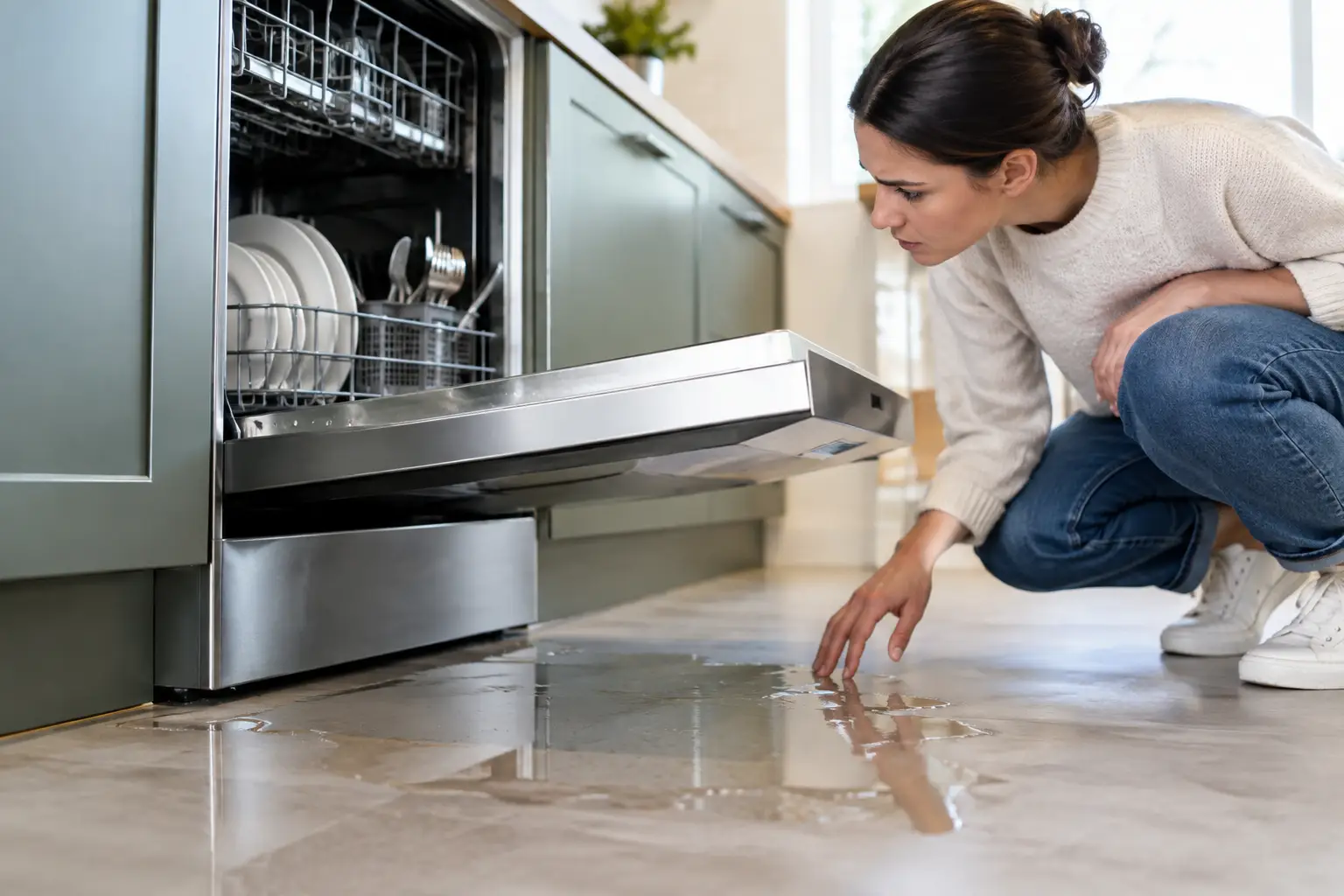
Standing water after a completed cycle is the symptom most homeowners notice first. A small amount of water near the filter area can be normal on certain models, but a visible pool across the bottom of the tub is not. If the dishwasher cannot drain after you cancel the cycle, the drain system needs attention.
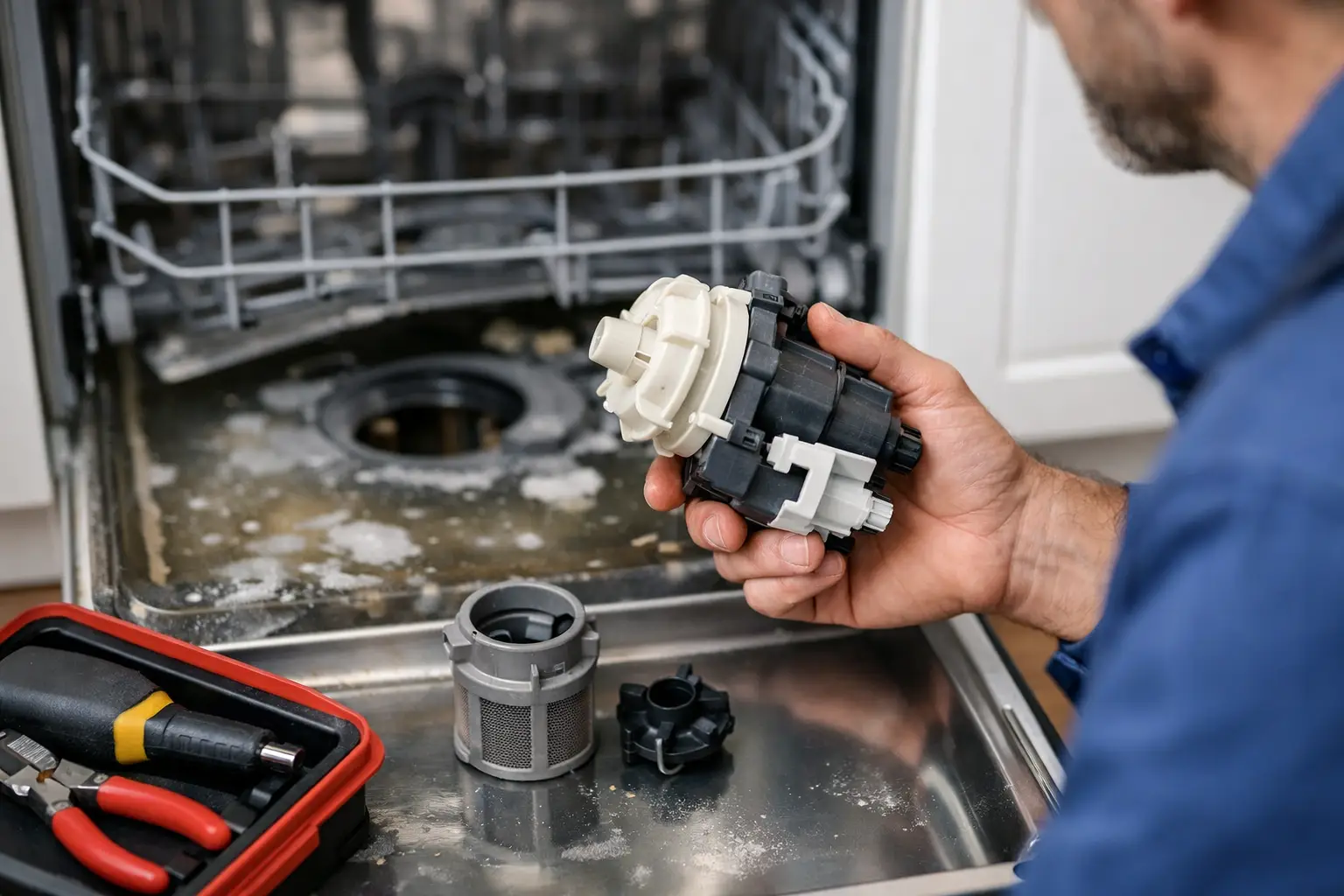
Unusual noises also deserve a closer look. A drain pump may make a rattling or grinding sound when a small object, such as a piece of broken glass, fruit pit, label fragment, or utensil tip, is caught in the impeller. A circulation motor that hums without spraying water may be seized or unable to move water properly.
Other warning signs include dishes that stay dirty despite proper detergent use, weak or inactive spray arms, recurring drain error codes, and water leaking from beneath the dishwasher. A leak does not automatically mean the pump has failed. It could come from a hose, door seal, sump gasket, or loose connection. Still, water below an appliance should be addressed promptly, especially in kitchens with wood flooring or finished spaces below.
Safe Checks Before Scheduling Service
A few simple checks can rule out common drainage restrictions. Turn off the dishwasher at the breaker or unplug it before reaching into the filter or sump area. If there is standing water, remove it slowly with a cup, towel, or wet-dry vacuum before handling the filter.
Remove and rinse the filter according to the manufacturer’s instructions. Food particles, grease, paper labels, and debris can prevent water from moving through the drain path. Check the area beneath the filter for visible foreign objects, but do not force tools into the pump opening or reach into an area where broken glass may be present.
Next, inspect the sink and garbage disposal. If the kitchen sink is draining slowly, the dishwasher may not be able to discharge water effectively. On recently installed disposals, a technician may find that the dishwasher drain knockout plug was never removed. That small installation oversight can make a functioning dishwasher appear to have a pump failure.
You can also look under the sink for a pinched or sharply bent drain hose. Do not disconnect hoses unless you are prepared for water release and have confirmed the power is off. If the hose, filter, and disposal connection appear clear but the dishwasher still will not drain, professional testing is the sensible next step.
Why Pump Problems Are Not Always DIY Repairs
Accessing a dishwasher pump often requires pulling the appliance out from under the counter, removing lower panels, disconnecting water and drain lines, and working near electrical components. Built-in units can be heavy, and an incorrect reinstallation can create a leak that does not show up until the next cycle.
There is also a diagnostic issue. A pump that does not run may have failed mechanically, but it may also lack power because of a wiring problem, faulty door latch, damaged control board, float switch issue, or failed drain relay. Replacing the pump without confirming the electrical cause may not solve anything.
For homeowners and property managers, the trade-off is simple. Cleaning a filter and checking the drain route are reasonable maintenance steps. Disassembling the base of a built-in dishwasher without the right tools, replacement seals, and testing equipment can lead to a second service call or water damage. A trained technician can identify whether the pump is blocked, electrically defective, leaking, or working correctly while another component is causing the issue.
What a Professional Dishwasher Pump Repair Visit Should Include
A reliable repair visit starts with the symptom, then follows the water path and electrical controls rather than jumping straight to part replacement. The technician should check the filter, sump, drain hose, disposal connection, and spray system as appropriate. They should also test the pump’s operation and inspect for leaks or damaged wiring.
If a pump replacement is needed, the technician should explain which pump has failed and why that repair is recommended. The total cost can vary by dishwasher brand, model, accessibility, and whether the pump is sold separately or as part of a larger assembly. Honest pricing means receiving a clear quote before the repair begins, not discovering added charges after the appliance has been taken apart.
Fasteny Appliance Repair provides professional dishwasher diagnostics and repair for homeowners, rental properties, and local businesses throughout Greater Massachusetts. Same-day or next-day availability can be especially helpful when a dishwasher is leaking, backed up, or needed for a busy household or commercial kitchen.
Preventing Future Drain and Pump Issues
Pumps wear out over time, but many drain problems begin with preventable debris buildup. Scrape plates well before loading them, even if your dishwasher is marketed as having a hard-food disposer. It is also wise to keep small items secure so they cannot fall through the rack and into the sump.
Clean the filter regularly. For a household that runs the dishwasher daily, a quick rinse every few weeks is a practical starting point. Homes with heavy cooking, pet bowls, or frequent greasy loads may need more frequent cleaning. If the filter is coated with grease, warm water and a soft brush are usually enough. Avoid harsh cleaning methods that can damage the mesh or plastic frame.
Run the kitchen sink before starting a cycle if the dishwasher shares a hot-water line and you want hot water to reach the tub sooner. Keep the sink drain clear, and avoid forcing grease-heavy food waste into the disposal. These habits will not prevent every mechanical failure, but they reduce the load on the drainage system.
When to Stop Running the Dishwasher
Do not continue running a dishwasher that is leaking onto the floor, tripping a breaker, producing a burning smell, or making loud grinding noises. Turn off the power and water supply if you can do so safely, then arrange service. Repeatedly restarting a machine that cannot drain may cause overflow, and running a noisy circulation pump can worsen damage to the motor or impeller.
A dishwasher should make kitchen cleanup easier, not turn one failed cycle into a wet floor and a pile of dishes. When basic checks do not restore normal draining or washing, a prompt, properly diagnosed repair is usually the quickest path back to a dependable kitchen routine.