A dishwasher that leaves standing water after a cycle, leaks across the kitchen floor, or runs for hours without cleaning anything is more than an inconvenience. When you need Brookline dishwasher repair help, the goal is simple: identify the real fault quickly, understand the cost before work begins, and get the appliance back to doing its job.
Some dishwasher problems have a safe, straightforward cause. Others involve electrical components, water connections, pumps, or control boards that need professional diagnosis. Knowing the difference can help you avoid wasted time, water damage, and a repair that only treats the symptom.
Brookline Dishwasher Repair Help for Common Problems
Dishwashers tend to give clear signals when something is wrong. The challenge is that several different parts can create the same symptom. A machine that will not drain, for example, may have a clogged filter, a blocked drain hose, a failing drain pump, or an issue farther down in the kitchen plumbing.
Poor cleaning is another common complaint. Cloudy glasses and food left on plates can result from blocked spray arms, low water temperature, a worn circulation pump, a detergent issue, or a water inlet problem. Loading changes and a filter cleaning may help, but repeated poor results usually call for a proper inspection.
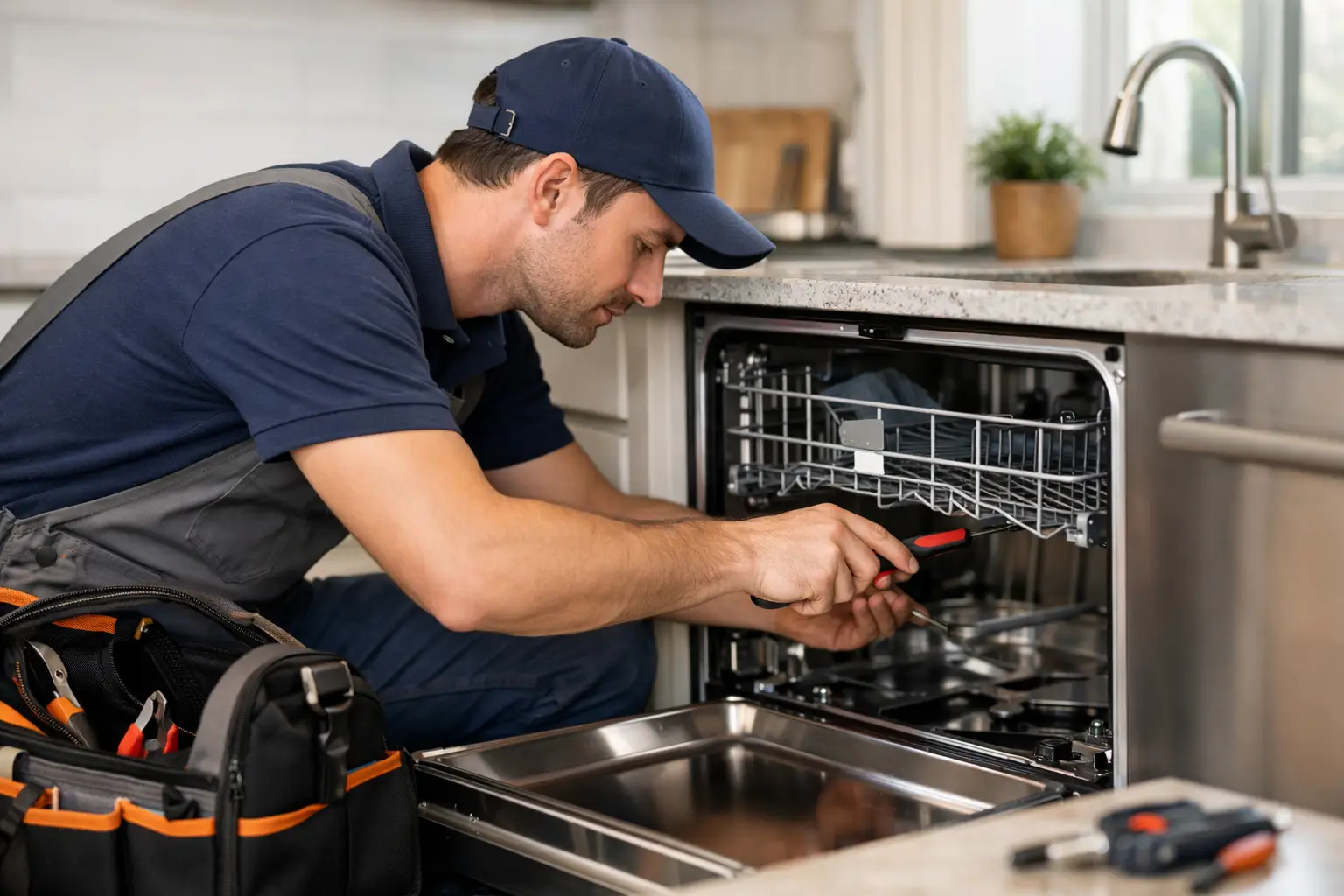
A professional technician can test the appliance rather than guess at the cause. That matters because replacing the wrong part can cost more than a correct repair and still leave you with the original problem.
Water left in the bottom of the dishwasher
First, remove the lower rack and check the filter area for food debris, broken glass, labels, or other obstructions. If the filter is removable, rinse it under warm water and reinstall it correctly. Also check that the sink drain is working normally.
If water remains after that, do not keep forcing cycles. A restricted hose, failed pump, or electrical fault can prevent draining. Continued use may cause an overflow or leave dirty water sitting in the tub.
Leaks under or around the door
A small amount of water near the dishwasher should be addressed promptly. Door-gasket wear, a loose hose connection, a cracked valve, an overfilled tub, and a damaged pump seal can all produce leaks. Sometimes excess suds from the wrong soap are the culprit, particularly if hand dish soap was used by mistake.
Turn off the dishwasher and clean up the water. If you can safely access the water shutoff valve, close it when the leak is active or severe. Avoid running another cycle until the source is identified. Water can reach flooring, cabinets, and electrical connections before a visible puddle looks serious.
Dishwasher will not start or stops mid-cycle
Check the basics first: make sure the door latches firmly, the control lock is not enabled, and the circuit breaker has not tripped. A dishwasher that has power but will not start may have a faulty door latch, failed thermal fuse, defective control panel, or a wiring issue.
Stopping partway through a cycle can point to heating, draining, or control problems. Modern dishwashers may pause when they cannot reach the required water temperature or complete a drain sequence. Error codes can be useful, but they are a starting point, not a final diagnosis.
What You Can Safely Check Before Scheduling Service
A few checks can save time without putting you at risk. Start by confirming the dishwasher is receiving power and the door closes fully. Clean the filter, inspect spray arms for visible debris, and verify that the kitchen sink drain is not backed up.
If dishes are coming out dirty, use fresh dishwasher detergent and run the hot water at the sink for a moment before starting the cycle. This helps the dishwasher begin with hot water rather than cold water sitting in the supply line. Make sure tall items are not blocking the spray arms from turning.
Do not remove wiring panels, disassemble the door, bypass a latch switch, or work on the unit while it is energized. Dishwashers combine water, electricity, heat, and sharp sheet-metal edges. A repair professional has the tools to test components safely and determine whether the issue is mechanical, electrical, or related to installation.
When Repair Is Usually the Better Choice
Many dishwasher problems are repairable, including failed pumps, heating elements, inlet valves, door latches, spray arms, dispensers, seals, hoses, and selected electronic components. For a relatively newer dishwasher in otherwise good condition, a targeted repair often makes practical financial sense.
Age matters, but it is not the only factor. A premium dishwasher may justify a more substantial repair than a basic model, especially when the rest of the appliance is reliable. The availability and price of replacement parts also affect the decision.
A clear diagnosis should include the failed component, the repair needed, and the expected cost before work begins. That gives you the information to decide without pressure. If replacement is the more sensible option, an honest technician should say so.
Why the Right Diagnosis Saves Time and Money
Dishwasher symptoms often overlap. A machine that does not clean well may need a circulation pump, but it could also have restricted spray arms or insufficient incoming water. A leaking machine may have a worn gasket, yet a faulty inlet valve could be overfilling the tub and pushing water out at the door.
This is why a quick visual guess is rarely enough. A qualified technician checks for error codes, water flow, drain performance, electrical continuity, heat function, and signs of worn or damaged components. The objective is not to sell the most parts. It is to complete the correct repair the first time.
For homeowners, landlords, and small business operators, that approach reduces disruption. A working dishwasher keeps kitchens cleaner, helps manage daily routines, and prevents staff or residents from spending unnecessary time washing dishes by hand.
What to Expect From a Dishwasher Service Visit
Before the appointment, leave the dishwasher accessible and remove dishes from the racks if possible. If there is a leak, note where you first saw water and whether it happened during filling, washing, or draining. If the dishwasher displays a code, write it down or take a photo.
During service, the technician should listen to the symptoms, inspect the machine, and explain the finding in plain language. You should receive a clear quote before an approved repair moves forward. There should be no mystery charges or vague promises that the appliance will simply be “looked at.”
Fasteny Appliance Repair serves Brookline and communities across Greater Massachusetts with responsive scheduling, certified technical expertise, transparent pricing, and a satisfaction guarantee. Same-day or next-day availability can be especially valuable when a leak or drainage problem cannot wait.
Signs You Should Stop Using the Dishwasher
Some issues should not be monitored for another week. Stop using the appliance and arrange service if you smell burning, see smoke, notice repeated breaker trips, find water pooling beneath the unit, or hear loud grinding during the cycle. These signs can indicate electrical risk, a failing motor or pump, or an active leak.
You should also pause use if the dishwasher is not draining and dirty water is backing up into the tub. Running repeated cycles may worsen the blockage or overflow condition. A quick call for service is often less costly than repairing damaged flooring or cabinets later.
A dishwasher does not need to fail completely before it deserves attention. If cycles are getting louder, dishes are no longer clean, or water appears where it should not, early service can prevent a smaller repair from becoming a kitchen-wide problem. The best next step is a clear diagnosis, a fair quote, and a repair plan that lets you get back to a clean, working kitchen.