
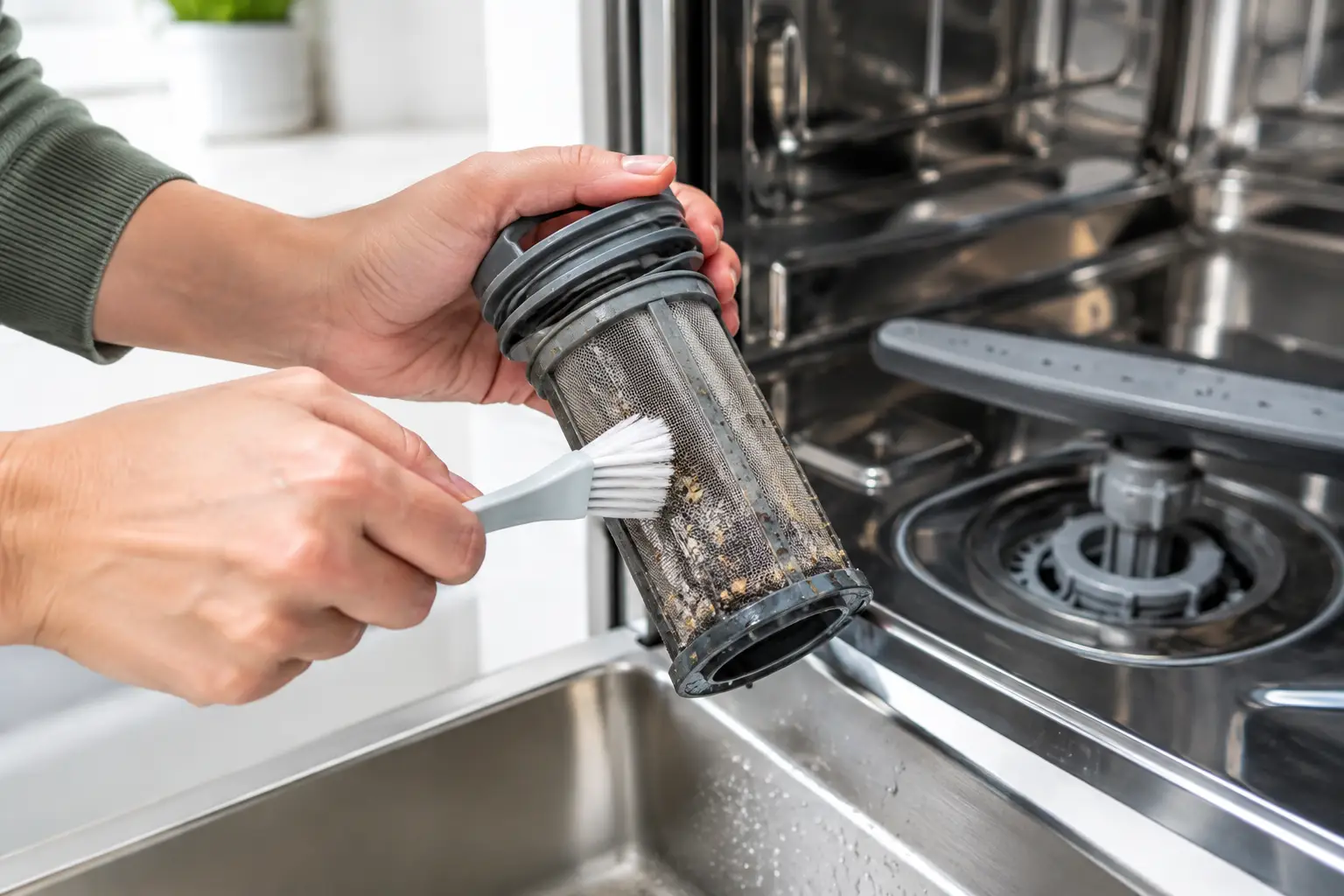
A dishwasher that leaves standing water in the bottom, smells sour after a cycle, or returns dishes with gritty residue is often telling you the same thing: food debris has stopped water from moving properly. The need to clean clogged dishwasher filter buildup is common, especially in busy homes where dishes go in quickly after meals. Fortunately, a basic filter cleaning can often restore normal drainage without replacing any parts.
The key is knowing what you can safely handle, what symptoms point to a deeper blockage, and when to stop before a simple maintenance job turns into a leak or damaged component.
What a Dishwasher Filter Does
Most modern dishwashers use a filter assembly at the bottom of the tub, beneath the lower spray arm. It catches food particles, labels, small bones, broken glass, and other debris before they reach the drain pump. This protects the pump and helps prevent debris from being redeposited onto clean dishes.
Over time, grease and fine food particles can coat the filter screen. A filter may look only slightly dirty on top while the mesh underneath is blocked with a thick, sticky layer. When that happens, water can drain slowly, the dishwasher may develop an odor, and the spray arms may not get the water pressure they need for a thorough wash.
Not every dishwasher has the same filter design. Many newer models have a removable cylindrical filter and a flat mesh screen. Some older units have a self-cleaning filter or disposer-style system that should not be disassembled without checking the owner’s manual. If you are unsure which style you have, avoid forcing any part loose.
Signs Your Dishwasher Filter Is Clogged
Poor cleaning results are often the first clue. You may see food specks on glasses, cloudy residue, or a dirty film on plates even when you use the right detergent. A clogged filter can also cause water to remain under the bottom rack after the cycle ends.
Other common signs include a musty smell, gurgling during draining, a dishwasher that stops mid-cycle, or an error code related to drainage. These symptoms do not automatically mean the filter is the only problem. A blocked drain hose, a failed drain pump, a stuck check valve, or a plumbing issue can create similar results. Still, cleaning the filter is the sensible first step because it is simple, low-cost maintenance.
How to Clean a Clogged Dishwasher Filter Safely
Start with the dishwasher completely off. For added safety, turn off power at the breaker or unplug the unit if the outlet is accessible. Remove the lower rack and set it aside so you can reach the base of the dishwasher without straining the rack rollers.
Look for the filter assembly near the center or back of the tub floor. In many models, the cylindrical filter unlocks with a short counterclockwise turn. Lift it carefully. If there is a flat screen underneath, remove it gently as well. Do not use a screwdriver, knife, or excessive force. A cracked screen or damaged locking tab can allow debris into the pump.
Carry the filter to the sink and rinse it under warm running water. Use a soft nylon brush, old toothbrush, or nonabrasive sponge to loosen the film from the mesh. A small amount of dish soap can help cut grease. If the buildup is stubborn, let the filter soak in warm, soapy water for 10 to 15 minutes before brushing again.
Avoid steel wool, harsh drain cleaners, bleach, or strong abrasive powders. These products can damage fine filter mesh, plastic components, seals, and finishes. Vinegar may help with light mineral deposits, but it will not remove every type of greasy blockage. Gentle scrubbing is usually more effective and safer.
Before reinstalling the filter, inspect the filter well for loose debris. Pick out visible food pieces with a paper towel or gloved hand. Be cautious around broken glass. Do not push debris farther into the drain opening, and do not pour water into the opening in an attempt to flush it out. If debris is already lodged near the pump, that can make the drainage problem worse.
Place the flat screen back in its original position, then reinstall the cylindrical filter. Turn it until it locks securely. A filter that is not seated correctly can come loose during a wash cycle, create noise, and expose the drain system to debris.
Run a short rinse cycle with the dishwasher empty. Watch for normal draining at the end. If the water clears and the machine sounds normal, the filter was likely the main issue.
When Cleaning the Filter Is Not Enough
A clean filter will not fix every drainage problem. If water remains in the tub after cleaning and reseating it, do not keep restarting cycles in hopes that the dishwasher will clear itself. Repeatedly running a unit with standing water can lead to odors, leaks, and additional strain on the drain pump.
A professional diagnosis is a better choice when you notice any of the following:
- Water returns to the tub after it drains, which can point to a drain-hose or plumbing connection problem.
- The dishwasher hums but does not drain, which may indicate a jammed or failed drain pump.
- Water leaks from the door, base, or under the cabinet.
- The dishwasher displays recurring drain-related error codes.
- You find broken glass, hard debris, or damage around the filter housing.
It also depends on the dishwasher’s age and design. Some built-in units require partial disassembly to reach the pump cover or check valve. That repair is best left to a qualified technician, particularly if the dishwasher is hardwired or installed beneath a stone countertop where moving it can be difficult.
Prevent Future Filter Clogs
You do not need to prewash every dish until it looks clean. In fact, many dishwasher detergents work best when there is a small amount of food soil to break down. But you should scrape plates, pans, and containers into the trash or disposal before loading. Rice, pasta, coffee grounds, eggshells, greasy sauce, fruit stickers, and small bones are frequent causes of filter and drain trouble.
Check the filter about once a month in an active household. Homes that run the dishwasher only a few times a week may need cleaning every two or three months. If you have hard water, mineral deposits can add to the problem, so inspect it more often if dishes begin to look cloudy or the dishwasher develops an odor.
Make sure the lower spray arm can spin freely after loading. Tall utensils, pot handles, and misplaced dishes can block the arm, creating poor wash results that resemble a clogged filter. Use the correct amount of detergent as well. Too much detergent can leave residue, while too little may allow grease to build up inside the machine.
Get Help When Drainage Problems Keep Returning
If you clean a clogged dishwasher filter and the issue comes back quickly, there may be a hidden restriction or failing part behind it. Recurring standing water, poor drainage, and unusual noises deserve a proper inspection rather than repeated temporary fixes.
Fasteny Appliance Repair helps homeowners and local businesses across Greater Massachusetts identify the actual cause, explain the repair clearly, and restore dependable dishwasher performance with transparent service. A dishwasher should make cleanup easier, not leave you dealing with dirty water after every meal.