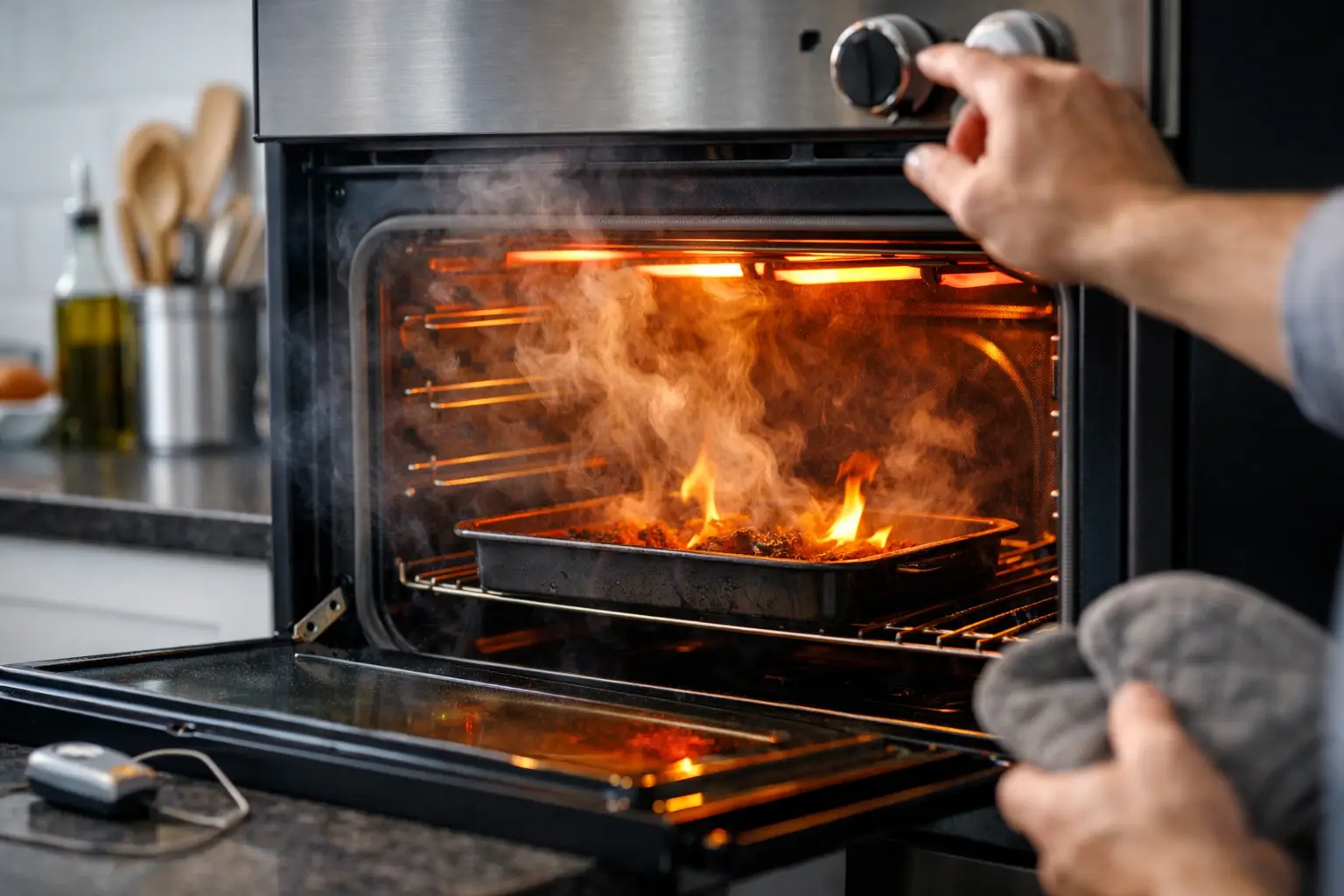
A roast that comes out scorched well before the timer ends is more than a frustrating dinner problem. When you are asking why oven overheats, the concern is usually that the appliance is not following its own temperature setting. That can ruin food, damage cookware, create excessive kitchen heat, and, in some cases, become a safety issue that needs prompt attention.
An oven may run a little warmer or cooler than the display, particularly during preheating. But it should not keep climbing far beyond the selected temperature, burn food repeatedly at normal cook times, or continue heating after it has been turned off. Those symptoms point to a control or sensing problem rather than ordinary oven behavior.
Why an Oven Overheats
Most ovens regulate heat through a simple cycle. A sensor measures the cavity temperature, sends that information to a control, and the control switches the heating elements or gas burner on and off to hold the selected setting. If any part of that chain sends bad information or fails to stop the heat source, the oven can overheat.
A faulty temperature sensor
In many electric and gas ovens, the temperature sensor is the most likely cause. It is the narrow metal probe mounted inside the oven cavity, often near the rear wall. As the oven heats, the sensor changes electrical resistance. The control board uses that change to determine whether to keep heating or shut the heat off temporarily.
A damaged, worn, or out-of-position sensor can report a temperature that is lower than the actual oven temperature. The control then keeps calling for heat, even though the oven is already too hot. A sensor that is touching the oven wall or has a loose connection can also provide inaccurate readings.
A failed electronic control board
Modern ovens rely on an electronic control board to manage temperature. If a relay on that board sticks in the closed position, the board may keep sending power to a bake or broil element when it should have stopped. This is a common explanation when an electric oven grows extremely hot, continues heating after reaching the set temperature, or keeps heating even when the control is turned off.
A control-board failure is not a do-it-yourself repair. The range should be disconnected from power at the breaker while you arrange service. Replacing the wrong part can be expensive, and electrical testing inside an oven involves live circuits and high heat.
A damaged bake or broil element
An electric heating element can sometimes short to its metal sheath or the oven cabinet. When that happens, it may heat continuously or heat much more aggressively than intended. You may notice visible blistering, cracks, burn marks, sparks, or an element that glows intensely even when the oven is supposedly off.
Do not continue using an oven with a visibly damaged element. Turn it off, shut off power at the breaker, and schedule a diagnosis. A technician can determine whether the element itself has failed or whether the control is incorrectly supplying power to it. Because these are electrical repairs, the Electrical Safety Foundation advises leaving them to a professional, and a related fault is covered in our guide on oven ignition repair.
A bad thermostat or selector switch
Older ovens may use a mechanical thermostat, temperature control, or selector switch instead of a fully electronic system. These components wear out over time. A thermostat that no longer responds accurately may allow the oven to overshoot the selected temperature. On some older ranges, a failing selector switch can also send power to an element when it should not.
The repair depends on the oven model and the failed component. In some cases, the correct part is still readily available and replacement is straightforward for a qualified technician. In others, the age and condition of the appliance may make repair-versus-replacement worth discussing before work begins.
Calibration drift, not a true failure
Sometimes the oven is not dramatically overheating. It may simply cook 25 to 50 degrees hotter than the display indicates. This is often called calibration drift. It can develop gradually, which is why familiar recipes may suddenly brown too fast or need less time than they once did.
Many models allow a temperature offset to be adjusted through the control panel. However, calibration is only appropriate when the oven heats consistently and remains reasonably close to the set temperature. If the temperature swings wildly, rises more than about 50 degrees above the setting, or does not cycle off, calibration will not solve the underlying problem.
Signs the Problem Needs Immediate Attention
An overheating oven deserves quick action when it behaves unpredictably. Turn the appliance off and stop using it if it continues heating after being shut off, produces smoke or a burning electrical smell, sparks, trips the breaker, or causes the control panel to become unusually hot.
For an electric oven that will not stop heating, turn off the circuit breaker or unplug the range only if it is safe to do so. For a gas oven, turn the oven off and shut off the gas supply if you smell gas. Leave the area and contact your gas utility or emergency services if the odor is strong or persistent. Do not try to relight the appliance or troubleshoot a suspected gas leak.
A door gasket that leaks heat can make the kitchen uncomfortable, but it does not usually cause the oven cavity itself to overheat. Similarly, steam from cooking or normal fan noise is not automatically a sign of a temperature-control failure. The key question is whether the actual cooking temperature is significantly higher than the setting or continues rising without stopping.
What You Can Safely Check Before Calling for Repair
Start with the simple observations that help narrow down the problem. Note the selected temperature, how long the oven has been running, whether food is burning unusually fast, and whether the bake element, broil element, or both appear to stay on. This information helps a technician diagnose the issue efficiently.
You can also check the oven temperature with a quality oven thermometer placed near the center rack. Let the oven preheat fully, then watch the reading through several heating cycles. Do not expect a perfectly flat number – ovens naturally cycle above and below the selected temperature. What matters is a consistent, reasonable range. A reading that repeatedly climbs far above the setting, such as 450 degrees when set to 350, indicates a real problem.
Avoid opening control panels, removing wiring, or testing electrical components yourself. A household oven contains high-voltage connections, and parts can remain hot long after the appliance is turned off. Do not rely on the display alone, either. A display can show 350 degrees while a failed sensor or control allows the actual temperature to climb much higher.
When Professional Oven Repair Makes Sense
Professional service is the right next step when the oven overheats repeatedly, cannot hold a stable temperature, or keeps heating after shutoff. A trained technician can test the sensor resistance, inspect element condition, check wiring, and confirm whether the control board or thermostat is receiving and sending the correct signals.
That diagnosis matters because several failures can create similar symptoms. Replacing a temperature sensor when the real issue is a stuck relay, for example, will not stop the overheating. A clear diagnosis also gives you a fair, transparent quote before repair work begins.
For homeowners and local businesses in Greater Massachusetts, Fasteny Appliance Repair can help identify the cause and restore safe, dependable oven performance with prompt service. Whether the problem is a sensor, control, thermostat, or heating element, the goal is the same: get your kitchen working properly without guesswork or unnecessary repairs.
If your oven is only slightly off, a calibration adjustment may be all it needs. If it is running away from the selected temperature, treat it as a repair issue, switch it off when safe, and have the appliance checked before the next meal depends on it.
Frequently Asked Questions
Why is my oven overheating?
The usual causes are a failing temperature sensor, a faulty thermostat or selector switch, or a control board that keeps calling for heat. Each can make the oven run hotter than the setting.
Is an overheating oven dangerous?
It can be. An oven that runs far above its setting risks burning food, damaging the door and seals, and in rare cases a fire. Stop using it and have it checked if it will not hold temperature.
How do I know if the oven temperature sensor is bad?
If the oven overshoots the set temperature or heats unevenly, a worn or out-of-position sensor is a common cause. A technician can test its resistance to confirm.
Can I fix an overheating oven myself?
Verifying the setting and letting the oven cool are safe. Replacing a sensor, thermostat, or control board involves electrical work and is best left to a technician.
How much does it cost to fix an overheating oven?
A sensor is usually inexpensive, while a control board costs more. A technician confirms the cause and quotes the repair before starting. See our oven repair options or request service.