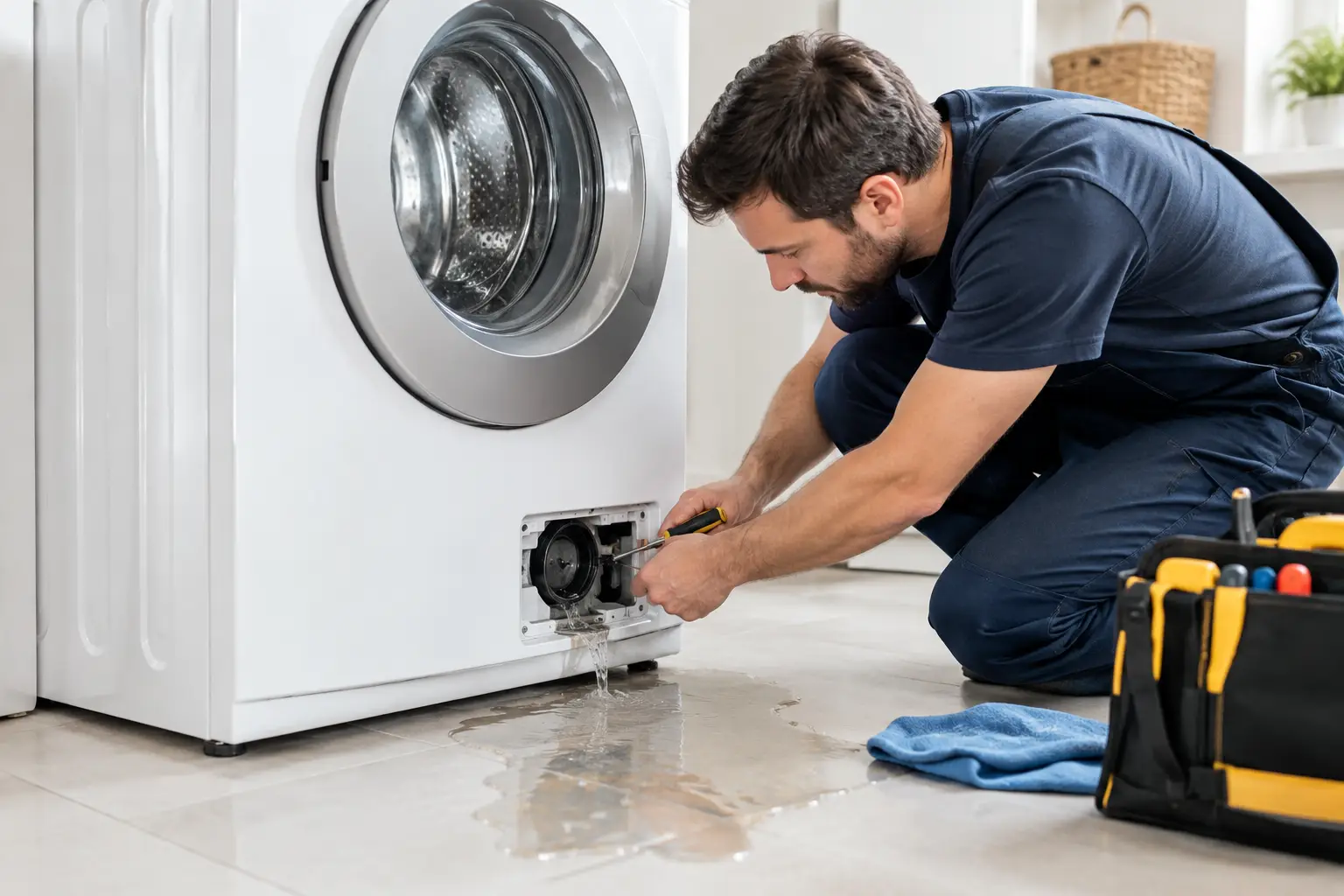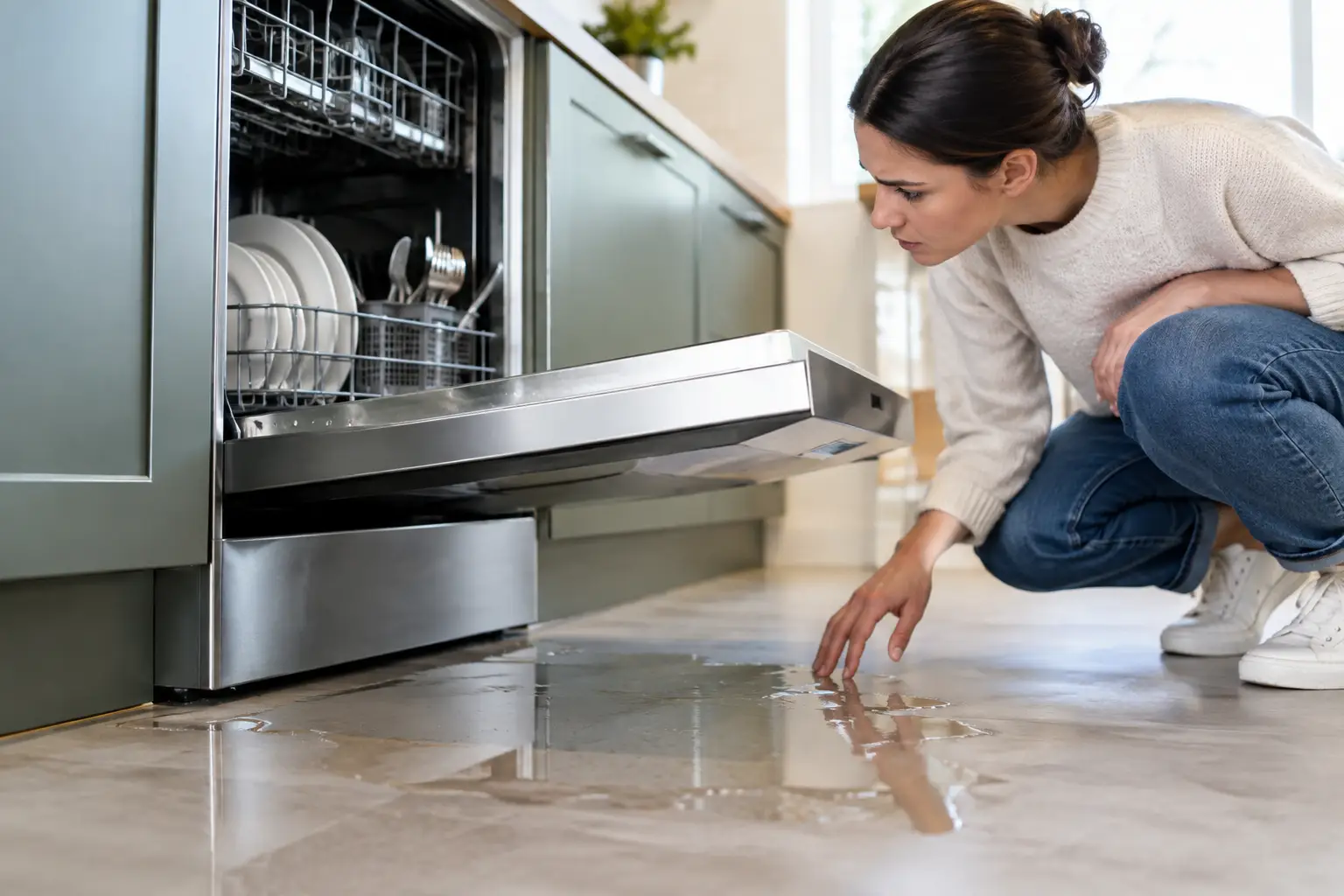
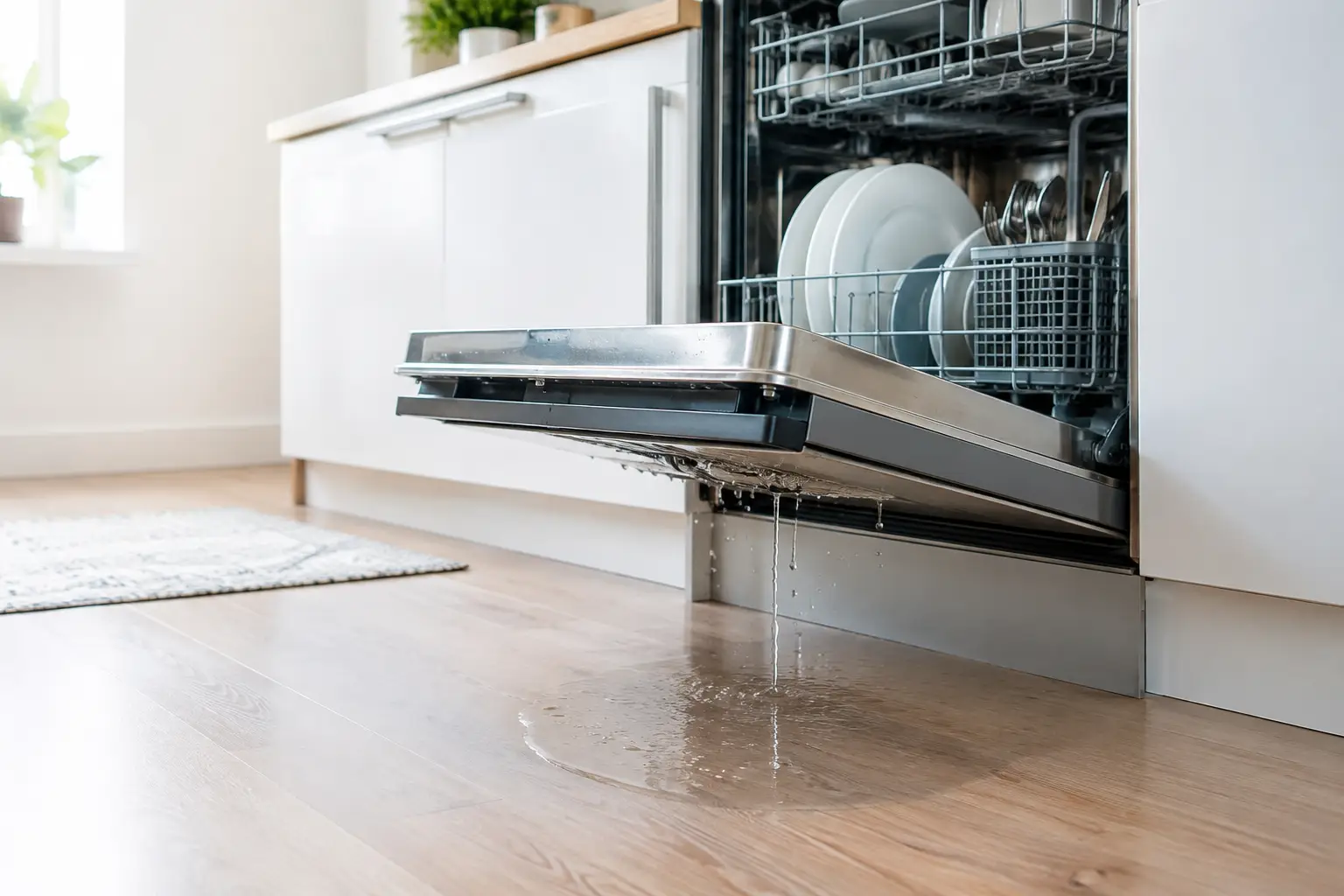
A puddle under the dishwasher is more than an inconvenience. Water can seep into flooring, cabinets, and subfloors long before the visible leak becomes severe. If you are asking what causes dishwasher leaks, the answer often depends on when and where the water appears. A leak at the front of the door points to different parts than water collecting beneath the machine or under the kitchen sink.
Before running another cycle, dry the area and place towels around the dishwasher. If water is near an outlet, wiring, or the dishwasher’s electrical connection, turn off power at the breaker and avoid using the appliance until it has been checked. A quick response can prevent a small repair from becoming a kitchen restoration project.
What Causes Dishwasher Leaks? Start With the Water’s Location
The location and timing of a leak give a technician useful clues. Water that appears only while the dishwasher is filling can involve the inlet valve, supply line, or float system. Water that escapes during the wash cycle is more commonly related to the door seal, spray arm, pump, or internal hose. A puddle that develops after draining may indicate a drain hose, plumbing connection, or blockage.
It is also worth checking whether the water is actually coming from the dishwasher. Sink drain connections, garbage disposals, faucet supply lines, and plumbing inside the cabinet next to the dishwasher can all leak into the same area. Never assume the appliance is the source simply because the puddle is nearby.
1. A Worn, Dirty, or Damaged Door Gasket
The rubber gasket around the dishwasher door creates the seal that keeps wash water inside. Food residue, grease, detergent buildup, and small objects caught along the edge can prevent that seal from closing properly. Over time, the gasket can flatten, crack, pull away from its channel, or become brittle.
Leaks from a door gasket usually show up at the front corners or directly below the door during a cycle. You can gently wipe the gasket with a soft cloth and warm water, but do not use sharp tools to scrape it clean. If the gasket is torn or no longer sits securely in place, it should be replaced rather than patched.
2. A Door That Does Not Latch or Close Correctly
A good gasket cannot do its job if the door is misaligned. A worn latch, loose hinge, bent door panel, or improperly loaded rack can keep the door from closing squarely. Even a tall cutting board or utensil extending beyond the rack can interfere with the door and create a small gap.
This issue can be frustrating because the dishwasher may still start and complete a cycle. Watch for a door that needs extra pressure to latch, appears uneven, or opens more easily than usual. Forcing the latch can damage the door further, so it is better to have the alignment and hardware inspected.
3. A Cracked or Blocked Spray Arm
Dishwasher spray arms distribute water through small openings as they spin. If an arm is cracked, split, or clogged, it can send a concentrated stream of water directly toward the bottom of the door. A spray arm that is blocked by a large pan may also fail to rotate correctly and repeatedly force water against one area.
Remove the lower rack and check that the spray arm turns freely. Look for visible cracks and clear food debris from the spray holes with care. If the arm is damaged, replacement is usually a straightforward repair, but the correct part must match the dishwasher model.
4. Too Much Detergent or the Wrong Soap
Using regular dish soap in a dishwasher can create a dramatic amount of suds, pushing foam and water out through the door. Even dishwasher detergent can cause trouble when too much is used, especially in soft-water areas. Excess rinse aid or spilled detergent can have a similar effect.
If the leak is accompanied by lots of foam, stop the cycle and clean up the water. Run no more cycles until the suds are gone and the dishwasher has been checked for other damage. Use only detergent labeled for automatic dishwashers, and follow the amount recommended for your water conditions and detergent type.
5. A Stuck Float or Faulty Water Inlet Valve
The float is a small component inside the tub that helps prevent overfilling. When water reaches the correct level, the float activates a switch to stop additional water from entering. If the float is blocked by debris or an item in the rack, the dishwasher may keep filling longer than it should.
A failing inlet valve can also allow too much water into the appliance. In some cases, water may slowly enter the tub even when the dishwasher is turned off. That is a clear reason to shut off the dishwasher’s water supply and arrange service. Overfilling can lead to leaks, poor wash performance, and unnecessary water damage.
6. A Loose Supply Line or Internal Hose
Dishwashers rely on several hoses and connections: the incoming water line, drain hose, and hoses inside the appliance that circulate water to the pump and spray arms. A loose clamp, worn hose, damaged fitting, or corroded connection can leak underneath the unit.
These leaks are often difficult to see because they happen behind the lower access panel or at the back of the dishwasher. Water may appear only at certain points in the cycle, then spread across the floor from underneath. Pulling out a built-in dishwasher without disconnecting it correctly can damage the water line, drain hose, flooring, or cabinets, so this is generally a repair best left to a qualified technician.
7. A Failing Pump or Damaged Pump Seal
The circulation pump moves wash water through the appliance, while the drain pump removes dirty water. Both components use seals that can wear down with age and regular use. When a pump housing cracks or a seal fails, water can leak from the bottom center of the dishwasher.
You may also notice unusual grinding, humming, poor cleaning, standing water, or drainage problems. Pump repairs vary by model. Some machines allow a seal or pump to be replaced separately, while others require a larger assembly. Accurate diagnosis matters because a drain problem can look similar to a pump leak from outside the appliance.
8. A Clogged Drain Path or Poor Drain Hose Connection
A dishwasher that cannot drain correctly may leave water in the tub or force water back through a weak connection. Food debris in the filter, a clogged drain hose, a blocked air gap, or a problem at the sink drain connection can all contribute. In kitchens with a garbage disposal, the dishwasher connection must also be installed correctly for water to drain as intended.
Check and clean the dishwasher filter according to the owner’s manual. If the dishwasher drains slowly, backs up into the sink, or leaks near the cabinet plumbing after the drain portion of the cycle, professional inspection can identify whether the issue is the appliance, the hose routing, or the household plumbing connection.
9. An Uneven Installation or Damaged Dishwasher Tub
A dishwasher should be installed and leveled according to the manufacturer’s specifications. If it shifts, tilts, or was secured poorly during installation, water can pool where it should not and escape around the door. An incorrect drain hose route can also create draining issues that lead to leaks.
A cracked stainless steel or plastic tub is less common, but it can happen as an appliance ages or after damage from an object inside the machine. Tub damage often requires a careful cost comparison. Depending on the dishwasher’s age, condition, and repair needs, replacing the appliance may make more sense than an extensive repair.
What to Do When Your Dishwasher Starts Leaking
First, stop the cycle if water is actively spreading. Turn off the dishwasher’s water supply if you can safely access the shutoff valve, and turn off power at the breaker when there is any chance water reached electrical components. Dry the floor, cabinets, and nearby baseboards promptly to reduce the risk of swelling, mold, or damaged flooring.
Avoid repeatedly running test cycles to find the leak. A single small leak can become much worse under normal wash pressure. Instead, note when it happened, whether the dishwasher was filling, washing, or draining, and where the water first appeared. That information helps speed up diagnosis and keeps repair costs clear.
For homeowners and local businesses across Greater Massachusetts, Fasteny Appliance Repair can diagnose dishwasher leaks, explain the repair before work begins, and help restore a dependable kitchen routine. A dishwasher should save time, not leave you monitoring the floor every time it runs.