A washer that stops mid-cycle can turn an ordinary morning into a pile of wet towels, work clothes, and unanswered questions. When the machine will not drain, spin, fill, or stay quiet, the Waltham washer repair team at Fasteny Appliance Repair can identify the real cause without guesswork and restore a critical part of your home routine quickly. We serve Waltham, Brookline, and the surrounding Massachusetts area with the same upfront, honest approach we bring to all of our washer repair work.
A washing machine problem is not always a major failure, but it is rarely a problem that improves with repeated use. Strange noises, standing water, leaks, and incomplete cycles can place additional strain on the motor, pump, belts, or electrical components. Prompt professional diagnosis can often prevent a smaller repair from becoming a larger replacement decision.
When to Call Waltham Washer Repair Experts
Some washer issues are easy to recognize. Others start quietly and become more disruptive over time. Calling for service makes sense when your washer repeatedly shows the same symptom, shuts down during cycles, or leaves clothes soaking wet after spinning.
A machine that will not start may have a failed lid switch, door lock, control board issue, or power supply problem. A washer that fills but does not agitate or spin could have a worn drive belt, damaged coupler, motor issue, or faulty lid lock. If it runs but will not drain, the problem may be a clogged drain hose, blocked filter, failed drain pump, or an object caught inside the pump housing.
Leaks deserve quick attention. Water around the washer may come from a loose supply hose, worn door seal, damaged tub-to-pump hose, cracked dispenser, or an internal component that needs replacement. The location of the water can help a technician narrow the diagnosis, but it should not be ignored, especially near flooring, walls, or electrical outlets.
Loud banging, grinding, scraping, or squealing is another reason to schedule service. An unbalanced load can cause occasional thumping, but persistent noise may point to worn suspension parts, bearings, a failing belt, or a foreign object trapped between the tubs. Continuing to run the washer can increase the damage.
Common Washer Problems and What They May Mean
Modern washers use sensors, locks, pumps, control boards, and electronic displays to manage each stage of the cycle. That makes them efficient, but it also means a single failed part can produce symptoms that seem unrelated.
Washer Will Not Drain or Spin
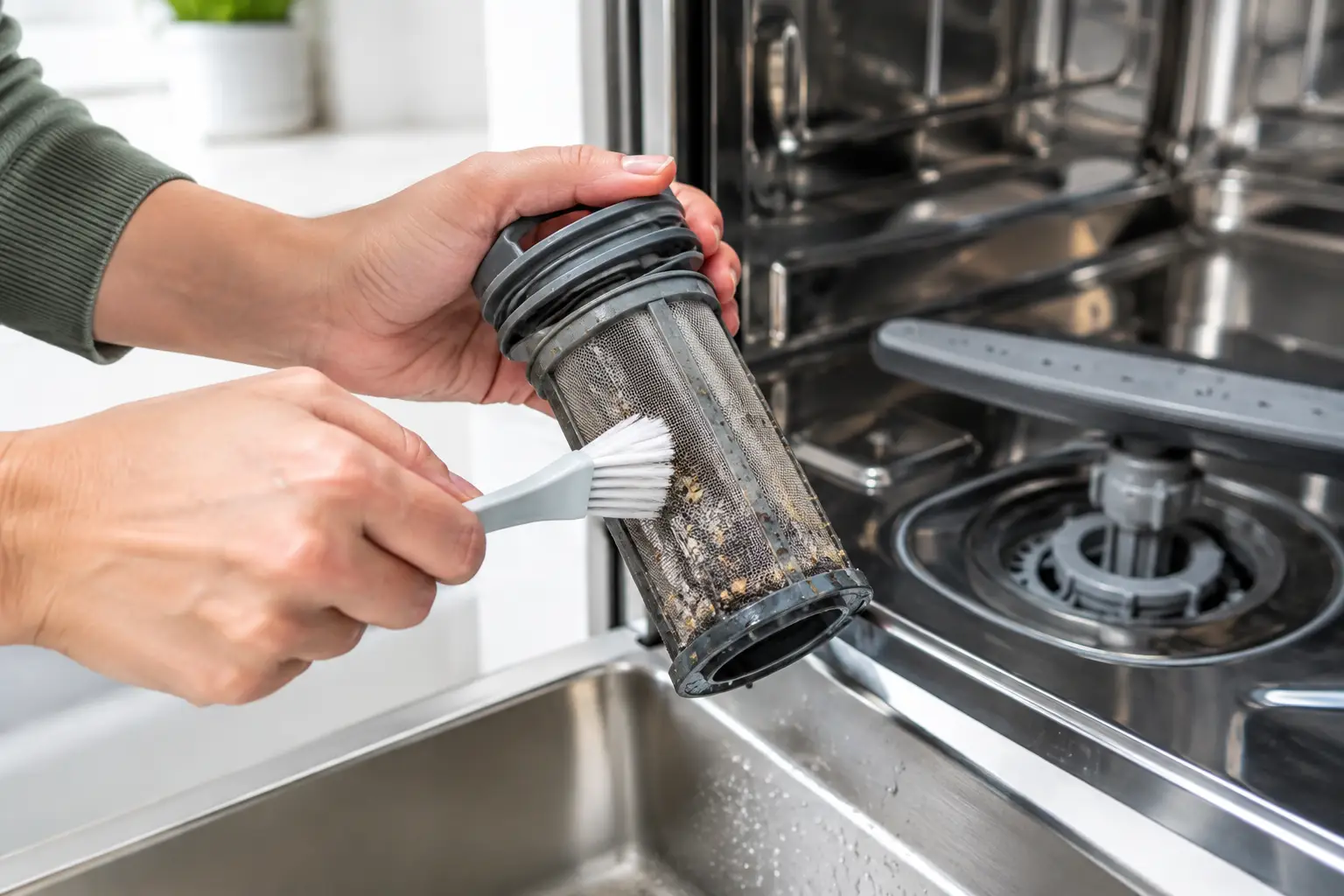
Drainage and spinning issues are among the most common service calls, and our guide on what to do when a washer will not drain covers the checks worth trying first. If the washer still has water inside, it may refuse to enter the spin cycle as a safety measure. A technician will inspect the drain hose for obstructions or improper installation, check the pump and filter, and test the components that signal the machine to move to the next cycle.
Front-load and top-load washers can fail for different reasons, so the repair is not one-size-fits-all. A front-load model may have a door-lock concern, while a top-load machine may have a lid-switch or suspension issue. Accurate testing matters more than replacing parts based on the symptom alone.
Washer Is Leaking
A leak does not automatically mean the washer needs replacement. In many cases, the repair involves a hose, gasket, clamp, inlet valve, pump, or seal. However, the source needs to be located before a quote can be given with confidence.
If water is actively leaking, turn off the washer and close the water supply valves behind it if you can do so safely. Avoid running another load to “check” whether the leak returns. A small drip can become a much larger spill during the fill or drain portion of a cycle.
Washer Shakes or Makes Excessive Noise
First, check whether the washer is level and whether a heavy item such as a comforter or bath mat has created an uneven load. If the shaking happens with ordinary loads or the unit moves across the floor, there may be a mechanical issue. Here is more on why a washing machine shakes violently.
Worn shocks, damaged suspension rods, loose counterweights, failing bearings, and worn drive components can all create excessive movement or noise. A professional inspection can separate a simple leveling adjustment from a repair that requires parts and labor.
Washer Has No Power or Stops Mid-Cycle
Before scheduling service, confirm that the outlet has power and that the circuit breaker has not tripped. If the outlet is working but the washer remains unresponsive, the cause could involve the power cord, control board, user interface, door lock, timer, or internal wiring.
Stopping mid-cycle is especially frustrating because the machine may hold water and lock the door. Avoid forcing the door open or repeatedly unplugging and restarting the washer. Those steps can complicate the issue or create a water spill. A technician can safely diagnose why the cycle is not advancing.
What a Professional Washer Repair Visit Should Include
A dependable repair visit begins with listening to the symptoms, including when they occur and whether the problem is constant or intermittent. Details such as error codes, unusual sounds, and where a leak appears can speed up the diagnosis.
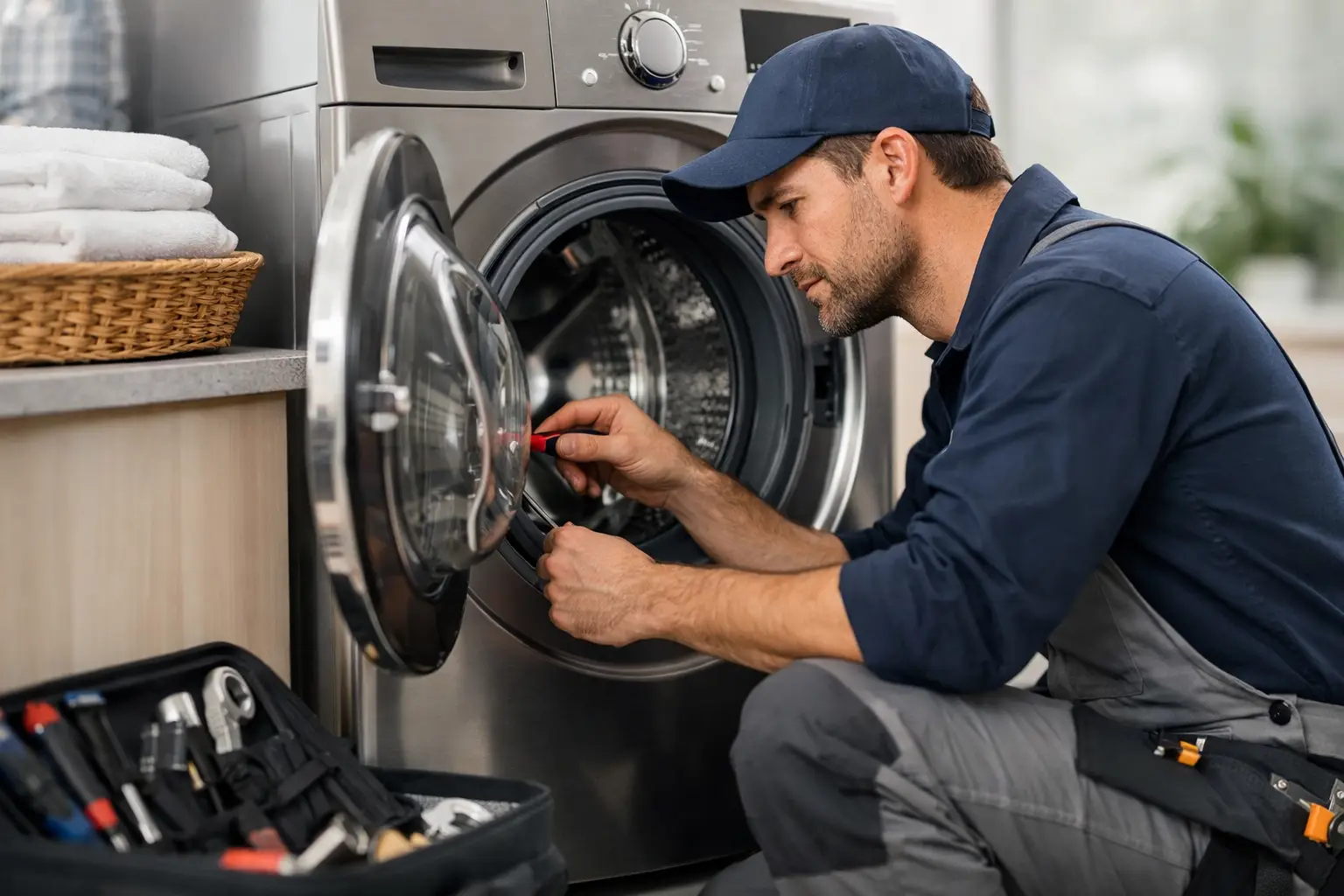
The technician should then inspect the washer’s mechanical, electrical, and drainage systems as needed. This may include checking the pump, hoses, inlet valves, belt or drive system, suspension, locks, sensors, and control components. The goal is to identify the failed part and the condition that caused it, not simply reset the machine and hope the problem stays away.
Clear pricing matters just as much as accurate diagnostics. You should understand what repair is recommended, what parts are needed, and what the expected cost includes before authorizing work. For homeowners and local business operators, that clarity makes it easier to decide whether repair is the sensible option.
At Fasteny Appliance Repair, the focus is on responsive scheduling, certified technical service, fair quotes, and repairs performed correctly the first time. Same-day or next-day availability can be particularly valuable when laundry is piling up or a leaking washer is threatening nearby floors.
Repair or Replace: How to Make the Right Call
There is no single age at which every washer should be replaced, and our guide on whether to repair or replace an appliance walks through the math. The right choice depends on the model, its condition, the cost of the repair, and whether the unit has had repeated failures.
Repair is often a practical choice when the issue is isolated, the washer has otherwise performed reliably, and the needed part is available. Pumps, belts, hoses, locks, valves, and many suspension components can frequently be repaired at a reasonable cost. A newer machine with one clear failure is usually worth evaluating before considering replacement.
Replacement may make more sense if the washer has major tub or bearing damage, recurring electronic failures, extensive corrosion, or a repair estimate that is high relative to the cost of a comparable new machine. It also depends on your household needs. A larger family may need a fast resolution and may prioritize capacity, efficiency, or a specific configuration over another repair.
An honest technician should explain both the repair path and the trade-offs. The most expensive option is not automatically the best option, and neither is the cheapest short-term fix.
A Few Steps to Take Before Service Arrives
You do not need to dismantle the washer or attempt a repair yourself. Simply note the brand and model number, save any error code shown on the display, and describe what happened before the issue appeared. If the washer leaks, take a photo of where the water collects if it is safe to do so.
Clear a path to the laundry area and remove clothing from the drum when possible. If the washer is full of water or the door is locked, mention that when booking service. This helps the technician arrive prepared for the situation.
A broken washer should not keep your household or business operation on hold longer than necessary. With a clear diagnosis, transparent quote, and skilled repair, you can get back to clean laundry without the uncertainty of repeated breakdowns.
Frequently Asked Questions
Do you offer washer repair in Waltham?
Yes. Fasteny Appliance Repair provides washer and washing machine repair throughout Waltham and nearby Massachusetts communities, including Brookline and the surrounding area. Call (617) 618-3311 or request service online to schedule a visit.
What washing machine brands do you repair in Waltham?
Our technicians service the major brands found in most Waltham homes, including Samsung, LG, Whirlpool, Maytag, GE, Frigidaire, and Bosch, in both front-load and top-load configurations.
How soon can a technician come out in Waltham?
We aim for prompt, often next-day scheduling for Waltham washer repair, and faster when a washer is full of water or leaking. Let us know the symptoms and whether the door is locked so the technician arrives prepared.
How can I keep my washer from breaking down?
Consistent care goes a long way: clean the drum and gasket monthly, avoid overloading, and keep the machine level. Our washing machine maintenance guide and Whirlpool’s washer and dryer maintenance tips both cover the routine that prevents most breakdowns.
Is it worth repairing a washer that will not drain or spin?
Usually, yes. Drain and spin problems are often caused by a clogged pump filter, a kinked hose, or a worn belt, which are affordable fixes compared with replacing the machine. A technician can confirm whether repair is the cost-effective choice before you commit.
Conclusion
A broken washer is a disruption you should not have to live with for long. From washers that will not drain or spin to machines that leak, shake, or lose power, prompt diagnosis protects the appliance and gets your laundry routine back on track. Skipping repeated guesswork usually saves both time and money.
When you need dependable Waltham washer repair, Fasteny Appliance Repair is ready to help across Waltham, Brookline, and Massachusetts. Request service online or call (617) 618-3311 to book a visit with a technician you can trust.